Patbingsu Korean Shaved Ice: The Ultimate Guide to Korea’s Favorite Summer Dessert
Patbingsu Korean Shaved Ice: The Ultimate Guide to Korea’s Favorite Summer Dessert
There are foods that define a season, and in Korea, summer has one answer above all others: patbingsu. The moment the temperature climbs and the humidity settles in, Korean dessert cafes fill up, queues form outside the most popular spots, and enormous bowls of shaved ice piled high with sweet red beans, rice cakes, fruit, and condensed milk start appearing on every table. Patbingsu Korean shaved ice is not just a dessert. It is a ritual, a cultural institution, and for many Koreans, one of the most reliable ways to make a difficult summer afternoon feel genuinely good.
If you’ve never had patbingsu before, this guide will tell you everything you need to know — what it is, what makes it special, how it has evolved over the centuries, what the best varieties are, and exactly where and how to enjoy it properly. If you have had it before and simply want to understand it better, you’re in the right place too.
Table of Contents
- What Is Patbingsu?
- A Brief History of Patbingsu Korean Shaved Ice
- What Goes Into a Bowl of Patbingsu
- The Most Popular Types of Patbingsu Today
- Traditional vs. Modern Patbingsu: What’s the Difference?
- The Ice Itself: Why Korean Shaved Ice Feels Different
- Where to Eat Patbingsu in Korea
- How to Eat Patbingsu Like a Korean
- Tips for Ordering Patbingsu for the First Time
- Final Thoughts
What Is Patbingsu?
The name says it all, if you know the components. 팥 (pat) means red bean, 빙 (bing) means ice, and 수 (su) means water — together forming the word for Korea’s most iconic cold dessert. At its most traditional, patbingsu is finely shaved ice topped with sweetened red bean paste, a handful of chewy rice cake pieces, a drizzle of condensed milk, and sometimes a small scoop of red bean ice cream on top.
But that description only captures one version of a dessert that has expanded dramatically in scope over the decades. Patbingsu Korean shaved ice today encompasses everything from the classic red bean preparation to elaborate seasonal creations featuring fresh strawberries, mango, matcha, injeolmi (roasted soybean powder rice cake), and handmade syrups. What links all of these versions is the same fundamental idea: a mountain of cold, lightly sweetened shaved ice as the base, with toppings that combine sweetness, chewiness, creaminess, and texture into something that feels completely unlike any other dessert tradition in the world.
Patbingsu is almost always a large portion — typically large enough to share between two people, though Koreans frequently eat an entire bowl on their own without much difficulty. It arrives in a wide, deep bowl with the toppings arranged carefully on top, and the experience of eating it is as much about texture and temperature as it is about flavor.
A Brief History of Patbingsu Korean Shaved Ice
Patbingsu has a history that stretches back over a thousand years, making it one of the oldest surviving dessert traditions in East Asia. The earliest records of ice-based desserts in Korea appear in documents from the Goryeo Dynasty (918–1392), where shaved or crushed ice was described as a luxury reserved for royalty and the aristocratic elite. Ice was harvested in winter, stored in specially constructed underground icehouses called 빙고 (binggo), and retrieved in summer for use in royal kitchens.
During the Joseon Dynasty (1392–1897), the tradition became slightly more accessible as icehouses expanded and the practice of flavoring ice with fruits and honey became more established. Historical records from the period describe shaved ice sweetened with honey and topped with various seasonal ingredients — a recognizable ancestor of what we eat today.
The transformation of patbingsu Korean shaved ice into a genuine mass-market dessert happened in the modern era. The introduction of mechanical ice shaving equipment in the 20th century made fine, fluffy shaved ice achievable at scale, and the addition of red bean paste — inexpensive, filling, and deeply satisfying — turned it from an aristocratic luxury into an everyday summer treat available to everyone. By the mid-20th century, patbingsu stalls were a fixture of Korean summer street culture, and the dessert had become the beloved national institution it remains today.
The 21st century brought a second transformation. As Korean dessert cafe culture exploded — driven partly by the influence of specialty coffee shops, Taiwanese-style dessert trends, and the general premiumization of Korean food culture — patbingsu underwent a dramatic aesthetic and culinary evolution. Modern bingsu varieties became more elaborate, more photogenic, and more expensive. The simple street food version coexisted with and was complemented by a whole new category of artisanal, seasonal, cafe-style patbingsu that now commands significant prices and long waiting lists.
What Goes Into a Bowl of Patbingsu
Understanding the components of patbingsu Korean shaved ice is the key to understanding why it works so well as a dessert. Every element has a purpose, and when they come together correctly, the result is greater than the sum of its parts.
The Ice
The foundation. Korean shaved ice — at its best — is not the crunchy, granular crushed ice of a snow cone. It is almost impossibly fine and soft, shaved from a block of frozen milk or lightly sweetened liquid into ribbons so delicate that they practically dissolve on contact with the tongue. The texture is closer to the inside of a freshly packed snowball than to anything you’d get from an ice machine. This softness is the defining quality that separates excellent patbingsu from mediocre patbingsu — get the ice right and everything else builds on a perfect base.
Pat — The Sweetened Red Bean
The ingredient that gives the dessert its name. 팥 (pat) is the Korean term for adzuki red beans, which are slow-cooked with sugar until they reach a consistency somewhere between a chunky paste and whole softened beans. The flavor is earthy, mildly sweet, and deeply satisfying in the way that legume-based sweets often are — substantial without being overwhelming, and with a natural sweetness that never feels artificial. In a traditional bowl of patbingsu, the red bean is both stirred through the ice and piled generously on top.
Tteok — Chewy Rice Cakes
Small pieces of 떡 (tteok) — Korean rice cake — are almost always included in a traditional bowl of patbingsu. They come in several varieties: plain white rice cake cut into small cubes, 팥떡 (pattteok, red bean rice cake), or the particularly beloved 인절미 (injeolmi) — soft rice cake rolled in roasted soybean powder (콩가루, konggaru). The function of the tteok in patbingsu is textural — their dense, chewy quality contrasts beautifully with the delicacy of the shaved ice and creates a satisfying resistance that prevents the whole bowl from feeling one-dimensional.
Condensed Milk
A drizzle of sweetened condensed milk over the top of the ice is a near-universal feature of patbingsu Korean shaved ice. It adds creaminess, richness, and a milky sweetness that rounds out the earthiness of the red bean and the lightness of the ice. Some versions use fresh cream instead, or a combination of both. Either way, this dairy element is what makes patbingsu feel genuinely indulgent rather than simply refreshing.
Additional Toppings
Beyond the core components, patbingsu can include a wide range of additional toppings depending on the variety and the establishment: fresh or glazed fruit, jelly cubes, corn flakes for crunch, a small scoop of ice cream, toasted nuts, syrup drizzles, or even a dusting of matcha powder. The specific combination varies enormously, but the underlying logic is always the same — build layers of flavor, texture, and temperature that reward slow, exploratory eating.
The Most Popular Types of Patbingsu Today
The world of Korean shaved ice has expanded far beyond the classic red bean version, and knowing the major varieties helps you make a better choice when standing in front of a menu.
Classic Patbingsu (팥빙수)
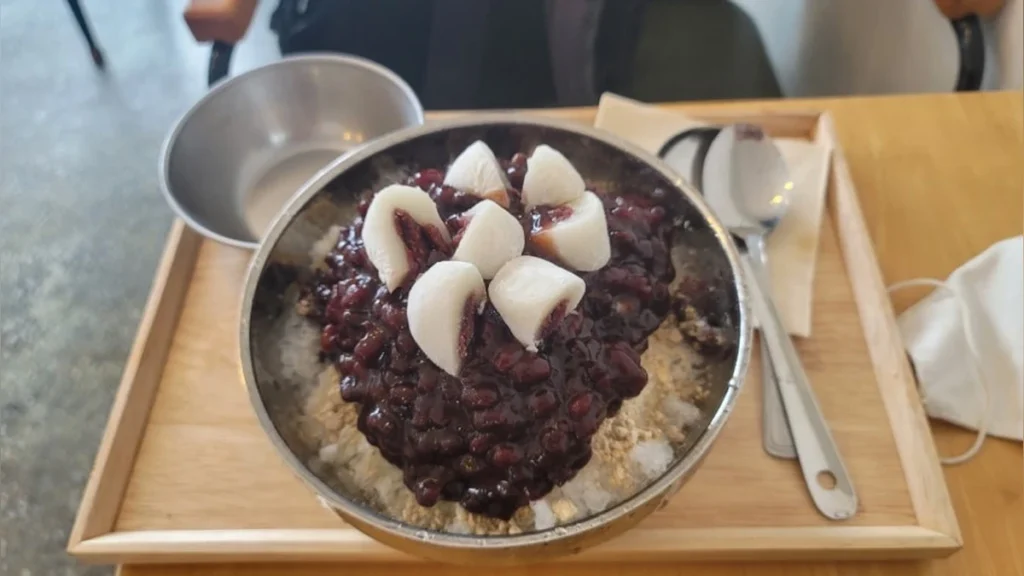
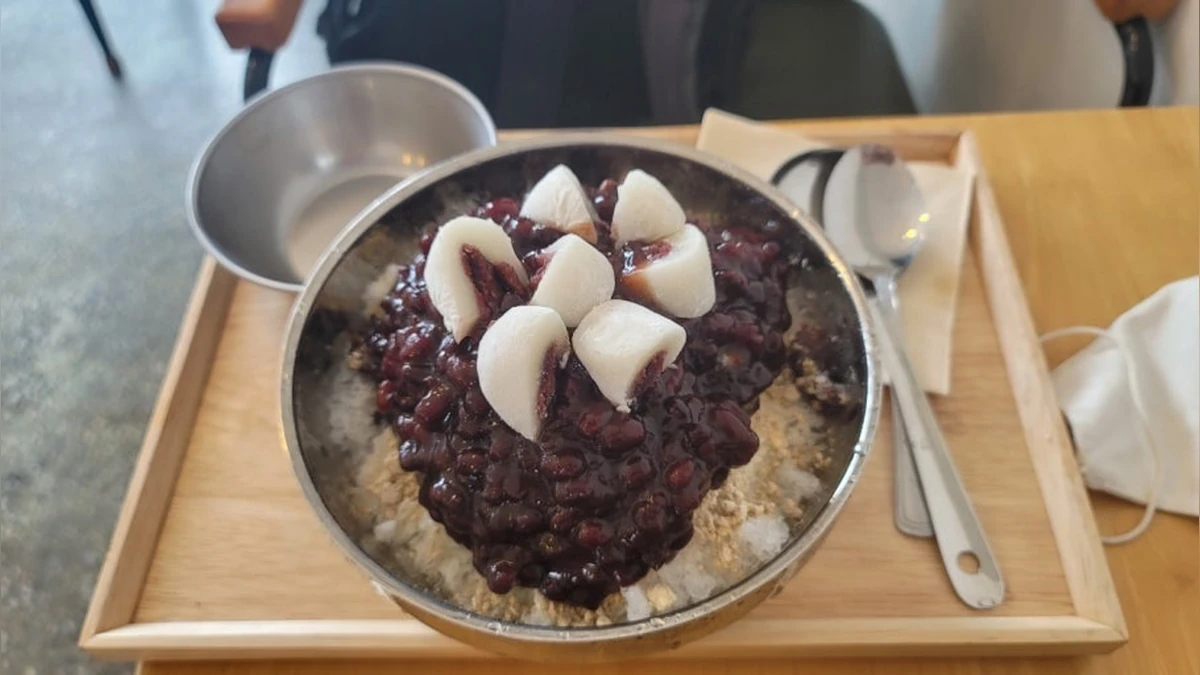
The original. Shaved ice, sweetened red bean, rice cakes, condensed milk, and sometimes a small scoop of red bean ice cream. This is the version that has been around for generations and the one that most Koreans grew up eating. It is found everywhere — from convenience stores selling pre-packaged single-serve cups to traditional dessert houses serving enormous hand-crafted bowls. Simple, satisfying, and impossible to tire of.
Injeolmi Bingsu (인절미 빙수)
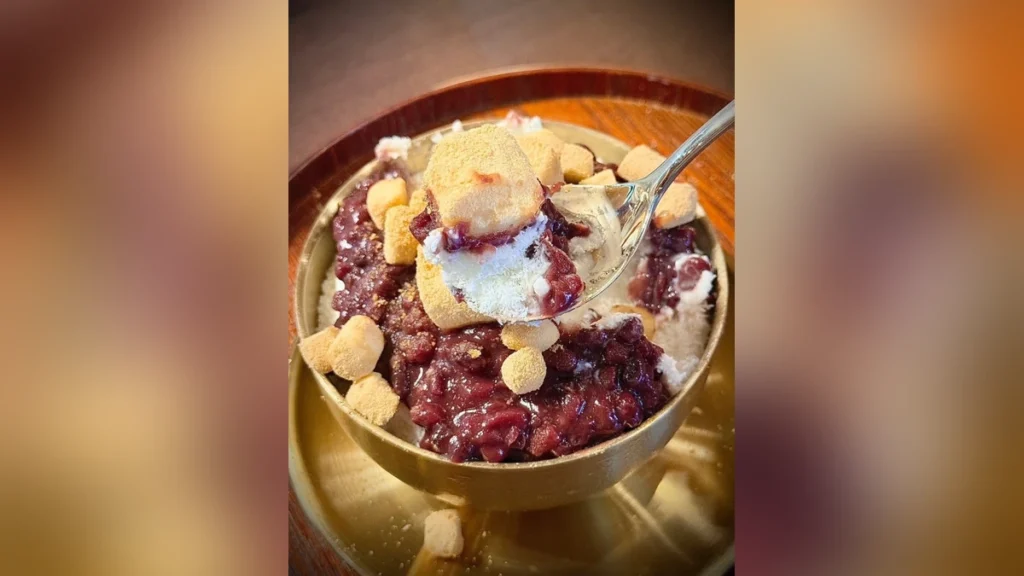
One of the most beloved modern classics. Instead of or in addition to regular rice cakes, this version features generous pieces of injeolmi — soft rice cake coated in roasted soybean powder — piled over milk shaved ice. The nutty, toasty flavor of the soybean powder against the clean sweetness of the ice and condensed milk is a combination that has become enormously popular across Korean dessert cafes. It is rich, fragrant, and deeply Korean in its flavor profile.
Strawberry Bingsu (딸기 빙수)

The seasonal star of spring and early summer. Fresh Korean strawberries — known for being exceptionally sweet, juicy, and fragrant — are either blended into a sauce that is layered through the ice or piled whole on top, or both. Strawberry bingsu is spectacularly photogenic, with the brilliant red of the fruit against the white of the ice creating a striking visual that has made it one of the most photographed desserts in Korean cafe culture. It is lighter and more fruit-forward than the red bean version, and the quality rises and falls entirely with the freshness of the strawberries.
Mango Bingsu (망고 빙수)
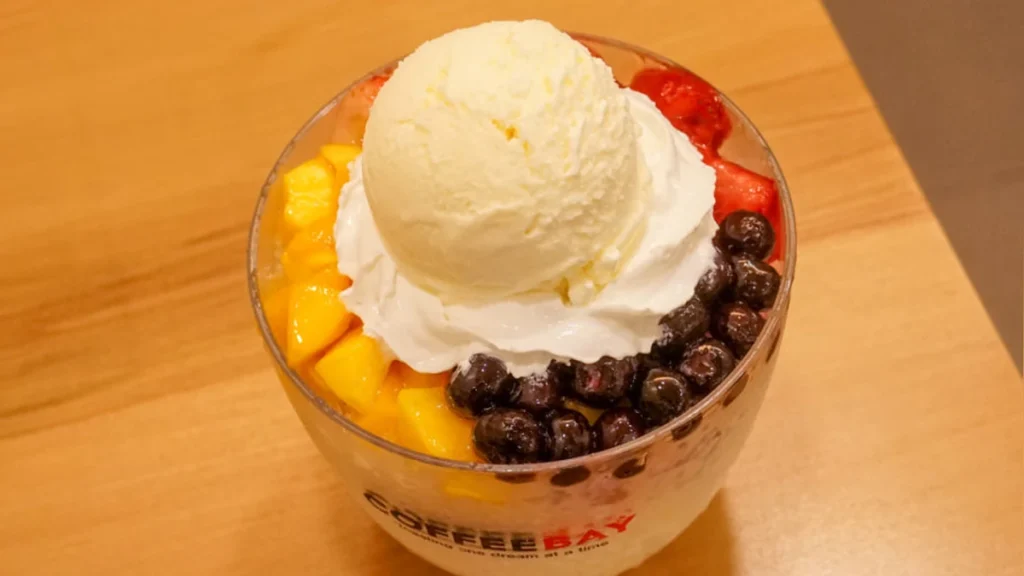
A summer staple featuring ripe mango — fresh, dried, or in sauce form — over milk ice, often with mango ice cream and condensed milk. The tropical sweetness of mango pairs surprisingly well with the neutral, milky base of the shaved ice, and this variety has become a reliable favorite at Korean dessert cafes during the hottest months of the year.
Matcha Bingsu (말차 빙수)
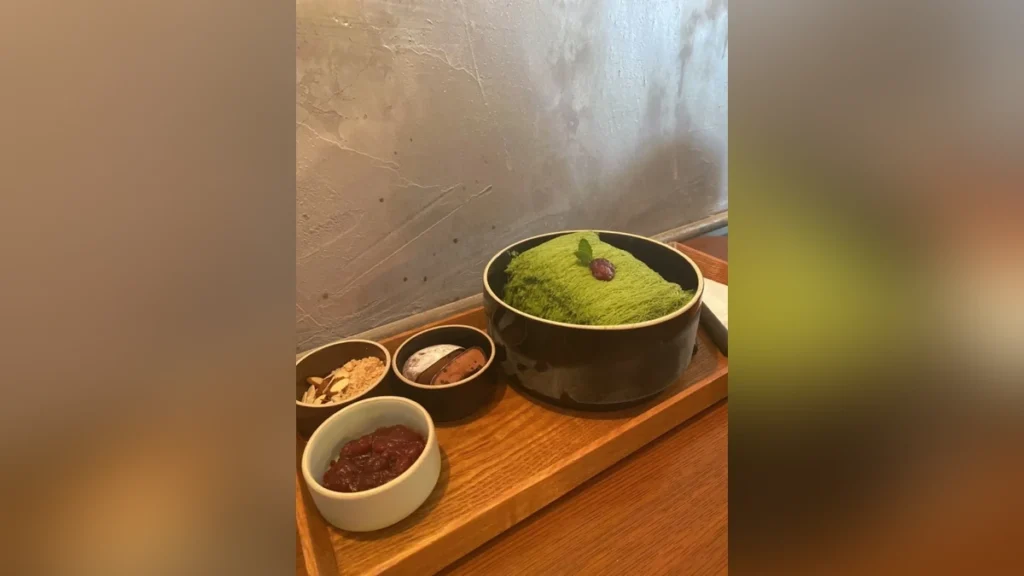
Shaved ice with a matcha-flavored base — either matcha milk ice or a generous dusting of high-quality matcha powder over plain milk ice — topped with sweetened red bean, injeolmi rice cake, and condensed milk. The bitterness of the matcha against the sweetness of the other components creates a more complex, adult flavor profile that has made this variety a favorite among those who find the all-sweet versions slightly one-note.
Chocolate and Specialty Bingsu
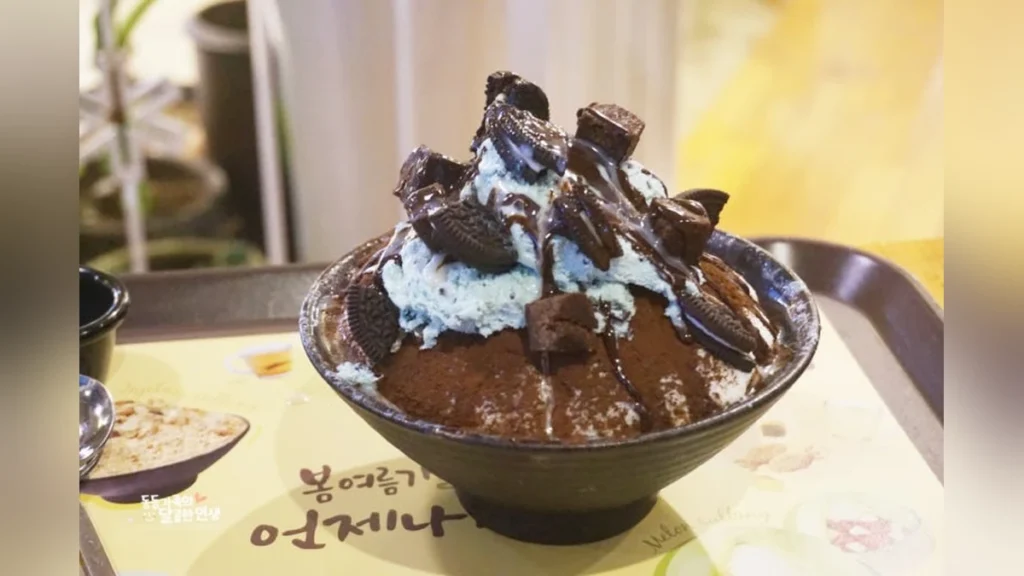
High-end dessert cafes have pushed bingsu in increasingly creative directions, producing versions built around premium dark chocolate, black sesame, hojicha (roasted green tea), seasonal stone fruits, and more. These cafe-exclusive varieties tend to be the most expensive and the most carefully constructed — often plated as much as served, and designed as much for the photograph as for the eating.
Traditional vs. Modern Patbingsu: What’s the Difference?
If you spend any time researching patbingsu Korean shaved ice, you’ll quickly notice that there are two fairly distinct worlds within the same dessert tradition — and understanding the difference helps you decide where to go and what to expect.
Traditional patbingsu — found at older-style Korean dessert houses (빙수 전문점), traditional teahouses, and some market stalls — is unpretentious, generous in portion, and priced modestly. The ice is shaved on-site, the red bean is made in-house according to long-established recipes, and the bowl arrives without much ceremony. The focus is entirely on flavor and satisfaction, and the portions tend to be enormous. This is the version that generations of Koreans grew up eating, and it remains the most authentic expression of what patbingsu is at its core.
Modern cafe-style patbingsu — found at trendy dessert cafes, specialty bingsu houses, and upscale Korean bakery chains — is more polished, more visually elaborate, and significantly more expensive. Seasonal ingredients are sourced carefully. The milk ice is often crafted from premium dairy. Toppings are arranged with aesthetic intention. Portions may be smaller than the traditional version, but the eating experience is more curated. This is patbingsu as a premium food product — still delicious, but designed as much for the full sensory experience as for pure caloric satisfaction.
Neither version is better than the other. They serve different needs and different moments. A sweltering August afternoon at a traditional patbingsu stall near a market, sharing a giant bowl with a friend, is one kind of perfect. A carefully composed strawberry bingsu at a quiet Seoul cafe on a slow summer afternoon is another kind entirely.
The Ice Itself: Why Korean Shaved Ice Feels Different
It is worth spending a moment on the ice itself, because the quality and character of the shaved ice is what separates a truly great bowl of patbingsu Korean shaved ice from a merely adequate one — and it is the element that most surprises visitors who expect something similar to the crushed ice of a snow cone or a Hawaiian shave ice.
The ice used in high-quality Korean bingsu is almost universally 우유 빙수 (milk ice) — a block frozen from a mixture of milk and a small amount of sugar rather than plain water. When shaved from a block frozen this way, the resulting texture is extraordinary: dry, light, almost powdery, with individual shavings so fine they float briefly before settling. It melts on contact with the tongue rather than crunching, and the mild creaminess from the milk base means the ice itself contributes flavor rather than simply providing cold.
The shaving machine matters too. Traditional Korean bingsu machines shave from a rotating block at very high speed, producing thin ribbons and layers of ice that stack rather than clump. The result — when done well — is a bowl of ice that holds its mountain shape for several minutes even at room temperature, and that yields to a spoon with almost no resistance. This is not something you can replicate at home with a blender or a standard ice crusher, and it is a large part of why eating patbingsu Korean shaved ice at a proper establishment feels so distinctly different from any other cold dessert experience.
Where to Eat Patbingsu in Korea
Traditional Patbingsu Houses
Older, established dessert specialists — often with long histories and devoted local followings — are the best places to experience classic patbingsu Korean shaved ice in its most authentic form. These places typically make their red bean from scratch daily, use house recipes developed over decades, and serve portions that are genuinely generous. Look for them in traditional market areas, older residential neighborhoods, and historic city centers.
In Seoul, the area around Insadong, Bukchon, and Gwangjang Market has a strong concentration of traditional Korean dessert spots where patbingsu is made the old way and the atmosphere matches. In Busan, the neighborhood around Nampo-dong and Gukje Market has similar options.
Specialty Bingsu Cafes
Dedicated bingsu cafes — open primarily during the warmer months, sometimes operating only as seasonal pop-ups — focus exclusively on shaved ice and typically offer the most creative and carefully crafted modern varieties. These are the places for injeolmi bingsu, seasonal fruit versions, and limited-time specialty flavors. Be prepared for lines on weekends and premium pricing for the most elaborate options.
Korean Bakery Chains and Dessert Cafes
Large Korean bakery and dessert chains — including some of the major national franchise brands — offer reliable, accessible patbingsu during summer. The quality is consistent if not exceptional, prices are reasonable, and the cafe atmosphere makes for a comfortable place to sit. These are good options if you want patbingsu without the uncertainty of finding a specialty spot.
Convenience Stores
Yes, Korean convenience stores sell patbingsu — specifically the single-serve cup variety, pre-packaged and stocked in the freezer section during summer months. The ice is not the soft milk ice of a proper bingsu house, and the toppings are simpler, but the cup bingsu available at stores like GS25, CU, and 7-Eleven has developed a genuine cult following in Korea for its nostalgic, approachable quality. It is the perfect late-night option, the budget-friendly alternative, and in its own way, a completely valid expression of patbingsu culture.
How to Eat Patbingsu Like a Korean
There is no single correct way to eat patbingsu, but there are a few approaches that make the experience significantly better.
Mix as you go, not all at once. The instinct when faced with a beautifully arranged bowl is to dig straight in from the top and eat in layers. The better approach is to gently fold the toppings into the ice as you eat, a little at a time. This ensures that every spoonful has a balance of ice, red bean, rice cake, and condensed milk rather than eating all the toppings first and then being left with plain ice at the bottom.
Eat it while it’s cold but don’t rush. Patbingsu is best eaten at a certain pace — not so fast that you end up with brain freeze, not so slow that the ice melts into a liquid pool before you’re halfway through. The sweet spot is a steady, engaged eating pace that lets you enjoy each spoonful while the ice is still properly cold and textured.
Share it, or don’t — both are fine. Patbingsu is traditionally considered a sharing dessert and is usually large enough for two. But solo eating is completely acceptable and widely practiced. There is something pleasantly self-indulgent about eating an entire bowl of patbingsu on your own on a summer afternoon, and no one will look at you oddly for it.
Save room for it. Patbingsu is filling in a way that a light dessert is not. The rice cakes are dense, the red bean is substantial, and even the ice adds volume. If you eat a full Korean meal immediately before ordering patbingsu, finishing the bowl may be more of a challenge than you expect. Many Koreans treat patbingsu as a standalone afternoon snack rather than a post-meal dessert, and this approach has a lot of wisdom behind it.
Tips for Ordering Patbingsu for the First Time
If you’re walking into a Korean dessert cafe or traditional patbingsu house for the first time, here are a few things that will make the process smooth:
Go for the classic patbingsu if you’re unsure. If the menu is overwhelming and you don’t know where to start, the traditional red bean version is always the right call for a first visit. It is the original, the most Korean, and the best way to understand what makes the dessert work before branching out into more elaborate varieties.
Check the portion size before ordering. Most patbingsu portions are enormous. If you are dining alone and not particularly hungry, some cafes offer a smaller individual size — worth asking about before defaulting to the full-size bowl.
Arrive early or outside peak hours. Popular bingsu spots in summer — particularly on weekends and public holidays — can have very long wait times. Arriving at opening or on a weekday afternoon dramatically improves your chances of a short wait.
Ask about seasonal specials. Many Korean dessert cafes rotate their patbingsu menu by season, with limited varieties available only during specific weeks. If you visit in strawberry season (late spring), mango season (midsummer), or during a special promotional period, asking what’s new or seasonal often yields the most interesting options on the menu.
Photograph it before mixing. The presentation of a good bowl of patbingsu is genuinely beautiful — a sculptural mountain of white ice with colorful toppings — and it deserves a moment of appreciation before you start eating. Take your photo while it still looks its best. Then mix, eat, and enjoy.
Final Thoughts
Patbingsu Korean shaved ice is one of those rare foods that manages to be simultaneously simple and extraordinary. At its most basic, it is shaved ice and beans. But when it is made properly — with ice that dissolves like snow, red bean that has been cooked with care, rice cakes that yield gently to the teeth, and a drizzle of condensed milk that ties everything together — it becomes something that is genuinely hard to describe to someone who has not experienced it.
It is not just the flavor, though the flavor is good. It is the temperature, the texture, the way the different elements melt and mix together as you eat. It is the social context — the summer afternoon, the dessert cafe, the friend across the table working through their own half of the bowl. It is the history behind it, stretching back to royal icehouses and Joseon-era summer palaces, now democratized into a cup available at any convenience store for a few thousand won.
Korea has given the world many things through its food culture. Patbingsu is one of the quieter gifts — not spicy, not fermented, not complex to understand — just cold, sweet, and exactly right for a summer day. If you haven’t tried it yet, summer in Korea gives you no better excuse to start.
Find a bowl. Take your time with it. You’ll understand everything it has to offer by the last spoonful.