Korean Maedeup Knot Art: The Ancient Craft That Ties Korea’s Culture Together
Korean Maedeup Knot Art: The Ancient Craft That Ties Korea’s Culture Together
There is a craft tradition in Korea that has been practiced for over a thousand years, woven into royal court ceremonies, hanbok fashion, Buddhist temple decorations, military regalia, and the small daily rituals of ordinary households. It does not involve a loom or a kiln or a paintbrush. It involves only cord, two hands, and a deep understanding of knots. That tradition is 매듭 (maedeup) — Korean knot art — and it is one of the most quietly remarkable craft heritages in all of East Asia.
Korean maedeup knot art is not simply decorative tying. It is a refined system of interlacing cords into precisely constructed, symmetrical knot forms, each with its own name, its own technique, and in many cases its own symbolic meaning. A single finished maedeup piece can take hours or days to complete, involving dozens of individual knot units assembled into larger compositions of extraordinary intricacy and beauty. The results are at once architectural and textile — objects that feel both structured and fluid, ancient and strikingly contemporary in their aesthetic.
This guide explores everything worth knowing about Korean maedeup knot art — where it came from, what makes it technically distinctive, what the major knot forms mean, how it has been used throughout Korean history, and where to experience and learn it today.
Table of Contents
- What Is Korean Maedeup?
- A History of Korean Maedeup Knot Art
- The Materials: Silk, Color, and Cord
- The Major Knot Forms and Their Meanings
- How Maedeup Was Used in Traditional Korean Life
- The Symbolism Woven Into Every Knot
- Maedeup in Modern Korea: Between Tradition and Contemporary Design
- Where to See and Experience Korean Maedeup Knot Art
- How to Start Learning Maedeup
- Final Thoughts
What Is Korean Maedeup?
The word 매듭 (maedeup) simply means knot in Korean, but as a craft tradition it refers specifically to the art of creating decorative knots from silk or cotton cord using a defined system of interlacing techniques. What distinguishes maedeup from casual knotting or macramé — the Western decorative knotting tradition it is sometimes compared to — is its exceptional precision, its bilateral symmetry, and the way each recognized knot form is treated as a discrete unit with its own identity, construction logic, and cultural meaning.
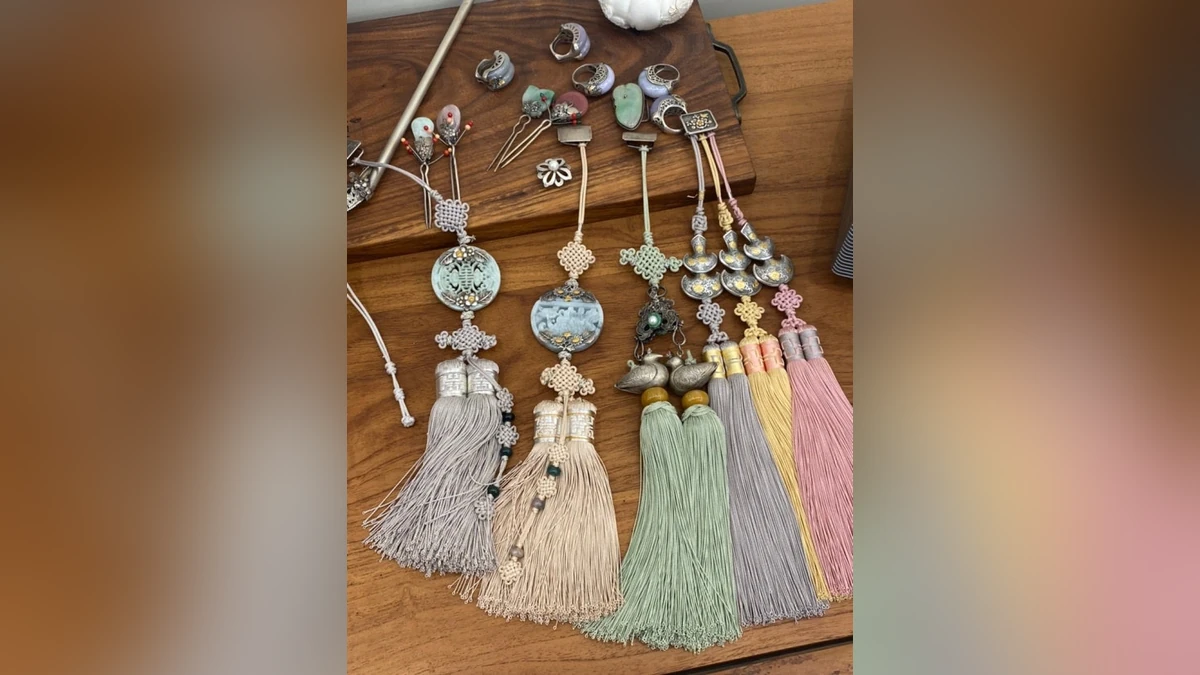
A piece of Korean maedeup knot art typically consists of one or more individual knot units arranged along a length of cord, often finished with decorative tassels (술, sul) at the bottom. The knots themselves are three-dimensional — they stand away from the cord surface and hold their form with a satisfying firmness. When made from silk, they catch and refract light in a way that makes even a small piece glow with subtle depth and color.
Maedeup is classified as a traditional craft under Korea’s Cultural Heritage Administration, and several master practitioners hold official recognition as Important Intangible Cultural Heritage holders — the highest formal designation the Korean government gives to living practitioners of traditional arts. This institutional recognition reflects the seriousness with which Korea regards maedeup not simply as decoration but as a living cultural practice that carries historical, technical, and symbolic significance.
A History of Korean Maedeup Knot Art
The origins of Korean maedeup knot art are ancient enough that pinpointing a single beginning is impossible, but historical evidence places decorative knotting in Korea as far back as the Three Kingdoms period (57 BC – 668 AD). Archaeological finds including bronze accessories and ornamental cord fragments from this era show the presence of knotted decorative elements in Korean material culture well over a millennium ago.
During the Unified Silla period (668–935 AD), evidence of maedeup appears in surviving artifacts and court documents that reference decorated cords as accessories for royal dress and ceremonial objects. The craft continued to develop through the Goryeo Dynasty (918–1392), when Buddhism’s influence on Korean court culture introduced additional symbolic frameworks — particularly around lotus motifs and auspicious symbols — that shaped the visual vocabulary of maedeup design.
It was during the Joseon Dynasty (1392–1897), however, that Korean maedeup knot art reached its most elaborate and systematized form. The Confucian social order of Joseon placed enormous emphasis on proper dress, ritual propriety, and the meaningful use of symbolic objects — and maedeup played a significant role in all three. Every element of a nobleman’s or court lady’s dress that involved a tie, a fastening, or a pendant was an opportunity for maedeup. The norigae (노리개) — a decorative pendant worn hanging from the jeogori (jacket) or chima (skirt) of hanbok — became the most celebrated expression of maedeup artistry during this period, and the finest norigae from the Joseon court are considered among the most exquisite objects in Korean art history.
Beyond court culture, maedeup appeared at every level of Joseon society. It decorated the tassels of tobacco pouches and purses, the fastening cords of wrapped gifts and ceremonial packages, the ornamental elements of Buddhist ritual objects, the decorated sword knots of military officers, and the small personal accessories of women across all social classes. It was everywhere — a quiet, continuous thread running through the material culture of an entire civilization.
The late 19th and early 20th centuries brought enormous disruption to traditional Korean crafts, including maedeup. The rapid modernization and industrialization of the colonial period, followed by the devastation of the Korean War, created conditions in which many traditional craft practices declined sharply or nearly disappeared as practitioners died without passing their knowledge on. By the mid-20th century, Korean maedeup knot art was genuinely at risk of being lost.
Recovery came through a combination of government intervention and individual dedication. The designation of maedeup as an Important Intangible Cultural Heritage in 1968 formalized the state’s commitment to preserving the tradition. Master craftswomen — most famously Chim Yeon-sook, who was designated a Human Cultural Treasure for her work in maedeup — dedicated their careers to documenting, teaching, and reviving the full repertoire of traditional knot forms. Their work is the reason the tradition exists in its current richness today.
The Materials: Silk, Color, and Cord
Understanding Korean maedeup knot art properly requires understanding what it is made from, because the material is not incidental — it is fundamental to everything the craft achieves visually and technically.
Silk Cord
Traditional maedeup is made from 명주실 (myeongjusil) — silk thread — twisted or braided into fine, smooth cord. Silk has properties that make it ideal for maedeup in ways that other materials cannot fully replicate. It holds a tight, clean knot without fraying. It has a natural luster that catches light and makes color appear deep and complex. It is strong enough to hold structure but supple enough to be worked into tight, intricate formations without resisting the maker’s hands. And when finished, a silk maedeup piece has a quiet, gemlike quality — small but luminous, modest but unmistakably refined.
Modern maedeup pieces are also made from cotton and synthetic cords, which are more affordable and accessible for beginners. These materials produce competent results but lack the particular visual richness that silk brings. At the level of master craftsmanship, silk remains the definitive material.
Color and Its Meaning
Color is not arbitrary in Korean maedeup knot art. The Korean traditional color system — rooted in the 오방색 (obangsaek), or five directional colors — assigns specific meanings to red, blue, yellow, white, and black, each associated with a cardinal direction, a natural element, and a set of auspicious properties.
Red signifies energy, passion, and protection against evil. Blue represents stability and longing. Yellow is the color of the center, of earth, and of imperial dignity. White carries associations of purity and mourning. Black is associated with wisdom and water.
In traditional maedeup, the choice of color — and the combination of colors in a single piece — communicated meaning to those who understood the system. A norigae made in red and gold communicated very different things than one made in blue and white. A gift wrapped with a specific color of maedeup cord carried intentions beyond the contents of the package. This layer of color-based meaning is one of the aspects of Korean maedeup knot art that most rewards deeper study.
The Tassel
Almost every completed maedeup piece ends in a 술 (sul) — a tassel made from the loose ends of the cord. The tassel is not simply a finishing touch. It is considered an integral part of the overall piece, and its length, density, and color are calibrated to complement the knot work above it. Making a clean, well-proportioned tassel is itself a skill that traditional maedeup practitioners spend significant time developing. A poorly made tassel can undercut even beautiful knot work above it, and a perfectly made one adds a final note of elegance that completes the composition.
The Major Knot Forms and Their Meanings
Korean maedeup knot art has a vocabulary of recognized knot forms — each with a distinct name, construction method, and symbolic resonance. Learning these forms is the foundation of maedeup study, and each one repays close examination.
Dorae Knot (도래매듭)
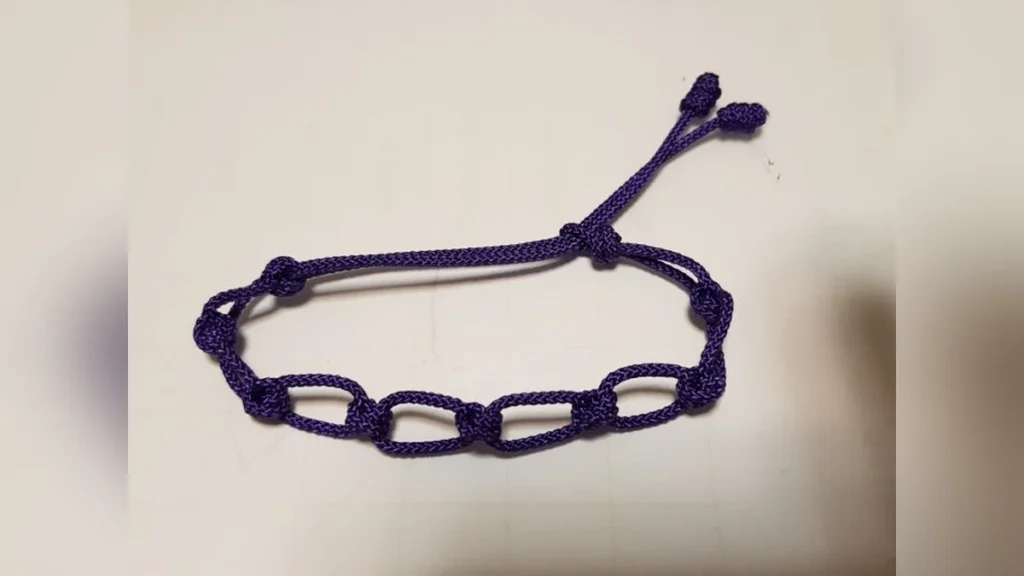
One of the most fundamental knot forms in maedeup, the dorae is a simple, compact round knot that appears alone or as a structural element connecting other, more complex knots. It is the knot most beginners learn first — a gateway into the logic of maedeup construction that, once understood, makes the approach to more complex forms much clearer.
Saengjjok Knot (생쪽매듭)
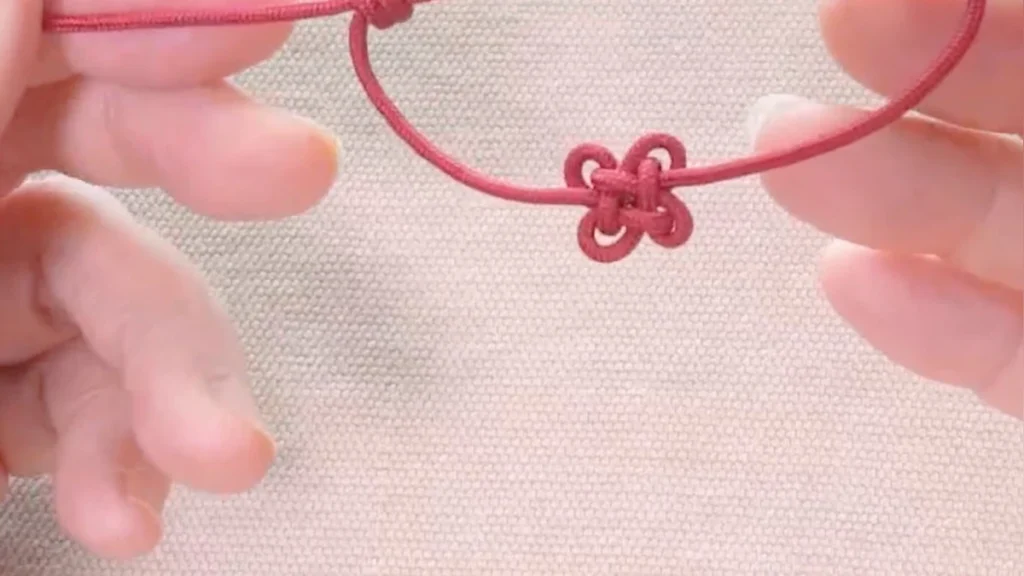
A flat, elongated knot with a clean, elegant silhouette. The saengjjok is valued for its visual simplicity and the way it lays smoothly against fabric, making it particularly useful in contexts where the knot needs to complement rather than compete with other elements. It appears frequently in the construction of norigae and in the fastening cords of traditional pouches and accessories.
Nabi Knot (나비매듭)
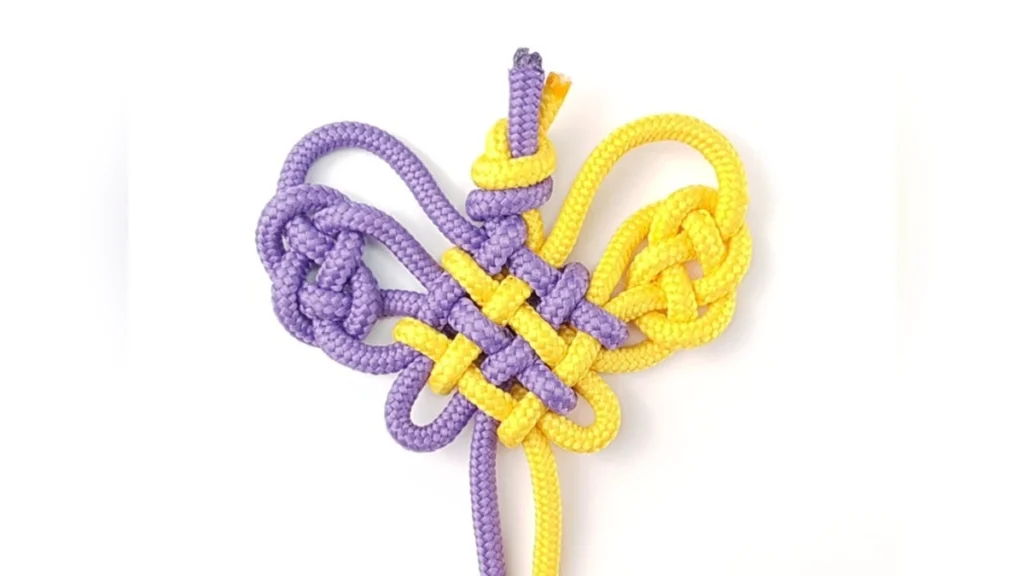
Nabi means butterfly in Korean, and this knot earns its name through its graceful, symmetrical form that suggests wings in repose. The nabi knot is one of the most beloved forms in the maedeup tradition — visually immediate and emotionally resonant, connecting the craft to the natural world in a way that is instantly readable even to someone with no knowledge of maedeup’s symbolism. Butterflies in Korean folk culture are associated with joy, transformation, and the souls of the departed, lending the nabi knot a range of meanings that move from celebratory to contemplative depending on context.
Garakji Knot (가락지매듭)
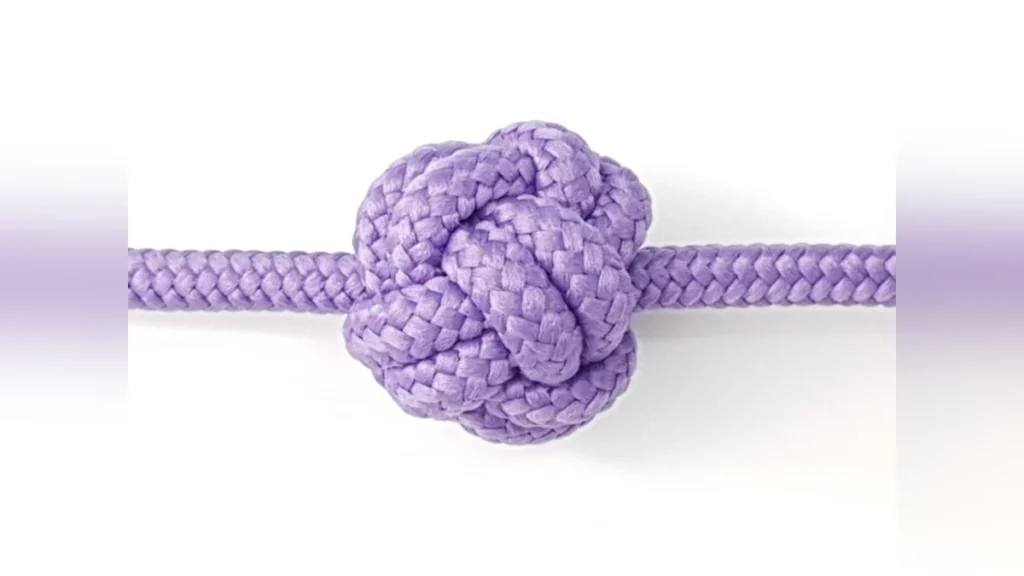
Named for the traditional Korean ring (가락지, garakji), this knot form is rounded and complete, a closed loop that visually suggests unity, continuity, and the circular nature of cycles. It is commonly used in pieces intended as gifts between couples or as accessories marking significant life transitions — its circular form a quiet visual argument for continuity and wholeness.
Yeonbong Knot (연봉매듭)
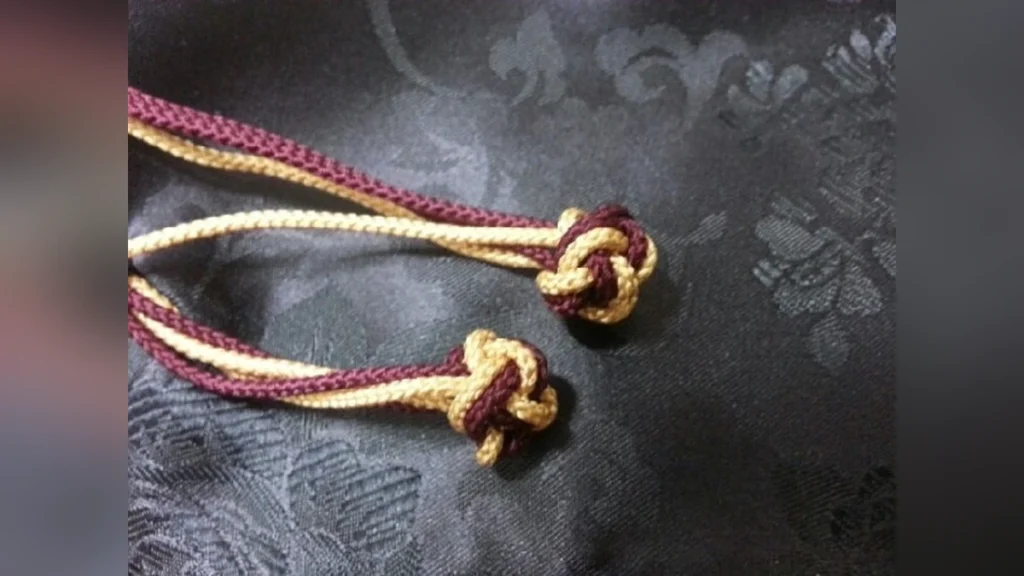
The yeonbong — lotus bud — knot is one of the most technically demanding and visually spectacular forms in the maedeup vocabulary. It takes its name from the lotus bud, one of the most symbolically significant forms in Korean Buddhist and folk art. The lotus rises from muddy water to bloom in purity — a metaphor for spiritual aspiration, moral resilience, and the emergence of beauty from difficult conditions. A well-executed yeonbong knot has a dimensional quality that almost seems to push upward out of the cord, and it is often used as a centerpiece in complex multi-knot compositions.
Gukwha Knot (국화매듭)
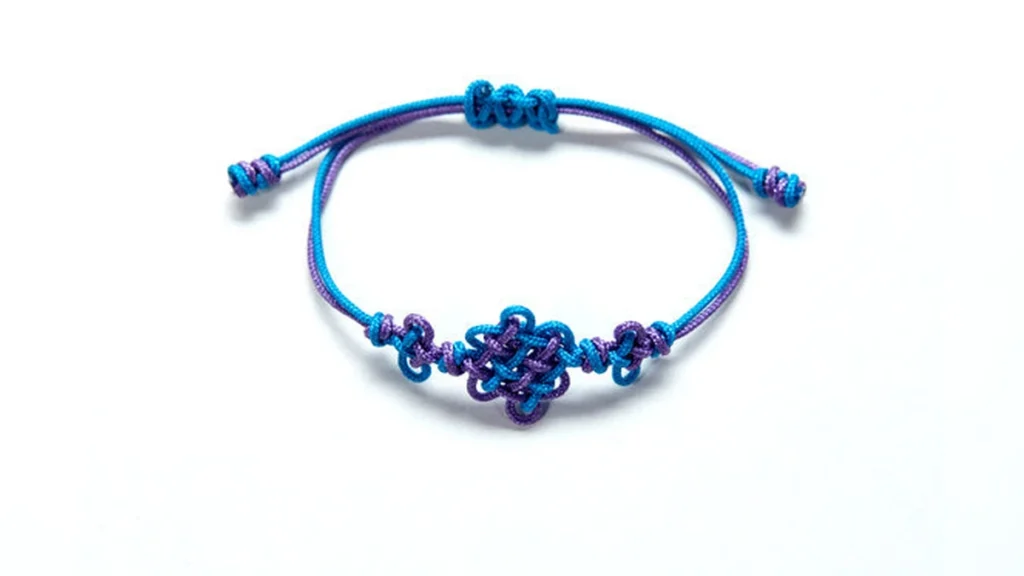
The chrysanthemum knot — a complex, multi-petaled form that requires patience and precision to execute correctly. The chrysanthemum is associated in Korean culture with longevity, steadfastness in adversity, and the beauty of late autumn. A gukwha knot piece carries all of these associations quietly within its form — complex, meticulously constructed, and beautiful in the way of things that have required real effort to achieve.
Jangsu Knot (장수매듭)
Jangsu means longevity, and this knot is one of the most explicitly auspicious forms in the maedeup tradition. It is commonly used in gifts given to elderly family members, in decorations for significant birthdays and longevity celebrations, and in any context where the wish for a long and healthy life is the central intention. Its form is strong, balanced, and compact — the visual expression of endurance.
How Maedeup Was Used in Traditional Korean Life
One of the most striking things about Korean maedeup knot art is how thoroughly it permeated traditional Korean material culture — not as a luxury reserved for a narrow elite, but as a functional and decorative element present at virtually every level of society and in virtually every domain of daily and ceremonial life.
The Norigae
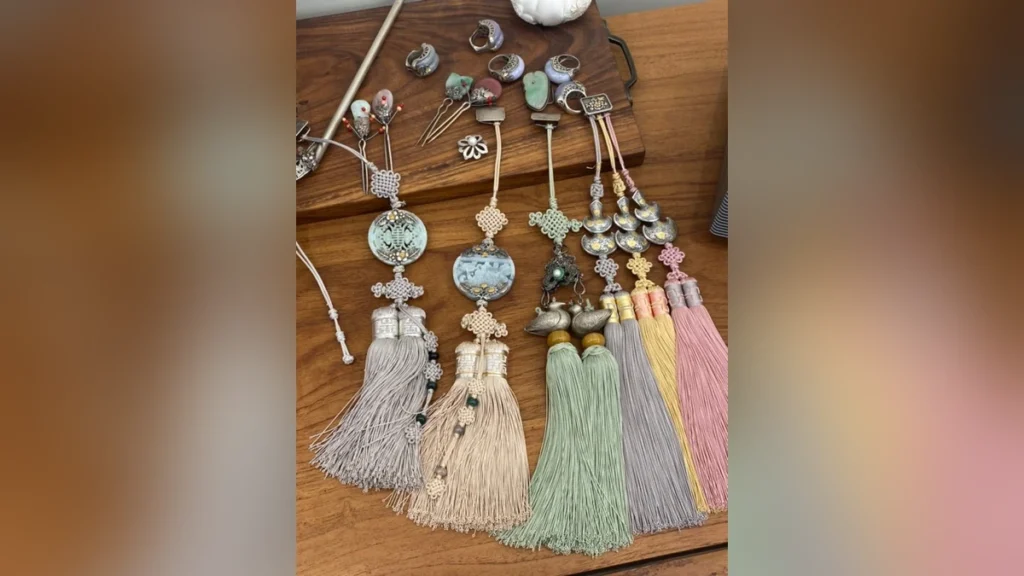
The norigae (노리개) is the most celebrated application of maedeup in the Korean craft tradition. These decorative pendants — worn hanging from the sash or collar of a woman’s hanbok — could range from simple single-element pieces to elaborate three-part compositions featuring maedeup knot work, precious stones or coral, and long decorative tassels. The finest Joseon-era norigae, preserved in museum collections, are masterworks of miniature design that combine multiple craft traditions — metal work, stone setting, silk weaving, and maedeup — into single compositions of extraordinary complexity and beauty. Norigae were not merely ornamental. They signaled the wearer’s social status, marked significant life events, and were often given as precious gifts between women of close relationship.
Ceremonial Wrapping and Gifts
In traditional Korean gift-giving culture, the presentation of a gift was inseparable from the gift itself. Ceremonial gifts were wrapped in cloth (보자기, bojagi) and tied with decorated cords featuring maedeup knots in colors and forms appropriate to the occasion. The knot work on the outside of a wrapped gift communicated the giver’s intentions and the significance of the contents before the package was even opened. This practice connected maedeup to the broader Korean cultural emphasis on the meaning of form and presentation, not just content.
Personal Accessories and Pouches
Tobacco pouches, coin purses, small personal carry bags, mirror cases — all of the small personal accessories that made up the everyday material world of Joseon Koreans were typically finished with maedeup cord work on their fastenings and decorative elements. These everyday objects brought maedeup into ordinary daily life in a way that court objects could not, and they were made and used by people of all classes. The craft knowledge required to produce basic maedeup work was widespread — it was something many women learned as part of their general domestic education, not something restricted to professional artisans.
Buddhist and Ritual Objects
Maedeup appears throughout the decorative elements of Korean Buddhist temples — in the ornamental cords of temple bells, in the decorative elements of ceremonial canopies, and in the accessories of ritual dress. The lotus symbolism embedded in several major knot forms made maedeup a natural fit for Buddhist visual culture, and the craft became closely associated with the craft workshops of major Korean temples during certain periods of its history.
Military and Official Regalia
Military officers in Joseon Korea wore decorated sword knots featuring maedeup work on their weapons, and official seals, documents, and ceremonial objects at all levels of government administration were typically tied with decorated maedeup cords. The craft thus penetrated even the most formal institutional contexts of Joseon society — a reminder that maedeup was never simply a women’s domestic art, but a craft with genuine public, institutional, and ceremonial dimensions.
The Symbolism Woven Into Every Knot
What makes Korean maedeup knot art particularly rich as a cultural tradition is that it operates simultaneously on a practical and a symbolic level. A piece of maedeup is a physical object — something made from cord, held together by specific knotting techniques, finished with a tassel. But it is also a collection of meanings, organized into visual form.
The most fundamental symbolic concept embedded in maedeup is the idea of connection. A knot is by definition something that joins — two ends of cord, two objects, two people. In Korean folk belief, this connecting function was understood to have real efficacy: the right knot, made with the right intention, in the right color, could strengthen bonds between people, invite good fortune, protect against misfortune, or mark a wish for a specific kind of future.
This belief gave maedeup a quasi-talismanic quality in traditional Korean culture. Norigae were not just fashion accessories — they were protective objects whose knot forms, colors, and accompanying charms were selected with specific intentions for the wearer’s wellbeing. Gifts tied with auspicious maedeup cords were understood to carry the giver’s good wishes in a material, not merely symbolic, form.
The concept of 무한 (muahn) — infinity or endless continuation — runs through many maedeup knot forms as a visual theme. Knots whose cord appears to weave in and out without a clear beginning or end suggest the continuous, unbroken nature of good fortune, longevity, or loving connection. This visual motif connects Korean maedeup to similar symbolism found in Celtic knotwork and Chinese decorative knot traditions — a reminder that the human instinct to find meaning in the endless line is not culturally specific, even when its particular expressions are.
Maedeup in Modern Korea: Between Tradition and Contemporary Design
Korean maedeup knot art today exists in two overlapping worlds — the world of traditional preservation and the world of contemporary creative application — and the relationship between them is one of the most interesting stories in Korean craft culture.
On the preservation side, the institutional framework established in the 1960s and strengthened over the following decades has produced a community of trained maedeup practitioners who maintain the full vocabulary of traditional forms, teach in formal and informal settings, and produce work in the classical tradition. Cultural centers, craft museums, and traditional arts organizations across Korea offer maedeup classes, exhibitions, and demonstrations. The craft is taught in some schools and universities as part of broader Korean cultural education programs.
On the contemporary side, Korean designers — particularly those working in fashion, accessories, and interior design — have embraced maedeup as a visual and conceptual resource. Knot forms appear in high-end Korean jewelry, in the decorative elements of luxury hanbok designs, in contemporary textiles and wallcoverings, and in the visual identity of Korean lifestyle brands that want to connect their aesthetic to traditional culture. The global rise of interest in Korean culture through the Korean Wave has accelerated this, bringing maedeup to international attention in contexts ranging from fashion editorials to art installations.
There is also a growing community of younger Korean practitioners who engage with maedeup on their own terms — not strictly as cultural preservation or commercial design application, but as a personal creative practice. Social media has played a significant role in this, with Korean maedeup artists sharing their work online and building followings among audiences who might never have encountered the craft in traditional institutional settings. This digital visibility has connected Korean maedeup to a global audience interested in fiber arts, slow craft, and handmade objects — and introduced the tradition to a new generation of practitioners both within Korea and internationally.
Where to See and Experience Korean Maedeup Knot Art
National Folk Museum of Korea
Located within Gyeongbokgung Palace in Seoul, the National Folk Museum has significant maedeup holdings in its permanent collection, with examples ranging from simple traditional accessories to elaborate Joseon-era norigae. The museum’s exhibition of traditional Korean material culture provides essential context for understanding maedeup within the broader framework of Korean craft history.
National Museum of Korea
The National Museum in Seoul holds important historical maedeup pieces within its collection of Korean decorative arts and artifacts, with examples from multiple dynasties illustrating the long evolution of the craft tradition.
Insadong and Bukchon, Seoul
The Insadong neighborhood and the adjacent Bukchon Hanok Village area in Seoul are the best places in the country to find traditional Korean crafts in a commercial context. Galleries, craft shops, and specialty stores in this area stock contemporary maedeup pieces, traditional-style accessories featuring knot work, and both antique and reproduction norigae. Several artisan workshops in the area offer hands-on maedeup experiences for visitors.
Korean Craft and Design Foundation
The Korea Craft and Design Foundation (KCDF), with its main gallery space in Seoul, regularly presents exhibitions featuring traditional and contemporary Korean crafts including maedeup. Their programming often explicitly addresses the relationship between traditional craft knowledge and contemporary design practice.
Cultural Centers and Craft Workshops
Municipal cultural centers and traditional craft organizations across Korea — particularly in Seoul, Jeonju, and Gyeongju, all of which have strong traditional craft cultures — offer maedeup classes and workshops throughout the year. Jeonju in particular, as one of the best-preserved traditional Korean cities, has a particularly rich environment for experiencing traditional crafts including maedeup in their cultural context.
How to Start Learning Maedeup
For anyone interested in learning Korean maedeup knot art, the entry points available today are more accessible than at any point in the recent past.
Start with a class, not a book. Maedeup is fundamentally a tactile, spatial craft — the logic of how a knot is constructed is almost impossible to fully grasp from a diagram or photograph alone. A single hands-on class with an experienced teacher, even a beginner’s introduction, conveys more in an hour than weeks of self-study from written materials. In Korea, beginner maedeup workshops are widely available at cultural centers, craft schools, and tourist-oriented experience programs, particularly in Seoul and Jeonju.
Begin with the dorae and saengjjok knots. These two foundational forms teach the basic spatial logic of maedeup construction — how cord is looped, interlaced, and tightened to create a stable three-dimensional structure. Mastering these first makes every subsequent knot significantly easier to approach.
Use proper cord from the start. Practicing on cheap synthetic cord produces habits and results that do not translate well to silk. If you are serious about the craft, investing in proper maedeup cord — even cotton maedeup cord, which is more affordable than silk but handles much more correctly than random craft cord — is worth doing from the beginning.
Be patient with the symmetry. The defining characteristic of maedeup work is its precise bilateral symmetry — the left and right sides of a knot must be mirror images of each other, pulled to identical tension. This sounds straightforward but requires real patience and practice to achieve consistently. Accepting early that this will take time, and treating each imperfect knot as a learning step rather than a failure, is the attitude that makes progress possible.
Connect with the community. The maedeup community in Korea — and increasingly internationally — is warm, knowledgeable, and genuinely enthusiastic about the craft. Following Korean maedeup artists on social media, joining online communities, and attending craft events are all ways to stay connected to a tradition that is being actively practiced and evolved by a dedicated community of people.
Final Thoughts
Korean maedeup knot art is one of those traditions that reveals its depth gradually, the way all genuinely old and complex things do. A first encounter might register simply as beautiful — something intricate and colored and unmistakably Korean hanging from a piece of traditional dress or displayed in a museum case. A second look begins to notice the structure, the symmetry, the precision of execution. A deeper engagement starts to reveal the system behind the beauty — the named forms, the color logic, the layers of symbolic meaning that have accumulated around specific knot types over centuries of continuous use.
What is perhaps most remarkable about Korean maedeup knot art is that it has survived everything that has happened to Korea over the past century and a half — modernization, colonization, war, urbanization, the near-total transformation of daily material culture — and arrived in the present not as a museum piece but as a living practice. People are making maedeup today, teaching it, learning it, wearing it, buying it, and finding in it something that feels irreplaceable: a direct physical connection to a long, continuous cultural tradition expressed through the simplest possible means — a cord, two hands, and the endlessly generative act of tying a knot.
That is a remarkable thing. It deserves to be known.