Korean Convenience Store Food: The Ultimate Guide
Korean Convenience Store Food: How a Quick Stop Became the Best Meal of My Trip
Nobody puts “convenience store” on their travel bucket list.
And yet, somewhere between the first trip to a GS25 at midnight and the fourth ramyeon eaten standing at a tiny counter beside a window fogged up from the cold, something shifts. You stop seeing it as a pit stop. You start seeing it as the point.
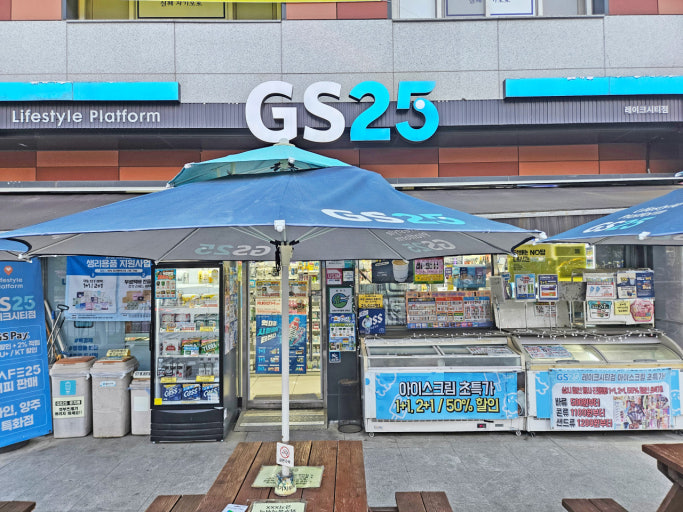
Korean convenience stores — CU, GS25, 7-Eleven, Emart24 — are not like convenience stores anywhere else on Earth. That sounds like an exaggeration. It isn’t. The food is genuinely good, the variety is absurd in the best possible way, and the entire culture around eating in one has its own quiet, fluorescent-lit charm that takes about 48 hours in Korea to become completely addicted to.
Here’s what you actually need to know before you walk through those sliding doors.
The Ramyeon Counter Is Not Optional
Every Korean convenience store worth its name has a hot water dispenser and a microwave near the back. This is where the magic happens.
Cup ramyeon — instant noodle cups — lines the shelves in a variety that will briefly overwhelm you. Spicy, mild, seafood, cheese, black bean, kimchi, and at least three versions that involve a flavor combination you’d never have thought to attempt. The prices sit somewhere between 1,000 and 2,000 won, which at current rates is roughly one to two US dollars.
You peel the lid halfway back, fill it to the line with hot water, close it, and wait three minutes. That’s it. That’s the whole process.
What happens in those three minutes is more than the sum of its parts. The noodles soften. The broth develops. The whole thing fills the air with a smell that, in the middle of a cold Korean night, is genuinely difficult to argue with. You eat it standing up, or perched on one of the small stools near the window, and it is — without irony, without qualification — one of the better meals you’ll have.
The Shin Ramyeon cup is the classic. Buldak (fire chicken) is for people who want to feel something. The cheese corn ramyeon is for people who want to feel something else entirely.
Triangle Kimbap: Small, Perfect, Essential
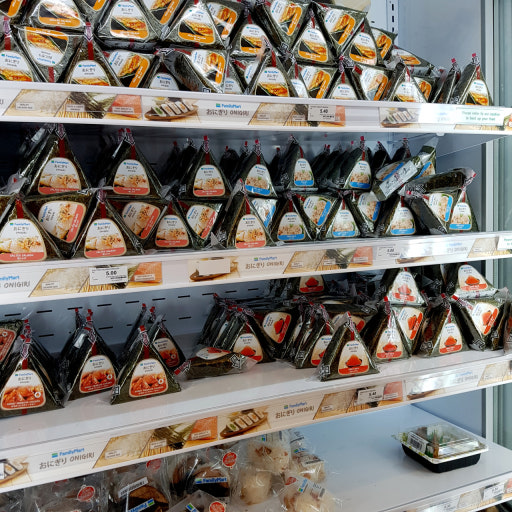
If ramyeon is the heart of the convenience store experience, triangle kimbap — called samgak kimbap (삼각김밥) — is the soul.
These are triangles of rice wrapped in seaweed, with a filling in the center. Tuna mayo. Spicy pork. Kimchi and spam. Bulgogi beef. Salmon. Cheese and ham. The fillings rotate seasonally, and the convenience stores compete with each other over who can release the most unexpected combination. (A cream cheese and shrimp version once existed. It was not bad.)
The packaging is a small feat of engineering. There’s a numbered pull-tab system — 1, 2, 3 — that peels the plastic away in sections without tearing the seaweed or collapsing the rice. First-timers always do it wrong. Pull tab 1 first, then 2, then 3. In that order. Non-negotiable.
They cost around 1,200 to 1,500 won each. One is a snack. Two is a meal. Three means you’ve given up pretending you’re not fully invested in this.
Hot Foods That Will Genuinely Surprise You
The hot case near the register — the one with the rotating shelf under a heat lamp — is where most tourists walk past without stopping. This is a mistake.
Korean convenience stores rotate their hot food selection constantly, but a few things tend to be permanent fixtures. Steamed fish cake skewers (odeng) sitting in hot broth. These are a staple of Korean street food culture, and the fact that you can get them at 3am in a convenience store for a few hundred won is one of the small, specific joys of being in Korea.
Hotteok — sweet pancakes filled with brown sugar, cinnamon, and sometimes nuts — show up at certain chains, certain seasons. If you see them, buy one immediately. No deliberation.
Fried chicken pieces, corn dogs, and something called a soondae hot dog that involves blood sausage wrapped in batter — the hot case is adventurous if you let it be. Point at things. Try them. The worst outcome is a 1,500 won lesson learned.
Drinks: The Section That Takes Longest
Korean convenience store drinks are their own rabbit hole, and you should budget time for them.
Beyond the expected sodas and water, you’ll find banana milk in the little rounded bottle that looks like it was designed for a child but tastes like it was designed for comfort. Barista-style canned coffees that are legitimately better than what you’d get from a vending machine anywhere else. Sikhye — a traditional sweet rice drink, cold and slightly fizzy, pale gold in the bottle — that tastes like dessert and goes with everything.
There’s a wall of juice, tea, and sports drinks. There are vitamin drinks in tiny glass bottles that you’re supposed to take as a shot. There are flavored soju and beer combinations sold ice-cold. There are seasonal drinks that appear for two months and disappear forever, which gives the drink section a slight feeling of tension every time you visit.
Get the banana milk. That’s non-negotiable advice.
Street Snacks and Shelf Finds Worth Knowing
The snack aisle in a Korean convenience store is longer than it has any right to be.
Honey butter chips — the flavor that sparked a nationwide shortage when they first launched in 2014 — are now widely available and just as addictive as their reputation suggests. Seaweed snacks, thin and salty and consumed by the bagful. Shrimp crackers in sizes that range from personal to irresponsible. Choco Pie, the original Korean chocolate-marshmallow sandwich that has been exported across Asia for decades.
Then there are the things exclusive to convenience stores. Certain chains release private-label items in collaboration with Korean food brands — limited-edition flavors, crossover snack packs, snacks tied to K-drama promotions. Some of it is gimmicky. Some of it is extraordinary. You won’t know which until you try.
The Korean convenience store snack aisle rewards curiosity and punishes nothing except a perhaps excessive loyalty to food you already know you like.
The Culture of Eating There
This is the part that takes non-Korean visitors the longest to understand, and once they do, they never quite get over it.
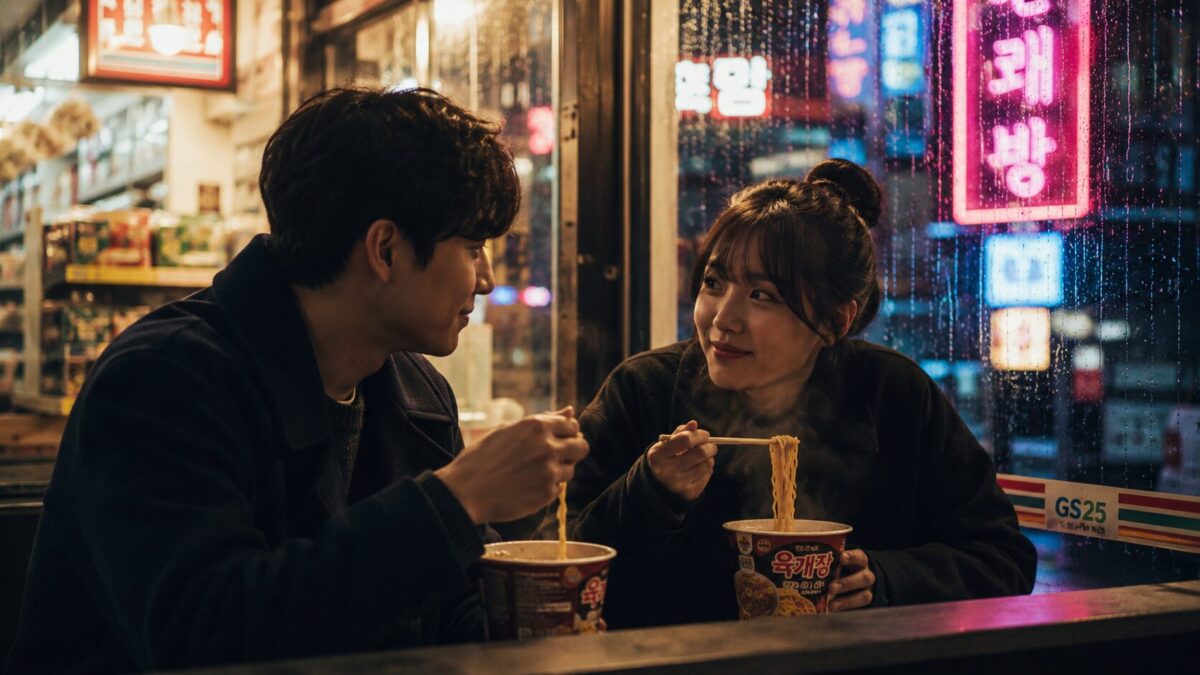
Eating inside a convenience store in Korea is completely normal. Not just tolerated — normal. There are seats specifically for it. The window counters, the stools, the occasional small table set up outside under the awning with a space heater pointed at it in winter. People eat full meals there. Students eat lunch there. Workers eat dinner there. Couples eat ramyeon together at midnight there like it’s a perfectly reasonable date, because in Korea, it is.
There’s a phrase Koreans use — 편의점 데이트 (pyeonuijeom deiteu), literally “convenience store date” — that has become its own cultural shorthand for a kind of low-pressure, late-night intimacy. You’re not going anywhere fancy. You’re going to get ramyeon from the hot water dispenser and sit by the window and talk until it’s too late to catch the last train.
That sounds small. In practice, it’s one of the most Korean things you can do.
A Few Practical Notes Before You Go
Prices are marked and non-negotiable. Tax is included. Most convenience stores are open 24 hours — in fact, the Korean term for convenience store, pyeonuijeom (편의점), translates roughly to “convenient store,” and the 24-hour aspect is so standard it barely gets mentioned.
Payment by card is universally accepted. Some locations have self-checkout. Staff are efficient rather than chatty — don’t read coldness into it, it’s just rhythm.
And the apps. Both CU and GS25 have membership apps that give you points, discounts, and access to deals that regular customers use constantly. If you’re staying in Korea for more than a few days, downloading one is worth the three minutes it takes.
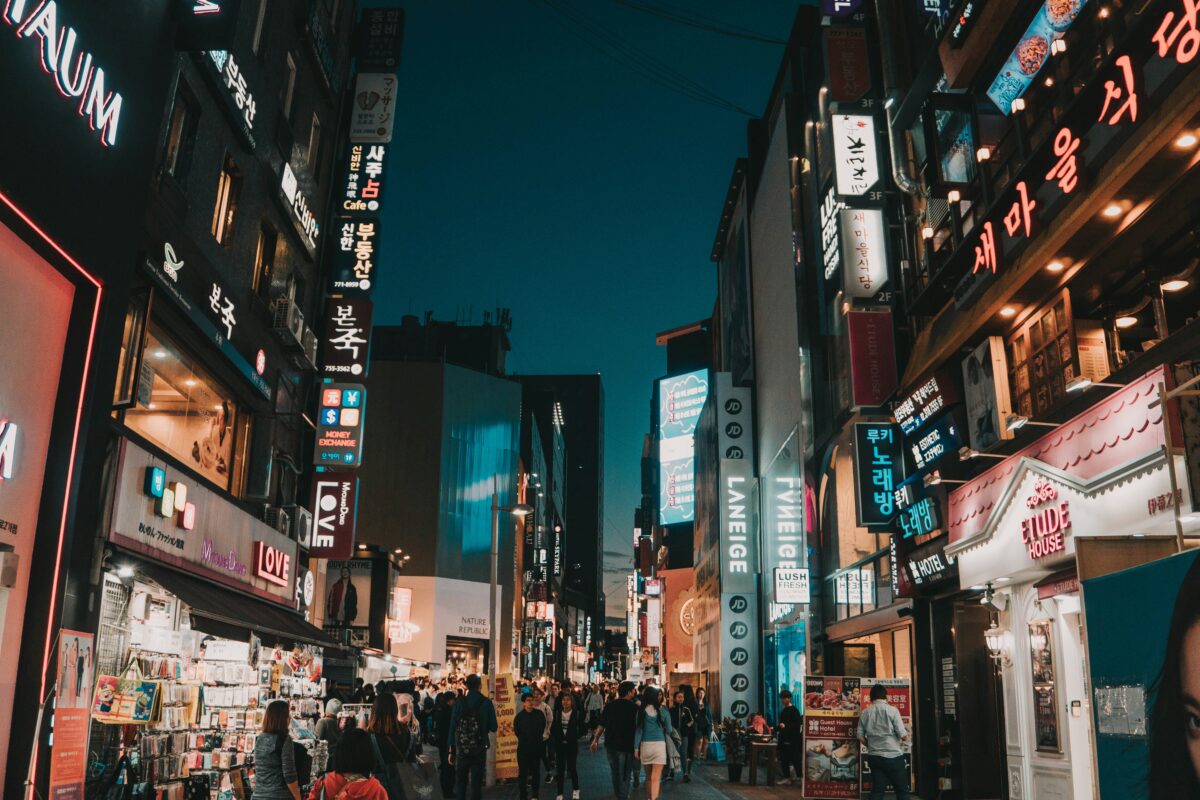
Korean convenience stores are everywhere. In Seoul, you’ll rarely walk more than a few minutes without passing one, sometimes two across the street from each other. They are woven into the daily fabric of the city in a way that makes them feel less like shops and more like infrastructure.
Go in. Take your time. Get the ramyeon. Get the triangle kimbap. Stand at the window with your banana milk and watch the street.
You’ll be back tomorrow. Everyone always is.