K-pop Idol Training System: The Brutal Road to Stardom
The Machine Behind the Magic: How K-pop’s Idol Training System Actually Works
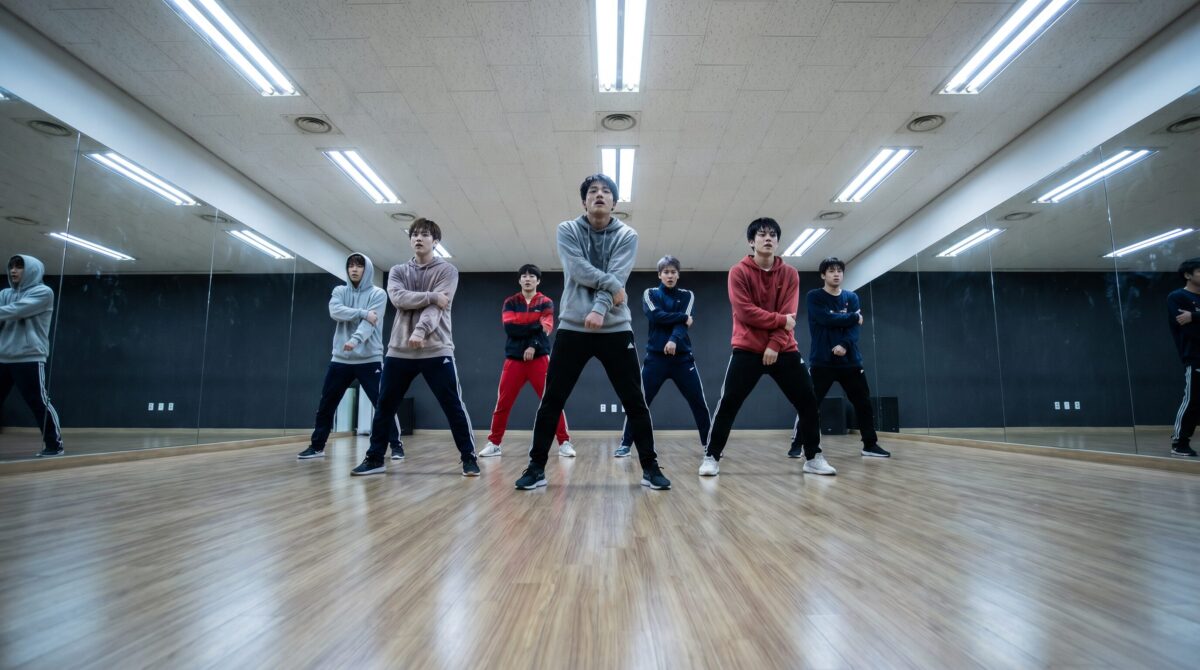
Somewhere in Seoul right now, a fifteen-year-old is practicing the same eight-count dance sequence for the sixth hour in a row.
They woke up before seven. They’ll be in the practice room until ten at night, maybe later. They haven’t debuted yet. They might not debut for another three years. They might never debut at all.
This is not unusual. This is Tuesday.
The K-pop industry has produced some of the most polished, coordinated, visually precise performers on the planet. Groups whose synchronization borders on unsettling. Vocalists who hit runs in three-part harmony on live television without flinching. Performers who can dance for two hours straight and still finish with a smile that reaches their eyes. None of that is accidental, and very little of it is natural talent alone.
Behind every idol on a stadium stage is a system — methodical, demanding, and unlike anything the Western music industry has ever built.
How It Starts: The Audition
The pipeline begins earlier than most people realize.
Major Korean entertainment companies — SM Entertainment, HYBE, JYP, YG, and a growing list of mid-tier labels — hold open auditions throughout the year, both in Korea and internationally. Some of the biggest names in K-pop were scouted on the street as children. Others submitted video auditions at thirteen. Others were pulled from talent competitions, school performances, or simply noticed by a scout at the right moment in the wrong direction.
The audition process evaluates singing, dancing, physical appearance, and something harder to define — presence, or star quality — that judges describe in different ways but seem to agree on in practice. You don’t need to be able to do everything perfectly. You need to demonstrate enough raw material that the company believes it can build something from you.
If you pass, you become a trainee. And the real work begins.
Trainee Life: What Nobody Tells You
Being a trainee at a major K-pop company means entering a structured system that covers nearly every aspect of your daily life.
The training itself is comprehensive far beyond singing and dancing. Vocal lessons. Choreography. Foreign language study — English and Japanese are standard, Mandarin increasingly common. Acting classes. Etiquette and media training. Some companies include physical conditioning programs. Others regulate diet formally. The training day runs long, typically stacked across morning academic studies for younger trainees, afternoon skill work, and evening practice sessions that can extend well past midnight.
Trainees are evaluated regularly — monthly or quarterly depending on the company — and the results of those evaluations determine everything. Progress. Continued enrollment. The possibility of being placed in a debut lineup. And for those who fall behind or whose development the company deems insufficient, the evaluation is also the exit door.
Most trainees don’t make it. That’s not speculation — it’s the statistical reality of a system designed to produce a very small number of exceptional performers from a very large number of hopefuls. SM Entertainment has reportedly trained hundreds of trainees for every group that eventually debuted. The ratio at most companies sits somewhere between quietly discouraging and genuinely brutal.
The contracts trainees sign are exclusive, long-term, and bind them to the company through debut and well beyond. Former trainees have spoken about the psychological weight of those evaluations — the anxiety of not knowing whether the next one would be the last, the complicated grief of being cut after years of investment, the particular loneliness of a life built entirely around a goal that may not arrive.

The Debt System Nobody Likes to Talk About
Training costs money. A lot of it.
Vocal coaches, choreographers, language tutors, practice facilities, housing for trainees from outside Seoul, food — the company pays for all of it during the training period, and the trainee doesn’t pay upfront. What they sign instead is a contract that recoups those training costs from future earnings once they debut.
This means a group that debuts after years of training can begin their career already owing the company a significant sum — in some documented cases, the equivalent of hundreds of thousands of dollars per member. The money owed comes out of revenue before the artists see any of it. Royalties, performance fees, merchandise income — all flow through the company first.
The system has been called exploitative by critics and former trainees alike. It has also been defended by companies as a necessary structure for an industry where the majority of investments never recoup. The legal landscape around idol contracts has shifted noticeably since the early 2000s, when contracts were largely unregulated and stories of twelve or fifteen year exclusive terms were not uncommon. The Korean Fair Trade Commission has intervened multiple times to set limits on contract length and conditions.
The situation has improved. Whether it has improved enough is a conversation the Korean entertainment industry continues to have, loudly and often publicly.
What Debuts Actually Look Like
A K-pop debut is not a single moment. It is the culmination of a rollout — sometimes months long — that the company architects with the precision of a product launch. Because that is, in many ways, what it is.
Pre-debut content builds anticipation: teaser images, video clips, profile reveals, performance previews. The fandom — carefully cultivated through fan club infrastructure, fan meetings, and social media — is primed before the first track drops. By the time a new group releases their debut single, a dedicated audience has already formed around them.
The debut album, the debut music video, the debut performance on one of Korea’s major music shows — Inkigayo, Music Bank, M Countdown — these are the formal moments. They are filmed, choreographed, costumed, and staged with a level of production that most Western artists don’t see until they are three or four albums into a successful career.
For the performers, the debut is the finish line they’ve been running toward for years. It is also, immediately, the starting line for something harder.
After Debut: The Pressure Doesn’t Leave
The training doesn’t stop when a group debuts. If anything, the standards tighten.
Promotion cycles are relentless. A new album every few months. Music show appearances multiple times per week. Fan sign events on weekends. International tours. Reality show content. Brand endorsement schedules. All of it running simultaneously, with almost no designated recovery time built into the structure.
Sleep deprivation in the early years of an idol’s career has been discussed so openly by so many artists that it has stopped feeling like a scandal and started feeling like a job description. Groups have spoken about practicing choreography in parking garages because the studio was booked. About eating in the van between schedules. About going back to the practice room after midnight performances to review footage and correct mistakes before the next day’s shoot.
The industry has started to respond — mental health is discussed more openly now than it was a decade ago, and some companies have made structural changes to schedules and rest requirements following public incidents involving artist burnout. How deep those changes run, versus how much remains unchanged beneath a more careful public surface, is hard to know from the outside.
Why People Still Choose It
With all of that on the table, the question asks itself: why do hundreds of thousands of young people still audition every year?
Part of the answer is straightforward. K-pop stardom, when it arrives, is enormous. Not just in Korea — globally. The cultural footprint of the biggest groups is genuinely difficult to compare to anything outside of American pop at its peak. The financial rewards for successful idols are real and life-changing. The creative output, at its best, is legitimately impressive — music, performance art, and visual storytelling combined at a level of polish that has built a worldwide fanbase not through accident but through sustained, disciplined craft.
Part of the answer is also about belonging. The trainee community, for all its pressures, creates bonds between young people who share an extreme experience. Former trainees, even those who never debuted, frequently describe their training years as formative in ways that go beyond the skills they developed.
And part of it is simply the dream, which has never required logic to be powerful.
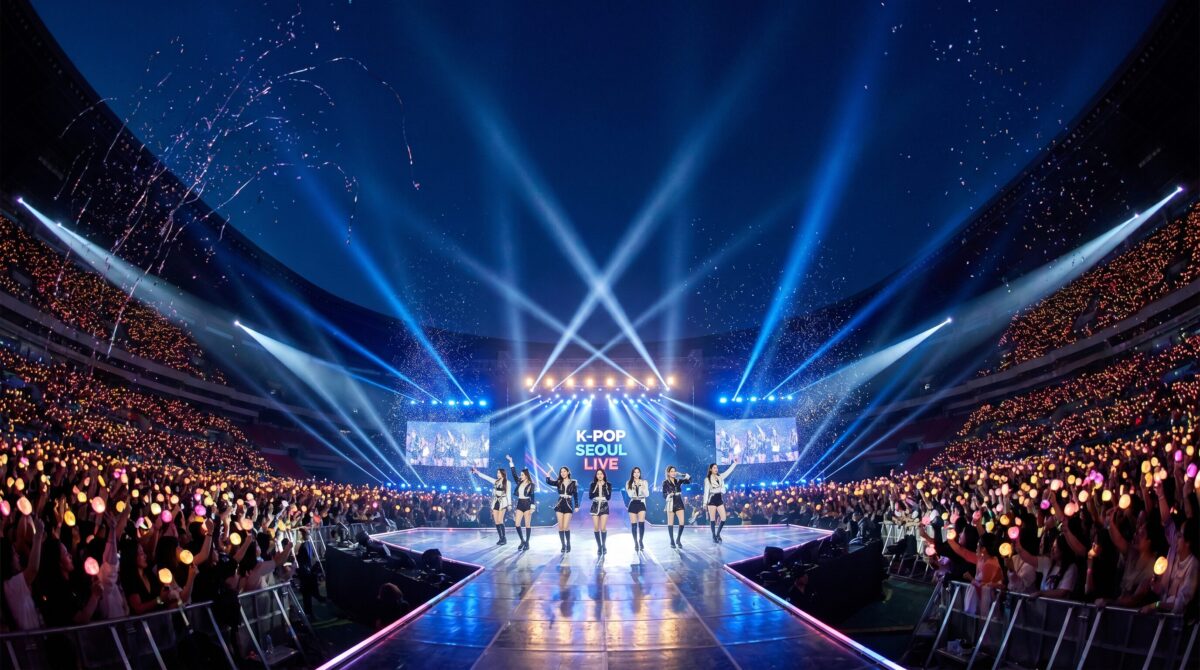
The machine behind K-pop is not pretty up close. It is demanding and unforgiving and built on a foundation of young people betting years of their lives on a result that is never guaranteed.
But the machine also produces something real. Something that fills stadiums and moves people across language and culture and geography in ways that are hard to fully explain and easy to feel.
That tension — between cost and creation, between system and art — is what makes the K-pop industry one of the most fascinating things to come out of Korea in the last thirty years. And it isn’t done yet.