F1963 Busan: Inside the Old Factory That Became One of Korea’s Most Beautiful Cultural Spaces
There is a particular pleasure in discovering that a place you expected to be interesting turns out to be quietly extraordinary.
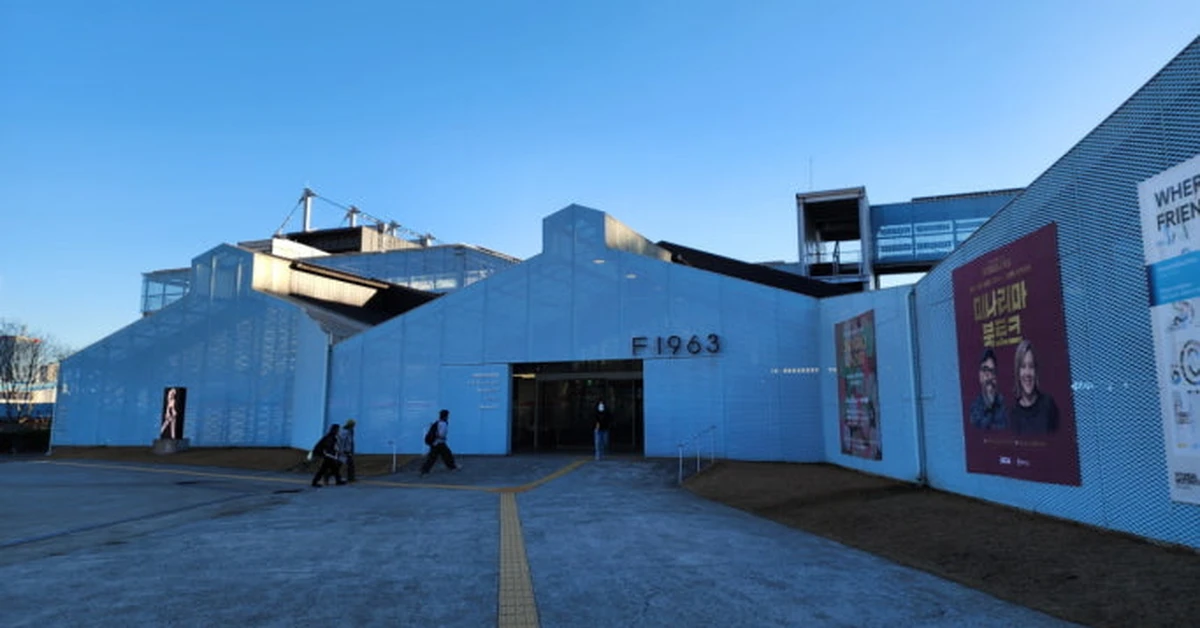
F1963 in Busan’s Suyeong district is that kind of place. From the outside — approached through a residential neighborhood, announced by nothing more dramatic than a parking lot and a modest entrance gate — it doesn’t telegraph what’s inside. And what’s inside is one of the most thoughtfully executed cultural spaces in Korea: a former industrial factory that produced wire ropes for forty-five years, preserved in its essential character, and transformed into an environment where art, books, coffee, food, nature, and old concrete coexist in a way that feels genuinely original rather than designed for a marketing brief.
The name explains itself simply. F stands for Factory. 1963 is the year the Suyeong plant of Korea Iron and Steel — better known by its later name Kiswire — began operations. The factory ran until 2008, producing wire ropes that became, among other things, the main cable of Gwangan Bridge, Busan’s most recognizable landmark. In 2016, the building was opened as a cultural complex for the Busan Biennale, an experiment that succeeded so completely that what began as a temporary transformation became permanent. The space has been operating as a cultural hub ever since, and has established itself as one of the better arguments for why Busan deserves more attention from visitors who tend to stop at the beaches and the famous market and then move on.
What F1963 Actually Is
F1963 is not easy to categorize, which is part of what makes it worth spending several hours in.
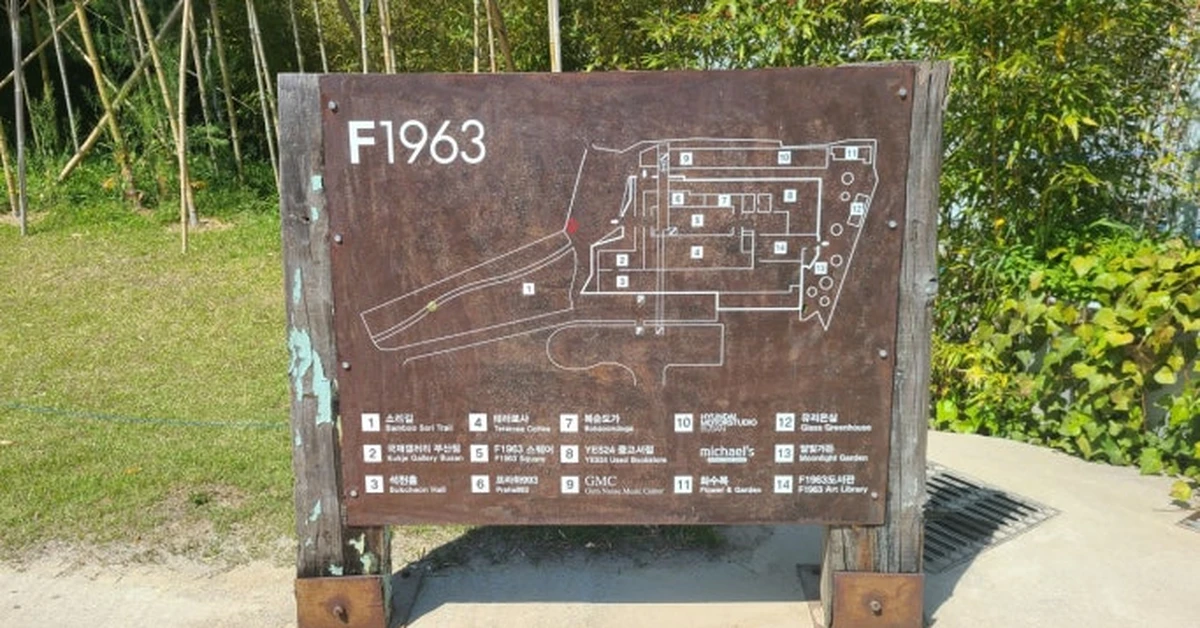
At its most basic, it is a cultural complex: a large repurposed industrial building containing a flagship coffee roastery, a bookstore with attached library, multiple art exhibition spaces, a traditional Korean makgeolli brewery and bar, restaurants, a flower and garden studio, and extensive outdoor areas including a bamboo forest, a moonlight garden, and a greenhouse. But the way these things are assembled — in a space where the original steel framework, exposed concrete, and industrial proportions have been preserved rather than smoothed over — gives F1963 an atmosphere that neither a standard cafe complex nor a conventional art gallery can replicate.
The building itself communicates something important about what it used to be. High ceilings that once accommodated industrial equipment now create the kind of vertical space that makes human occupation feel both small and comfortable. Exposed steel beams carry the patina of decades of industrial use. The transitions between areas happen not through finished corridors but through the natural geography of a building that was designed for function rather than experience — and that functional directness is, paradoxically, what makes wandering through it feel like exploration rather than a choreographed visitor journey.
It is worth arriving without a rigid plan. F1963 rewards the visitor who arrives with time and appetite for slow discovery rather than the one checking off a list.
Terarosa — The Coffee That Made the Space Famous

The branch of Terarosa inside F1963 is, for many visitors, the primary reason for the visit. That is understandable. Terarosa is one of Korea’s most respected specialty coffee roasters, with its original location in Gangneung on the east coast having established a national reputation for quality and seriousness that few Korean coffee brands match. The F1963 branch takes that reputation and places it inside a space that is, visually and atmospherically, exceptional.
The cafe occupies a section of the old factory floor where the original industrial structure has been preserved in full. High ceilings, exposed steel and concrete, large windows that let in the particular quality of light that old industrial buildings tend to collect — these are the conditions in which Terarosa’s carefully sourced and roasted coffees are served. The result is a combination of coffee quality and physical setting that produces the specific kind of contentment that good cafes in interesting buildings reliably deliver.

The menu follows Terarosa’s characteristic approach: a serious espresso program using beans sourced from specific farms, single-origin pour-overs prepared with attention to variables that many cafes don’t bother tracking, and a selection of food items that complement rather than compete with the coffee. The signature lemonade has developed a following of its own, and the cakes served alongside the coffee are the kind made with the same care as the drinks rather than as an afterthought.
On weekdays, the space fills gradually from mid-morning and reaches comfortable capacity through the afternoon. On weekends, arriving before 11am is the practical approach to securing seating without a significant wait. The bar seats, which face the baristas and the roasting equipment, are the most engaging spots for anyone interested in watching the work that goes into what arrives in the cup.
The Bookstore and Library — Mangmi
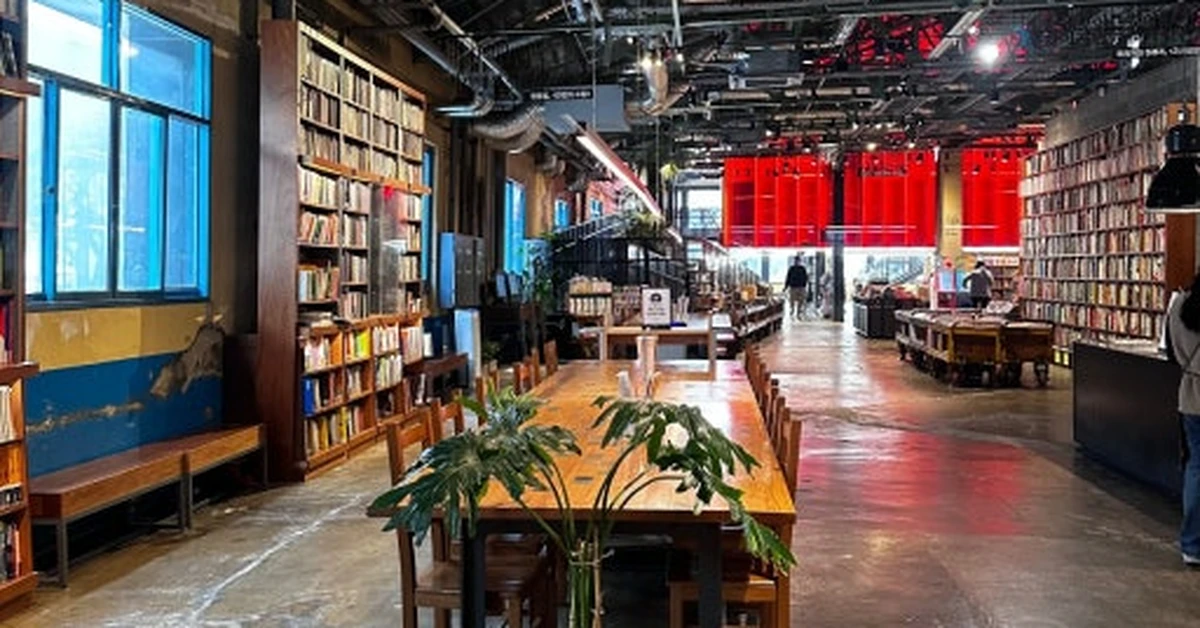
Books and industrial spaces have an affinity that is not immediately obvious but becomes clear once you’re inside it. The high shelves, the specific quality of quiet, the way paper and old concrete age in parallel — these things belong together in a way that the designers of F1963’s library section seem to have understood intuitively.
The bookstore and library occupying the space known as Mangmi within F1963 is one of the most thoughtfully assembled book spaces in Busan. The collection tilts heavily toward art, design, architecture, and visual culture — categories that feel appropriate given the building’s history and current use — but includes literature and general nonfiction in sufficient depth that browsing takes longer than expected.
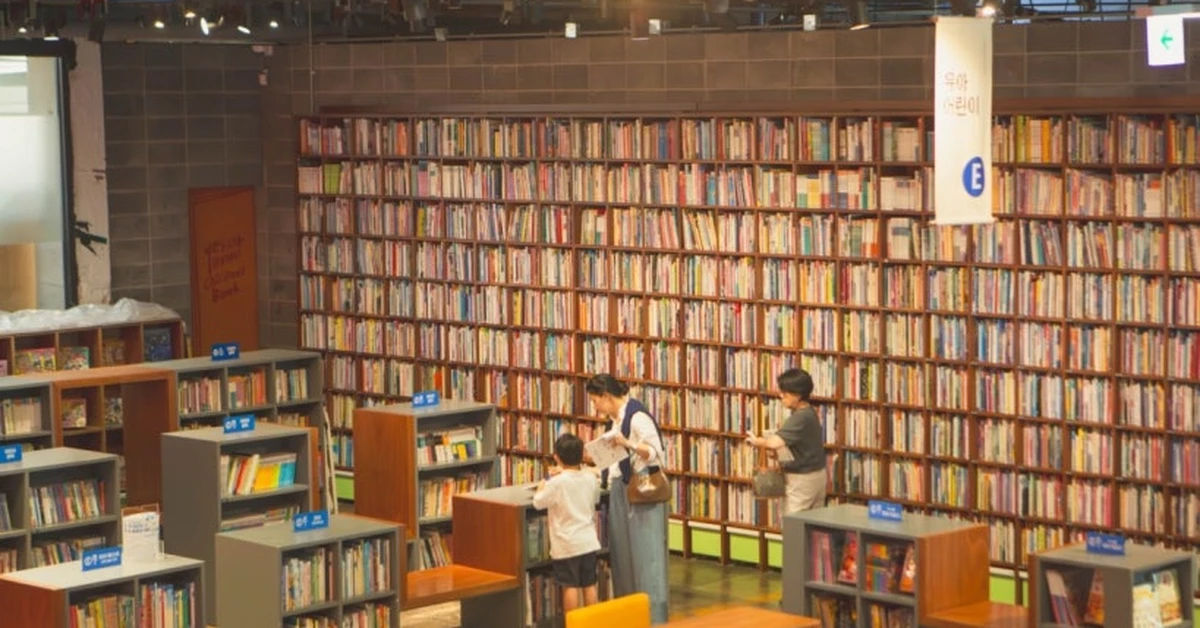
The library component allows books to be read within the space without purchase, which transforms the area into a place where people genuinely settle in for extended periods. The combination of the Terarosa coffee a few steps away and the availability of interesting books to read while drinking it has made the F1963 bookstore one of those places where an intended thirty-minute visit routinely becomes two hours.
For visitors interested in Korean contemporary art, architecture, and design, the selection available at Mangmi is likely the best concentrated collection available anywhere in Busan, including titles and publications that don’t appear in mainstream bookstores.
The Exhibition Spaces — Seokcheon Hall and Beyond

F1963 hosts rotating contemporary art and design exhibitions throughout the year in its dedicated gallery spaces, the most significant of which is Seokcheon Hall. The exhibition program leans toward contemporary Korean and international artists working in installation, sculpture, and new media — forms that benefit from the industrial scale of the spaces and that engage productively with the building’s history.
Previous exhibitions have explored topics including urban architecture, the relationship between technology and nature, the history of Korean industrialization, and various experimental approaches to material and form. The quality of the programming has been consistently strong enough that checking what’s showing before your visit is worthwhile — the difference between an ordinary visit to F1963 and an exceptional one can hinge on whether you happen to arrive during a particularly strong exhibition.
Entry to the exhibitions is generally charged separately from the complex itself, with prices varying depending on the scale of the show. The main complex grounds are free to enter, making it possible to visit the gardens, bookstore, and outdoor areas without an exhibition ticket and supplement with a gallery ticket if the current show warrants it.
The gallery spaces themselves are worth attention independent of what’s being shown. Seokcheon Hall in particular — with its preserved industrial shell and the specific quality of light that enters through its clerestory windows at certain times of day — is one of those rooms that improves everything exhibited within it.
Boksoondoga — Makgeolli in the Factory
Boksoondoga is a traditional Korean makgeolli brewery and bar with a national reputation that predates its presence at F1963. The Busan location inside the complex brings together the specific pleasures of traditional fermented rice wine with the industrial atmosphere in a combination that works surprisingly well.
Makgeolli — Korea’s milky, slightly sweet, lightly carbonated traditional rice wine — is one of those beverages that tastes best in contexts that match its character: unpretentious, convivial, and preferably accompanied by Korean snacks and the company of people who aren’t in a hurry. The F1963 location provides those conditions in a space that also happens to be genuinely beautiful.
For international visitors unfamiliar with makgeolli, Boksoondoga is an excellent introduction. The staff are accustomed to explaining the product to first-time visitors, the varieties available cover a range of sweetness and complexity that illustrates the breadth of the category, and the food pairings — including pajeon and various traditional snacks — give the experience a completeness that a standalone beverage order wouldn’t provide.
The bar becomes more animated in the early evening as the day-visit crowds give way to people settling in for the night, and the shift in atmosphere — from cultural complex to something closer to a neighborhood gathering place — is one of F1963’s more endearing qualities.
The Outdoor Spaces — Bamboo Forest, Moonlight Garden, and Greenhouse
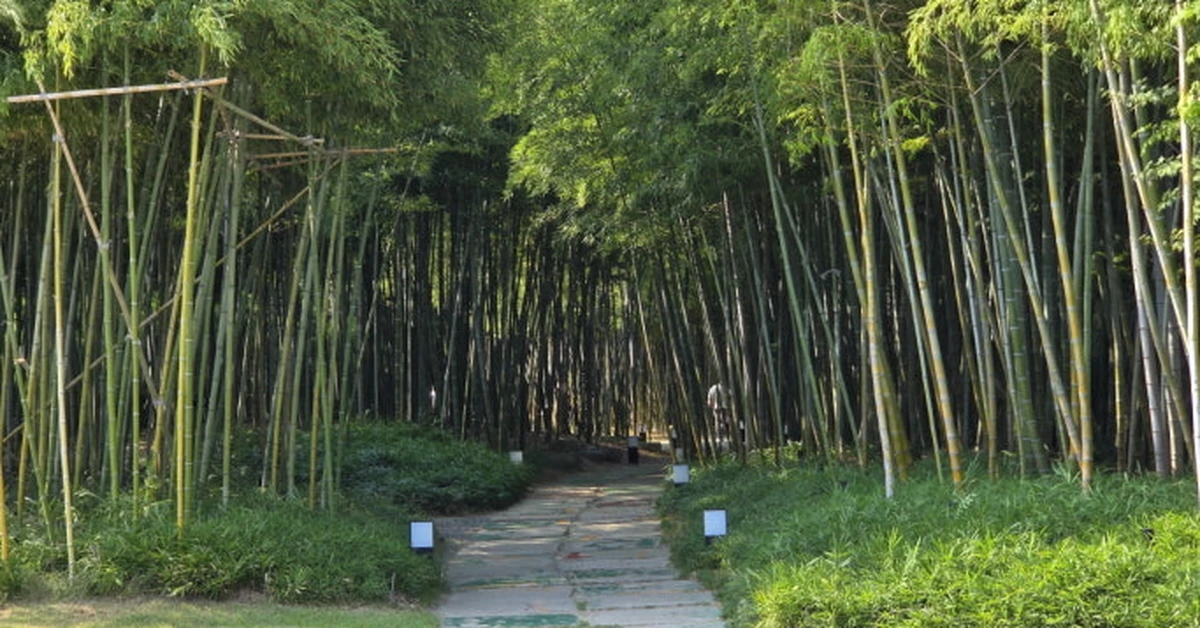
The grounds of F1963 extend well beyond the industrial building itself, and the outdoor areas are among the complex’s most rewarding elements for visitors who spend time in them rather than moving straight from building to building.
The bamboo forest, planted in a strip alongside the main structure, creates a corridor of green that is startling in proportion to the surrounding urban environment. Bamboo grows fast and dense, and the stand at F1963 has reached a scale where walking through it produces the specific combination of visual enclosure and acoustic softening that bamboo forests reliably deliver. Against the backdrop of old concrete and steel, the contrast between industrial material and living plant is one of the more striking visual juxtapositions available anywhere in Busan.
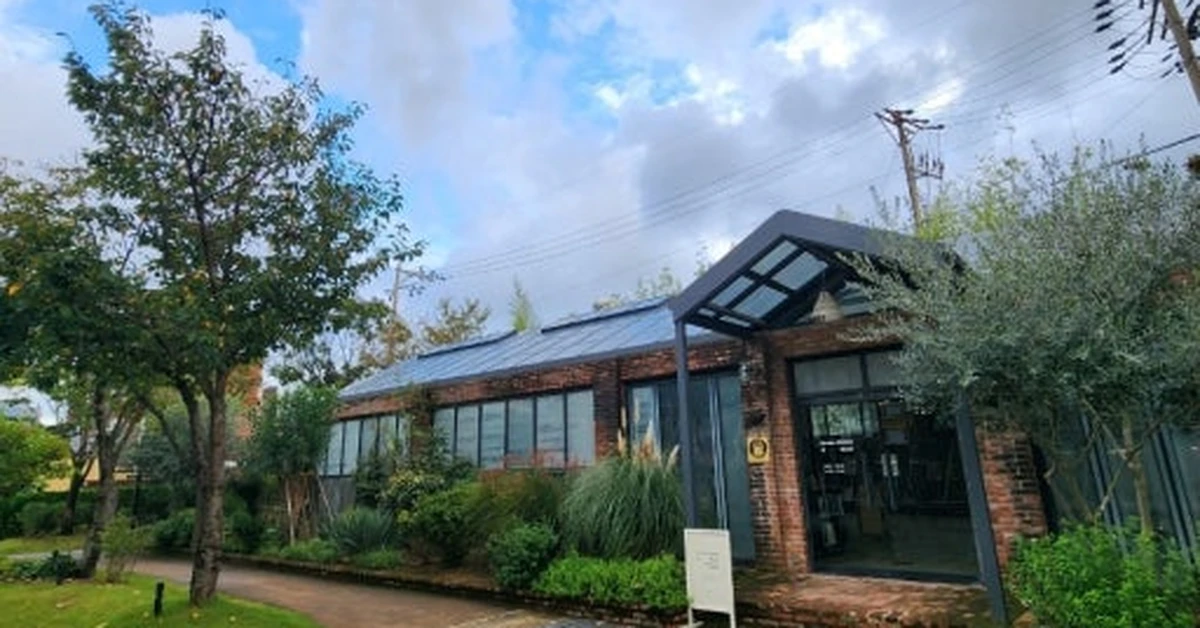
The Moonlight Garden — dalbit jeongwon in Korean — is a more formally designed outdoor space that comes into its own in the late afternoon and evening, when the quality of light changes and the garden’s more composed elements become legible. The name is not merely decorative: the garden is designed with the experience of moonlit evenings in mind, and visiting as darkness falls, when the complex’s lighting activates and the transition from daylit art space to atmospheric evening environment takes place, is a different and worthwhile experience from the standard daytime visit.
The greenhouse functions as both an event space and a working plant environment. It connects directly to the Hwasumok Flower and Garden studio, which offers occasional classes in flower arrangement and garden culture — an option worth exploring for visitors with particular interest in Korean aesthetic traditions around nature.
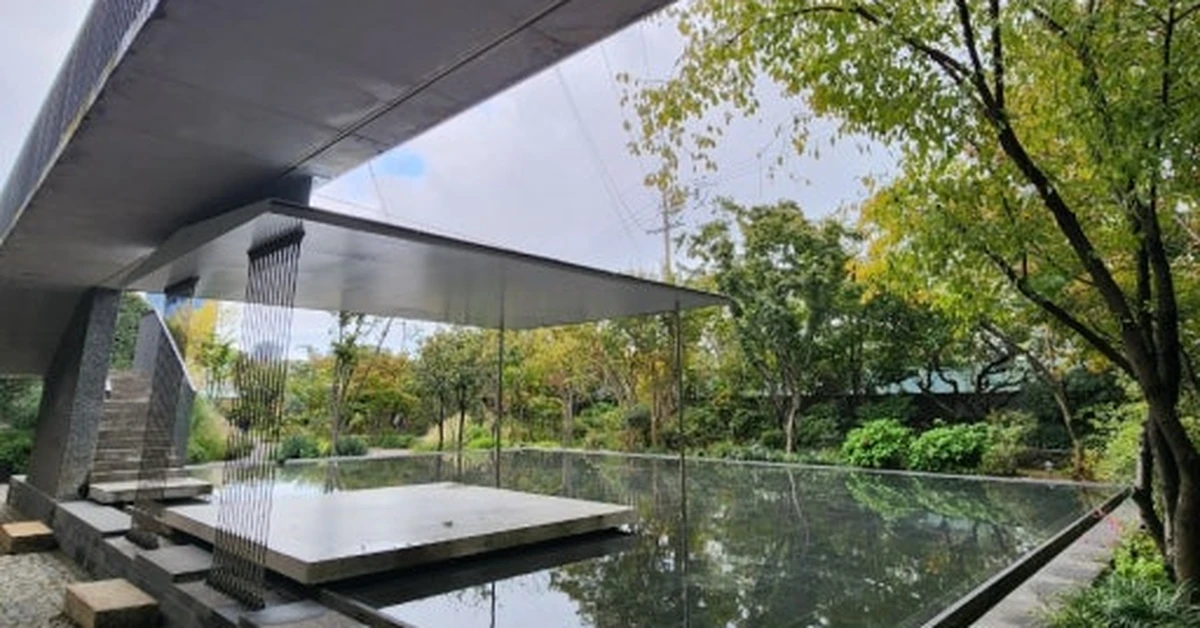
In autumn, the gardens become especially beautiful as the deciduous trees within the complex grounds change color against the preserved industrial structures. The combination of rust and grey steel, concrete, and autumn foliage is visually arresting in a way that photographs well but exceeds photographs in person.
A Practical Guide to Visiting F1963
Getting there
F1963 is located in Mangmi-dong, Suyeong-gu, Busan, at 20 Gurak-ro 123beon-gil. The complex is not directly on a subway line, which makes it slightly less convenient than Busan’s most accessible attractions. The practical options from central Busan are a taxi — approximately 15 to 20 minutes from Seomyeon or Haeundae and inexpensive by taxi standards — or a combination of subway and bus. From Suyeong Station on Lines 2 and 3, bus connections to the complex take around 10 minutes. The complex has its own parking, which fills quickly on weekends but is manageable on weekdays.
The address in Korean for taxi or navigation apps: 부산 수영구 망미동 475-1
Opening hours
The complex is open daily from 9am to 9pm. Individual spaces within the complex — exhibition halls, specific restaurants and cafes — may have different hours, and it is worth checking the current exhibition schedule before visiting to ensure the gallery spaces you want to see are open.
What to allow time for
A meaningful visit to F1963 takes a minimum of two to three hours for someone who wants to cover the main areas at a comfortable pace. Visitors who plan to sit with coffee, spend time in the bookstore, take a walk through the outdoor spaces, and visit an ongoing exhibition should allow three to four hours. People who find themselves settling into the space — which is easy to do — regularly stay longer.
Best times to visit
Weekday mornings offer the most relaxed atmosphere, with the bookstore and coffee spaces comfortably uncrowded and the outdoor areas peaceful enough to move through without the weekend crowd density. Autumn is widely considered the best season for the outdoor spaces, when the combination of foliage color and industrial architecture is at its peak. Late afternoon visits capture the best light quality in both the indoor and outdoor spaces.
Weekend afternoons can be busy, particularly near the Terarosa counter and in the areas around popular exhibition installations. If visiting on a weekend, arriving before noon avoids the peak crowd period.
The Bigger Context — What F1963 Means for Busan
F1963 sits within a broader story about how Busan is reimagining its relationship with its industrial past. The city’s port and manufacturing heritage defined it for much of the twentieth century, and as those industries have shifted or declined, spaces that once served industrial functions have become available for creative repurposing.
The transformation of the Kiswire factory into F1963 is the most successful example of this pattern in Busan, but it is not the only one. The warehouse districts near the port, the former railway facilities in various parts of the city, and industrial sites in Yeongdo and elsewhere have all attracted interest from artists, architects, and cultural institutions looking for spaces that carry the weight of the city’s history without being merely nostalgic about it.
What makes F1963 work — and what distinguishes it from the many industrial-to-cultural conversions that feel forced or superficial — is the specificity of the preservation. The decision to maintain the original structure rather than installing a contemporary building within the factory shell means that the industrial history is present throughout every interaction with the space. The coffee you drink is in the same room where wire was made. The books you read are shelved against the same walls that once held industrial equipment. That continuity between past and present use is not a design choice overlaid on an otherwise neutral space. It is the space.
Understanding this makes the visit more rewarding. F1963 is not a place that has been converted away from what it was. It is a place that has grown into a new function without losing its old self — which is, in miniature, the story of how the best cities in the world evolve.
Final Thoughts
Busan has more obvious attractions that appear higher in most travel itineraries — the beaches, the seafood market, the temple above the sea, the cliffside culture villages. F1963 is the kind of place that doesn’t compete with those for top billing, and doesn’t need to. It occupies a different register: quieter, more contemplative, more interested in the accumulation of small pleasures over time than in the dramatic single impression.
The visitors who get the most from F1963 are those who arrive with a few hours and no particular agenda, who find a seat at the Terarosa bar and watch coffee being made, who wander into the bookstore intending to stay five minutes and leave an hour later, who walk through the bamboo and feel, for a moment, what it means to be in a city that has figured out how to carry its history lightly.
That is not a small thing. And it is worth the fifteen minutes from Haeundae that most people, unfortunately, don’t take.
Have you visited F1963 on a trip to Busan? What did you find there — the coffee, the books, the garden, or something else entirely? Share it in the comments.

