Korea’s Mukbang Culture: Why the World Can’t Stop Watching Koreans Eat
Picture this: it’s late at night, you’re sitting alone in your apartment, and instead of eating in silence you open your phone and tune into a live stream of someone consuming an enormous bowl of ramen with the kind of focused joy that makes you wish you were there. You watch, you feel less alone, and somewhere in the back of your mind you start wondering where the nearest ramen place is.
That is mukbang. And it is one of the most unexpectedly influential cultural exports South Korea has ever produced.
What started as a niche late-night internet stream on a Korean platform around 2009 has grown into a global phenomenon that has reshaped how food is marketed, how people relate to eating alone, how certain dishes went from regional Korean staples to worldwide cravings, and how a generation of content creators built careers out of something as fundamentally human as sitting down for a meal. In 2026, mukbang is no longer a curiosity. It is a genre, an industry, and a lens through which millions of people around the world engage with Korean food culture every single day.
This is the story of how that happened, what it actually means, and why it matters more than it first appears to.
What Mukbang Actually Is
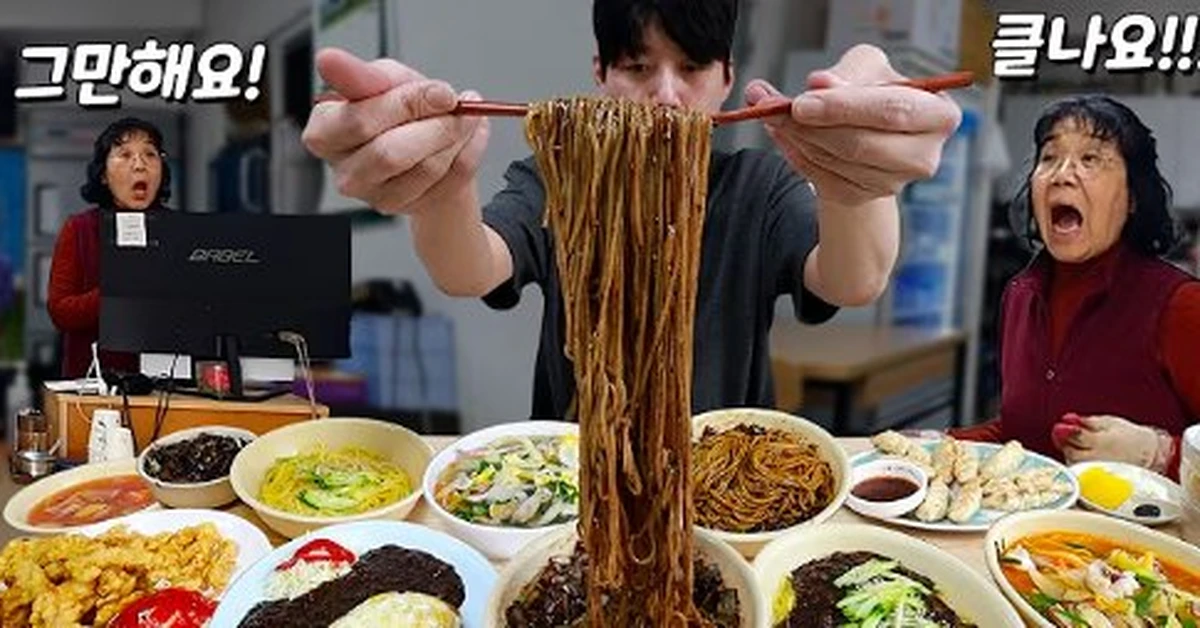
The word itself is a combination of two Korean words: 먹는 (meongneun, meaning “eating”) and 방송 (bangsong, meaning “broadcast”). Put them together and you get 먹방 — mukbang — an eating broadcast. The concept is exactly what it sounds like: a person films or streams themselves eating, usually in large amounts, while interacting with an audience.
That description makes it sound simple. And in one sense it is — the format could not be more stripped back. No elaborate set, no complex storyline, no special effects. Just a person, a camera, and a lot of food. What makes mukbang interesting is not what it is on the surface but what it became and why.
The format was first introduced on the Korean live streaming service AfreecaTV around 2009. In those early days, the streams were entirely live — a host would set up a camera, lay out an enormous spread of food, and eat in real time while chatting with viewers who typed comments into a live chat window. The interaction was central to the appeal from the beginning. You weren’t just watching someone eat. You were having a meal together, virtually, with a person who talked back.
That distinction matters more than it might seem.
Why It Started — The Social Gap Mukbang Filled
To understand mukbang, you have to understand something about Korean food culture that predates it by centuries.
Eating in Korea is, at its root, a communal act. A traditional Korean meal is not plated individually — dishes are shared from the center of the table, banchan (side dishes) are communal, and the meal is understood as something that happens between people rather than something that happens to a single person. The Confucian values that shaped Korean social norms for centuries gave food a specific role in maintaining family bonds, community ties, and social hierarchy. You ate together because eating together was how relationships were expressed and reinforced.
As a result of this deeply social understanding of mealtimes, eating alone — especially at dinner — carried a particular kind of social weight in Korea for a long time. Going to a restaurant by yourself was not a neutral lifestyle choice. It was a visible signal of isolation, something that happened to people with nobody to share a meal with.
Then came the social shifts of the 2000s. South Korea urbanized rapidly and completely. Young people moved to Seoul and other major cities for work, living in small apartments, often far from family and hometown communities. The same intense work culture that drove Korea’s economic transformation also produced a generation of young adults who regularly found themselves eating alone — late at night, after long days, with nobody across the table.
Mukbang filled that gap in a way that nothing else had. Viewers could prepare their own meal, turn on a broadcast, and feel as though they were eating alongside someone, even if the connection was virtual. The live chat made it more than passive viewing — you could type something and the host might respond, making it feel like actual conversation at a shared table. A community formed around something as ordinary as eating, and that sense of shared company turned out to be exactly what many people were missing.
There is something genuinely touching about this when you sit with it. An entire format was born not from entertainment ambition but from loneliness — the specific, quiet loneliness of eating a bowl of something alone in a city apartment and wishing there was another voice in the room.
From Korea to the World — How Mukbang Went Global
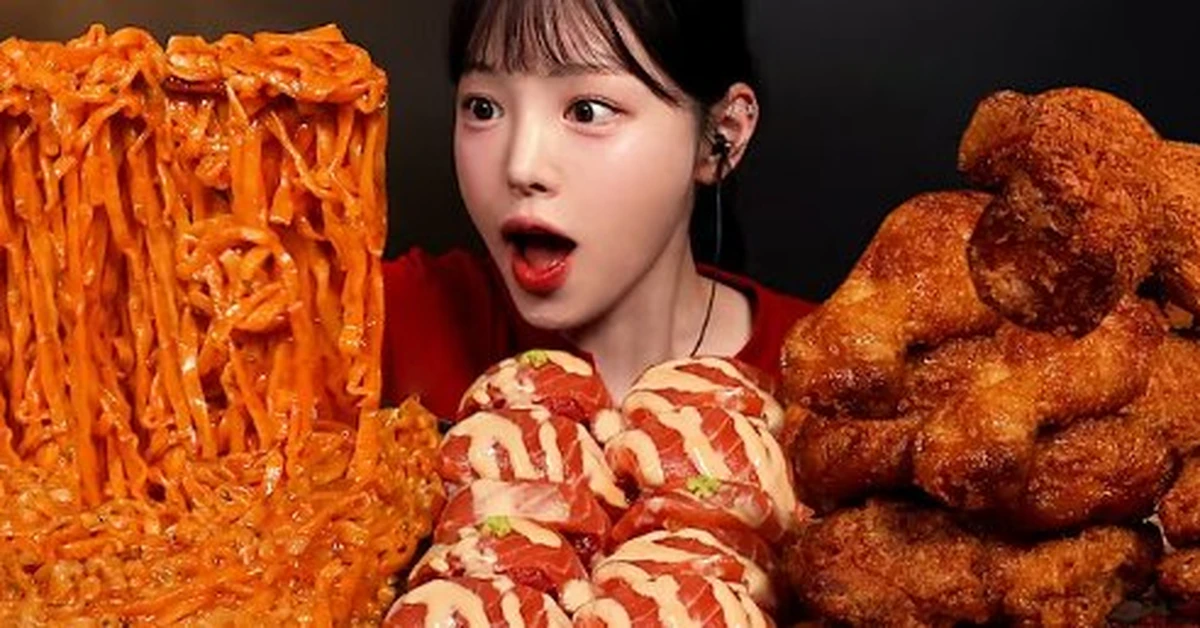
Mukbang remained primarily a Korean phenomenon through most of the early 2010s, growing steadily on AfreecaTV before YouTube gave it the distribution infrastructure it needed to reach international audiences.
The business side evolved quickly. Food brands discovered that when a popular mukbang creator with several million subscribers featured their product in a video, sales would visibly respond within days. The effect was measurable, repeatable, and far more effective than traditional advertising for the target demographics. Companies that understood this early moved quickly, and partnerships between food brands and mukbang creators became a significant part of the Korean food marketing landscape.
The global breakthrough came through several forces arriving at roughly the same time. The K-pop and Korean drama wave of the 2010s had created international audiences with a genuine pre-existing interest in Korean culture, and food was a natural and accessible extension of that curiosity. ASMR — autonomous sensory meridian response, the pleasurable tingling produced by soft sounds like gentle crunching or whispering — overlapped naturally with mukbang’s close-up eating sounds, and ASMR’s growing Western fanbase encountered mukbang content through that crossover.
The Buldak ramen challenge is one of the clearest examples of how mukbang accelerated food trends internationally. Early videos of people attempting the notoriously spicy Buldak noodles spread widely on YouTube, triggering waves of response content across platforms. The genuinely pained and sometimes tearful reactions to extreme heat levels turned what had been a Korean convenience store product into a global shared experience — not through traditional advertising but through the organic energy of challenge-based content. Within a few years, the brand had accumulated tens of millions of related social media posts across multiple platforms, driven almost entirely by user-generated content.
By the mid-2010s, mukbang creators from North America, Europe, Southeast Asia, and beyond were producing eating content in the mukbang format, frequently featuring Korean food, and in doing so introducing Korean cuisine to audiences that had no other direct connection to the country.
The Mukbang Ecosystem in 2026
The format has diversified enormously since the days of a single host sitting in front of a pile of takeout containers and a laptop.
ASMR mukbang — where the focus shifts to the sounds of eating, recorded with particular audio sensitivity and often with minimal conversation — developed into its own distinct subgenre. The genre appeals to global audiences who tune in primarily for the sensory experience: the crunch of fried chicken, the slurp of noodles, the particular soft sound of well-cooked rice. These videos sometimes have little to no verbal commentary but attract tens of millions of views on the strength of their audio quality and food presentation alone.
Cooking-and-eating content occupies another space — videos where the preparation of the meal is as central as the consumption, combining food tutorial energy with mukbang satisfaction. Challenge-based content involves extreme spice levels, unusual food combinations, competitive eating, or reaction videos to other cultures’ cuisines. Each subgenre has its own communities, its own stars, and its own relationship with the food industry.
The “modisumer” trend — where creators and ordinary viewers modify existing products with improvised recipes and share the results online — has become closely woven into mukbang culture. When a viral video combined Buldak ramyeon with traditional miyeokguk seaweed soup, an unusual pairing that worked surprisingly well, convenience store sales of the ramen product rose dramatically within weeks. The creator had not been sponsored. The recipe simply resonated, and the platform amplified it. This is mukbang’s particular power: it creates food trends without the approval of any food brand or media company, and the trends it creates are real.
Top mukbang creators in Korea today have subscriber counts in the tens of millions and influence that extends well beyond their direct viewership. When a creator with ten million subscribers uploads a video, the ripple effects on food sales, restaurant foot traffic, and social conversation can be significant enough to show up in retail data the following week.
How Mukbang Changed Korean Food Culture
The effects on Korean food culture itself have been substantial and in some cases permanent.
Solo dining — once quietly stigmatized in Korean social life — has been normalized in a meaningful way over the course of mukbang’s rise. Restaurants across Korea have responded to changing habits by introducing single-person counter seating, individual portion menus, and dining setups that make eating alone comfortable rather than conspicuous. The physical design of Korean food spaces changed in response to a cultural shift that originated on internet streams. It is not possible to attribute that change entirely to mukbang, but the format was unquestionably part of the story.
Specific foods rose to prominence through mukbang visibility in ways that would have been impossible through traditional marketing. Korean fried chicken’s international rise is partially a mukbang story — the food is visually satisfying, audibly rewarding, and photogenic in a way that performs brilliantly in video format. Tteokbokki’s global profile grew substantially through repeated appearance in eating content. The particular qualities of Korean food — vivid colors, varied textures, the sounds of sauce and crunch — turned out to be almost perfectly suited to the demands of food content creation.
Food television in Korea absorbed some of the logic of mukbang as well. The intimacy of the format, the focus on genuine pleasure and appetite rather than technical instruction, the sense of a close relationship between host and viewer — these qualities filtered into how mainstream Korean food programming approached its subject matter, producing a generation of food television that feels considerably warmer and more personal than what came before.
For international audiences, mukbang has functioned as one of the most effective introductions to Korean cuisine that has ever existed. When a creator works through a spread of Korean BBQ with visible delight, explaining each dish while the grill sizzles and the banchan fills every corner of the table, that is a more effective form of cultural communication than any restaurant review or travel guide. It is food experienced as friendship, offered through a screen, and the emotional register of it translates across language and distance remarkably well.
The Concerns Mukbang Raised

A complete account of mukbang culture has to address the concerns it has generated, because they are genuine and they have not gone away.
Dietitians and health researchers have raised consistent concerns about the promotion of overconsumption and disordered eating patterns. Watching large amounts of food being consumed, particularly in a context designed to make the experience pleasurable and aspirational, creates associations that may influence viewers’ own relationship with eating. Research published in Korea in 2025 found statistically significant associations between mukbang viewership and late-night eating, increased food delivery orders, and dining out behavior — particularly in multi-person households. Whether these behavioral associations constitute a public health concern or simply reflect a lifestyle correlation remains a subject of ongoing discussion.
Food waste is a related concern. Some formats of mukbang — particularly competitive eating content or videos where enormous quantities of food are prepared primarily for visual effect — generate significant food waste, a fact that has attracted criticism in Korea and internationally. China took regulatory action in 2020, implementing restrictions on extreme eating content on the basis of its contribution to food waste, a policy decision that sparked debate about whether similar approaches would be appropriate elsewhere.
The promotion of unhealthy specific foods is another recurring criticism. Mukbang is disproportionately associated with highly processed, high-sodium, and high-calorie foods — instant noodles, fried foods, sugary snacks — partly because these foods perform well in the format and partly because the brands that sell them have been most active in creator partnerships. The result is a content landscape that does not represent the full breadth of Korean food culture, and that may give international audiences an incomplete picture of what Korean eating actually looks like day to day.
These concerns are worth taking seriously. The format that gave millions of lonely late-night apartment dwellers a sense of company at the dinner table is the same format that can push unhealthy eating patterns and model a relationship with food that many nutritionists find troubling. Both things are true simultaneously, and the more honest the conversation about mukbang is, the more useful it becomes.
Why Mukbang Matters Beyond the Food
Mukbang is ultimately about more than food. It is about the particular loneliness of modern urban life and the creative ways people find to address it. It is about the power of shared experience, even when the sharing is digital and asynchronous. It is about how food carries culture — how watching someone eat a specific dish creates a connection to that dish, that place, and the people who grew up with it.
Korea produced mukbang because Korea had the specific combination of conditions that made it inevitable: a deeply communal food culture, a rapidly modernizing society that was creating millions of isolated solo eaters, a technologically advanced streaming infrastructure, and a generation of young people willing to turn their meals into content. That combination existed in Korea first, which is why mukbang is Korean. But the loneliness it addressed and the pleasure it offered are universal, which is why mukbang went everywhere.
The next time you find yourself watching a video of someone eating Korean food in the small hours of the morning, feeling strangely comforted by the sound and the company — you are participating in a cultural phenomenon that began with a person eating alone in Seoul and deciding, on a whim, to invite the internet to join them.
Somehow, the whole world said yes.
Have you ever watched a mukbang? Did it make you want to try the food you saw — or did it change how you think about eating alone? Tell us in the comments.
Tags: Mukbang Korea, Korean Food Culture, Mukbang History, Korean Eating Broadcast, Korea Food Trend, Mukbang Explained, Korean Internet Culture, Meokbang, Korea Food Challenge, Korean YouTube, ASMR Eating, Solo Dining Korea, Korean Food Trend 2026, K-Food Culture, Korea Travel Food