Bibimbap: Korea’s Most Beloved Bowl and Why It’s So Much More Than Mixed Rice
If there’s one dish that comes closest to summarizing Korean food culture in a single bowl, it’s bibimbap.
Colorful, nourishing, deeply customizable, and rooted in centuries of Korean culinary tradition — bibimbap is one of those meals that manages to be both humble and extraordinary at the same time. You can find it in a paper cup on a Korean Air flight, at a Michelin-recognized restaurant in Jeonju, in a sizzling stone pot at a street-side diner, or made from last night’s leftovers in a home kitchen on a weekday morning. The range is vast. The appeal is consistent.
This is the story of what bibimbap actually is, where it comes from, and why it tastes the way it does.
What Bibimbap Means
The name breaks down simply. Bibim (비빔) means mixing. Bap (밥) means rice. Bibimbap is, at its most literal, mixed rice — steamed white rice topped with an assortment of vegetables, a protein, a fried egg, and gochujang (Korean chili paste), all brought together by vigorous mixing before eating.
That description is accurate but incomplete, in the way that describing a symphony as organized sound is accurate but incomplete. The magic of bibimbap is not the individual components — it is what happens when they are combined. Each ingredient is seasoned and prepared separately, often with considerable care, so that they retain distinct flavors and textures when placed in the bowl. The act of mixing — thorough, committed, until every grain of rice is coated and every vegetable is evenly distributed — transforms those distinct elements into something unified. The sum is genuinely greater than the parts.
A Brief History
Bibimbap’s origins are not precisely documented, but food historians generally trace the dish to the Joseon Dynasty period, roughly the fifteenth century onward. Several theories exist about how it developed.
One of the most compelling connects bibimbap to the Korean practice of cleaning out the refrigerator — or more accurately, clearing out the remaining banchan (side dishes) at the end of a meal or the end of a day. In a food culture built around shared communal dishes, leftover vegetables, seasoned greens, and remaining rice were combined into a single bowl rather than wasted. This practical origin explains bibimbap’s inherent flexibility: the dish works with whatever is available.
Another theory ties bibimbap to ceremonial contexts, specifically the practice of offering food at ancestral rites and then combining the offering dishes afterward. The food prepared for rituals was then shared among family members, often mixed together into a single bowl.
Whatever its precise origin, bibimbap appears in Korean royal court records from the late Joseon period, suggesting it had moved well beyond humble origins by that time. The dish that began as practical home cooking eventually found its way to the royal table — a trajectory that says something about how deeply it embedded itself in Korean food culture across all social levels.
What Goes Into the Bowl
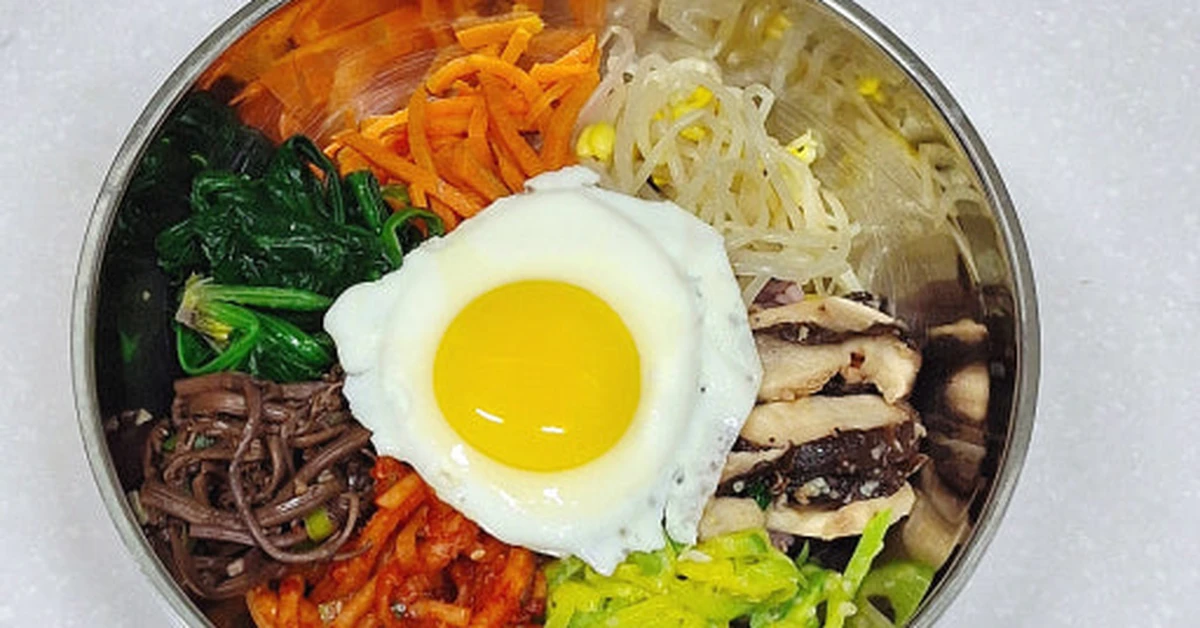
A well-made bibimbap is an exercise in balance: color, texture, flavor, and nutrition are all considered.
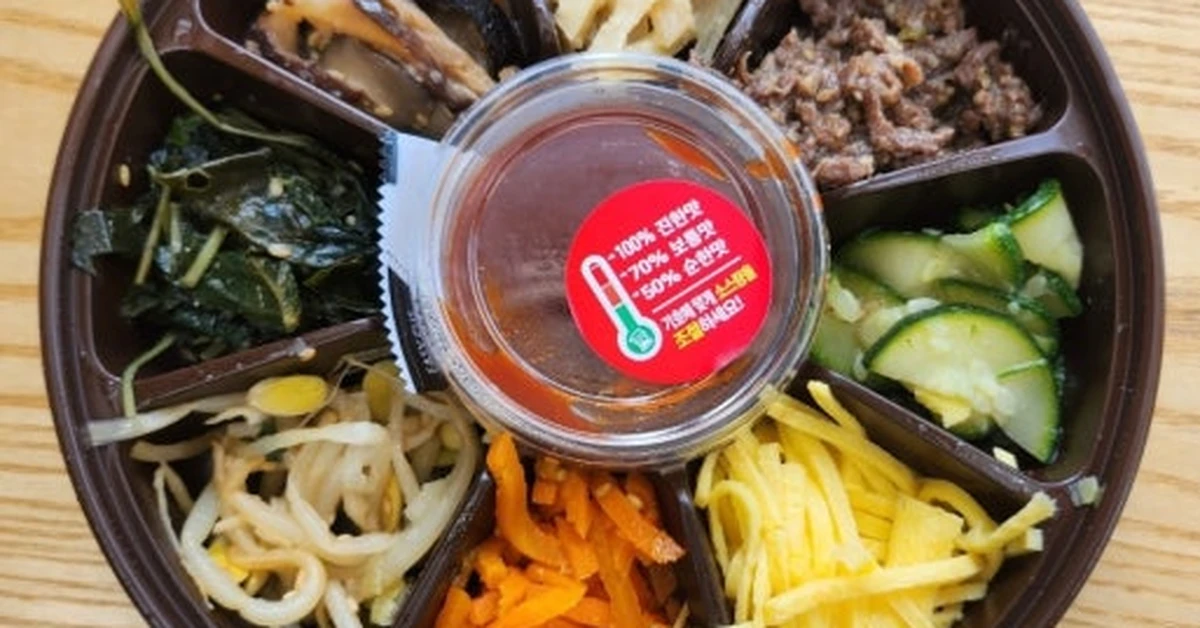
The vegetables — called namul — are the heart of the dish. Typical combinations include sautéed spinach seasoned with sesame oil and garlic, julienned carrots stir-fried with a light touch, blanched bean sprouts dressed with sesame and salt, sliced zucchini, and gosari (bracken fern), which has a distinctly earthy, slightly chewy quality that provides textural contrast to the softer vegetables. Each namul is prepared and seasoned individually, which is part of what makes a properly constructed bibimbap genuinely labor-intensive to make well.
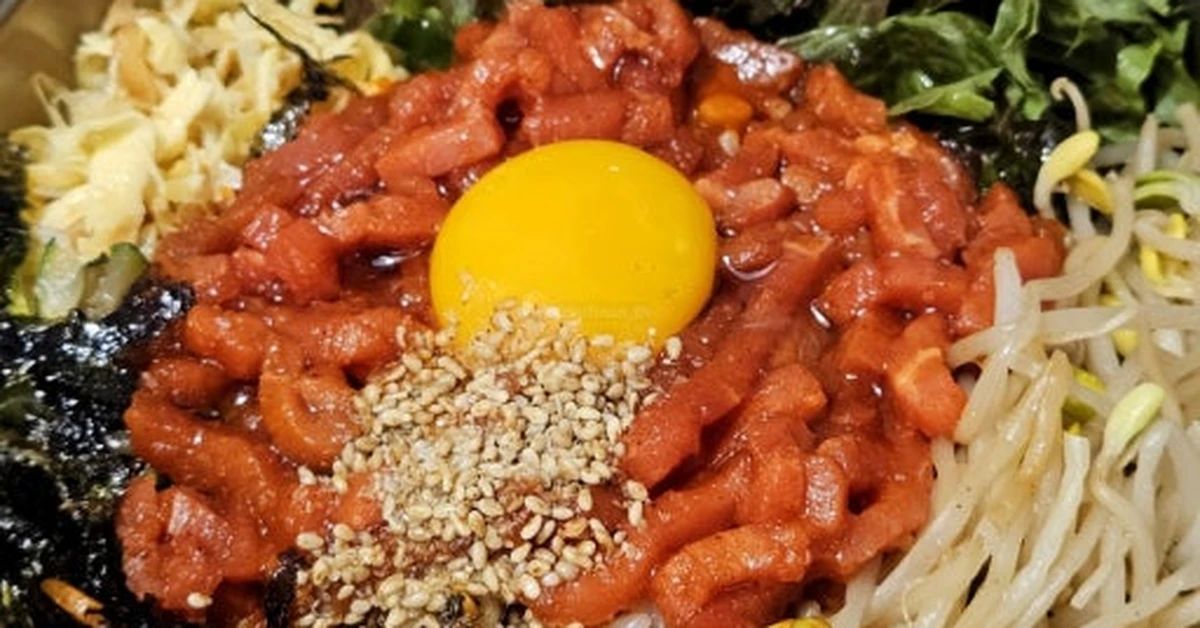
Beef bulgogi or thinly sliced raw beef (yukhoe) is the traditional protein, though mushrooms are the common alternative for vegetarian versions. The fried egg on top — sunny-side up, the yolk still runny — is a near-universal element whose rich yolk becomes part of the sauce as the bowl is mixed.
The sauce is gochujang: Korea’s fermented chili paste, made from red pepper powder, glutinous rice, soybeans, and salt. It contributes heat, sweetness, depth, and that particular fermented richness that makes it irreplaceable. The amount is adjustable to taste, which makes bibimbap as mild or as spicy as the eater prefers.
A drizzle of sesame oil over everything just before mixing completes the flavor profile with a warm, nutty fragrance that is, for many people who grew up eating Korean food, one of the most reliably comforting smells imaginable.
Dolsot Bibimbap — The Stone Pot Version
If regular bibimbap is the everyday version, dolsot bibimbap is the one that adds theater.
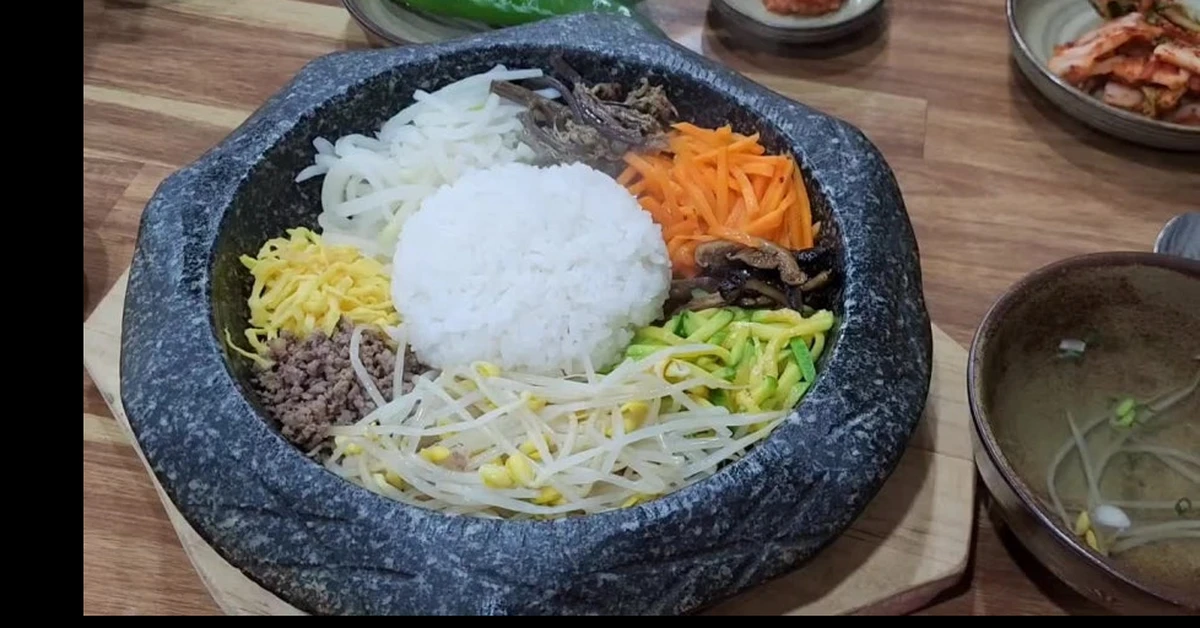
Dolsot refers to the heavy stone pot — heated until it is intensely hot — in which the rice is served. When the rice hits the sides of the scorching stone, it begins to crisp immediately, creating a golden, slightly crunchy layer at the bottom and sides of the pot. This layer, called nurungji, is one of Korean food’s most beloved textures: crispy on the outer edge, still chewy at the center, carrying a faint nutty flavor from the toasting.
The visual and auditory experience of a dolsot bibimbap arriving at the table — still sizzling, a column of fragrant steam rising from the surface — is part of its pleasure. The recommendation for first-time eaters is to mix quickly and thoroughly while the pot is still at maximum heat, so the egg cooks from the residual warmth and the nurungji develops fully before the temperature drops.
Jeonju Bibimbap — The Version That Earned a Reputation
Of all the regional variations of bibimbap in Korea, Jeonju’s is the one most associated with prestige and craft.
Jeonju, a city in the North Jeolla Province known throughout Korea for the quality of its food culture, has developed a version of bibimbap that is more elaborate and more ceremonially presented than what you’ll typically find elsewhere. Jeonju bibimbap uses a broth-cooked rice rather than plain steamed rice, giving the base a slightly different texture and flavor. The toppings are more numerous and more varied — often including ingredients like raw beef tartare (yukhoe), gingko nuts, pine nuts, jujubes, and the specific regional vegetables of the area. The bowl is typically presented in brass rather than ceramic, and the visual arrangement before mixing is deliberately beautiful.
Visiting Jeonju specifically to eat bibimbap is not an unusual thing to do. The city has an entire restaurant culture built around the dish, with families who have operated the same bibimbap restaurants for generations. If you eat one composed, ceremonial version of bibimbap in Korea, Jeonju is where to eat it.
How to Eat Bibimbap Properly
The single most important instruction is one that first-time bibimbap eaters often underestimate: mix it thoroughly.
Not a gentle stir. A real, committed mix that keeps going until the rice changes color from white to the deep reddish-orange of the gochujang, until every vegetable is distributed throughout the bowl, until the egg yolk has broken and blended into everything. The transformation takes thirty seconds to a minute of actual effort. The result is a completely unified dish that eats very differently from the pre-mix arrangement of distinct, carefully placed components.
Second: adjust the gochujang to your heat tolerance before mixing. Adding more is always possible. Taking it back is not. Most Korean restaurants serve the paste on the side for this reason.
Third: eat it warm. Bibimbap at room temperature is a diminished thing. If you’re eating dolsot, move quickly.
Why Bibimbap Travels So Well
Bibimbap has become one of the most internationally recognized Korean dishes for a reason that goes beyond flavor. It is visually striking — the composed, colorful bowl photographs beautifully, which gave it an early advantage in the era of food social media. It is nutritionally legible, hitting proteins, grains, and multiple vegetables in a single serving in a way that maps intuitively onto Western ideas of a balanced meal. And it is adaptable: vegetarian, vegan, gluten-conscious, and spice-averse versions are all achievable without compromising the essential character of the dish.
But the real reason bibimbap endures across cultures is that the act of mixing — the moment of bringing everything together and making a unified thing from many distinct parts — is one of the most satisfying physical gestures in food. It requires something from the eater. And in return, it delivers something that a pre-assembled, already-mixed dish could never quite replicate.
That interactive quality is quintessentially Korean in a way that’s hard to articulate but easy to feel. Korean food has always been about participation: the shared table, the communal banchan, the grill you tend yourself. Bibimbap puts that same spirit into a single personal bowl, and asks you to finish the job.
Where to Try It
In Korea, bibimbap is everywhere — but the versions worth seeking out tend to be at places that prepare the namul fresh daily rather than in advance, where the sesame oil is added just before serving rather than pre-mixed, and where the stone pot is heated to a proper temperature rather than a lukewarm approximation.
Jeonju is the destination for a composed, traditional version. Seoul’s Gwangjang Market has a well-known yukhoe bibimbap stall where the beef tartare version is prepared to order and eaten at communal tables. Most temple food restaurants in Korea serve a vegetarian bibimbap that is among the cleanest and most thoughtfully balanced versions of the dish available anywhere.
Outside Korea, the quality range is wide. The best benchmark for whether a restaurant’s bibimbap is worth ordering: does the gochujang arrive on the side, allowing you to season it yourself? If yes, someone in the kitchen understands what the dish is supposed to be.
Have you tried bibimbap — in Korea or abroad? Was it the dolsot version, Jeonju-style, or something in between? Tell us in the comments.