
살금살금: The Korean Word for Sneaking Without a Sound
살금살금: The Word for Moving Like You’re Not Supposed to Be There
There’s a very specific feeling everyone has experienced at least once.
It’s two in the morning. The refrigerator is on the other side of the house. Your parents — or your roommate, or your partner — are asleep, and you have made a series of decisions that have led you to this hallway, at this hour, on a mission that absolutely cannot wake anyone up. Every footstep becomes a calculation. Your whole body negotiates with the floorboards.
English doesn’t really have a word for that. We say “sneaking,” which is close, but it’s a verb about intention — the act of trying not to be noticed. It doesn’t capture the physical texture of the movement itself: the held breath, the slow weight transfer, the specific quality of trying to make your body weigh nothing.
Korean has a word for exactly that texture. It’s 살금살금, and it might be the most relatable word on this entire list.
What 살금살금 Actually Means
Pronounced sal-geum sal-geum, this word describes moving stealthily and quietly — specifically with the intention of not being detected, not making noise, and not disturbing whatever or whoever is nearby.
It’s not just about being quiet. Plenty of things are quiet without being 살금살금. A library is quiet. A sleeping cat is quiet. 살금살금 carries an active, almost conspiratorial energy underneath the silence. There’s a reason for the quiet. Someone is trying to get away with something, or trying not to wake someone, or trying to avoid being seen.
Like its cousin 사뿐사뿐, it functions as an adverb and most naturally pairs with 걷다 (geotda, to walk) or 가다 (gada, to go):
살금살금 걷다 — to walk stealthily, sneaking along.
살금살금 다가가다 — to creep up on something or someone.
The word shows up constantly in situations involving secrecy, mischief, or the deliberate avoidance of attention — which, if you think about it, covers a remarkable amount of daily human life.
The Difference Between 사뿐사뿐 and 살금살금
If you’ve read about 사뿐사뿐 already, you might be wondering how it’s different from 살금살금. They both describe quiet, careful movement, and a beginner could be forgiven for treating them as synonyms.
They’re not, and the difference is worth understanding because it reveals something about how precise Korean mimetic vocabulary actually is.
사뿐사뿐 is about lightness. It describes the physical quality of barely touching the ground — graceful, feathery, delicate. A dancer moves 사뿐사뿐. A child in soft slippers moves 사뿐사뿐. There’s an aesthetic, almost beautiful quality to it.
살금살금 is about stealth. It describes the intention to avoid detection. The movement might not be light or graceful at all — someone moving 살금살금 might be tense, awkward, hyperaware of every joint that might creak. What matters isn’t grace. What matters is not being noticed.
You could move 사뿐사뿐 in broad daylight in front of an audience, and it would still mean something. You could not really move 살금살금 if everyone already knows exactly where you are and what you’re doing. The word requires a kind of secrecy to make sense at all.
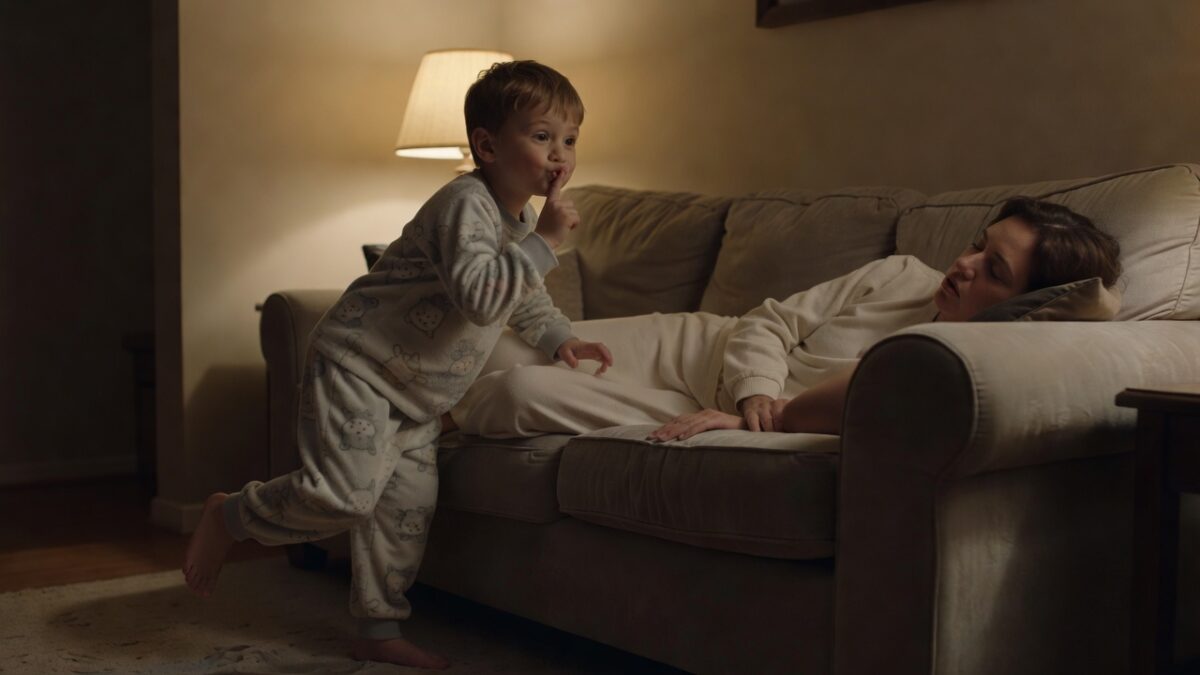
A Word Built for Childhood — and Adulthood Too
Ask any Korean adult about 살금살금, and there’s a strong chance they’ll smile before they even define it. The word is deeply tied to specific memories — sneaking snacks past a strict parent, tiptoeing in after curfew, trying to retrieve a phone from a sibling’s room without getting caught.
Korean children’s books use 살금살금 constantly, often paired with illustrations of foxes, mice, or sneaking children — small creatures whose entire survival strategy depends on moving without being seen or heard. There’s something universal about that imagery. The mouse in the wall. The cat stalking a bird. The kid raiding the kitchen at midnight. 살금살금 belongs to all of them.
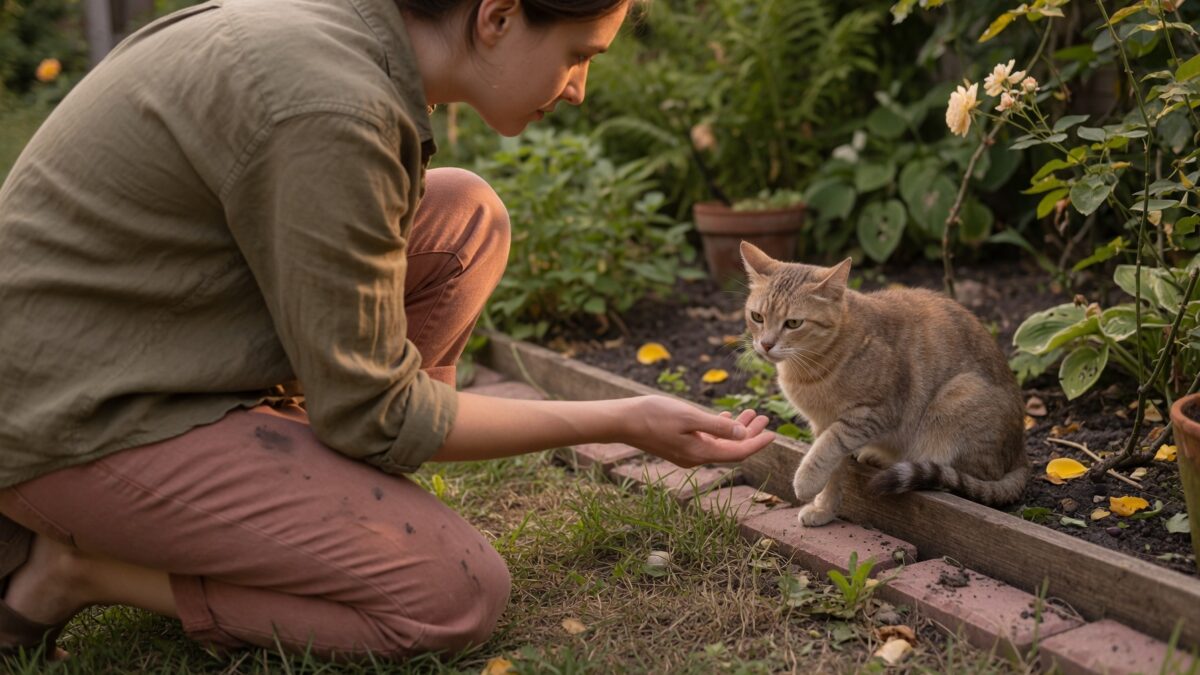
But the word doesn’t disappear once people grow up. Adults use it constantly, just in slightly different contexts. Someone coming home late and trying not to wake a sleeping spouse moves 살금살금. An employee trying to leave the office early without drawing the boss’s attention might describe their exit that way, half-joking. A person trying to approach a skittish animal — a stray cat, a nervous dog — moves 살금살금 toward it, slowly enough not to spook it.
The thread connecting all of these situations is the same: someone is trying to exist, for a moment, without consequence. 살금살금 is the sound — or rather, the deliberate absence of sound — of that attempt.
The Reduplication Does Real Work Here
Like 사뿐사뿐, this word is built from a single unit — 살금 — repeated twice. And like its cousin, the repetition isn’t decorative. It changes what the word communicates.
A single 살금 could describe one cautious step, one moment of careful movement. But 살금살금 describes a sustained, ongoing stealth — the entire journey across the room, not just the first foot lifted off the floor. The doubling stretches a single instant into a process, a campaign, a small operation with a beginning, a middle, and hopefully a successful end.
This pattern repeats across a whole family of related words that describe careful or cautious behavior:
조심조심 — doing something carefully, cautiously, with deliberate care.
슬금슬금 — moving slowly and somewhat sneakily, often associated with avoiding responsibility or drifting away from something.
어슬렁어슬렁 — wandering or loitering aimlessly, with an unhurried, slightly suspicious quality.
Each one carries its own specific flavor of caution, and a fluent speaker reaches for exactly the right one without thinking — the way an English speaker instinctively knows the difference between “creeping,” “lurking,” and “loitering,” except Korean has built an entire grammatical category around this kind of precision.
Why This Word Resonates With Everyone
What makes 살금살금 such a satisfying word to learn isn’t just its sound, though the sound is genuinely pleasant — soft consonants, an easy rhythm, nothing harsh about it even though it’s describing the tension of trying not to get caught.
What makes it resonate is how universally human the underlying experience is. Every culture has had a version of the midnight kitchen raid, the snuck-in arrival after curfew, the careful approach toward something that might startle and run. Korean simply gave that universal human experience its own dedicated word — compact, rhythmic, and instantly recognizable to anyone who hears it described.
That’s the quiet gift of 의태어 as a category. They don’t just describe actions. They describe the specific emotional texture underneath ordinary actions — the held breath, the calculated risk, the small thrill of almost getting away with something.
Try It Yourself
살금살금.
Say it slowly. Sal-geum. Sal-geum. Notice how soft it sounds even though it’s describing something tense — that gentleness in the sound is part of the word’s charm.
A few simple sentences to start with:
아이가 살금살금 부엌으로 들어갔어요. — The child snuck quietly into the kitchen.
고양이에게 살금살금 다가갔어요. — I crept slowly toward the cat.
Small sentences, but they carry a specific kind of tension that “quietly” or “carefully” in English can only gesture at from a distance.
Next time you find yourself easing open a door at midnight, holding your breath at the top of a creaky stair, or inching toward a cat that might bolt at any second — you’ll have the word for it. 살금살금. The sound of trying not to be noticed, said as quietly as the thing it describes.