Korean Jeon Pancake: The Ultimate Guide to Korea’s Favorite Savory Dish
Korean Jeon Pancake: The Ultimate Guide to Korea’s Favorite Savory Dish
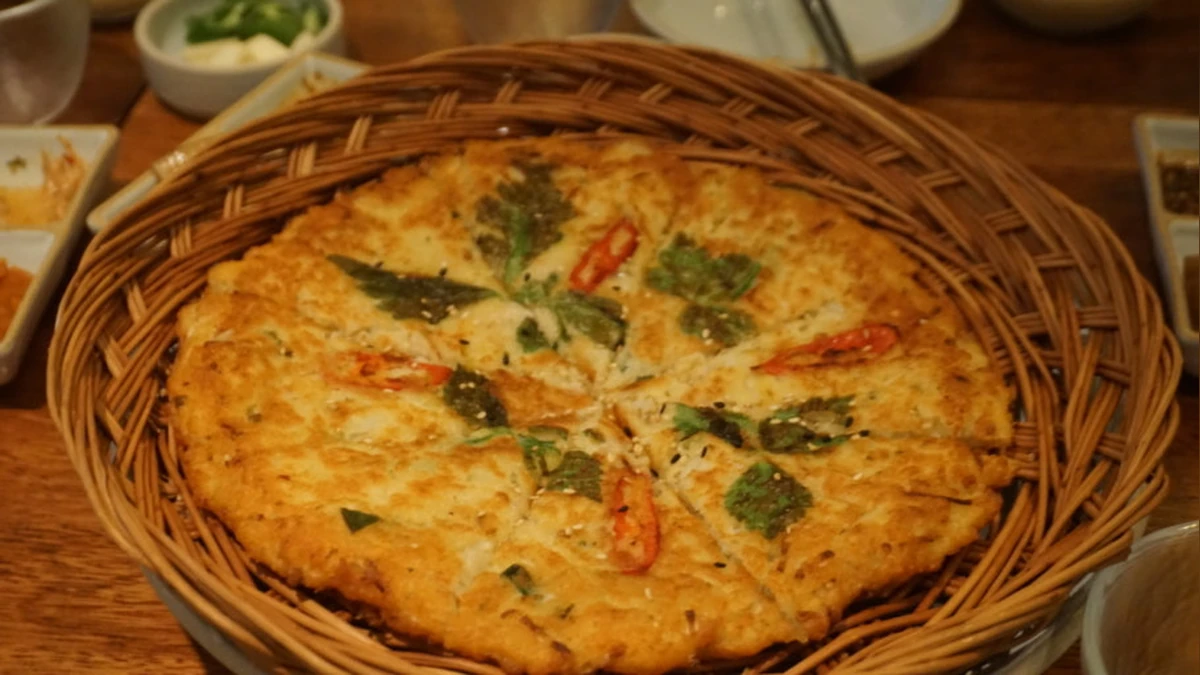
There’s a dish in Korea that shows up at family gatherings, traditional holidays, street food stalls, late-night restaurants, and rainy afternoon tables alike — and that’s the Korean jeon pancake. Crispy on the outside, chewy in the middle, packed with vegetables, seafood, or meat, and eaten hot straight from the pan — jeon is one of those foods that manages to be both deeply traditional and endlessly craveable at the same time.
If you’ve ever wandered through a Korean market, sat down at a Korean BBQ restaurant, or celebrated a holiday with a Korean family, there’s a good chance you’ve already eaten jeon without knowing its name. This guide covers everything you need to know — what it is, the many forms it takes, how it’s made, when Koreans eat it, and how to enjoy it yourself whether you’re in Korea or cooking at home.
Table of Contents
- What Is Korean Jeon Pancake?
- Jeon vs. Buchimgae: Is There a Difference?
- The Most Popular Types of Korean Jeon Pancake
- Why Koreans Eat Jeon on Rainy Days
- Jeon at Korean Traditional Holidays
- The Dipping Sauce That Makes It All Work
- How Korean Jeon Pancake Is Made
- Where to Eat Jeon in Korea
- Tips for Making Jeon at Home
- Final Thoughts
What Is Korean Jeon Pancake?
At its most basic, jeon (전) is a Korean savory pancake made by coating ingredients in a flour-and-egg batter and pan-frying them in oil until golden and crisp. The word itself is broad — it covers everything from a simple green onion pancake to an elaborate seafood platter to thin slices of zucchini individually dipped and fried.
What makes jeon different from, say, a Western pancake or a Japanese okonomiyaki is the approach. Korean jeon pancake tends to be thinner and crisper, with a focus on letting the fillings shine rather than overwhelming them with batter. The result is something that sits somewhere between a pancake and a fritter — light enough to eat several pieces in a row, satisfying enough to anchor a full meal.
Jeon is served as a side dish (반찬, banchan), as an appetizer, as a main shared dish in the middle of the table, or as a standalone snack. It appears at formal ancestral rites, at casual weeknight dinners, and everywhere in between. Few dishes in Korean cuisine occupy quite as wide a social and culinary space as jeon does.
Jeon vs. Buchimgae: Is There a Difference?
This is a question that even Koreans occasionally debate. The short answer is: they refer to essentially the same thing, just with slightly different emphasis.
Jeon (전) is the more formal, traditional term. It tends to appear in ceremonial contexts, on restaurant menus, and in older culinary writing. The word carries a sense of occasion — jeon is something you prepare with care.
Buchimgae (부침개) is the more casual, everyday term. It literally means something along the lines of “something pressed and fried,” and it’s the word most Koreans use at home when they’re just making a quick pancake for dinner. If a Korean grandmother says she’s making buchimgae for lunch, she’s making jeon. The two words are used interchangeably in daily life, with jeon being slightly more formal and buchimgae being more colloquial.
For the purposes of this guide, both terms refer to the same category of dish. You’ll see both on menus and in conversation, so it’s worth knowing either way.
The Most Popular Types of Korean Jeon Pancake
One of the most wonderful things about Korean jeon pancake is just how many varieties exist. Every region has its own specialties, every family has its preferred recipe, and the ingredient combinations are practically endless. Here are the most well-known and widely loved types:
Pajeon (파전) — Green Onion Pancake
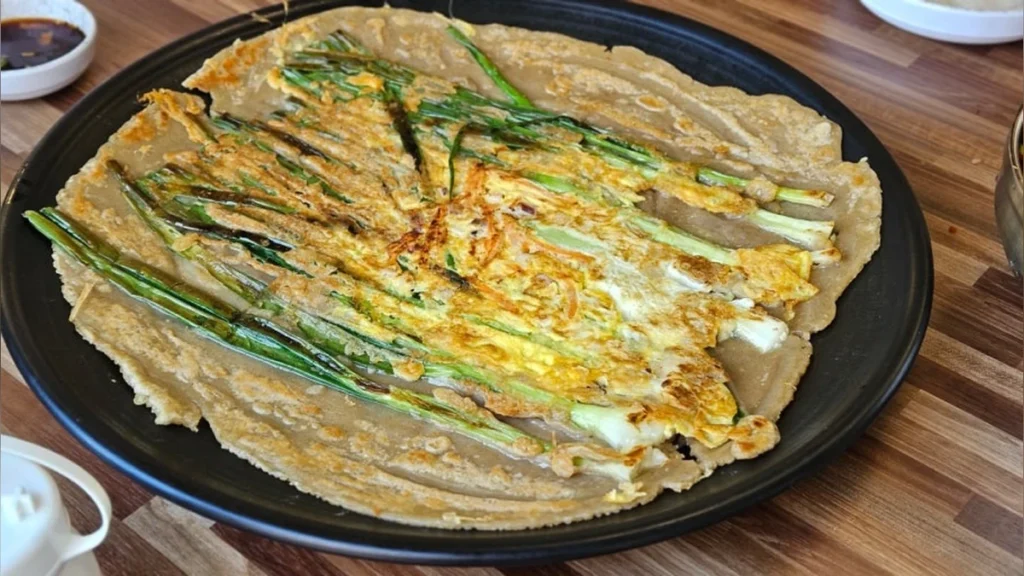
Pajeon is arguably the most iconic variety. Made with a batter of flour, water, and eggs mixed with generous amounts of green onion, it’s simple, deeply savory, and absolutely satisfying. Haemul pajeon (해물파전) adds a layer of mixed seafood — shrimp, squid, clams — on top, creating something richer and more complex. Haemul pajeon is a staple at pojangmacha (street food tents) and traditional Korean restaurants across the country.
Kimchi Jeon (김치전) — Kimchi Pancake
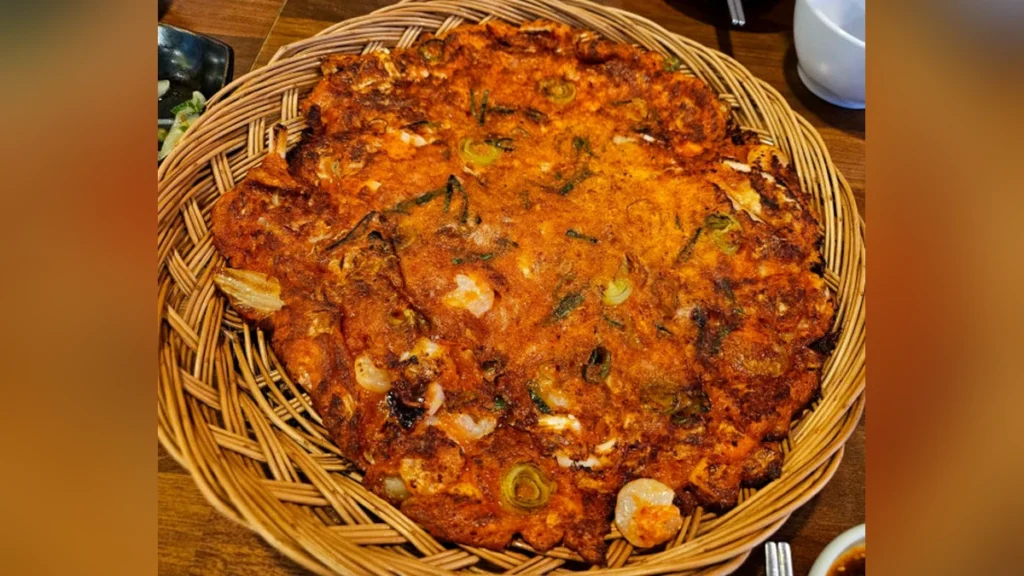
Made with chopped fermented kimchi mixed directly into the batter, this variety has a sharp, tangy, slightly spicy flavor that is completely unlike anything else. The acidity of well-fermented kimchi caramelizes as it hits the hot pan, creating crispy, slightly charred edges that are genuinely addictive. Kimchi jeon is considered a great way to use up older, more sour kimchi that’s past its prime for eating raw.
Hobak Jeon (호박전) — Zucchini Pancake
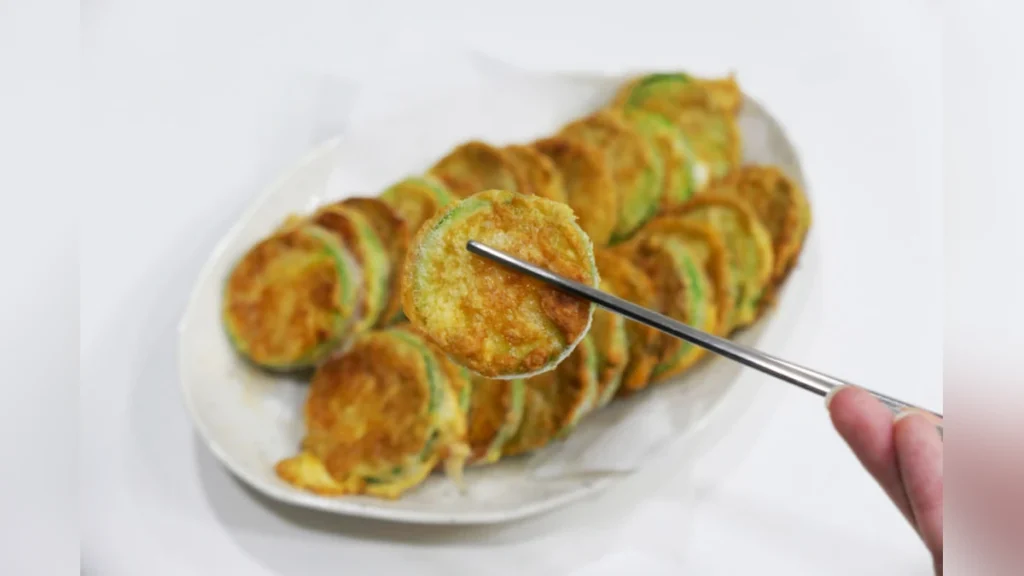
Thin slices of zucchini, individually coated in flour and beaten egg, then pan-fried until just golden. Hobak jeon is delicate, mild, and elegant — the kind of dish that surprises people with how much flavor comes from so few ingredients. It’s a common fixture at ancestral rites and holiday tables.
Dongtae Jeon (동태전) — Pollock Pancake
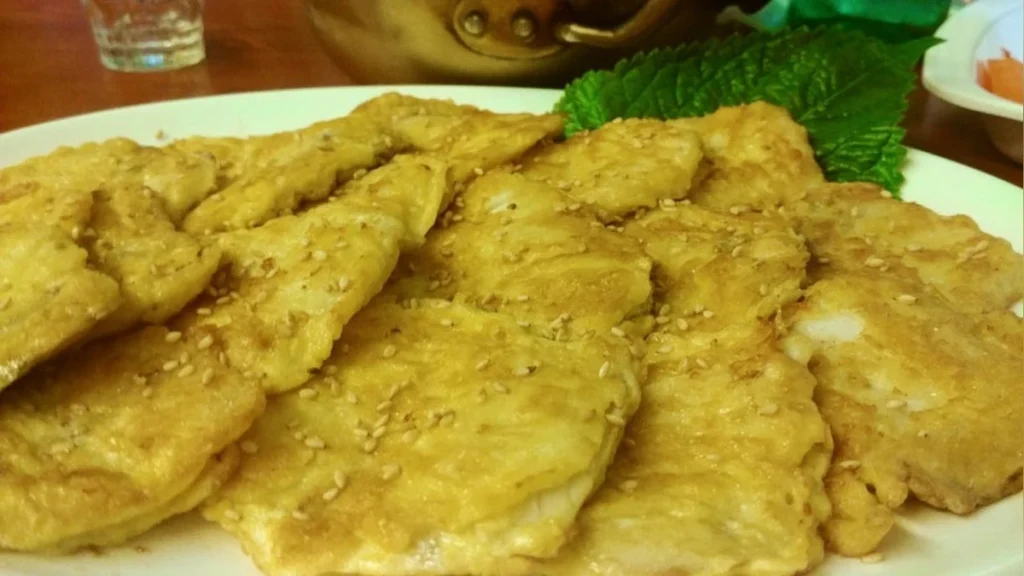
Slices of frozen pollock, seasoned, coated in flour and egg, and pan-fried. The fish stays tender inside while the coating crisps up beautifully. Dongtae jeon is a winter favorite and appears regularly at jesa (제사, ancestral memorial rites).
Bindaetteok (빈대떡) — Mung Bean Pancake
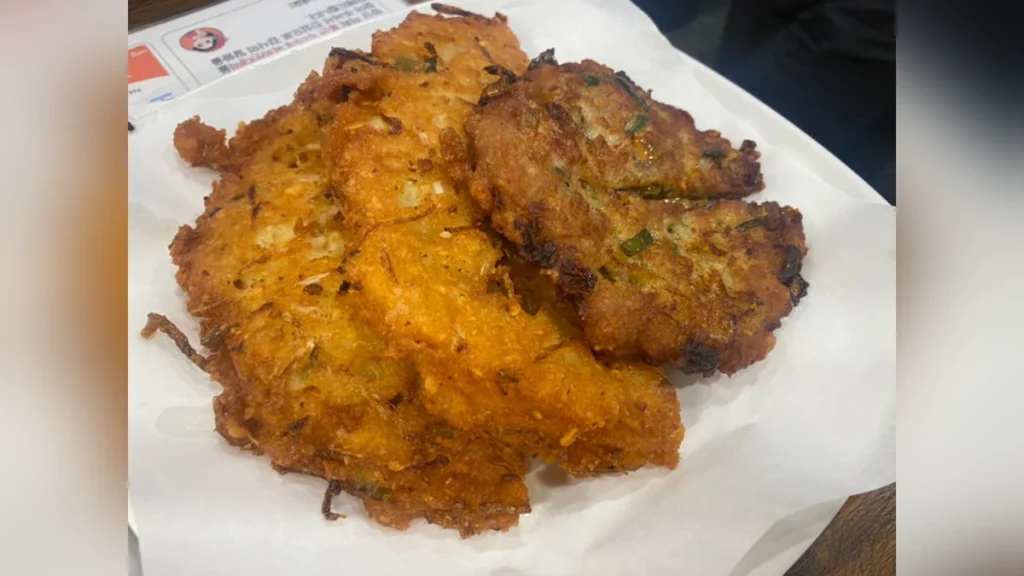
Made with ground soaked mung beans as the base rather than wheat flour, bindaetteok has a denser, grainier texture and a more robust, earthy flavor. It’s often loaded with kimchi, pork, or vegetables, and it’s been a street food staple since at least the Joseon Dynasty. Gwangjang Market in Seoul is one of the most famous places to eat bindaetteok in Korea.
Haemul Jeon (해물전) — Seafood Pancake
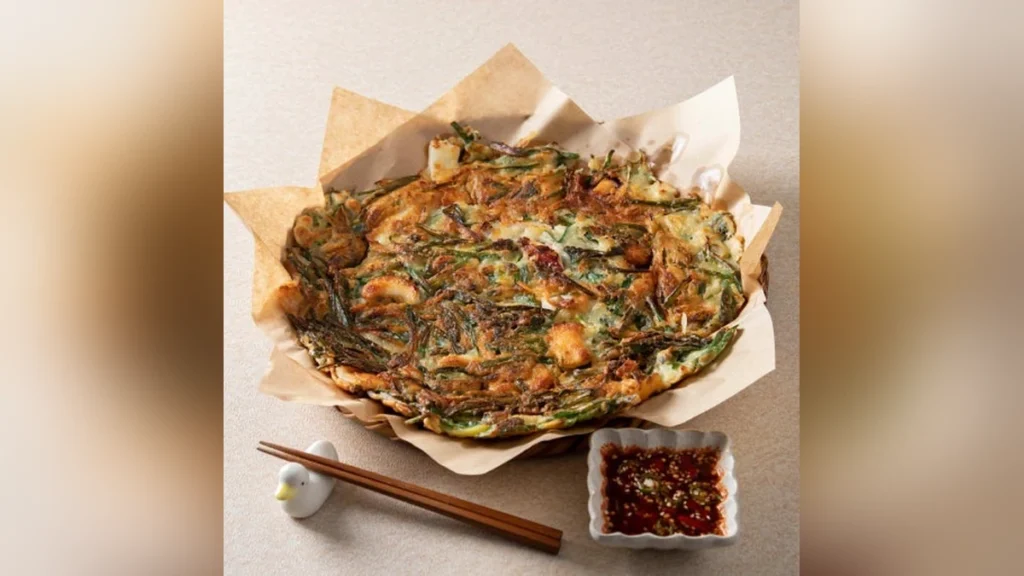
A broader category that encompasses any jeon made primarily with mixed seafood. Often larger and thicker than pajeon, haemul jeon can include squid, shrimp, oysters, and scallops. Served at seafood restaurants and coastal markets, it’s one of the most indulgent versions of the dish.
Gogi Jeon (고기전) — Meat Pancake
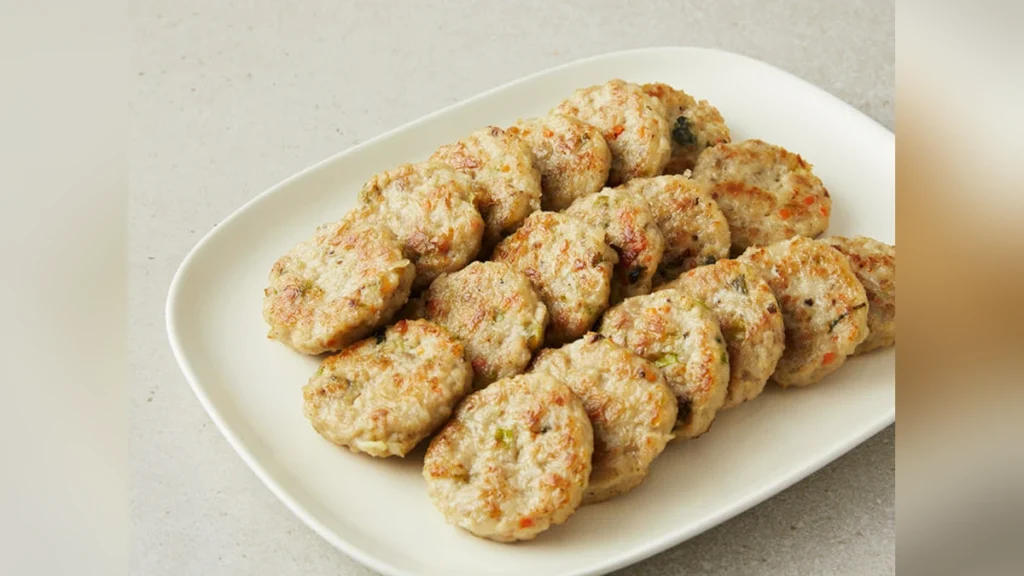
Thin patties of seasoned ground beef or pork, coated in flour and egg and pan-fried. Gogi jeon is a popular choice for holiday spreads and ancestral rituals, and it has a homey, comforting quality that differs from the more vegetable-forward varieties.
Why Koreans Eat Jeon on Rainy Days
If you ask a Korean what food they associate with rainy weather, the answer will almost always be jeon — specifically pajeon — paired with a glass of makgeolli (막걸리), a milky, slightly fizzy rice wine. This pairing is so culturally embedded that it has its own phrase: 비 오는 날엔 전이 먹고 싶다, which translates roughly to “on rainy days, you want jeon.”
The explanation most Koreans give is sensory: the sound of rain pattering on the roof sounds similar to the sizzle of jeon batter hitting a hot oiled pan. That auditory association supposedly triggers a craving. Whether or not that’s the full scientific explanation, the ritual is real and widely observed — rainy day pajeon and makgeolli is as culturally resonant in Korea as soup and a grilled cheese sandwich might be elsewhere.
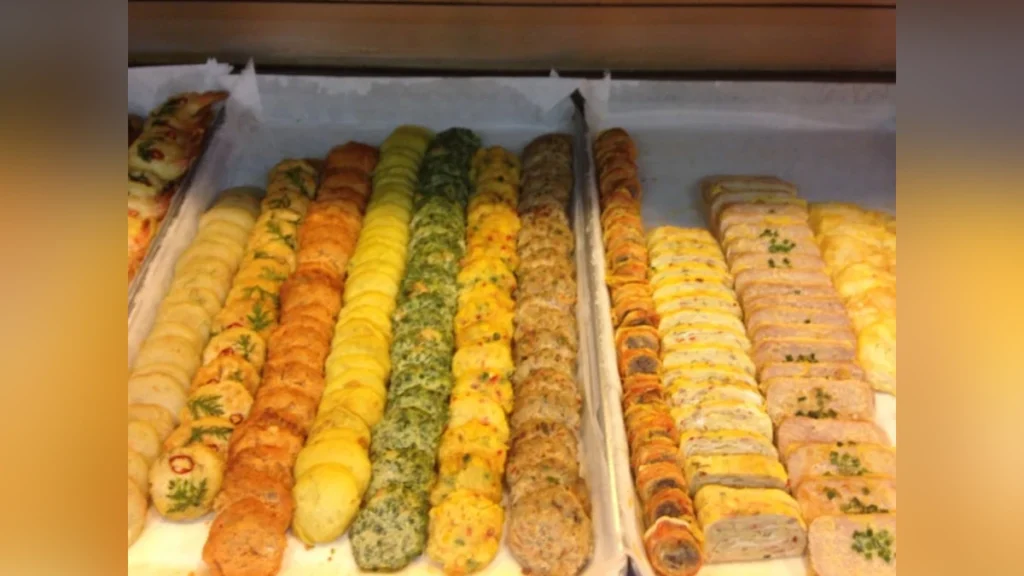
There’s also a more practical historical angle. Before refrigeration, rainy or cold weather meant people stayed indoors and cooked with what they had. Flour, eggs, green onions — the basic ingredients for pajeon — were pantry staples. A quick, satisfying meal made from everyday ingredients on a grey day is an easy ritual to understand, regardless of where you’re from.
Jeon at Korean Traditional Holidays
Korean jeon pancake plays an especially significant role during major traditional holidays, particularly Chuseok (추석, the harvest festival) and Seollal (설날, Lunar New Year). On these occasions, families gather to prepare large spreads of food to honor their ancestors in a ritual called jesa (제사).
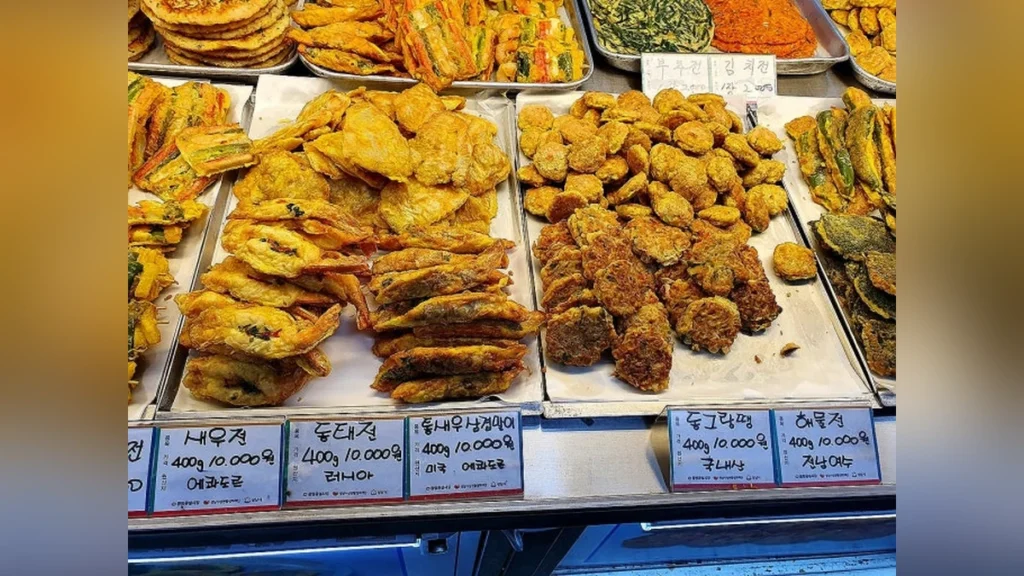
Jeon is central to these holiday food spreads. Families spend hours — sometimes an entire day — frying batch after batch of various jeon varieties. The kitchen fills with the smell of hot oil and sizzling batter, and everyone takes turns at the stove. For many Koreans, the memory of preparing jeon together as a family is inseparable from the holidays themselves.
The specific varieties prepared for jesa tend to be more refined and carefully made than everyday jeon — hobak jeon, dongtae jeon, and gogi jeon are particularly common at these rituals because of their clean flavors and neat, uniform appearance. Presentation matters at jesa, and jeon made for the occasion tends to be cut into precise shapes and arranged with care.
Beyond jesa, jeon also shows up at birthdays, wedding celebrations, and any gathering where food is prepared in abundance. It’s a dish that scales well — easy to make in large quantities, keeps reasonably well at room temperature for a few hours, and appeals to nearly everyone.
The Dipping Sauce That Makes It All Work
No discussion of Korean jeon pancake is complete without talking about the dipping sauce. In Korean, this is called yangnyeom ganjang (양념간장) — a seasoned soy sauce that accompanies jeon at virtually every table.
The base is simple: soy sauce and rice vinegar. From there, most people add a small amount of sesame oil, a pinch of sugar, and thinly sliced green onion. Some versions include a bit of gochugaru (red chili flakes) for heat, or a few drops of sesame seeds for texture.
The balance the sauce strikes is essential to the experience. Jeon is rich and oily from the pan — the acidity of the vinegar in the dipping sauce cuts right through that richness and resets your palate between bites. It also adds a savory depth that complements the mild batter without overpowering the fillings. It’s a small thing that makes a big difference, and eating jeon without it feels distinctly incomplete.
How Korean Jeon Pancake Is Made
The technique for making jeon is simple enough that beginners can produce good results on their first try, but nuanced enough that experienced cooks develop real feel for it over time. Here’s a general overview of the process:
The batter is typically made from a mixture of all-purpose flour (or a dedicated Korean pancake mix called buchimgaru, 부침가루) and cold water, sometimes with an egg added for binding and color. The key is not overmixing — a lumpy batter produces a lighter, crispier result than a smooth one. Cold water also helps with crispness, as does keeping the batter on the thinner side.
The fillings are either mixed into the batter (as with kimchi jeon or pajeon) or coated individually in flour and egg before frying (as with hobak jeon or dongtae jeon). The coating method gives a cleaner, more delicate result. The mix-in method gives a more rustic, hearty texture.
The pan and oil matter more than most people realize. A well-seasoned cast iron pan or a heavy non-stick skillet works best. The oil needs to be hot before the batter goes in — not smoking, but visibly shimmering. Too little oil produces a dry, pale jeon; the right amount creates that deeply golden, crispy exterior that defines the dish.
The flip is done once. When the bottom is golden and the edges begin to look set, a confident single flip with a wide spatula is all it takes. Pressing the jeon gently with the spatula after flipping helps ensure even contact with the pan and speeds up the final browning.
Serving is immediate. Jeon is at its absolute best hot from the pan, with the dipping sauce on the side. It can be eaten at room temperature and still be very good, but the crackling crispness of freshly made jeon is something worth experiencing as soon as possible.
Where to Eat Jeon in Korea
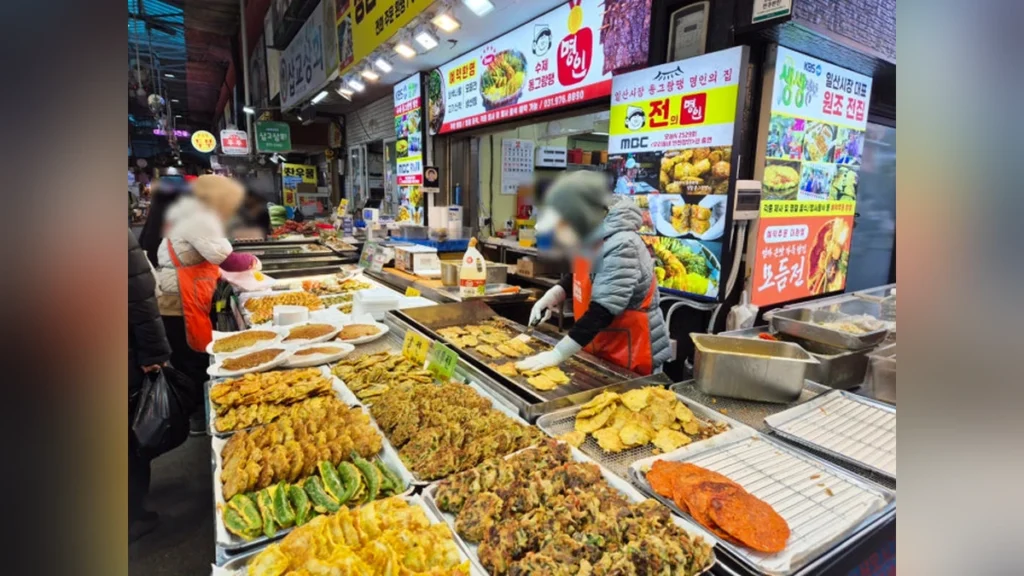
Traditional Markets
Korean traditional markets (재래시장, jaeraemarket) are the best place to experience jeon in its most authentic, unpolished form. Gwangjang Market in Seoul is the most famous destination, with a long indoor alley lined with stalls serving bindaetteok and pajeon alongside raw vegetables and traditional snacks. The atmosphere is lively, the portions are generous, and the prices are very reasonable.
Other large markets across the country — Jagalchi Market in Busan, Sujeonghoe Market in Daejeon, Tongin Market in Seoul — all have vendors making jeon to order throughout the day.
Pojangmacha and Bunsikjip
Pojangmacha (포장마차) are the covered street food stalls you’ll find along riversides, near universities, and in entertainment districts. Many specialize in haemul pajeon and makgeolli, making them the classic rainy-day destination. Bunsikjip (분식집) — casual snack restaurants — also frequently serve jeon as part of their menu alongside tteokbokki and gimbap.
Korean Restaurants Abroad
Outside Korea, pajeon and haemul pajeon are among the most commonly found jeon varieties at Korean restaurants worldwide. If you’re outside Korea and want to try jeon for the first time, look for it on the appetizer section of the menu at a mid-range Korean restaurant — it’s usually there, and usually well-made.
Tips for Making Jeon at Home
If you’re inspired to try making Korean jeon pancake at home, here are a few things that will genuinely improve your results:
Use cold water in the batter. Room temperature or warm water makes the batter develop more gluten and produces a chewier, less crisp result. Cold — even iced — water keeps things light.
Don’t skip the oil. Jeon needs more oil than you think. A thin film is not enough. The base of your pan should be properly coated, and adding a small drizzle when you flip ensures the second side browns evenly too.
Use buchimgaru if you can find it. Korean pancake mix, available at most Asian grocery stores, contains a small amount of seasoning and a blend of starches that produces a better texture than plain all-purpose flour. It’s a minor upgrade that makes a noticeable difference.
Keep fillings dry. Wet ingredients — kimchi, zucchini, seafood — release water as they cook, which can make your jeon soggy. Squeeze out excess moisture from kimchi before using, salt zucchini slices and pat them dry, and blot seafood with a paper towel before adding it to the batter.
Eat it right away. Jeon does not improve with time. Make it just before you plan to eat it, and serve it directly from the pan to the table. The crispy exterior softens quickly as it cools, which is fine — but the first few minutes off the heat are genuinely the best.
Final Thoughts
Korean jeon pancake is one of those dishes that seems simple until you realize how much meaning it carries. It’s the smell of a grandmother’s kitchen during the holidays. It’s a rainy Sunday afternoon with makgeolli and good company. It’s the first thing that disappears at a family gathering and the dish people request most when they’ve been away from home too long.
Whether you’re trying it for the first time at a Seoul market stall, ordering pajeon at a Korean restaurant nearby, or attempting your first batch at home on a grey afternoon — jeon has a way of feeling immediately familiar and deeply satisfying. Once you’ve had it properly made and still hot from the pan, it’s very hard not to want it again.
That’s the thing about Korean jeon pancake. It doesn’t ask for much. It just delivers, every single time.