
Korean Age System Explained: Why You’re Older in Korea
You Are Older in Korea — Here’s Why That’s Actually Fascinating
The moment you land in Korea, you age.
Not metaphorically. Not from jet lag, though that’s real too. According to the traditional Korean age system, you could be one — or even two — years older than you were when you boarded the plane. No birthday required. No cake. No particular warning.
You just arrive, and somehow, you’re older.
If that sounds like the setup to a joke, it’s not. The Korean age system is one of the most genuinely confusing cultural concepts for foreigners to wrap their heads around, and also one of the most interesting — because it turns out that how a society counts age tells you something real about how that society thinks about time, community, and what it means to be a person in the world.
Three Ages, One Person
For most of its modern history, Korea operated with not one but three different age systems running simultaneously — a situation that managed to confuse Koreans and non-Koreans alike in slightly different ways.
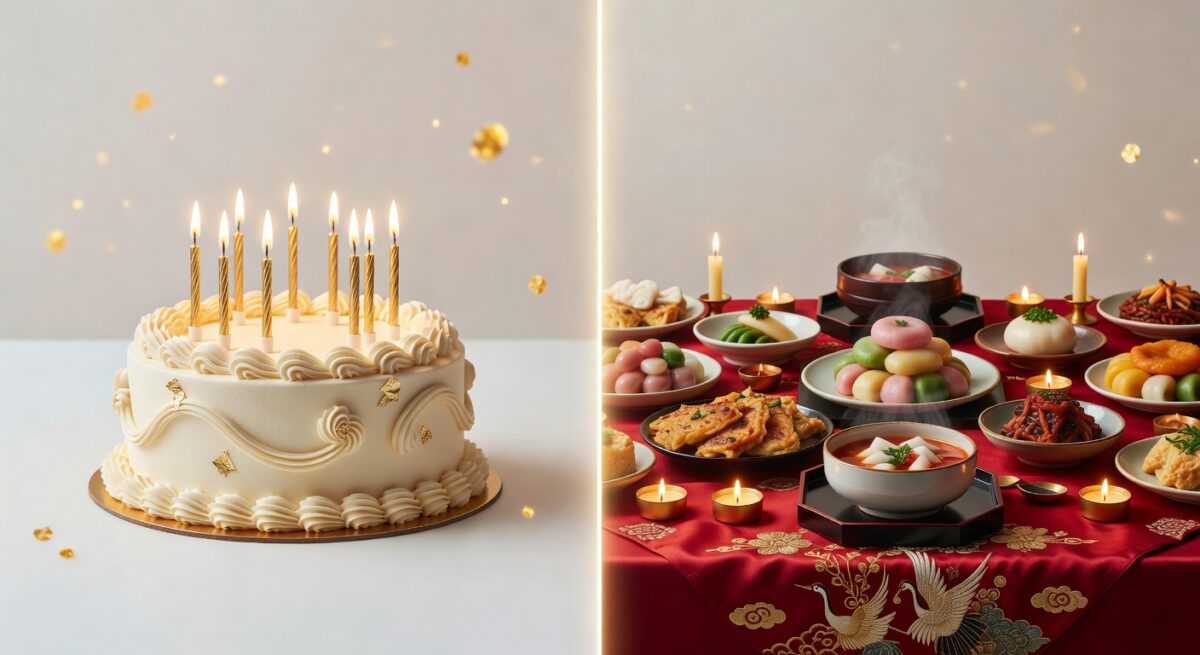
The first is the one most people have heard about: traditional Korean age, called 세는나이 in Korean. Under this system, everyone is born at age one — not zero. The logic being that the nine months spent in the womb count for something, and arriving in the world already represents a year of existence. Then, on January 1st of the Lunar New Year, everyone in the country ages by one year together, regardless of when their actual birthday falls.
All of it. Everyone. On the same day.
The second system is year age, or 연나이. This one is simpler: take the current year, subtract your birth year, and that’s your age. No birthdays, no months, no exact dates. Just years. This was commonly used for school enrollment and military conscription because it made grouping people by birth year clean and administratively straightforward.
The third is the international age system — what most of the world uses. You’re born at zero. You age on your birthday. Your age reflects how many years you have actually been alive.
Three systems. One person. Depending on which one applied to the situation at hand, you might give three different answers to the question “how old are you?” in the same week.
The Math That Makes Your Head Hurt
Here’s where it gets genuinely disorienting, and the best way to feel it is through an example.
Say you were born on December 28th. Under the traditional Korean system, you are one year old from the moment you arrive. Three days later, on January 1st, you turn two. You are two years old. You have been alive for seventy-two hours.
Under the international system, you are zero for those three days, and you won’t turn one until the following December 28th.
The gap between those two ages — in this case, two full years — is not a rounding error or a cultural quirk. It’s a structurally different way of thinking about what age means. Korean age is not a measure of how long you’ve been alive. It is a measure of which year of existence you are currently in. There’s a philosophical difference there that’s easy to miss when you’re focused on the practical absurdity of being two years old at three days old.
For people born in January or February, the gap was often just one year. For December babies, it was frequently two. For everyone, it was a number that required a moment’s calculation every time the question came up.
Why It Existed in the First Place
The 세는나이 system didn’t appear out of nowhere. It has roots that go back thousands of years and connect to a broader East Asian cultural framework shared historically by Korea, China, and other neighboring countries — though most of those countries moved away from the system long before Korea did.
Part of the logic is philosophical: the Korean system treats life as beginning at conception, not at birth. The time in the womb is acknowledged and counted. There is something quietly generous about that — an insistence that existence began before the moment anyone could see it.
Part of it is communal. By aging everyone together on New Year’s Day rather than on individual birthdays, the traditional system reinforced a sense of shared time — the community moving forward together, not each person on their own private calendar. In a Confucian cultural framework that places enormous weight on collective identity and social harmony, this made a kind of sense that the purely individual birthday-based system doesn’t quite capture.
And part of it is simply history. Systems persist because they persist. The 세는나이 was the water that generations of Koreans swam in — so normal, so embedded in daily language and social interaction, that alternatives felt not just different but somehow alien.
What Changed in 2023
In June 2023, the South Korean government made it official.
After years of debate, public discussion, and a growing chorus of people pointing out that running three parallel age systems was confusing, legally complicated, and occasionally created real-world problems in medical, legal, and administrative contexts — South Korea standardized to the international age system for all official and legal purposes.
The change was significant. Government documents, medical records, legal contracts, insurance policies — all now use 만나이, the international system. If you turn thirty by international count, official Korea agrees you are thirty.
The reaction was a mix of practical relief and something harder to name — a mild collective wistfulness, maybe, for a system that had been woven into the language of daily life for so long. Koreans had grown up asking each other’s age in ways that assumed the 세는나이 as a default. Age determined honorifics, social dynamics, drinking culture, military timelines. It wasn’t just a number. It was a social organizing principle.
Officially, that principle has changed. In practice, the transition is slower and more human than any government announcement can fully capture.
It’s Still Very Much Alive in Daily Life
Here’s what the 2023 reform did not do: it did not make Koreans stop using 세는나이 in conversation.
Walk into any family gathering in Korea today and ask someone’s age. Depending on the context and the generation of the person you’re asking, you may still get a 세는나이 answer without the other person thinking twice about it. Older Koreans in particular continue to use the traditional system naturally and without apology, because for them it is not a system at all — it is simply how age works.
Younger Koreans are more likely to code-switch — using international age in official contexts and traditional age in casual ones — or to specify which system they mean when the distinction matters. The phrase 만으로 — meaning “by the full count,” signaling the international system — has become a useful clarifier in conversations where ambiguity might otherwise cause confusion.
Korean dramas, which are watched obsessively by people learning about Korean culture all over the world, still regularly feature characters discussing their 세는나이 and the social implications that flow from it. The question of whether two characters were born in the same year — making them peers who can speak informally to each other — remains a genuine plot point in ways that only make sense if you understand how deeply age functions as a social signal in Korean culture.
Age as Social Architecture
In Korea, age is not just a biographical fact. It is the architecture of social interaction.
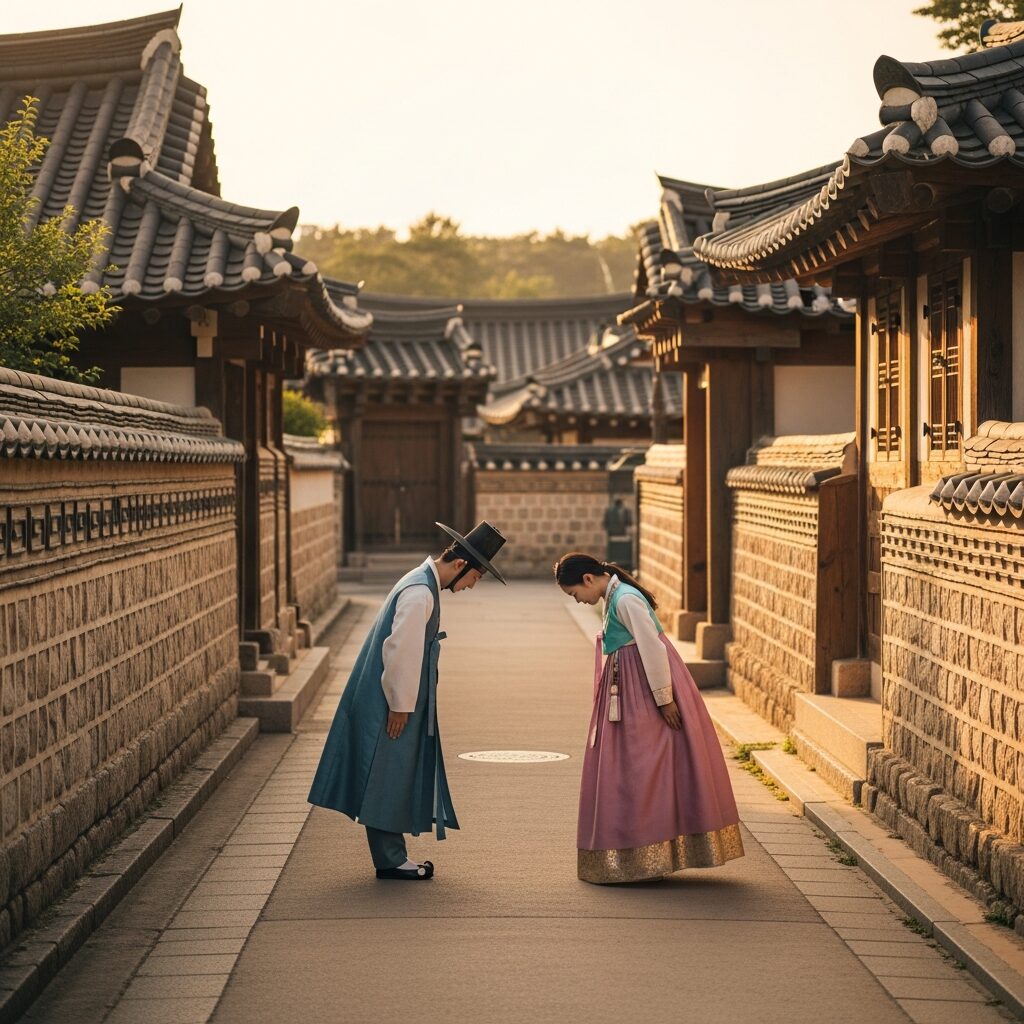
Knowing someone’s age — or specifically, knowing whether they are older, younger, or exactly the same age as you — determines what language you use with them. Korean has formal speech levels and informal speech levels, and the shift between them is largely governed by relative age. Speaking informally to someone older than you without permission is rude. Speaking formally to someone your own age for too long can feel cold and distancing.
This is why Koreans, upon meeting someone new, will often ask about age early in the conversation — not out of nosiness, but because the answer determines the entire register of the relationship going forward. The question 나이가 어떻게 되세요? — “How old are you?” — is not intrusive in Korea the way it might feel in other cultural contexts. It is, in a real sense, necessary information.
The age system, whether traditional or international, sits at the center of all of this. Which is why a government announcement could change what number goes on a legal document without fully changing the way the concept lives in the culture.
So How Old Are You in Korea?
If you’re still curious: take your age by the international system. If your birthday hasn’t happened yet this calendar year, add one. That’s your traditional Korean age in most casual contexts.
Or just ask. Koreans are generally patient with foreigners navigating this, and the question “which system are we using?” is increasingly a reasonable one to raise.
The numbers will differ by one or two. The number that matters more — the one that shapes how someone speaks to you, thinks about you, relates to you — is something that took centuries to build and will take more than a government memo to fully unwind.
That’s not a criticism. It’s just what happens when a number means more than a number.