Traditional Korean Sulppang: Origin, Taste, and Cultural Meaning
The Smell Before the Taste
There is a smell that drifts through traditional markets in Korea.
It is warm.
Slightly sweet.
Faintly sour.
It does not announce itself loudly.
It lingers.
That smell often comes from “Sulppang” (술빵).
Literally, the word means “alcohol bread.”
“Sul” means alcohol.
“Ppang” means bread.
For many people seeing the name for the first time, it creates confusion.
Does it contain alcohol?
Is it strong?
The name sounds heavier than the food itself.
What Sulppang Actually Is
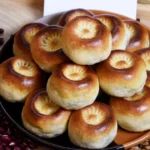
Sulppang is a soft, steamed bread made from fermented batter.
Traditionally, the fermentation comes from makgeolli — Korean rice wine.
Makgeolli (막걸리) is cloudy, mildly alcoholic, slightly sour.
When mixed into flour or rice batter and left to rest, natural fermentation creates air pockets.
The result is not baked like Western bread.
It is steamed.
The texture becomes moist and spongy.
The flavor carries a gentle tang.
By the time it is fully cooked, most of the alcohol has evaporated.
What remains is aroma.
Real-Life Usage
Sulppang is not a ceremonial food.
It is sold in markets.
Sometimes in small bakeries.
Often in plastic bags, still warm.
It is large, usually round.
Sometimes studded with raisins or red beans.
Vendors slice it into thick wedges.
It is eaten as a snack, sometimes breakfast.
Sometimes bought on the way home.
It is rarely plated formally.
There is no ritual.
Just warmth.
A Common Misunderstanding
Because it contains makgeolli, some assume Sulppang is indulgent or adult-oriented.
But children eat it.
Elderly people eat it.
It does not taste alcoholic.
The fermentation is structural, not intoxicating.
Another misunderstanding is to categorize it as cake.
It looks like cake.
It feels airy.
But its sweetness is restrained.
The flavor is closer to grain than sugar.
Fermentation and Korean Food Culture

Korean cuisine relies heavily on fermentation.
Kimchi ferments.
Soybean paste ferments.
Rice wine ferments.
Fermentation is not considered exotic.
It is familiar.
Sulppang belongs to that same logic.
It uses time as an ingredient.
The batter rests.
Air forms quietly.
The dough rises without dramatic expansion.
In a food culture shaped by seasons and preservation, fermentation is not innovation.
It is habit.
The Texture and the Mood
Sulppang is soft but slightly elastic.
When you tear it apart, steam escapes.
The inside shows small, uneven holes.
It does not crumble easily.
It holds together.
The surface is pale, sometimes lightly browned on the bottom from the steaming tray.
There is nothing decorative about it.
No frosting.
No glaze.
Even when raisins are added, they are sparse.
The bread feels practical.
It satisfies without excess.
Historical Background
Sulppang became more common in the 20th century when wheat flour became widely available.
Before that, rice-based steamed cakes were more typical.
As makgeolli production was already widespread in rural areas, combining it with flour was not complicated.
The bread reflects adaptation.
It sits somewhere between rice cake and Western bread.
Neither fully traditional nor fully imported.
Korea’s modern food history often carries that in-between quality.
Social Memory
For many Koreans, Sulppang carries nostalgia.
It reminds them of markets.
Of grandparents buying a slice.
Of sharing pieces on the way home.
It is not associated with luxury.
It belongs to ordinary afternoons.
Because it is inexpensive and filling, it has long been practical.
But practicality does not erase affection.
Why It Still Exists

Modern bakeries sell croissants and cream-filled pastries.
Convenience stores sell packaged cakes with long shelf lives.
Yet Sulppang continues to appear in traditional markets.
It does not compete visually.
It sits quietly beside rice cakes and fried snacks.
Its shape has not changed much.
Round.
Soft.
Cut into wedges.
It does not chase trends.
It survives because it fits into routine.
The Meaning in the Name
The name still causes pause for some visitors.
“Alcohol bread.”
It sounds stronger than it tastes.
But the name reflects honesty about ingredients.
Makgeolli is not hidden.
It is acknowledged.
In Korea, alcohol has long been part of agricultural life.
Rice wine was homemade.
Shared.
Common.
Using it in bread does not feel rebellious.
It feels continuous.
Sulppang is warm in the hand.
It is slightly sour before it is sweet.
It is soft without being fragile.
You do not eat it slowly to analyze flavor notes.
You tear it.
You chew.
And for a moment, fermentation, grain, and steam settle into something steady.
Not dramatic.
Just familiar.