Seoul Travel Guide Part 2: Trendy, Hip, and Endlessly Creative — Seongsu, Hongdae & Yeonnam
If Part One of this series was about Seoul’s deep past — the palaces, the courtyards, the weight of five centuries — then Part Two is about something entirely different. This is the Seoul that wakes up late and stays out long. The Seoul of pop-up stores and rooftop cafes, of converted shoe factories and railway-line parks, of streets that look completely different every six months because someone always has a new idea for what an old building can become.
Three neighborhoods define this version of Seoul better than anywhere else: Seongsu-dong, Hongdae, and Yeonnam-dong. They sit in different parts of the city, carry different energies, and attract slightly different crowds — but together, they form the beating creative heart of the most dynamic city in Asia. This guide covers all three, with enough detail to do each one justice and enough context to understand what makes each one tick.
Understanding Seoul’s Creative Geography
Before diving into specifics, it helps to understand how these three neighborhoods relate to each other and to the broader city.
Seongsu-dong sits on the eastern side of the Han River, across from Gangnam, and is most easily reached from Seongsu Station on Subway Line 2. Hongdae and Yeonnam-dong sit side by side in the northwestern part of the city, both accessible from Hongdae Entrance Station — one of Seoul’s busiest transit hubs, served by Line 2, the Gyeongui-Jungang Line, and the AREX Airport Express. The two western neighborhoods are so close that most visitors naturally move between them on foot, making Hongdae and Yeonnam-dong a logical single chapter in any day out.
Seongsu, by contrast, is a destination in its own right — big enough, and interesting enough, that it rewards a dedicated half-day visit rather than a quick stop. Many travelers do Seongsu in the morning and cross the city to Hongdae and Yeonnam-dong for the afternoon and evening, which turns the whole thing into one of Seoul’s most satisfying full-day itineraries.
Seongsu-dong — Seoul’s Brooklyn Moment
The comparison gets made constantly, and like most urban comparisons it only goes so far — but when people call Seongsu “Seoul’s Brooklyn,” they’re pointing at something real. The industrial bones, the creative repurposing, the collision of rough textures and design-conscious aesthetics, the sense that you’re watching a neighborhood reinvent itself in real time — all of it lands.
What was once a district of shoe factories, printing presses, and auto repair workshops began drawing artists and designers around 2015, when rents were low enough that creative people could afford to take risks. Old warehouses became galleries. Former factory floors became cafes with exposed brick and impossibly high ceilings. Small studios started producing the kind of indie fashion and leather goods that ended up on the backs of Seoul’s most style-conscious crowd.
A decade later, the neighborhood has grown considerably more polished — global brands have arrived, pop-up culture has exploded, and weekend queues outside certain cafes stretch half a block. But the industrial aesthetic that started it all is still visible in the bones of the buildings, and the creative energy hasn’t dissipated so much as intensified.
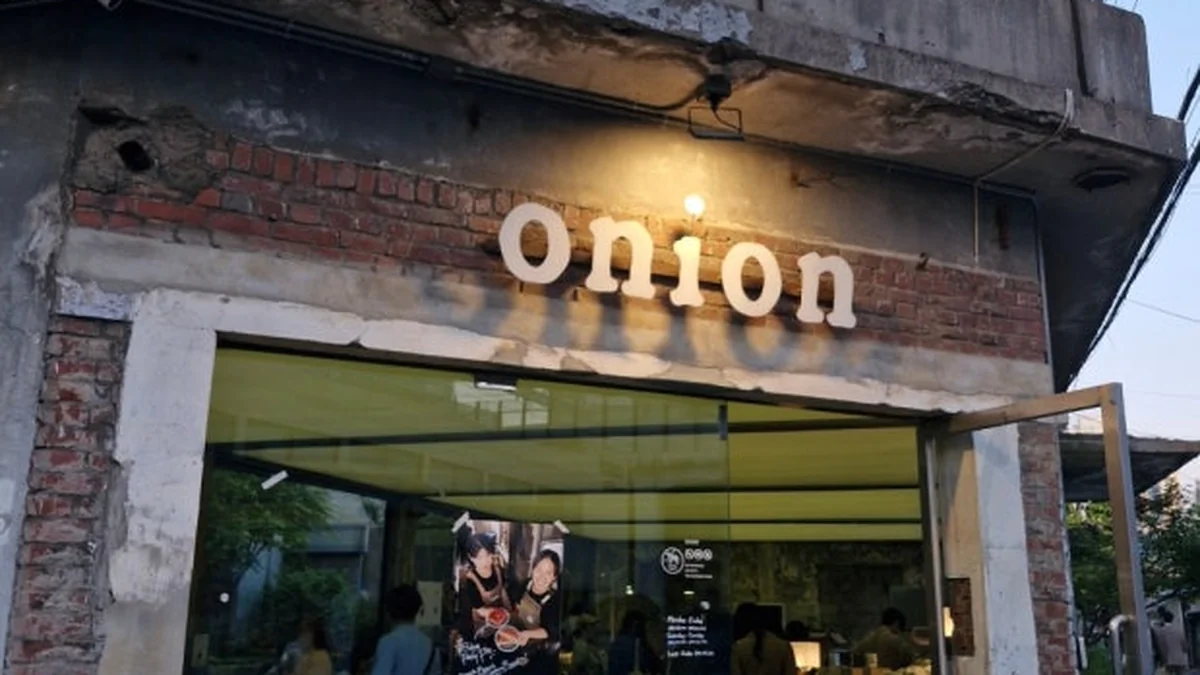
Cafe Onion is the spot that most people associate with Seongsu’s early transformation. Housed in a former goldsmith’s building with over forty years of history, it kept its original interior intact — rusty doors, peeling tiles, crumbling textures — and built around them rather than over them. The result is one of the most atmospherically compelling cafe spaces in Seoul. The homemade buns are excellent. The outdoor courtyard on a clear morning is the kind of place people genuinely don’t want to leave.
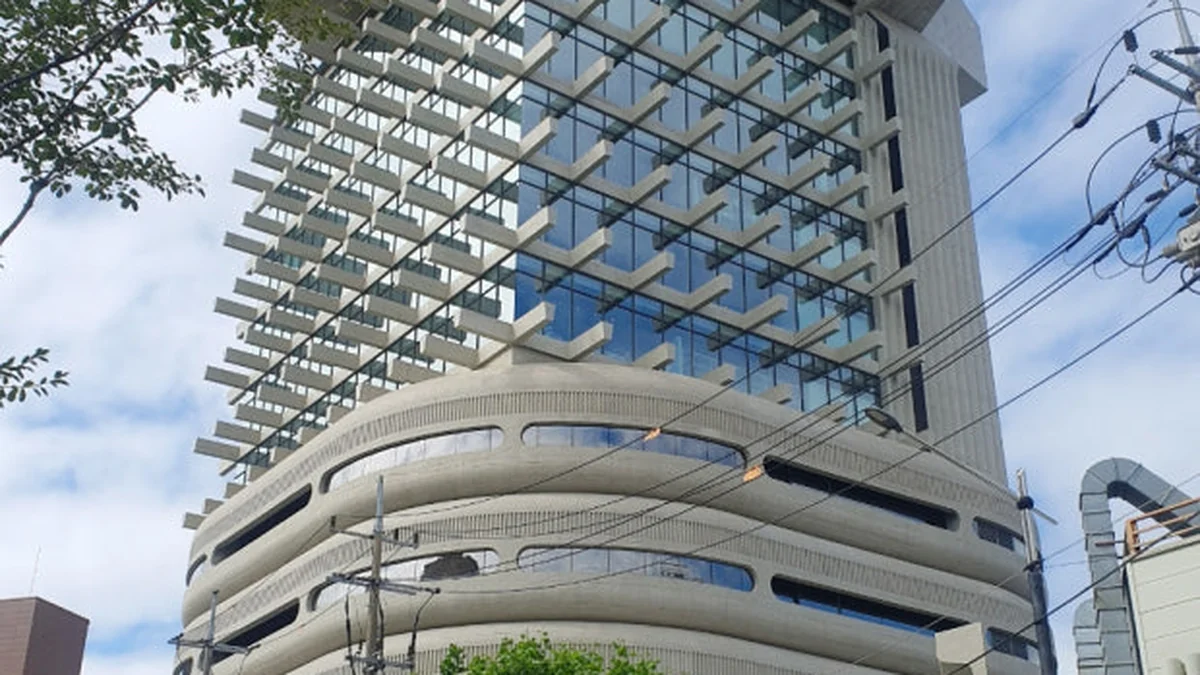
The most talked-about arrival in recent years is HAUS NOWHERE — Gentle Monster’s fourteen-story flagship building, which opened in early 2025 and has been generating social media attention ever since. Gentle Monster, the Korean eyewear and experience brand, has built its global reputation on turning retail spaces into immersive art installations, and HAUS NOWHERE takes that philosophy to its most ambitious scale yet. Even if eyewear isn’t particularly your interest, the building is worth walking through — each floor offers something different, the architecture is genuinely striking, and the NUDAKE dessert cafe inside is one of the better places in Seongsu for a sit-down coffee.
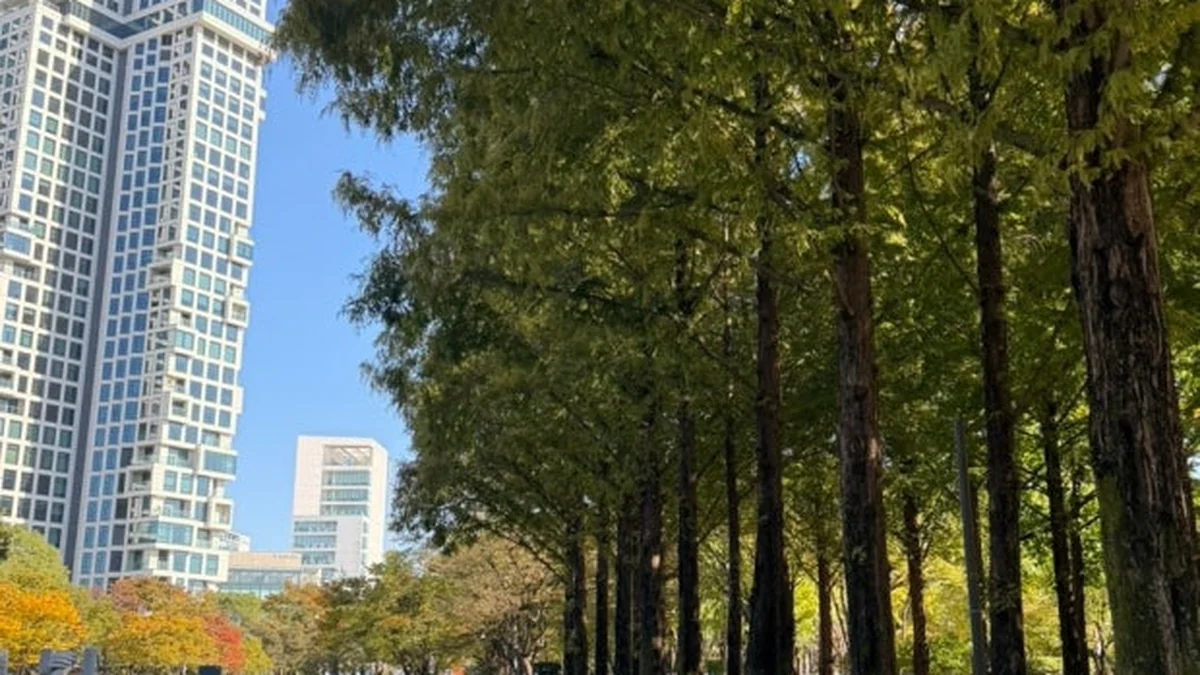
Seoul Forest sits at the edge of the Seongsu neighborhood and provides exactly the kind of natural counterweight the area needs. After a morning of cafe-hopping and design browsing, walking into the park — with its walking trails, rose garden, butterfly pavilion, and wide lawns where families picnic and couples rent bikes — feels like pressing a reset button. On weekday mornings, the forest is quiet enough to make you forget you’re in a city of ten million people. On weekends, it’s alive in the best possible way.
One of the more subtle pleasures of Seongsu is the pop-up culture that defines its commercial landscape. On any given weekend, a temporary installation from a Korean beauty brand, a limited-edition drop from a fashion label, or a collaborative food concept between two restaurants might have appeared since your last visit. The neighborhood actively rewards repeat visits in a way that few static commercial districts do.
Hongdae — The Original Energy
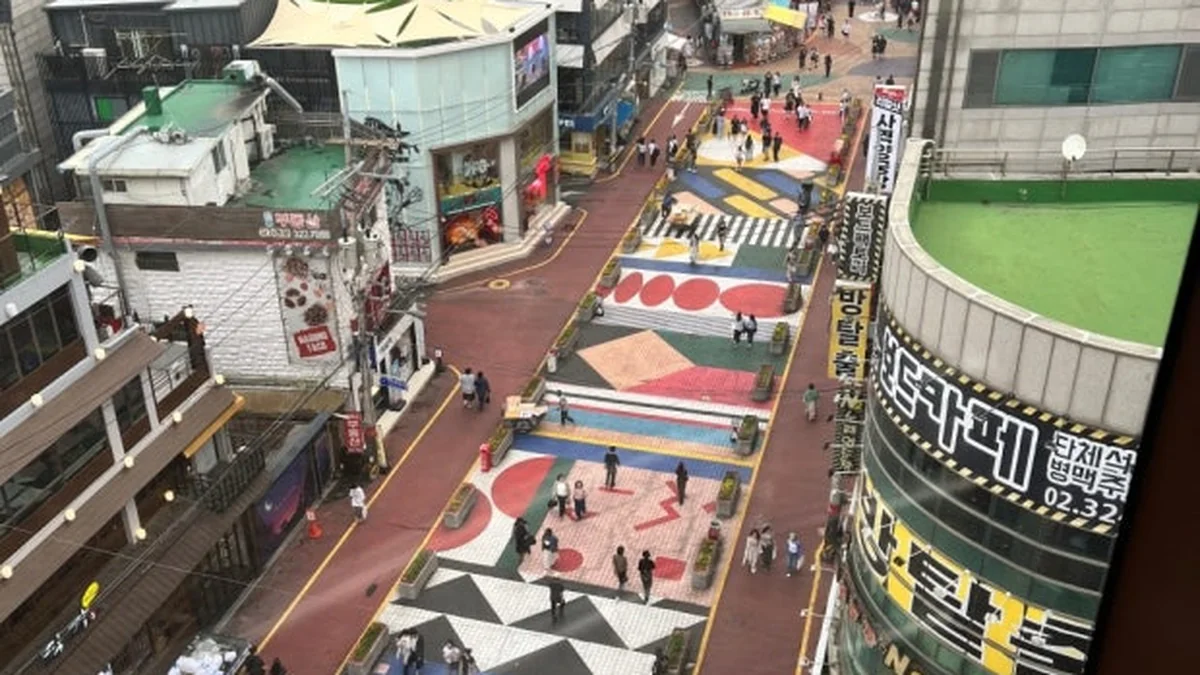
Hongdae has been Seoul’s center of youth culture for decades, and the years have not entirely dimmed what made it special. Yes, chain stores have replaced some of the independent shops that defined the neighborhood in its earlier incarnations. Yes, the tourist numbers have grown considerably since the rest of the world discovered Korean pop culture. Yes, on a Friday night in July, the streets around Exit 9 are packed enough that walking at normal pace becomes genuinely difficult.
But Hongdae still delivers on its core promise: energy, creativity, youth, and the kind of street-level life that money and planning can’t fully manufacture.

The neighborhood takes its name from Hongik University — 홍익대학교 — one of Korea’s most respected art and design schools, whose graduates have shaped Korean visual culture for generations. That foundation matters. The aesthetic sensibility you notice in Hongdae’s murals, its independent clothing stores, its performance spaces, and even its cafe interiors comes from a genuine creative tradition rather than a marketing strategy.
Street performance is one of Hongdae’s most distinctive features, and one that has survived the neighborhood’s commercialization better than most. On weekend evenings, the pedestrian areas around the main streets fill with buskers, dance crews, and impromptu one-person performances that range from genuinely remarkable to endearingly enthusiastic. The audience gathers, disperses, and reforms constantly — there’s a spontaneous civic quality to it that you won’t find in more curated parts of the city.
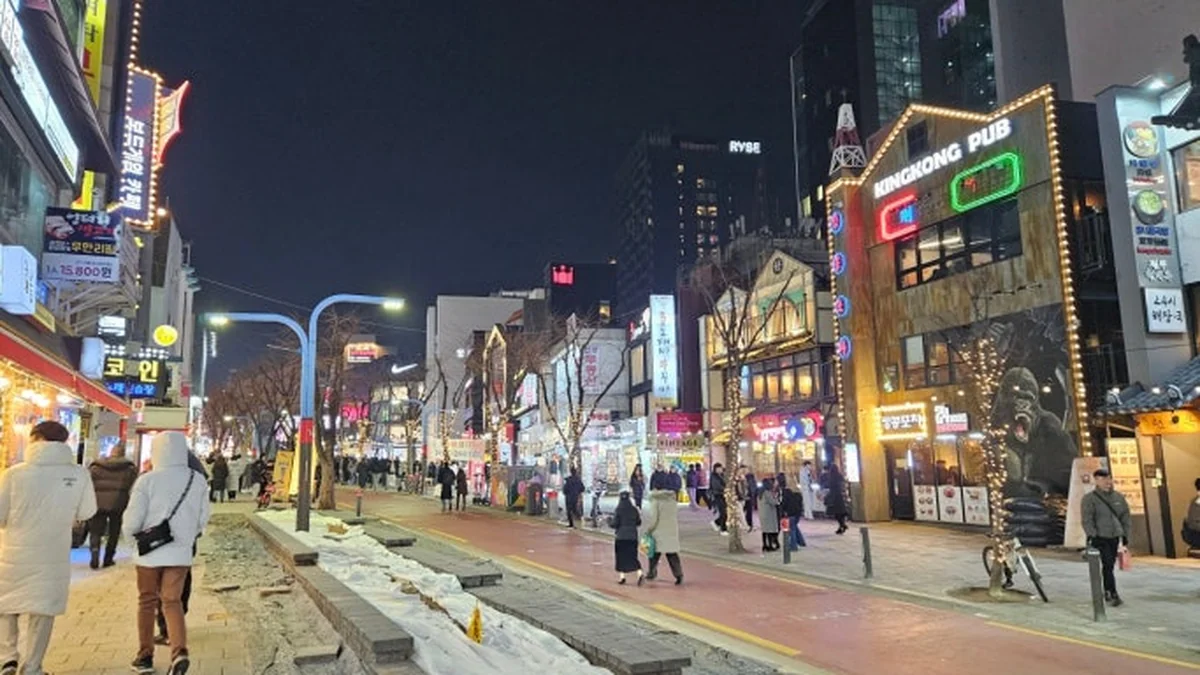
The food and drink scene in Hongdae is dense, affordable, and excellent. The streets around the main exit are lined with pojangmacha-style tents, Korean fried chicken joints, tteokbokki stalls, and craft beer bars that stay open until the early morning hours. The key is to wander rather than plan — the best meals in Hongdae tend to be the ones you find by following a smell or a crowd rather than a recommendation.
For those who want a calmer experience in the same area, the streets a few blocks from the main drag — particularly toward Hapjeong and Sangsu — have developed their own quieter, more local character over the years. These edges of Hongdae are where a lot of the genuine neighborhood life happens: small wine bars, independent bookshops, hand-drip coffee specialists, and the occasional gallery that doesn’t announce itself loudly from the street.
Yeonnam-dong — The Quiet Next Door
Walk ten minutes east from Hongdae Entrance Station Exit 3, and the Gyeongui Line Forest Park begins. Follow it north, and you’re in Yeonnam-dong — and the contrast is immediate enough to feel almost theatrical.
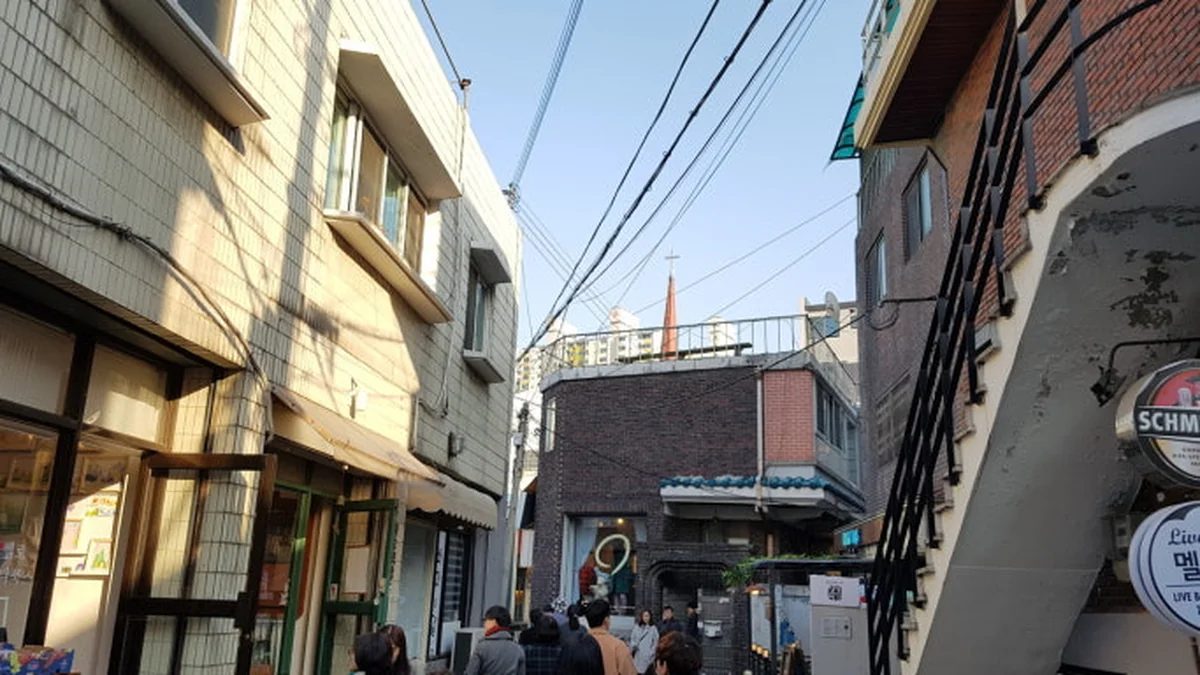
The noise falls away. The crowds thin. The streets narrow into the kind of residential lanes where you can hear your own footsteps. And then, tucked into the converted ground floors of old houses, begin to appear some of the most quietly beautiful cafes in Seoul.
Yeonnam-dong’s origin story involves the Gyeongui Line — a railway that ran through this area for decades, cutting the neighborhood off from easy access and keeping rents low enough that it remained genuinely residential long after areas like Hongdae had been fully commercialized. When the railway was decommissioned and converted into the 6.3-kilometer Gyeongui Line Forest Park in 2016, the neighborhood’s character began to shift. Young entrepreneurs noticed. Cafes opened in converted hanok structures. Boutiques appeared between laundromats and supermarkets.
What makes Yeonnam-dong different from every other trendy Seoul neighborhood is that it never fully shed its residential identity. Families still live here. The morning brings kids heading to school and residents commuting to work. The conversations overheard at cafe tables tend to be about weekend plans and work life rather than which pop-up just opened. There is a comfortable ordinariness to Yeonnam-dong that its trendier neighbors have largely lost — and that ordinariness is, paradoxically, what makes it so appealing.
The Gyeongui Line Forest Park itself deserves time. The walking and cycling path runs through the neighborhood in a long, tree-lined corridor that provides the kind of unhurried urban greenery that Seoul doesn’t have enough of. On a mild afternoon, sitting on a bench with a convenience store coffee while the light filters through the trees and distant Hongdae music drifts over — that particular combination of sounds and sensations is one of the most pleasant you’ll find in this city.
Cafe culture in Yeonnam-dong runs deep and idiosyncratic. Most cafes are converted residential buildings, which means each one has a different layout, a different set of windows, a different relationship to the street. Some have preserved original architectural details from the 1970s. Others have been renovated into clean, minimal spaces that contrast sharply with the neighborhood’s older textures. The overall effect is a density of genuinely individual spaces — the opposite of the interchangeable aesthetic that has taken over parts of Hongdae and Seongsu.
The shopping here tends toward the independent and the handmade: stationery shops, small clothing labels, ceramics boutiques, and the kind of lifestyle goods that someone clearly made because they wanted to, not because a trend report told them to. Prices are generally lower than in Seongsu, and the experience of shopping here feels more personal — you’re often buying directly from the person who made the thing.
Doing All Three in One Day
For those who want to cover all three neighborhoods in a single ambitious day, here’s a rhythm that tends to work well.
Start in Seongsu by 10am — early enough to get a seat at Cafe Onion without a significant wait and to walk the neighborhood before the weekend crowds fully arrive. Spend two to three hours here: coffee and pastries first, then the streets around Yeonmujang-gil for shops and galleries, then a walk through Seoul Forest if the weather cooperates. Leave Seongsu by early afternoon.
Cross the city to Hongdae by subway — Seongsu Station to Hongdae Entrance Station via Line 2 takes about forty minutes. Arrive in the mid-afternoon, when the neighborhood is starting to come alive but hasn’t yet reached its peak density. Spend an hour or so in Hongdae itself — the main streets, a look at whatever street performances are setting up, a meal at one of the pojangmacha tents if appetite allows.
Then walk east along the Gyeongui Line Forest Park into Yeonnam-dong for the early evening. This transition, from Hongdae’s noise into the park’s green quiet and then into Yeonnam’s residential calm, is one of Seoul’s most pleasant walks. Spend the evening here — a long sit at one of the cafes, a browse through the boutiques before they close, dinner at a small restaurant tucked into a side lane. End the night with a convenience store beer on a park bench if the temperature allows.
It’s a full day. But it’s the kind of full day that feels genuinely earned.
Practical Notes
Seongsu changes faster than almost any other neighborhood in Seoul — pop-ups open and close on timescales of weeks, and specific shops recommended last year may have transformed by the time you arrive. Embrace the unpredictability rather than fighting it. The neighborhood always has something happening; the exact thing happening will be different from whatever you read about.
Weekday visits to all three neighborhoods are considerably more relaxed than weekend ones. If your schedule allows, a Thursday or Friday morning in Seongsu and a Friday afternoon/evening in Hongdae and Yeonnam-dong hits the sweet spot between activity and accessibility.
Comfortable walking shoes are non-negotiable for a day like this — the distances are real, and the terrain in Yeonnam-dong’s side streets is uneven. A T-money card handles all transit. Naver Maps is more reliable than Google Maps for pedestrian routing in both Seongsu and Yeonnam-dong, where some of the smaller streets and alleys aren’t always mapped accurately.
Final Thoughts on Part Two
These three neighborhoods represent a different kind of Seoul from the palaces and shrines of Part One — but they’re no less worth understanding. They show a city that is constantly in conversation with itself, always renegotiating what an old building can become, what a forgotten district can turn into, what “cool” means to a generation of Koreans who grew up on both traditional culture and global creative influence.
Seongsu shows you Seoul at its most ambitious and forward-facing. Hongdae shows you its energy and its youth. Yeonnam-dong, if you’re lucky enough to catch it on a quiet afternoon, shows you something more private — the city living for itself rather than for visitors, comfortable in its own company.
All three are worth your time. All three will look slightly different the next time you visit. That’s not a flaw — it’s the point.
Up next — Part 3: Food Markets and Culinary Seoul — Gwangjang Market, Myeongdong Street Food, and the dishes that define this city’s table.
Have you spent time in Seongsu, Hongdae, or Yeonnam-dong? Which one felt most like the Seoul you were looking for? Drop your thoughts in the comments — we’d love to hear which neighborhood got under your skin.