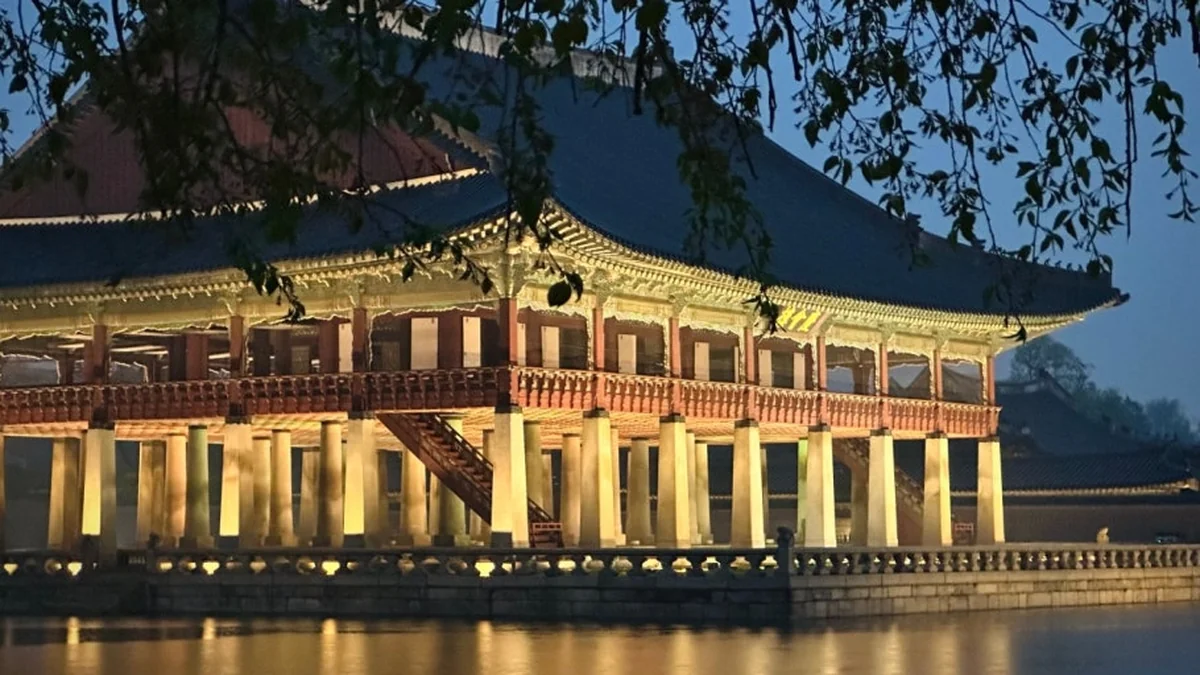
Seoul Travel Guide Part 1: Royal Palaces, Hanok Villages, and the Soul of Old Seoul
Seoul is one of those cities that refuses to be simplified. It’s a place where a glass skyscraper casts its shadow over a five-hundred-year-old palace wall, and where a grandmother sells sesame sweets from a wooden cart a few steps away from a Michelin-starred restaurant. Getting to know Seoul properly takes time — which is exactly why this guide is built across five separate chapters, each covering a different face of the city.
This first chapter is about the Seoul that existed before everything else. The Seoul of kings and scholars, of lantern-lit courtyards and tiled rooftops, of streets narrow enough that two people have to turn sideways to pass each other. It’s the part of the city that many travelers only graze the surface of — and the part that, if you slow down enough to actually feel it, turns out to be the most rewarding of all.
Where to Start: Understanding Old Seoul’s Geography
Everything in this itinerary sits in a compact, walkable cluster in the northern part of central Seoul — the area that was the heart of the Joseon Dynasty capital for over five hundred years.
Gyeongbokgung Palace anchors the entire neighborhood to the north. Bukchon Hanok Village spreads out just to the east of it. Insadong runs south through the middle. Changdeokgung and Jongmyo Shrine sit a little further east. All of it connects naturally on foot, which means you can move through it at your own pace without constantly consulting a subway map.
The nearest subway stations are Gyeongbokgung Station on Line 3 for the palace, and Anguk Station on Line 3 for Bukchon and Insadong. Both are clean, well-signed in English, and easy to navigate from any part of central Seoul.
Gyeongbokgung Palace — The Grand Beginning
Start here, and start before 9am if you can manage it.

Gyeongbokgung is the largest and most imposing of Seoul’s five royal palaces — built in 1395 as the main seat of the Joseon Dynasty and designed from the ground up to convey power, legitimacy, and order. The central axis runs straight from the main south gate through the throne hall to the mountains behind, a deliberate alignment that places the palace in harmony with the surrounding landscape in a way that still reads clearly even from a modern map.
Walking through Gwanghwamun Gate — the massive outer gate that faces the city — and into the first courtyard gives you an immediate sense of scale. The palace complex covers roughly 57 acres, and on a clear morning with the mountains of Bugaksan visible above the back wall, it looks genuinely magnificent.
The throne hall, Geunjeongjeon, is the centerpiece and the place most visitors photograph first. The two-tiered stone platform it sits on, the carved stone figures lining the courtyard, and the painted wooden ceiling visible from the front steps all reward unhurried looking. The National Folk Museum of Korea sits within the palace grounds and is included in the entry ticket — it offers some of the most accessible and well-presented context on Korean history and daily life you’ll find anywhere in the city.
Admission is 3,000 won for adults, which ranks among the best-value cultural experiences in Seoul. The changing of the royal guard ceremony happens at the main gate at 10am and 2pm and is worth watching if your timing allows — the costumes and choreography are meticulous and the whole production lasts about twenty minutes.
One practical note: Wearing a hanbok gives you free entry, and rental shops clustered around the palace gates make it easy to pick one up before you go in. If you plan to rent, do it before arriving at the entrance rather than after, since the shops closest to the gate tend to get busy once the morning crowds build.
Bukchon Hanok Village — The Quiet Above

A ten-minute walk east from Gyeongbokgung brings you to Bukchon Hanok Village, and the transition between the two is one of Seoul’s most quietly striking experiences. You leave the grand formality of the palace behind and enter a neighborhood of lanes so narrow, walls so close, and rooflines so consistent that the modern city feels genuinely distant even though it’s visible just beyond the edges.
Bukchon — which translates roughly as “northern village” — is not a museum or a reconstruction. It is a living residential neighborhood, home to real people who have chosen to live in traditional hanok houses in the middle of a 21st-century megacity. This is worth keeping in mind: the beauty is real, the history is real, and the request from residents to walk quietly and keep noise down is also real. Treat it accordingly.

The most famous view in Bukchon is from the upper section of Bukchon-ro 11-gil — a steep alley that looks down over a staircase of tiled rooftops toward the modern city beyond. This image has appeared on more Korean travel promotional materials than almost any other, and yet standing there in person, it still earns the attention it gets. The geometry of the overlapping rooftop curves, the way the lines pull your eye through the frame and out toward the distant buildings — it’s the kind of composition that reminds you why people travel to see things in person rather than just online.
Beyond the famous viewpoint, Bukchon rewards wandering. The smaller lanes that branch off the main road hide workshops, tiny galleries, and the occasional tea house tucked behind a wooden gate. Some of these places have been operating for generations. A bowl of traditional sikhye, a sweet fermented rice drink, taken slowly in a hanok courtyard is one of those deeply pleasant small moments that don’t appear on any official highlights list but stay with you longer than most things that do.
Changdeokgung Palace and the Secret Garden

If Gyeongbokgung impresses with scale, Changdeokgung rewards with intimacy. Built in 1405 as a secondary royal palace, it became the preferred residence of many Joseon kings — partly because its layout, which works with the natural contours of the hill it sits on rather than imposing a rigid grid upon them, gives it a different quality of space. Less formal, more human, somehow more alive.
Changdeokgung is a UNESCO World Heritage Site, and the designation feels earned. The main palace complex is beautiful, but the real reason to come is Huwon — the Secret Garden — a 78-acre landscaped garden hidden behind the palace that served as a private retreat for the royal family. Ponds, pavilions, old trees, and carefully composed views across water appear around almost every turn. The garden is the kind of place where you instinctively slow down, where conversation drops to a murmur, and where you find yourself noticing the quality of light in a way that everyday city life rarely encourages.
Huwon access requires a separate ticket and a guided tour — admission for the palace and garden combined is 8,000 won for adults. Tours run at set times and fill up quickly, so booking in advance on the official website is strongly recommended, particularly on weekends and during spring cherry blossom season when demand is especially high.
The walk between Changdeokgung and Bukchon takes around fifteen minutes and passes through some of the most pleasant streets in old Seoul. This transition, from royal garden to residential lane, captures the neighborhood’s character better than either place does in isolation.
Insadong — Culture, Craft, and the Street That Feeds You
Running south from Bukchon toward central Seoul, Insadong is one of the most visited streets in the city — and one of the few tourist-heavy areas that manages to hold onto genuine character despite the foot traffic.

The main street is lined with traditional craft shops, art galleries, antique dealers, and tea houses. The quality varies considerably from shop to shop, as it always does in any busy tourist corridor, but the density of genuinely interesting things — hand-painted fans, traditional pojagi wrapping cloth, celadon ceramics, handmade paper goods — is still high enough that browsing here doesn’t feel like a waste of time. The further you get from the main road into the side lanes, particularly around the Ssamziegil courtyard complex, the more interesting the discovery tends to be.
The food in Insadong deserves its own mention. Hotteok — sweet filled pancakes — are the classic Insadong street snack, and the version sold by the long-running stalls here tends to be better than what you’ll find in most other parts of the city. Tteok, Korean rice cakes in various traditional forms and colors, are sold at dedicated shops and are worth buying as much for the craftsmanship as for the taste. Insa-dong-gil, the street’s central artery, has enough snacking options that you could graze your way through an entire afternoon without sitting down to a formal meal.

For a proper meal, gogung bibimbap — a Jeonju-style bibimbap served in a stone pot — is available at several restaurants just off the main street and is consistently one of the better lunch choices in the neighborhood. The stone pot version arrives sizzling and develops a satisfying crispy rice crust at the bottom called nurungji if you let it sit for a few minutes before eating.
Jongmyo Shrine — The Most Overlooked Site in Old Seoul
A ten-minute walk east of Insadong, Jongmyo Shrine is the most important Confucian royal shrine in Korea and a UNESCO World Heritage Site — and it is consistently among the most overlooked stops on any Seoul itinerary, which is a genuine shame.

Built in 1395, the year Gyeongbokgung was completed, Jongmyo houses the spirit tablets of the Joseon Dynasty kings and queens and serves as the site of an ancestral ritual called Jongmyo Jerye, which has been performed without interruption for over six hundred years. The ritual is still conducted in May each year according to traditions that have changed little since the Joseon period — the costumes, the music, the food offerings, and the prescribed movements are all maintained with the same exactitude they’ve always had.
The shrine itself is architecturally austere in a way that initially surprises visitors expecting ornate decoration. The Jeongjeon, the main hall, is one of the longest wooden structures in Asia — over 100 meters — and its severe horizontal line and dark wood give it a gravity that no amount of elaborate carving could have added. The surrounding grounds are wide and quiet, shaded by old trees, and largely empty of the crowds you’ll find a few streets west. Admission is 1,000 won, which makes it one of the most absurdly underpriced experiences in Seoul.
Practical Notes for This Itinerary
This entire route is walkable from end to end in a full day, though a day and a half gives it more space to breathe. Starting at Gyeongbokgung at opening time, moving through Bukchon in the mid-morning before the crowds peak, and reaching Insadong for lunch keeps the pacing comfortable.
Spring and autumn are the exceptional seasons for this area. Cherry blossoms inside the palace grounds in April and the golden ginkgo trees lining Changdeokgung’s outer walls in November are two of the most beautiful natural displays in Seoul. Summer visits are hot and crowded on weekends but perfectly manageable on weekdays. Winter brings fewer crowds and a different, starker beauty to the palace stonework and bare-branched gardens.
Dress modestly for temple and shrine visits, particularly Jongmyo. The most comfortable footwear is flat-soled and sturdy — the stone paths inside the palaces and the steep lanes of Bukchon are both hard on anything with a heel.
The T-money card handles all subway and bus travel. Naver Maps is more accurate than Google Maps for pedestrian routing in this part of Seoul, particularly inside the older neighborhoods where the street layout doesn’t always match what Google expects.
Final Thoughts on Part One
The old heart of Seoul is the part of the city that most visitors see first and many never return to, because the newer, flashier neighborhoods pull them away with promises of cafes and shopping and nightlife. All of that has its place, and the next four parts of this series will cover it thoroughly.
But there’s something in these lanes and courtyards — in the weight of the history, the deliberateness of the architecture, the quietness that lingers inside the shrine walls — that the rest of Seoul, for all its electricity, can’t replicate. Coming here slowly, early in the morning, before the tour groups arrive and before the snack stalls open, is one of the purest travel experiences the city offers.
Take your time with it. The rest of Seoul will still be there when you’re ready.
Up next — Part 2: Trendy & Hip Seoul — Seongsu-dong, Hongdae, and Yeonnam-dong. The coolest neighborhoods in one of the world’s most creative cities.
Have you visited the royal palaces in Seoul? Did Gyeongbokgung or Changdeokgung leave a bigger impression? Share your experience in the comments — we’d love to hear which part of old Seoul got to you.

