Nakhwa Nori Korea: A Guide to the Falling Fire Festival
Nakhwa Nori Korea: A Guide to the Falling Fire Festival
There’s a moment during Nakhwa Nori Korea when the first embers begin to fall — slowly, silently, like they have all the time in the world — and the entire crowd goes quiet. No explosions. No smoke filling the sky. Just thousands of tiny sparks drifting downward in the dark, catching the surface of the water below and disappearing.
It’s one of the most quietly beautiful things you can witness in this country, and yet most visitors to Korea have never heard of it.
That’s changing fast. What was once a small regional tradition practiced near Buddhist temples and village pavilions has become one of Korea’s most talked-about cultural experiences — drawing tens of thousands of visitors, appearing in K-dramas and variety shows, and now being considered for official national heritage status. If you haven’t encountered Nakhwa Nori Korea yet, this is the guide you need.
Table of Contents
- What Is Nakhwa Nori?
- The History Behind the Falling Fire
- How Nakhwa Works — The Making of the Fire Wands
- Where to See Nakhwa Nori Korea
- Nakhwa in Korean Pop Culture
- Why Nakhwa Nori Is More Than Just a Festival
- Tips for Planning Your Visit
What Is Nakhwa Nori?
The name says everything you need to know, once you understand it. In Korean, nakhwa carries a double meaning — it can mean “falling flowers” and “falling flames” at the same time. Nori means play, festival, or the enjoyment of something beautiful. Put them together and you get a name that captures the entire spirit of the tradition in just two words.
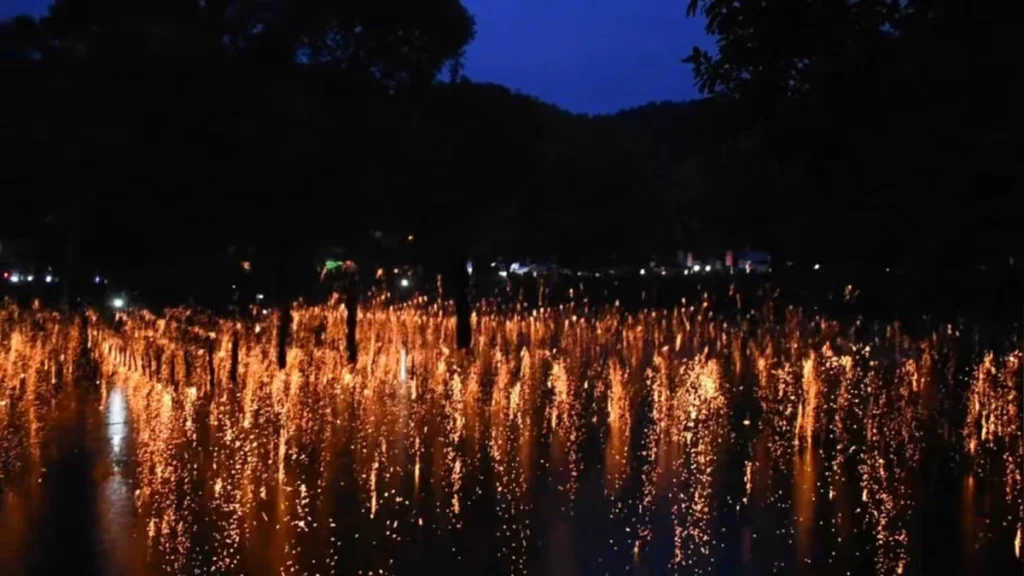
Nakhwa Nori Korea is a traditional fire ceremony in which bundles of charcoal-filled paper — called nakhwabong — are hung from ropes, pine branches, or iron wires above water. When lit, they burn slowly and steadily, releasing cascades of tiny glowing embers that drift downward through the night air and dissolve into the surface of the river or pond below.
Unlike modern fireworks, there is no bang. No chemical burst of color. Just a long, slow, luminous rain of fire that somehow manages to feel both ancient and dreamlike at the same time. For many people who witness it for the first time, the experience is genuinely moving in a way that’s hard to put into words afterward.
The History Behind the Falling Fire
Nakhwa Nori Korea traces its origins back to the Joseon Dynasty, with the tradition believed to have taken shape during the 17th century. It began as a Buddhist purification rite, originally practiced as part of the Yeondeunghoe — the Lotus Lantern Festival — which itself holds UNESCO Intangible Cultural Heritage status.
In those early days, lighting lanterns and burning nakhwa wands were considered two parts of the same celebration. The fire was seen as a way to chase away misfortune, purify the community, and invite blessings for the year ahead. The ritual was also tied to prayers for a good harvest and the well-being of the village — deeply communal in its original purpose.
During the Japanese colonial period, the tradition was suppressed along with many other aspects of Korean cultural life. It gradually disappeared from public practice and was nearly lost entirely. The revival began in the 1980s, and in 2008, the Haman Nakhwa Nori was officially designated as an Intangible Cultural Heritage of Gyeongsangnam-do Province — a recognition that helped anchor the tradition’s place in Korean cultural life going forward.
Today, cultural authorities are discussing whether Nakhwa Nori deserves national-level heritage status. Given the scale of recent attendance figures and the growing international interest, that conversation is already well underway.
How Nakhwa Works — The Making of the Fire Wands
There’s something genuinely fascinating about how low-tech Nakhwa Nori Korea is, and how extraordinarily beautiful the result turns out to be.
The nakhwabong — the fire wand at the center of it all — is made from oak charcoal powder wrapped tightly in hanji, traditional Korean paper made from mulberry bark. The bundle is attached to a thick cotton wick and then strung onto long ropes or iron wires that stretch across the water. Dozens, sometimes hundreds of these wands are hung in rows above rivers, ponds, and pavilion gardens before the ceremony begins.
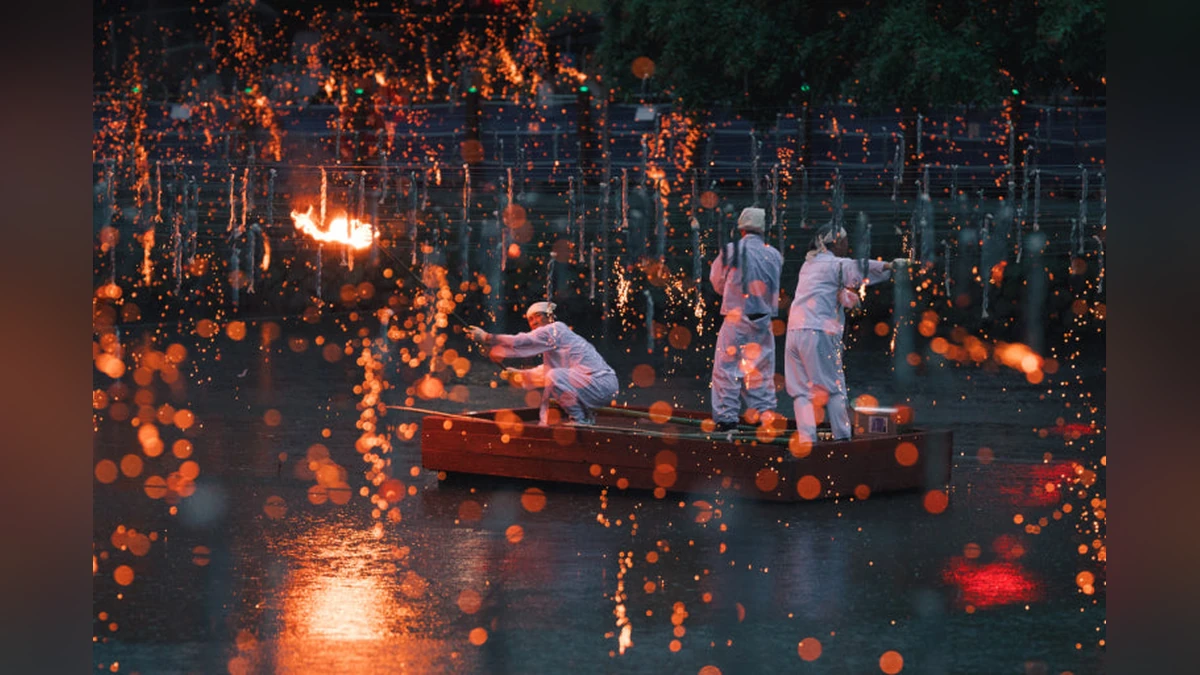
When evening falls, locals — sometimes in boats, sometimes from the riverbank — light each wick using long fire-tipped sticks. The charcoal begins to burn slowly and evenly, releasing a steady stream of glowing embers that fall in graceful arcs toward the water. Because the burning is gradual rather than explosive, a single display can last well over two hours — a remarkable contrast to the few seconds of a conventional firework burst.
The reflection on the water below doubles the visual effect. Watching the embers fall and mirror themselves in a still pond, disappearing at the exact moment they touch the surface — that image is what stays with people long after the night is over.
Where to See Nakhwa Nori Korea
Haman, South Gyeongsang Province
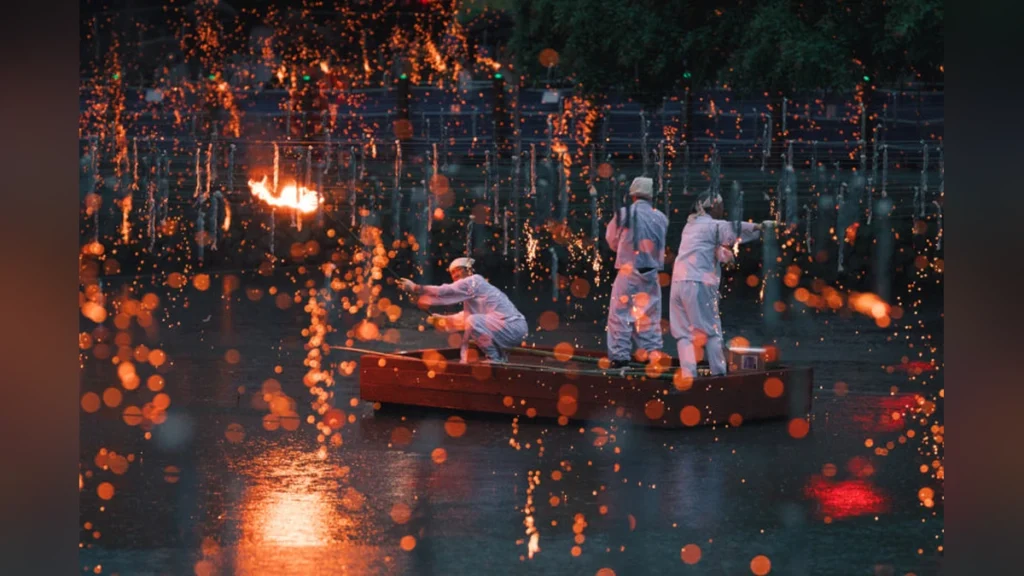
The Haman Nakhwa Nori Festival is the most famous expression of this tradition in the country, held annually at the Mujinjeong Pavilion. The pavilion sits beside a tranquil pond, and the way the falling embers reflect across the still water has made it one of the most photographed cultural spectacles in Korea.
The event is typically held around Buddha’s Birthday in spring — usually April or May depending on the lunar calendar — and has in recent years also been held in October. Attendance has grown dramatically over the past several years, with more than 60,000 visitors arriving at one recent event — enough to overwhelm local infrastructure and prompt organizers to introduce an advance reservation system.
The festival isn’t only about the fire display itself. Visitors can try on hanbok, write wishes on nakhwabong paper, craft traditional Korean keychains, and enjoy local food while live traditional music plays. It’s a genuinely immersive cultural experience from beginning to end.
Sejong City
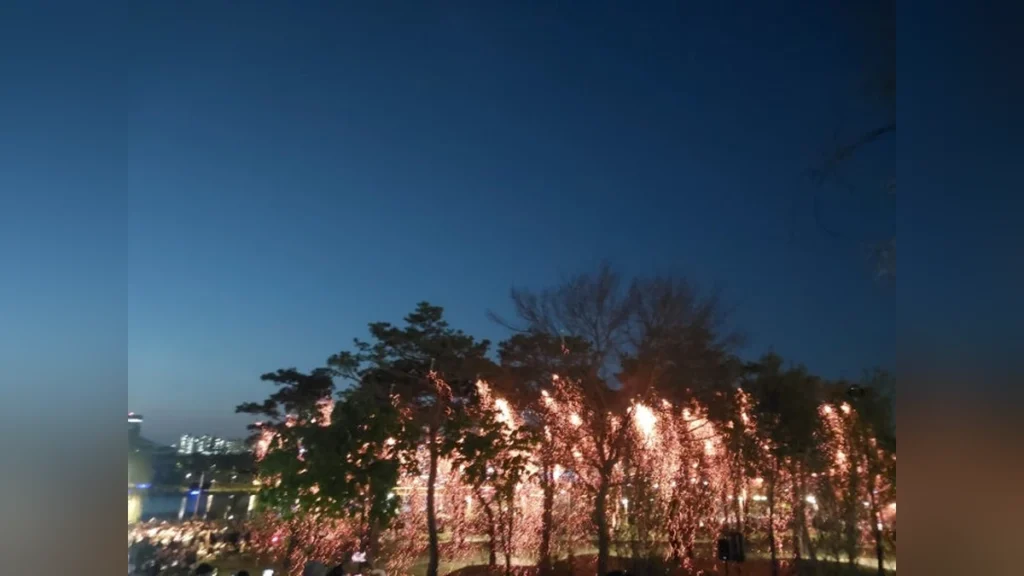
Sejong has become an increasingly significant venue for Nakhwa Nori Korea in recent years. The ceremony is held at Sejong Central Park, which offers a vast open space capable of hosting very large crowds. The Sejong version takes place in two forms — temple ceremonies held in February and October, and the official Sejong Nakhwa Festival near Buddha’s Birthday.
A February ceremony at Yeongpyeong Temple in Sejong unexpectedly drew over 30,000 visitors when organizers had anticipated a few thousand — a striking measure of just how much public interest has grown. For 2025, organizers prepared 10,000 fire wands, double the number used two years earlier.
Andong Hahoe Village — Seonyu Julbul Nori
Slightly different in form but equally spectacular, the Seonyu Julbul Nori in Andong’s Hahoe Folk Village is a related tradition worth knowing about. Hahoe Village itself is a UNESCO World Heritage Site, which gives the whole experience an added layer of historical weight.

Here, fire travels along long ropes strung above the river, creating an effect described as looking like the flowing Milky Way. The combination of the historic village backdrop, the river, and the slow-moving fire overhead makes it one of the most visually distinctive events in Korea’s cultural calendar.
Nakhwa in Korean Pop Culture
One of the reasons Nakhwa Nori Korea has broken into mainstream consciousness in recent years is its recurring presence in Korean entertainment. The visual quality of the falling embers — romantic, ephemeral, deeply atmospheric — makes it an almost irresistible setting for storytelling.
The tradition has appeared in several notable K-dramas, including Bloody Heart, Revenant, See You in My 19th Life, and Destined with You, where it was used to heighten emotional or romantic scenes. The variety show 1 Night and 2 Days dedicated an episode to the Haman festival, showing the preparation process from start to finish — which introduced the tradition to an audience that might never have encountered it otherwise.
BTS member RM also featured imagery inspired by nakhwa in the music video for his solo track Wild Flower, using the falling sparks as a metaphor for fleeting beauty and the passing of time. That kind of cultural crossover — from centuries-old folk tradition to contemporary Korean artistic expression — says a great deal about how alive this tradition still is.
Why Nakhwa Nori Is More Than Just a Festival
It would be easy to describe Nakhwa Nori Korea simply as a beautiful fire display and leave it at that. But to do so would be to miss most of what makes it significant.
At its core, this is a tradition built around the idea of communal blessing — a shared act of marking the season, praying for the well-being of the village, and honoring something larger than individual experience. The fact that it takes place over water, that the fire falls rather than rises, that the display is quiet rather than loud — all of these qualities distinguish it from spectacle for its own sake and give it a contemplative quality that’s rare in public events.
There’s also something meaningful about the revival story itself. A tradition suppressed during the colonial era, nearly forgotten, brought back through the efforts of local communities and Buddhist institutions, and now drawing 100,000 visitors at a single event — that arc is as compelling as the fire display.
For travelers interested in experiencing Korean culture in a way that goes beyond palaces and street food, Nakhwa Nori offers something genuinely different. It asks you to slow down, stand in the dark, and watch something quiet and old and beautiful do its thing.
Tips for Planning Your Visit
Book early. The Haman festival in particular now requires advance reservations due to demand. Tickets and reservation slots tend to fill quickly once they open, especially for the main evening display. Check the official Haman County cultural events calendar well ahead of your intended visit.
Arrive early in the day. The nakhwa display itself takes place after dark, but arriving early lets you explore the surroundings, enjoy cultural program activities, and secure a good viewing position before the crowds build. By late afternoon, popular viewing spots near the water fill up quickly.
Dress warmly. Spring evenings in Gyeongsangnam-do and autumn nights anywhere in Korea can be cool, especially when you’re standing outdoors for an extended period. A light jacket at minimum is advisable.
Go with patience. Because the display burns slowly over a long period — sometimes two hours or more — Nakhwa Nori rewards a relaxed mindset more than almost any other festival. This is not an event to rush through. Give yourself the time to simply watch, and the experience will settle into you in its own way.
Consider combining your visit. Haman is accessible from Busan by train, making it a natural addition to a southern Korea itinerary. Andong’s Hahoe Village is also worth building a longer stay around, given the depth of cultural experiences available there beyond the Julbul Nori itself.
Final Thoughts
Nakhwa Nori Korea is the kind of tradition that makes you grateful someone cared enough to bring it back. Suppressed, forgotten, and quietly revived over decades, it now draws crowds in the hundreds of thousands and appears in the most-watched dramas in the country — all without ever raising its voice or reaching for anything louder than the sound of embers touching water.
If you find yourself in Korea when the nakhwabong are being strung above the pond at Mujinjeong, or stretched across the river at Hahoe, make the time to be there. You’ll find that some of the most beautiful things in the world don’t make any noise at all.
🔥