Korea’s Modern War History: Understanding the Conflict That Shaped a Nation — A Travel & History Guide
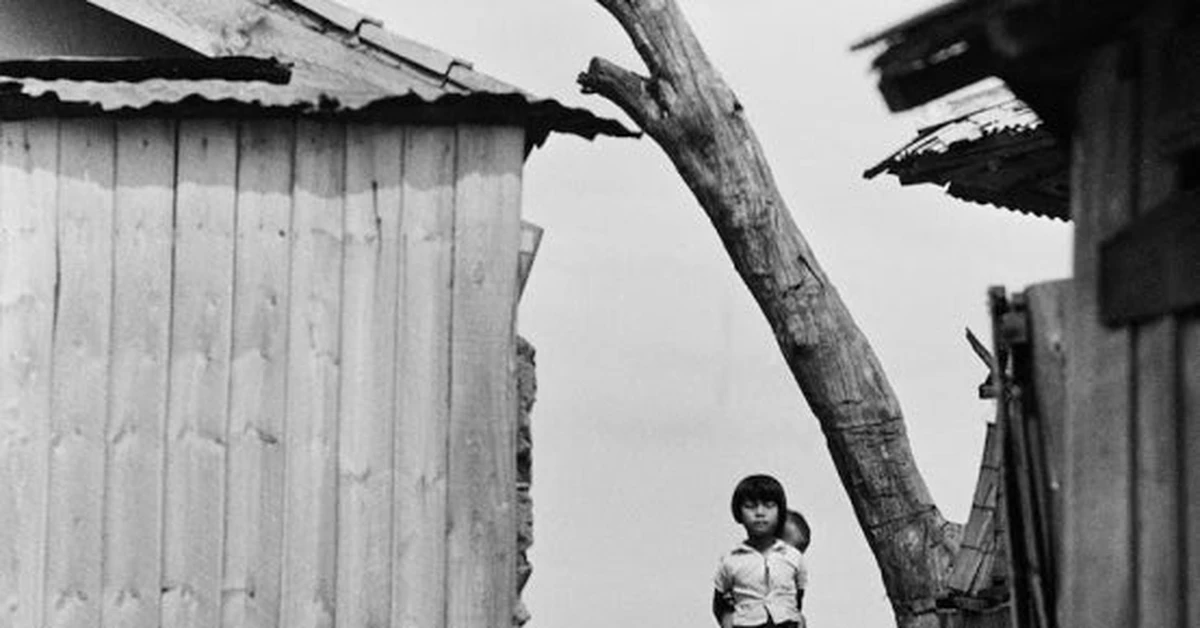
To understand modern Korea — its work ethic, its urgency, its particular relationship with both memory and ambition — you have to understand what happened here in the twentieth century. In the span of roughly sixty years, the Korean Peninsula was colonized, liberated, divided, torn apart by one of the most intense conflicts of the Cold War era, and then rebuilt from near-total destruction into two of the most divergent societies on earth.
The physical evidence of that history is still present. You can see it in the rusted locomotive at Imjingak that stopped running when the country was split in two and has sat at the end of the tracks ever since. You can feel it in the silence of the UN Memorial Cemetery in Busan, where soldiers from twenty-one countries rest in the only United Nations cemetery in the world. You can stand at an observation deck in the northern part of South Korea and look across a few kilometers of empty land into a country that is simultaneously the closest and most distant place imaginable.
This guide is for anyone who wants to understand Korea’s modern war history not just as a set of dates and facts, but as a living presence — something woven into the landscape, the people, and the extraordinary story of how this country became what it is today.
The Colonial Era — When Korea Lost Its Name
The modern chapter of Korean suffering begins in 1910, when Japan formally annexed the Korean Peninsula after years of encroaching control. What followed was thirty-five years of systematic colonial rule that touched nearly every aspect of Korean life.
The Japanese colonial administration suppressed the Korean language in public institutions, compelling Koreans to adopt Japanese names under the Soshi-kaimei policy. Korean cultural expression was constrained. Land was redistributed through policies that favored Japanese interests and displaced Korean farmers from land their families had cultivated for generations. The peninsula’s resources — rice, minerals, industrial output — were extracted in service of the Japanese imperial project, particularly as Japan expanded its military ambitions across Asia through the 1930s.
The years of the Second World War brought additional burdens. Hundreds of thousands of Korean men were conscripted into Japanese labor battalions or military service. An estimated 100,000 to 200,000 young Korean women — exact numbers remain a subject of historical dispute — were forced into sexual servitude for the Japanese military, a chapter that continues to generate diplomatic tension between Korea and Japan more than eighty years later. The suffering of these women, referred to as “comfort women” in translation though the Korean term 위안부 carries its own weight, remains one of the most painful unresolved historical wounds in East Asia.
Liberation came in August 1945 with Japan’s surrender to the Allied powers. The joy was profound, but brief. Korea’s freedom arrived already fractured.
Division — The Line That Became a Wall
In the immediate aftermath of World War Two, the Allied powers made a provisional administrative decision that would shape the next century of Korean history. The United States and the Soviet Union agreed to divide responsibility for managing Korea’s transition to independence along the 38th parallel of latitude — the Americans taking the southern zone, the Soviets the northern.
What was intended as a temporary administrative arrangement calcified. In the south, the US backed the establishment of a government aligned with Western interests. In the north, the Soviets supported a communist government under Kim Il-sung. The two governments became incompatible, then adversarial. By 1948, two separate states had been formally declared — the Republic of Korea in the south and the Democratic People’s Republic of Korea in the north. The 38th parallel was now more than a line on a map. It was a border between two fundamentally different visions of what Korea should be.
The people caught on the wrong side of that line — and there were hundreds of thousands of them, families separated, communities split, individuals whose homes were suddenly in a different country — carried the cost of that political geography in ways that the governments making the decisions never fully accounted for. The Korean term for the families separated by division, 이산가족 (isang gajok), means “scattered families.” Reunions between them — always rare, often the first and only time such families have seen each other in decades — have been events of extraordinary emotion that occur with decreasing frequency as that generation ages.
The Korean War — The Conflict the World Called “Forgotten”
On June 25, 1950, North Korean forces crossed the 38th parallel in force. Within days, the South Korean military — under-equipped and caught off guard — was in rapid retreat. Seoul fell to North Korean forces within three days of the initial crossing.
The United States, operating under a United Nations mandate, intervened rapidly. Sixteen countries ultimately sent combat troops to fight under the UN flag. The initial weeks were desperate — South Korean and UN forces were pushed back to a small defensive perimeter around the southeastern city of Busan, what became known as the Pusan Perimeter, in some of the most intense defensive fighting of the war.
The counteroffensive began in September 1950 with a bold amphibious landing at Incheon, orchestrated by General Douglas MacArthur, that cut North Korean supply lines and changed the character of the war. UN forces swept north with momentum, recapturing Seoul and pushing deep into North Korean territory. For a brief moment, the prospect of a unified peninsula under UN auspices seemed possible.
Then China entered the war.
In late October 1950, Chinese People’s Volunteer Army forces crossed the Yalu River in massive numbers, pushing UN forces back in some of the most brutal fighting of the entire conflict. The brutal winter of 1950 to 1951 saw engagements in conditions of extraordinary cold — the Chosin Reservoir battle, in which UN forces fought their way out of a Chinese encirclement in temperatures that dropped to minus thirty degrees, remains one of the most studied and harrowing engagements in modern military history.
The war stabilized near the 38th parallel through 1951 and 1952 as armistice negotiations began at Panmunjom. The negotiations were slow, contested, and frequently stalled. Fighting continued even as diplomats talked, adding casualties on all sides for two more years while the boundary that would eventually be agreed upon barely moved from where the line had stood at the beginning.
The armistice was signed on July 27, 1953 — not a peace treaty, but a ceasefire agreement. No formal peace treaty between the two Koreas, or between the Korean states and their respective allied powers, has ever been signed. The Korean War technically remains unfinished. The armistice line — which deviates from the old 38th parallel in various places based on where the front happened to be on the day of ceasefire — became the Military Demarcation Line, flanked on both sides by a two-kilometer buffer zone: the Demilitarized Zone, or DMZ.
The human cost of the three years of war was staggering. Estimates of total military dead range from 1.2 million to over 1.5 million across all sides. Civilian casualties may have been comparable or higher. The peninsula’s infrastructure was devastated. Major cities had been fought over multiple times. The scholar and historian Bruce Cumings described the bombing of North Korea during the war as one of the most intensive aerial campaigns in history — more tonnage was dropped on the Korean Peninsula than in the entire Pacific theater of World War Two.
Rebuilding — The Miracle That Required Everything
South Korea in 1953 was one of the poorest countries in the world. GDP per capita was lower than some sub-Saharan African nations. The capital city was rubble. The country’s economic infrastructure barely existed.
What happened over the following decades is a story that economists and development scholars study as one of the most dramatic national transformations in modern history. The compressed industrialization of South Korea — the Miracle on the Han River — produced growth rates that defied conventional economic models. Industries were built from nothing into global leaders within a single generation. Education was prioritized with a ferocity that made South Korea one of the most highly educated populations in the world. A country that had been colonized, divided, and nearly destroyed rebuilt itself into the world’s twelfth-largest economy within fifty years.
That story of rebuilding is inseparable from the story of the war. The urgency that drives Korean work culture, the seriousness with which education is approached, the particular relationship Korea has with its own success — these are not cultural abstractions. They are responses to an experience of loss so total that survival itself was not guaranteed, and recovery required everything everyone had.
The DMZ Today — Where History Meets the Present

The Demilitarized Zone is one of the most heavily militarized borders on earth, and simultaneously one of the most biodiverse natural corridors in East Asia. Because human access has been prevented for over seventy years, the four-kilometer-wide strip of land between the two Koreas has become an unintended wildlife sanctuary — home to Amur leopard cats, Eurasian black bears, migratory birds, and plant species that have disappeared from the surrounding agricultural landscape.
For visitors, the DMZ and its surrounding areas offer some of the most historically significant — and emotionally complex — experiences available anywhere in Korea.
Imjingak Peace Park
Located in Paju, Gyeonggi Province, approximately 55 kilometers north of Seoul, Imjingak sits just 7 kilometers from the Military Demarcation Line and serves as the practical boundary of civilian access. The park was developed as a space for the many Koreans who cannot cross into the north to express their longing for divided families and former hometowns.
The Freedom Bridge stands here — the bridge over which nearly 13,000 South Korean prisoners of war crossed on their return home after the armistice. The rusted locomotive displayed at the park’s northern edge stopped running when the division happened and has remained frozen in that moment ever since, bullet holes still visible in its body. Mangbaedan Altar, where displaced Koreans from the north perform ancestral rites in the direction of their former homes, is one of the most quietly heartbreaking places in the country.
Imjingak is accessible from Seoul by subway and shuttle services, making it the most practically accessible point of engagement with the DMZ experience for visitors without a guided tour.
The Third Infiltration Tunnel
Four infiltration tunnels dug by North Korea beneath the DMZ have been discovered by South Korean forces. The Third Tunnel, discovered in 1978, is the most visited by civilians. Located near Panmunjom, it extends roughly 1.7 kilometers into South Korean territory at depths of up to 73 meters. Walking through the narrow, low-ceilinged passage — which requires crouching at certain points and feels genuinely claustrophobic — is one of the most immediately physical engagements with the reality of the division available to visitors. North Korea denied building the tunnel, claiming it was a coal mine, despite the absence of coal and the presence of dynamite blast marks angled toward the south.
Dora Observatory

Situated on a hill near the DMZ, Dora Observatory offers the closest legal view of North Korean territory available to most civilians. On clear days, the Kaesong Industrial Complex — a joint North-South economic project that operated intermittently before its most recent closure — is visible, along with North Korean guard posts, the artificial Kijong-dong village sometimes called “Propaganda Village” for its large buildings and enormous flag, and the surrounding countryside. Binoculars are available. The experience of looking at a country so geographically close and so fundamentally unreachable is one that visitors consistently describe as genuinely affecting in a way that no museum exhibit quite replicates.
Access to the DMZ area requires joining an organized tour, which depart from Seoul daily. Most tours include Imjingak, the Third Tunnel, and Dora Observatory in a single half-day or full-day itinerary. Entry to the Joint Security Area at Panmunjom — where the armistice was signed and where the two Koreas face each other across a conference table — remains restricted and subject to diplomatic conditions as of 2026, following the suspension of regular civilian access in 2023.
The War Memorial of Korea — Seoul
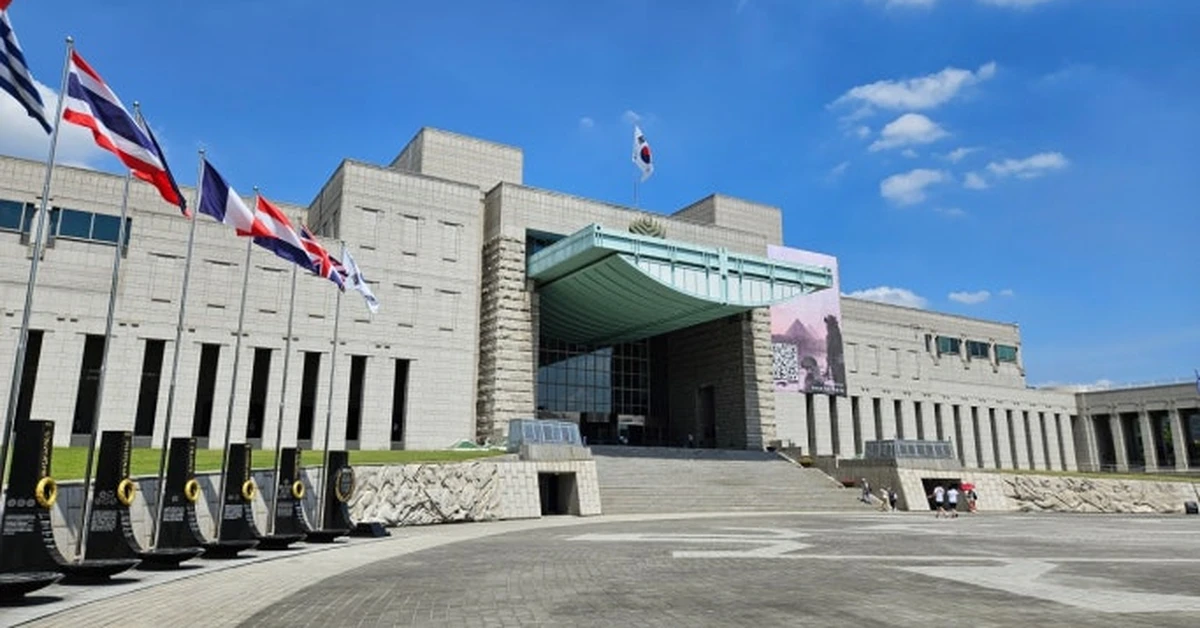
The War Memorial of Korea, located in Yongsan, Seoul, is the country’s largest war museum and one of the most comprehensive military history institutions in East Asia. Despite its scale and the importance of the history it holds, admission is completely free — a policy that reflects a deliberate decision to make this particular history universally accessible.
The museum houses over 10,000 artifacts across six indoor exhibition halls and a large outdoor area. The indoor galleries move chronologically from ancient Korean military history through the Japanese colonial period, the Korean War, and subsequent conflicts. The Korean War rooms — three galleries dedicated specifically to the conflict of 1950 to 1953 — are the emotional heart of the museum, combining weapons and military hardware with personal objects, photographs, letters, and the individual stories that give the broader statistics human scale.
The outdoor exhibition contains tanks, aircraft, naval vessels, and artillery from various periods of Korean military history, arranged across a landscaped area that also includes memorial plazas, a garden, and an artificial lake. The Statue of Brothers — the museum’s most recognized image — depicts a South Korean soldier and a North Korean soldier embracing on the battlefield, brothers who found each other on opposite sides. The sculpture’s embrace is simultaneously triumphant and heartbreaking, which is precisely the emotional register in which modern Korean history most honestly lives.
English-language guided tours of the Korean War Room run daily at 10am and 2pm on days the museum is open. The museum operates Tuesday through Sunday from 9:30am to 6pm. The nearest subway station is Samgakji Station on Lines 4 and 6 — use Exit 12 on Line 6 or Exit 1 on Line 4.
Allow at least three hours for a meaningful visit. Many people discover they could easily spend twice that.
The UN Memorial Cemetery — Busan

In a quiet residential area of Busan’s Nam District stands the only United Nations cemetery in the world — the final resting place of soldiers from twenty-one countries who died on Korean soil during the Korean War.
The cemetery was established in April 1951, when the war was still in progress, to provide burial for those who died in battle. Originally holding approximately 11,000 graves from nations including the United States, the United Kingdom, Australia, Canada, Turkey, France, and Ethiopia among others, subsequent repatriations of remains have reduced the current number to approximately 2,300 soldiers from eleven countries, with the remainder returned to their home nations.
The grounds are immaculately maintained, the rows of white headstones extending across a space that feels deliberately and rightly peaceful. The Wall of Remembrance at the cemetery’s perimeter lists the names of UN soldiers killed and missing in action — over 40,000 names, a count that makes the scale of the multinational sacrifice of the war concrete in a way that the broader statistics of the conflict don’t. The adjacent UN Peace Memorial Hall provides a comprehensive timeline of the war and contextualizes the cemetery within the wider conflict.
Every year on Memorial Day in June, visitors and officials place flowers on the graves of the fallen. The ceremony — Koreans honoring soldiers from countries around the world who came to fight for a peninsula they had often never heard of before the conflict began — captures something essential about how Korea understands and honors its modern history.
The cemetery is reachable from Daeyeon Station on Line 2. Entry is free and it is open daily.
Seodaemun Prison History Hall — Seoul

Before the Korean War, before the division, there was the colonial period — and Seodaemun Prison is where a significant portion of that history is most concretely preserved.
Built by the Japanese colonial authorities in 1908, the prison was used primarily to incarcerate Korean independence activists throughout the colonial period. Ahn Chang-ho, one of the most important figures in the Korean independence movement, was imprisoned here. Yu Gwan-sun, the teenage independence activist who became a symbol of the March 1st Movement of 1919 and died in the prison at age 17, is perhaps its most famous prisoner.
The prison continued in use under various administrations after liberation, not closing until 1987. Today it operates as a history museum — the prison buildings, the isolation cells, the execution building, and the underground torture chambers preserved as testimony to what was done here.

Walking through Seodaemun Prison is a difficult experience, as it should be. The preserved cells are small and cold. The accounts of what prisoners endured — documented through photographs, testimony records, and physical evidence — are confronting. The experience of it, for anyone who visits, is not comfortable in the way that most museum visits are. That discomfort is appropriate, and it is honest.
The prison is located near Dongnimmun Station on Line 3. Entry fees are modest. It is open Tuesday through Sunday.
Understanding What You’re Seeing
Traveling through Korea’s modern war history requires a particular quality of attention — a willingness to sit with complexity rather than resolving it into simpler narratives.
This is not history that offers comfortable conclusions. The Korean War was simultaneously a civil war between Korean factions and an international conflict shaped by Cold War politics. The question of who bears primary responsibility for the war’s outbreak, and what the war’s human cost meant for ordinary Koreans on both sides of a border they did not choose, is a subject of ongoing scholarly debate. The legacy of the Japanese colonial period continues to affect diplomatic relations in the region decades after the formal end of colonialism.
What the memorial sites, the museums, and the DMZ itself offer is not answers to these questions. They offer proximity to them — a chance to stand where things happened, to see what was used and what was left behind, to read the names of people who did not survive.
That proximity changes the way history feels. The Korean War is sometimes called “the Forgotten War” in American popular culture — forgotten because it was overshadowed by World War Two before it and Vietnam after it, and because its ending was ambiguous rather than triumphant. In Korea, it is not forgotten. It is present in family stories, in the annual reunions of separated families that every Korean watches on television with collective emotion, in the observation decks where people peer through binoculars at a country they can see but not reach.
Spending time with this history — carefully, with respect for what it meant to real people and what it continues to mean — is one of the more significant things a visitor to Korea can choose to do.
Practical Planning Notes
War Memorial of Korea: Free entry. Open Tuesday–Sunday, 9:30am–6pm. Samgakji Station (Lines 4 and 6). English tours at 10am and 2pm. Allow 3+ hours.
Seodaemun Prison History Hall: Modest entry fee. Open Tuesday–Sunday. Dongnimmun Station (Line 3). Allow 1.5–2 hours.
DMZ Tours: Organized tours depart daily from Seoul. Most include Imjingak, the Third Infiltration Tunnel, and Dora Observatory. Passport required. JSA access remains restricted as of 2026 — confirm current availability when booking. Book in advance; tours fill quickly in peak season.
UN Memorial Cemetery, Busan: Free entry. Open daily. Daeyeon Station (Line 2). Allow 1–1.5 hours.
Imjingak Peace Park: Accessible by subway (Gyeongui-Jungang Line to Imjingang Station) plus a short bus or taxi. The park itself is free to enter; the Third Tunnel and Dora Observatory involve small fees and require a DMZ tour ticket.
Final Thoughts
Korea’s modern war history is not a separate chapter from the Korea that visitors experience in its cafes and mountains and food markets. It is the foundation beneath all of it — the reason a country with so little margin for failure rebuilt itself with such ferocity, the source of the particular emotional depth that surfaces in Korean art and cinema and conversation when these events are touched, the explanation for why the DMZ, which from a distance looks like just a strip of empty land, carries so much weight.
The history is difficult. It should be. The people who lived through it earned the right to have it taken seriously, and the best thing a visitor can do is show up prepared to do that.
Have you visited any of Korea’s war memorial sites? What did you find most affecting — the War Memorial in Seoul, the DMZ, or somewhere else entirely? Share your experience in the comments.

