Korean Chopsticks Explained: Shape, Material, and Dining Culture
The First Thing People Notice
When foreigners sit down at a Korean table, they often pause.
The chopsticks are not wooden.
They are not round.
They are flat.
And they are metal.
For many visitors, this feels unfamiliar.
Metal seems heavy.
It seems slippery.
The first question usually comes quickly.
Why are Korean chopsticks made of metal?
The Name and the Pair
In Korea, chopsticks are called “Jeotgarak” (젓가락).
They are almost never placed alone.
They come with a spoon.
The pair is called “Sujeo” (수저).
“Su” refers to spoon.
“Jeo” refers to chopsticks.
In daily life, Koreans do not speak of chopsticks separately as often as other cultures might.
The spoon and chopsticks belong together.
Rice and soup are central to the meal structure.
The spoon handles rice and broth.
The chopsticks handle side dishes.
The division is quiet but consistent.
Historical Background
Early Korean chopsticks were not always metal.
Like in neighboring regions, wood and bamboo were once common.
Metal chopsticks became prominent during the Goryeo and Joseon periods.
Brass and silver were used among the upper classes.
There is a common explanation that silver chopsticks were used to detect poison.
The story persists.
Historically, the scientific accuracy of that belief is uncertain.
But the symbolism mattered.
Metal signaled refinement, durability, and status.
Over time, metal chopsticks became normalized beyond royalty.
Today, stainless steel is standard in most households.
Shape and Structure
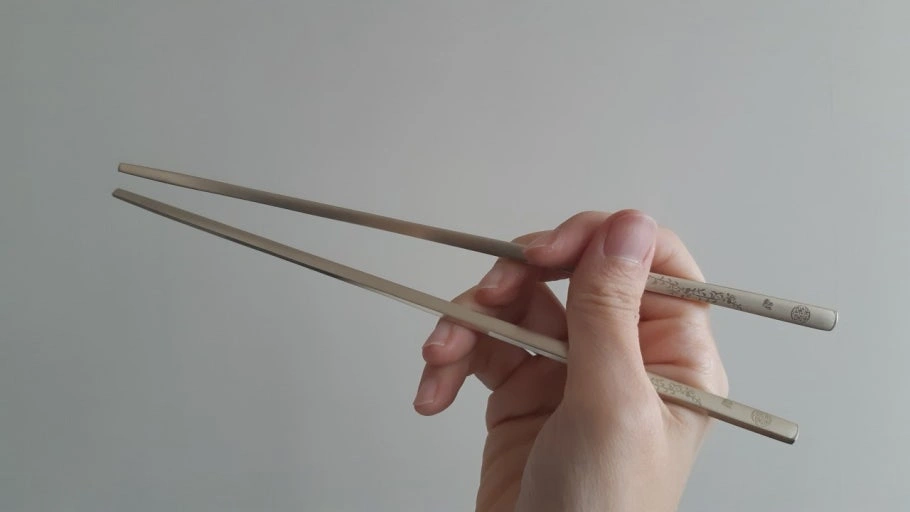
Korean chopsticks are usually flat and rectangular rather than round.
This shape gives more control when picking up thin or slippery food.
Korean cuisine includes many small side dishes — “Banchan” (반찬).
Beansprouts.
Kimchi.
Marinated vegetables.
Precision matters.
The flat design prevents rolling on the table.
It also reflects an emphasis on order in table setting.
The spoon and chopsticks are placed parallel, usually on the right side.
Alignment is subtle but consistent.
A Common Misunderstanding
Many assume metal chopsticks are uncomfortable or impractical.
They feel heavier at first.
For those used to wooden chopsticks, the texture feels colder.
But Koreans grow up using them.
Control becomes natural through repetition.
Another misunderstanding is that metal was chosen for aesthetic reasons alone.
But durability played a role.
Metal is reusable, washable, long-lasting.
In a food culture where meals include soups, stews, and shared dishes, sturdiness matters.
Dining Behavior and Social Structure
Korean meals are often shared.
Multiple side dishes are placed in the center.
Everyone reaches inward.
This arrangement requires coordination.
There are unspoken rules.
Chopsticks should not be stuck upright into rice.
That resembles a ritual for the deceased.
Food is not passed directly from chopsticks to chopsticks.
These behaviors are not always explained aloud.
They are absorbed.
Korean dining etiquette reflects Confucian influence — respect for elders, awareness of hierarchy, controlled gestures.
The youngest at the table may wait before lifting their spoon.
Metal chopsticks move quietly across shared plates.
Material and Cultural Memory
Metal retains temperature.
In winter, it feels cold at first touch.
In summer, it warms quickly in the hand.
There is something practical about that neutrality.
Unlike wood, metal does not absorb flavor.
It remains unchanged by repeated meals.
This durability mirrors a certain preference in Korean material culture — longevity over softness.
Furniture, bowls, cooking tools often favor strength.
Not decorative excess.
Function first.
Why It Continues
Disposable wooden chopsticks exist in restaurants.
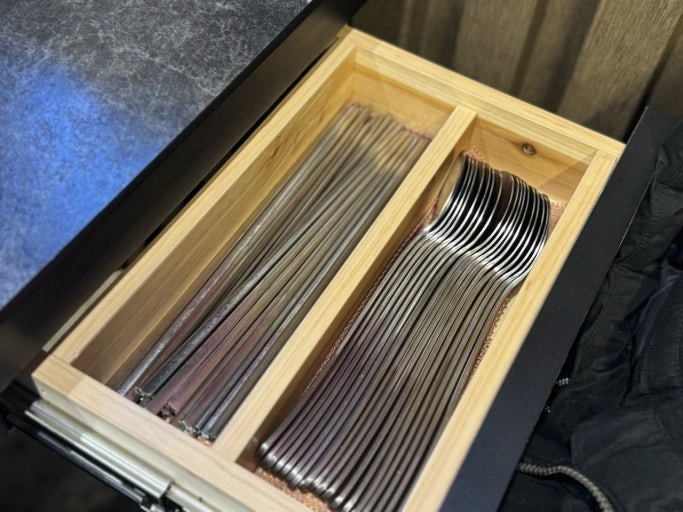
But at home, stainless steel remains common.
They are washed.
Returned to drawers.
Used daily.
Children learn to handle the flat edges early.
It becomes muscle memory.
The sound of metal touching a bowl is familiar in Korean kitchens.
Soft, brief, precise.
Korean chopsticks are not dramatic objects.
They do not carry elaborate carving.
They are slim.
Straight.
Reserved.
But they shape how food is touched, lifted, shared.
The weight in the hand is steady.
The gesture is controlled.
And over time, the metal no longer feels unusual.
It feels ordinary.
Ordinary in the way habits become invisible.
Until someone new sits at the table and notices the difference.