Korea’s Kids Cafes: The Genius Invention That Keeps Children Happy and Parents Sane
Every parent who has traveled with young children knows the feeling. You are in a beautiful city, there is so much you want to see and eat and experience, and your three-year-old has been awake since 5am and needs to run, right now, in a space large enough that nothing expensive will get knocked over.
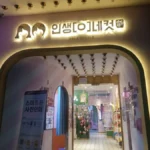
Korea has a very good answer to this problem. It is called the 키즈카페 — the kids cafe — and it is one of those concepts so practically elegant that you spend about five minutes inside one wondering why every country doesn’t have them.
What a Kids Cafe Actually Is
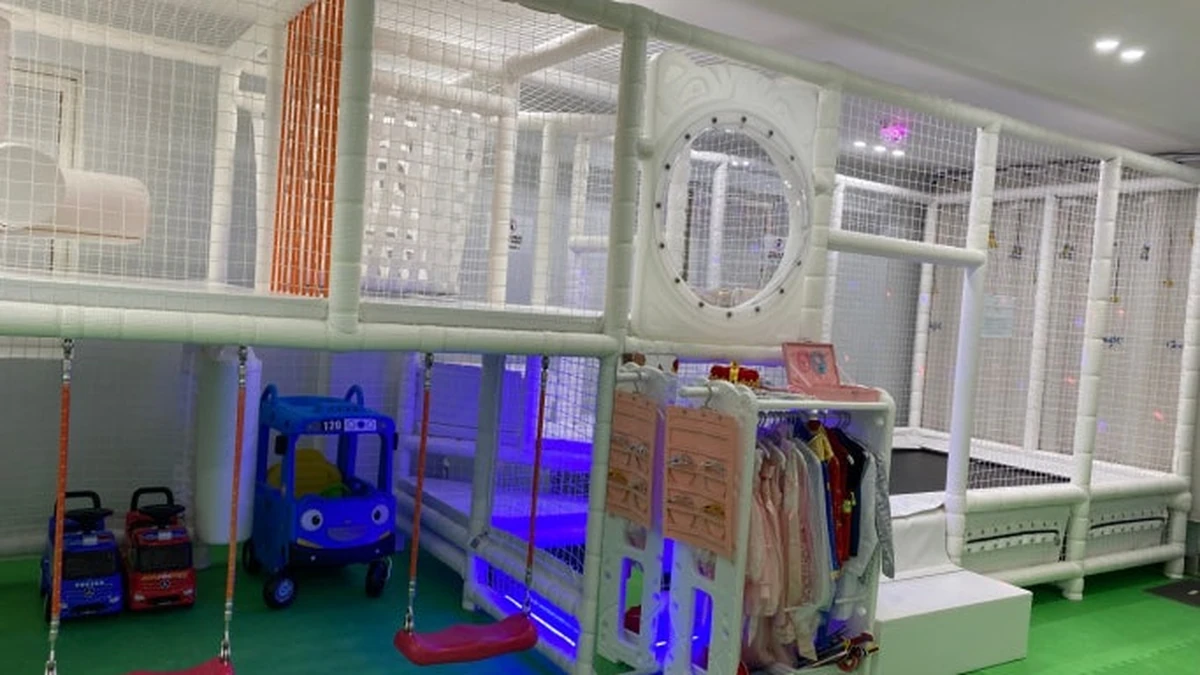
The name combines the Korean word for children with the word for cafe, which captures the essential concept: a space designed simultaneously for children to play and for parents to sit down with a decent cup of coffee and breathe for a moment.
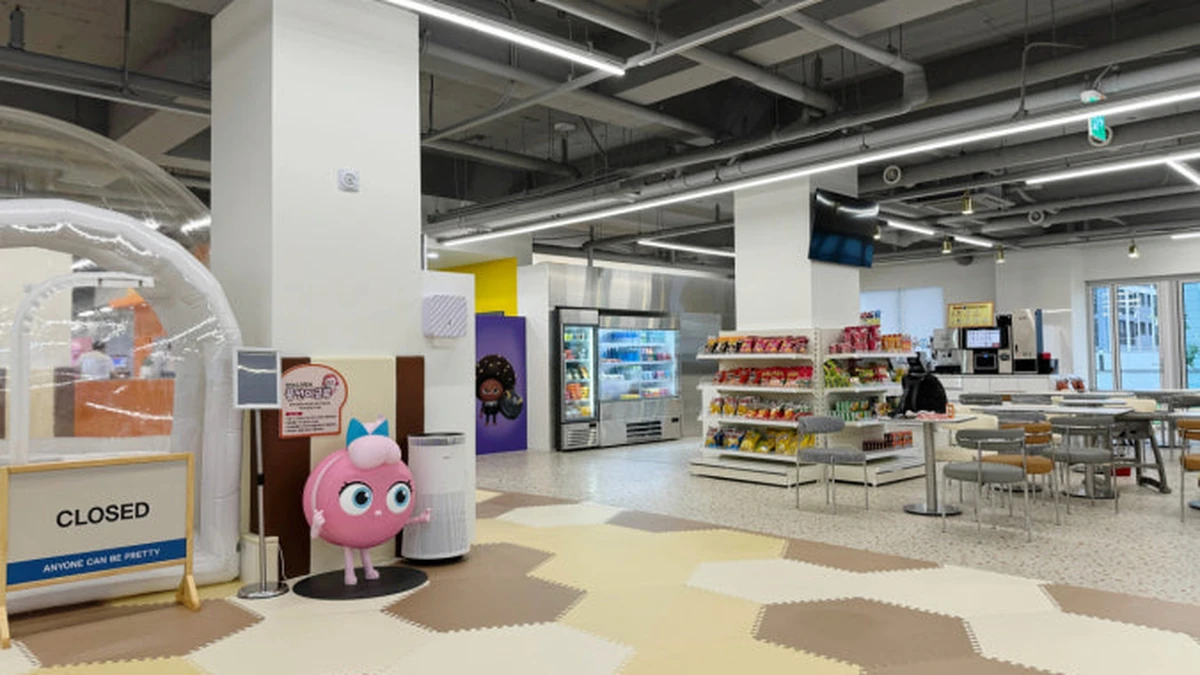
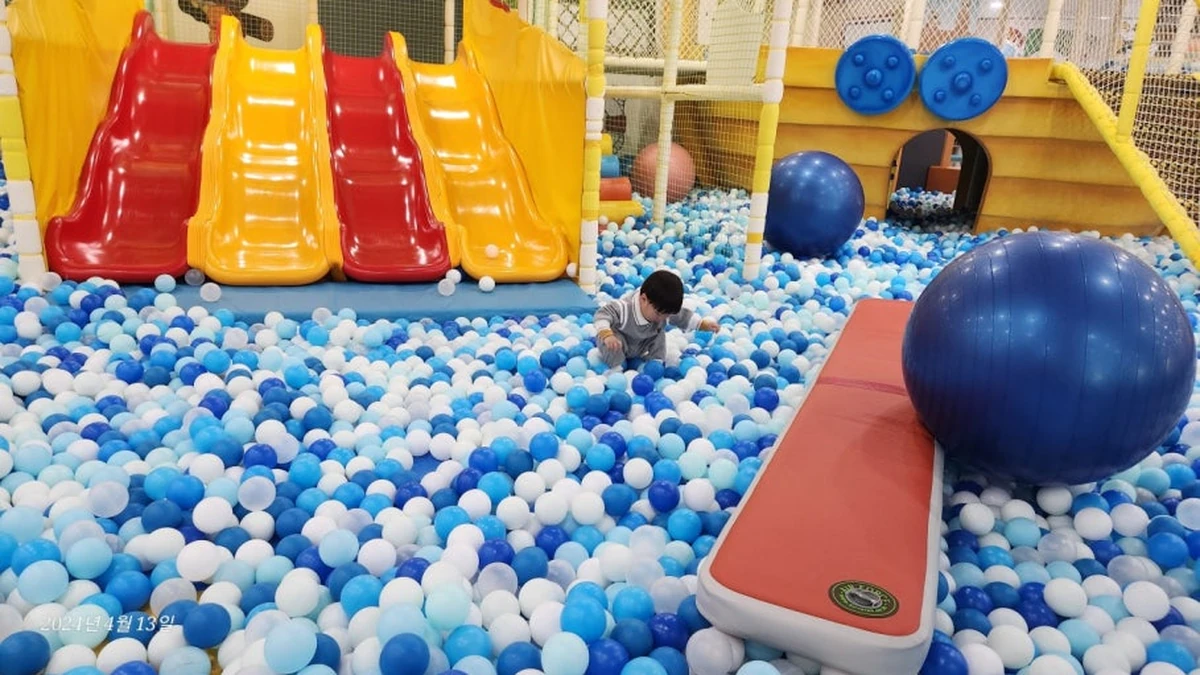
In practice, a Korean kids cafe is an indoor playground with a proper adult cafe attached. The children’s area is typically large, padded, staffed by supervisors, and equipped with slides, ball pits, trampolines, climbing structures, and activity zones. The adult area is a real cafe — not a vending machine in a hallway — with comfortable seating arranged so parents can watch their children while drinking something good.
Admission works on a time-based system. Families pay an entry fee that covers a set period — usually two hours — and includes one or two complimentary adult beverages as part of the ticket. Children play. Parents sit. Everyone is happy. It is almost disarmingly simple as a concept, and the execution in Korea tends to be impressively thorough.
Why Kids Cafes Exist in Korea
To understand why kids cafes became so popular in Korea, it helps to understand a few things about Korean urban life and parenting culture.
Korea is one of the world’s most densely urbanized countries. A significant proportion of Korean families live in apartment buildings in major cities, which means the average Korean child does not have a yard to run around in. Outdoor spaces — parks, playgrounds — are available but subject to weather, and Korean winters and summers can be genuinely extreme. There is a strong practical case for high-quality indoor play spaces.
At the same time, Korean parenting culture places considerable emphasis on children’s development, enrichment, and engagement. The kids cafe responded to this by evolving beyond simple play equipment into spaces that offer structured experience programs — cooking classes, slime-making workshops, science experiments, art activities — alongside the free play areas. Many kids cafes now operate on a model where children can participate in a guided program during part of their visit and use the play facilities for the rest.
The format also addresses something that parents in Korea — and everywhere — genuinely need. Young children require close supervision, but sustained vigilance is exhausting. The kids cafe creates an environment where the supervision is shared with trained staff, the play area is safely enclosed, and parents can relax their attention slightly without worrying. The tables in the adult section are almost always positioned facing the play area specifically so parents can watch their children from their seats. It is a design decision that reflects a real understanding of what parents actually need.
The Scale of It
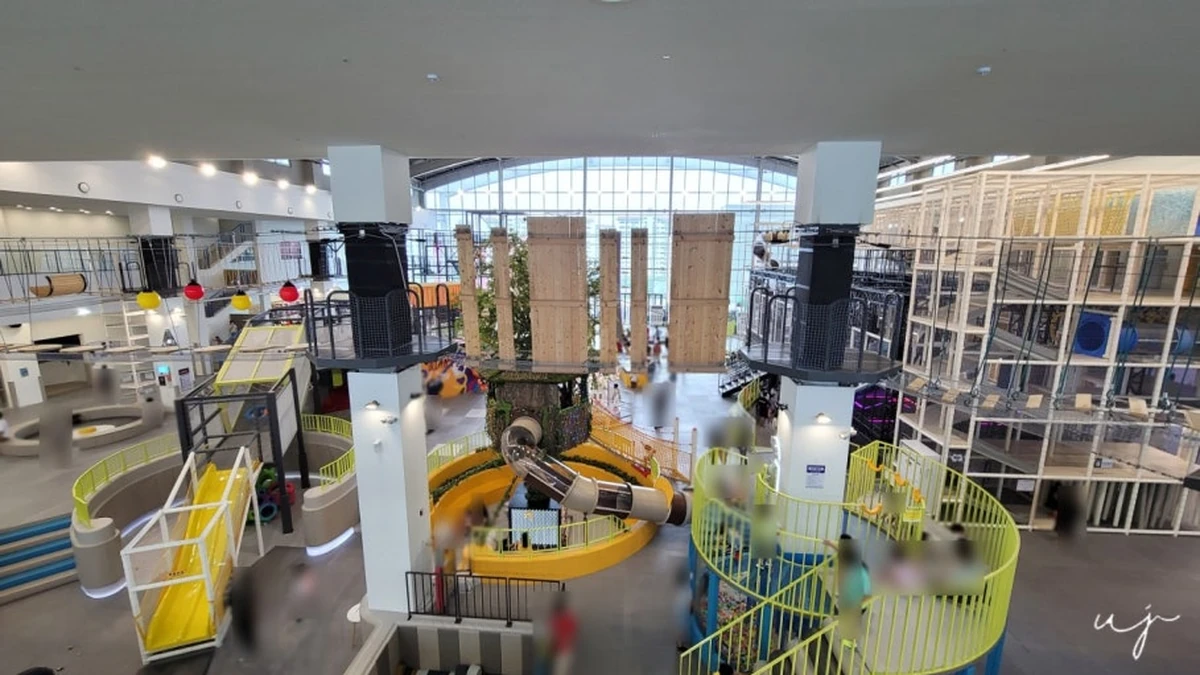
One of the first things that surprises visitors is the size.
Korean kids cafes are not small. The larger ones in Seoul and other major cities cover thousands of square meters across multiple floors, with different zones designed for different age groups and different types of play. A single facility might contain a trampoline area, a large slide structure, a ball pit, a mini racing track for kid-sized cars, a role-play town where children can pretend to be doctors or chefs or shopkeepers, a creative activity room, a dedicated toddler zone with softer surfaces for the youngest visitors, and a full-service cafe with a food menu that goes considerably beyond coffee.
The investment in these spaces is significant. The play equipment is custom-built and maintained to a high standard. The decor is thought through. Some facilities carry licensed character themes — popular Korean animations, international properties like Tayo the Little Bus or Super Wings — that children recognize and respond to with immediate delight. The themed kids cafe, where every element of the space is designed around a single character or world, has become its own subgenre within the broader kids cafe category.
The public sector has also entered the space. Seoul Metropolitan Government operates a network of publicly funded kids cafes — called Seoul Kids Cafe — offering large, well-equipped indoor play spaces at subsidized prices for families who cannot access the premium private facilities. These public spaces maintain the same essential model: safe play for children, rest space for parents, and trained staff on hand. They have become particularly valued in neighborhoods where private kids cafe prices put the experience out of reach for lower-income families.
What Parents Get Out of It
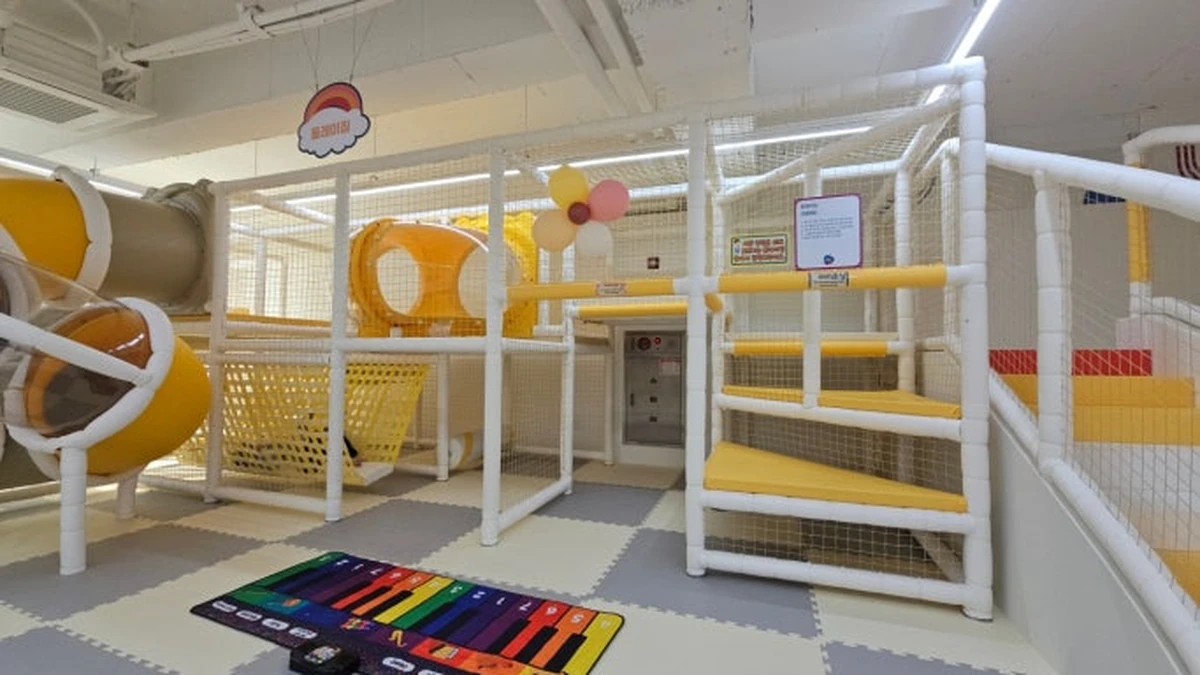
It would be easy to frame the kids cafe purely as a children’s amenity. But the adult side of the equation is taken seriously in Korea, and this is one of the things that distinguishes a well-run kids cafe from a basic indoor playground.
The coffee is actual coffee — not the institutional drip of a sports center vending machine. Many kids cafes source from specialty roasters or run their own proper espresso programs. The food menu often extends to brunch items, simple Korean meals, and desserts that adults want to eat rather than just tolerating. Some premium facilities serve cocktails in the evening, evolving from family day space to something more adult-oriented after the children’s last session.
The physical design of the parent area matters too. Comfortable chairs, tables spaced for actual conversation, good lighting, reliable WiFi — these details are attended to in the better facilities, because the business model depends on parents staying for the full session and returning. A parent who feels genuinely comfortable is more likely to extend the visit, return the following weekend, and recommend the place to friends. Korean kids cafes have understood this and invested in the adult experience accordingly.
One detail that consistently surprises first-time visitors: the socks. Almost all Korean kids cafes require children — and often parents in the play area — to wear grip socks for safety and hygiene. Many facilities sell socks at the entrance for visitors who arrive without them. It is a small thing, but it reflects the general standard of cleanliness and safety management that Korean kids cafes maintain, which tends to be noticeably higher than comparable indoor play facilities in many other countries.
The Experience Programs
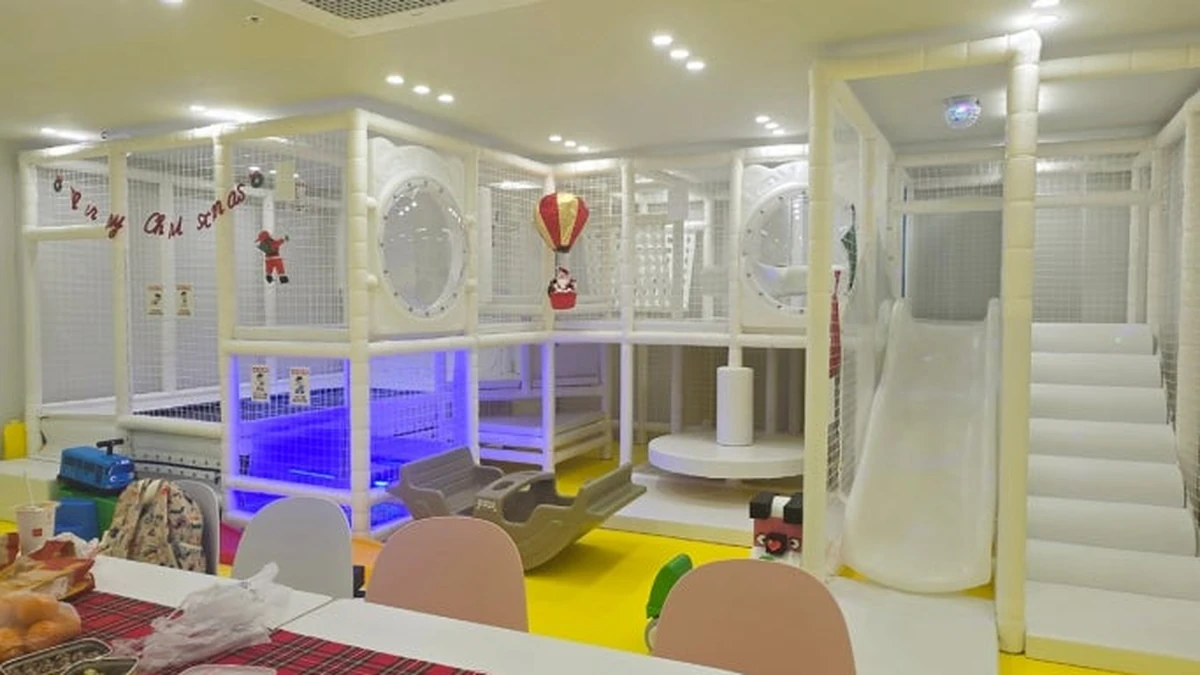
The structured activity component of the kids cafe is where the format moves furthest from simple playground provision.
Slime-making classes are among the most popular experience programs, particularly for children in the elementary school years. The combination of sensory engagement, creative customization, and the satisfaction of taking something home makes slime workshops one of the most reliably successful kids cafe activities. Other common programs include cooking classes designed for children, simple science experiments, pottery and clay activities, and seasonal craft workshops tied to Korean holidays and cultural events.
These programs typically run as timed sessions led by a staff member — a kind of structured play period within the broader free-play visit. Parents can participate alongside their children or sit in the cafe area, depending on the specific program’s setup. The quality of these programs varies considerably between facilities, with the larger, more established kids cafes investing in proper curriculum development for their activity offerings.
Birthday party packages are a significant part of the kids cafe business model. Hosting a child’s birthday party at a kids cafe — with a reserved section, a birthday meal, a dedicated activity program, and the play facilities for the whole party group — has become a standard option in Korean family culture. The packages handle most of the logistics that make children’s parties exhausting, which makes them an attractive proposition for parents who want their child to have a good celebration without running the whole thing themselves.
For Visitors Traveling with Children
For international visitors to Korea with young children, kids cafes offer a practical and genuinely enjoyable option at several moments in a trip.
Rainy days, which can arrive without much warning in Seoul and other Korean cities, become much easier to manage with a kids cafe nearby. The combination of a few hours of supervised play, decent food, and a warm interior makes rainy day management nearly pleasant rather than stressful.
Long stretches of sightseeing that exceed a young child’s endurance can be broken up with a kids cafe stop that resets everyone’s mood and energy levels. The typical two-hour session gives parents enough time to properly rest rather than just pause, and children come out the other side in a sufficiently better state to continue with the day.
The entry fee is reasonable by international travel standards — typically a few thousand won per child with one or two adult drinks included — and the experience genuinely occupies children in a way that parks or cafes without play facilities do not. Naver Maps in Korean (키즈카페 + neighborhood name) returns the most complete results for finding nearby facilities; many locations also have English-language reviews that give a clear sense of what to expect.
A Genuine Korean Invention
Kids cafes are not unique to Korea — similar concepts exist in Japan, parts of Europe, and increasingly in Korean-influenced markets elsewhere — but the Korean version is the one that developed the format most fully, and the category as it exists globally has been shaped significantly by what Korean entrepreneurs built in Seoul and other Korean cities over the past two decades.
The kids cafe solved a problem that exists everywhere: how do you give young children the physical activity and stimulation they need while giving their parents a genuine moment to rest, within a single affordable visit? The answer Korea arrived at — a properly designed indoor play space, staffed safely, combined with a real cafe serving food and drink that adults actually want — is so obviously right that it is slightly surprising it took until now to travel as widely as it has.
If you are in Korea with children, find one. If you are in Korea without children, you may still find yourself understanding immediately why the parent sitting with their latte, watching their child charge down a slide for the fifteenth time, looks so comprehensively at peace.
Have you visited a kids cafe in Korea — or seen the concept appear in your home country? What was the experience like? Tell us in the comments.