조마조마 Korean: The Word for Dread That Won’t Sit Still
조마조마: The Korean Word for Anxiety That Sits in Your Stomach and Won’t Leave
조마조마 Korean is one of those words that makes you realize a feeling you’ve had a hundred times never had a proper name.
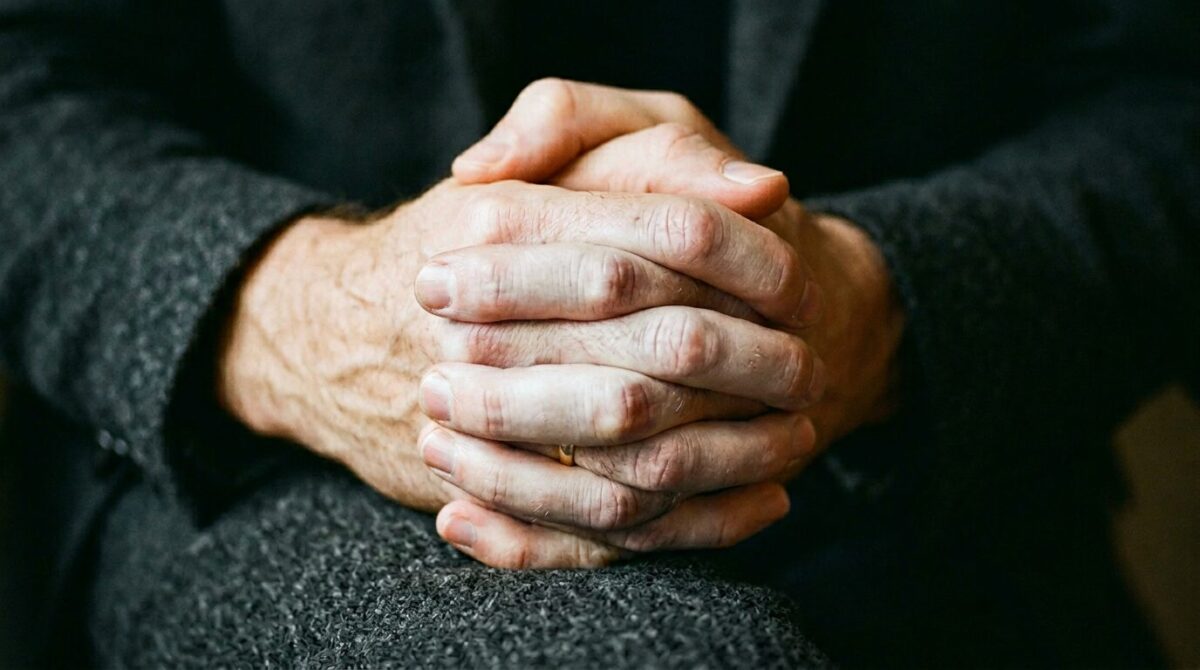
Not the panic that hits suddenly. Not the clean, almost exciting nervousness of 두근두근 — the heart pounding before something you want to happen. This is the other kind. The slow-building, low-grade kind. The feeling that something is about to go wrong and you can’t do anything about it except wait and watch and quietly fall apart on the inside while your face tries to stay neutral.
You know the feeling. You’ve probably felt it this week.
The English language handles it with approximations — anxious, nervous, on edge, uneasy. All of those are true. None of them quite captures the specific, squirming quality of the thing. Korean doesn’t approximate. Korean has 조마조마.

What 조마조마 Actually Means
Pronounced jo-ma jo-ma, the word describes a state of anxious unease — specifically the kind produced by uncertainty about an outcome you care about. It’s the feeling while you’re waiting. While something is still unresolved. While the thing that could go wrong hasn’t gone wrong yet but absolutely might.
There’s a helplessness threaded through 조마조마 that separates it from ordinary nervousness. You are not doing anything. You cannot do anything. You are simply suspended in the gap between what is happening and what might happen next, and that gap is deeply uncomfortable.
It functions as both an adverb and an adjective-forming word in Korean:
조마조마하다 — to feel anxious, nervous, on edge with dread.
조마조마한 마음 — an anxious, apprehensive heart or feeling.
조마조마하게 기다리다 — to wait nervously, with creeping dread.
The word is most at home in situations involving watching someone else take a risk, waiting for news that could change things, or following events you have no control over but have a great deal invested in.
조마조마 vs. 두근두근: The Feeling That Looks Similar but Isn’t
If you’ve read the previous post in this series, you already know 두근두근 — the pounding heart of excitement, anticipation, and romantic feeling. At first glance, 조마조마 and 두근두근 might seem to describe the same territory. Both involve elevated emotional states. Both involve waiting. Both produce a physical response.
The difference is the direction of the feeling.
두근두근 leans toward something. It’s anticipatory in the warmest sense — the heart pounding because you want what comes next, because the outcome you’re hoping for is possible, because you are excited and nervous in roughly equal measure. There’s energy in it. A forward pull.
조마조마 leans away. It’s anticipatory in the most uncomfortable sense — the stomach tightening because the outcome you’re dreading is equally possible, because the thing you care about might not be okay, because you are watching something play out and you have no way to intervene.
Two people can be waiting for the same announcement and feel completely different things. The one who applied for the job and genuinely wants it feels 두근두근. The one who already got the job but is waiting to hear whether their best friend got one too — they feel 조마조마.
Same moment. Completely different internal weather.
The Situations That Belong to 조마조마
Because this word is specifically about helpless, watchful anxiety, it clusters around a very particular set of human experiences — the ones where you are not the one taking the risk but you are completely emotionally invested in the result.
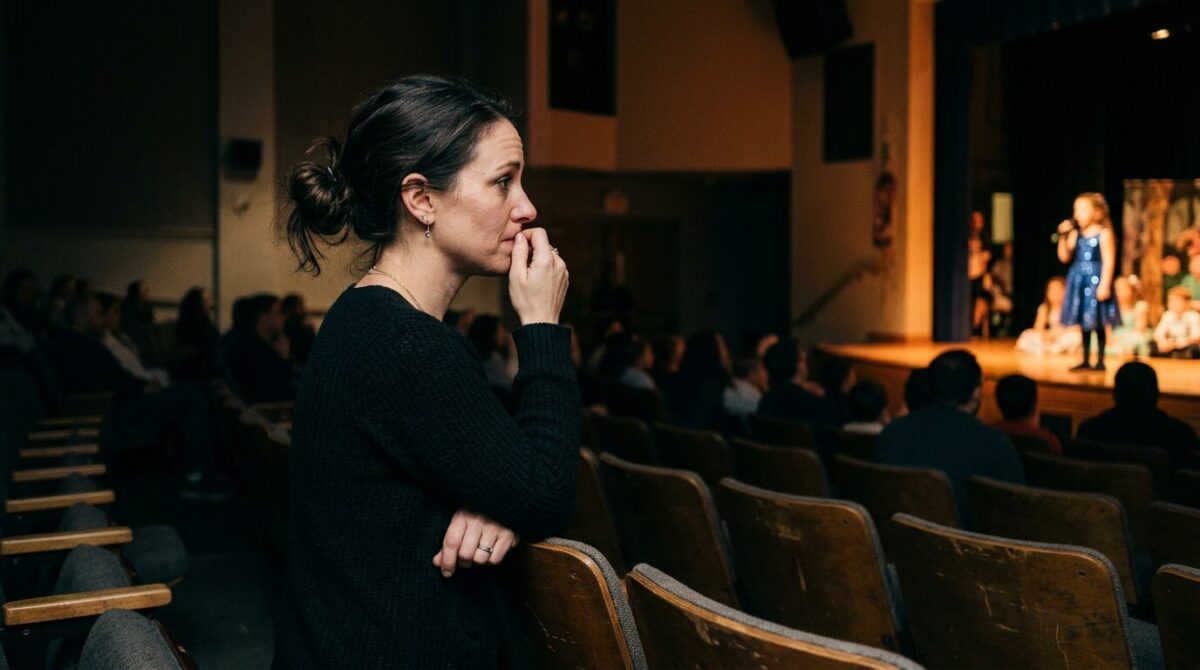
Watching your child perform in a school play for the first time. Every mispronounced line, every moment where they freeze and search the audience for a familiar face — that’s 조마조마.
Following a live sports match where the team you’ve supported for years is one goal down with three minutes left. Your hands are probably doing something involuntary. 조마조마.
Sitting in the waiting room while someone you love is in surgery. Not panic — panic is louder than this. This is the quiet, controlled version of barely holding it together. 조마조마.
Watching a friend send a message to someone they’ve been working up the courage to contact for weeks, then waiting for the three dots to appear. Also 조마조마, though considerably lower stakes.
What all of these share is the same architecture: high emotional investment, zero control, and an outcome that hasn’t arrived yet. Korean built a word for exactly that architecture, and once you have it, you’ll find yourself reaching for it constantly.
Why This Word Sounds the Way It Does
조마조마 belongs to the family of Korean 의태어 — mimetic words that recreate the texture or quality of an experience rather than simply naming it. And like the best members of that family, its sound is not accidental.
Jo-ma, jo-ma. The syllables are rounded, slightly tight, closed. There’s a containment in the sound — something held in, something not fully released. Compare it to the open, warm resonance of 두근두근, which sounds expansive and physical. 조마조마 sounds more compressed. More interior. More like something circling without finding an exit.
This is phonaesthesia at work again — the phenomenon where certain sounds carry an inherent emotional or physical quality. Korean 의태어 deploy it masterfully, and 조마조마 is one of the more convincing examples. The word sounds like the feeling of being contained by your own anxiety while something outside of you determines how it ends.
The doubling does its usual work too. A single 조마 might describe a flicker of unease — a momentary twinge. 조마조마 describes a sustained state, an ongoing condition, anxiety that has settled in and is not leaving until the outcome arrives. The repetition stretches a single moment of dread into the whole experience of dreading.

조마조마 in Everyday Korean Life
This word appears constantly in Korean conversation, and it covers a wider range of situations than you might initially expect.
Korean drama is practically built on 조마조마. The genre depends on it — characters watching situations develop that could destroy everything they’ve worked toward, audiences watching right alongside them, both parties stuck in the same helpless suspension. When a drama makes you grip something involuntarily during a tense scene, the Korean word for what you’re feeling is probably 조마조마.
But it’s just as common in completely mundane contexts. A Korean parent waiting for their child’s exam results uses it. Someone watching a package tracker that hasn’t updated in three days uses it. A person sitting in the passenger seat while a new driver navigates a difficult parking space uses it, quietly, while making their face do something calm.
It also appears in a specifically Korean cultural context that’s worth mentioning: the intense anxiety of watching someone you care about be evaluated or judged in public. Audition programs — and Korea produces them in enormous quantities — generate 조마조마 as a primary emotional product. The audience is not just watching a performance. They are watching a person’s dream hang on the decision of a panel, and the feeling that produces has a name.
Try It Yourself
조마조마.
Jo-ma, jo-ma. Say it quietly, because that’s the register it belongs to. This is not a loud word. The feeling it describes doesn’t announce itself — it accumulates.
A few sentences to start with:
조마조마해서 못 기다리겠어요. — I’m so anxious I can barely wait.
경기 보는 내내 조마조마했어요. — I was on edge with anxiety the whole game.
그 말을 들을 때까지 조마조마한 마음이 사라지지 않았어요. — The anxious dread didn’t leave until I heard those words.
What’s worth noticing is the last one — how naturally Korean allows you to describe the moment the anxiety ended as much as the anxiety itself. The word implies resolution is coming. You are 조마조마 until something. The feeling is defined by its own eventual end.
And maybe that’s the quiet comfort built into the word: it acknowledges that this is a temporary state. Something will happen. The outcome will arrive. The suspension will resolve.
Until then, 조마조마. The sound of watching something you can’t control, from closer than is comfortable.