Hamhung Naengmyeon: The Spicy Cold Noodles Koreans Crave
The Noodles That Do Not Wait
If Pyongyang naengmyeon is described as quiet, then Hamhung naengmyeon is immediate.
There is no hesitation when it arrives.
The bowl is red.
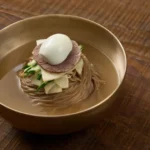
Even before tasting, you know what to expect. Chili paste coats thin noodles. Slices of cucumber, boiled egg, sesame seeds. Sometimes strips of raw fish marinated in spicy sauce.
You mix it.
The color deepens.
And then it hits all at once.
What “Hamhung” Refers To
“Hamhung” (함흥) is a city in what is now North Korea. Like Pyongyang naengmyeon, this style traces its origins to northern regions of the Korean peninsula.
But the flavor profile evolved differently.
Traditionally, Hamhung-style noodles were often served mixed (“bibim,” 비빔) rather than in clear broth. The sauce is made primarily with gochujang (fermented chili paste), vinegar, garlic, and sugar.
The balance leans toward sharpness.
The taste does not unfold slowly.
It announces itself.
Texture Comes First
The noodles in Hamhung naengmyeon are typically made from potato starch or sweet potato starch.
This gives them a distinctive chewiness.
They are thin but elastic, almost resistant.
You bite, and the noodles push back slightly before yielding.
In many restaurants, scissors are used to cut them shorter after serving. Otherwise, lifting a full strand can feel endless.
The chew is part of the pleasure.
It is physical.
Spicy, Sour, Sweet
The sauce carries three main directions at once:
Spicy.
Sour.
Sweet.
Vinegar sharpens the edges. Sugar rounds them slightly. Chili paste binds everything together.
Sometimes cold broth is added lightly on the side, but it does not dilute the intensity. It supports it.
This is not a dish that hides.
The Raw Fish Variation
One well-known version includes marinated raw fish—often skate or flatfish.
The fish is sliced thin, mixed with the red sauce, and placed on top of the noodles.
For some, this combination feels adventurous. For others, it is standard.
The coldness of the noodles and the softness of the fish contrast with the aggressiveness of the sauce.
It is layered, but never quiet.
How Koreans Relate to It
In Korea, preference between Pyongyang and Hamhung naengmyeon can feel almost like a personality trait.
If Pyongyang style requires patience, Hamhung rewards appetite.
Many people who say, “Pyongyang naengmyeon tastes like nothing,” will immediately prefer Hamhung style.
It satisfies quickly.
There is no need to search for subtlety.
On hot summer days, the cold spicy noodles feel direct and refreshing at the same time.
Sweat and chill coexist.
A Summer Habit
Naengmyeon in general is strongly associated with summer in South Korea today.
Although historically eaten in winter in the North, modern South Korean dining culture places cold noodles firmly in hot weather.
Air conditioning hums. Stainless steel bowls sweat with condensation. Diners lean over bright red noodles.
You mix vigorously.
The sound of metal chopsticks against a metal bowl is sharp and familiar.
Is There a “Proper” Way?
As with many Korean dishes, there is an unspoken sequence.
Mix thoroughly so the sauce coats every strand. Taste. Adjust with vinegar or mustard if desired.
But unlike Pyongyang naengmyeon, adding more vinegar here does not feel like a violation.
The dish already expects boldness.
Some even enjoy it intensely sour.
What It Represents
Hamhung naengmyeon reflects a side of Korean taste that values stimulation.
Korean cuisine is often built on fermentation, chili heat, and strong aromatics. Hamhung style aligns with that identity more obviously than its Pyongyang counterpart.
It feels less meditative.
More expressive.
Yet, like Pyongyang naengmyeon, it carries the history of migration. Many famous Hamhung-style restaurants in South Korea were established by families who moved south after division.
So beneath the red sauce lies displacement.
But you do not taste that first.
You taste chili.
After the Bowl Is Empty
When you finish Hamhung naengmyeon, your lips may still tingle slightly.
The cold lingers in your mouth, but so does the spice.
It is a dish that leaves a trace.
Unlike subtle broths that fade quietly, this one stays for a while.
In Korea, some foods are meant to comfort softly.
Others are meant to wake you up.
Hamhung naengmyeon belongs to the second group.
It does not wait for you to understand it.
It makes sure you notice.