Korean Postpartum Care Center: What Is a Sanhujoriwon and Why Every New Mom Deserves One
Korean Postpartum Care Center: What Is a Sanhujoriwon and Why Every New Mom Deserves One
In most parts of the world, giving birth is followed by a brief hospital stay, a discharge with a folder of pamphlets, and the somewhat terrifying experience of being sent home with a newborn and the expectation that you will somehow figure the rest out. In Korea, the experience is fundamentally different. After leaving the hospital, most Korean mothers go directly to a 산후조리원 (sanhujoriwon) — a professional postpartum care center — where they spend anywhere from two to four weeks in a dedicated facility designed entirely around the recovery of the mother and the care of the newborn.
The Korean postpartum care center is not a hospital. It is not a hotel. It is something that most other cultures do not have a direct equivalent for — a purpose-built institution that treats the weeks after childbirth as a serious recovery period requiring professional support, rest, nutritional care, and the kind of expertise that most new parents, left to their own devices, simply do not have access to. The result is a system that has become so embedded in Korean maternal culture that many Korean women consider it not a luxury but an essential part of giving birth.
This guide covers everything worth knowing about the sanhujoriwon — what it is, what happens inside, how much it costs, who uses it, what makes it culturally distinctive, and what the rest of the world might learn from Korea’s approach to the weeks that follow birth.
Table of Contents
- What Is a Korean Postpartum Care Center?
- The Philosophy Behind Korean Postpartum Care
- What a Typical Day at a Sanhujoriwon Looks Like
- Newborn Care Inside the Korean Postpartum Care Center
- The Food: Why Postpartum Nutrition Is Taken This Seriously
- Facilities and Amenities: What to Expect
- How Much Does a Korean Postpartum Care Center Cost?
- Who Uses Sanhujoriwon — and Who Doesn’t
- The Debate Around Sanhujoriwon: Criticism and Counterpoints
- What Foreigners and Expats Need to Know
- What the Rest of the World Can Learn from Korea
- Final Thoughts
What Is a Korean Postpartum Care Center?
The word 산후조리 (sanhujori) breaks down simply: 산후 (sanhu) means postpartum — after birth — and 조리 (jori) means recovery or recuperation. The 원 (won) at the end simply means center or institution. Together, the word describes precisely what the facility is: a center for postpartum recovery.
In practice, a Korean postpartum care center is a residential facility where new mothers stay for two to four weeks immediately following childbirth. The mother has her own room — typically private, clean, and equipped with a hospital-grade adjustable bed, a bassinet for the newborn, and a bathroom. The facility operates around the clock with a staff of trained nurses, midwives, and infant care specialists who provide medical monitoring, breastfeeding support, newborn care, physical therapy, and nutritional services throughout the stay.
The concept is built around a single central idea: that the period immediately after childbirth is one of the most physically and emotionally demanding transitions a human body goes through, and that recovering from it properly requires more than willpower and family support. It requires rest — genuine, sustained, uninterrupted rest — combined with professional care that the vast majority of new parents cannot provide for themselves.
The Korean postpartum care center provides exactly that, in a package that has been refined over decades into a comprehensive, systematized, and widely accessible form of postpartum care that is genuinely unlike anything available in most other countries.
The Philosophy Behind Korean Postpartum Care
To understand the sanhujoriwon, you first need to understand the cultural and philosophical framework that produced it — because the Korean postpartum care center does not exist in isolation. It is the institutionalized expression of a set of beliefs about the postpartum body that have been part of Korean culture for centuries.
The traditional Korean concept of postpartum recovery is called 산후조리 (sanhujori), and its core principle is this: the body immediately after childbirth is in a state of profound vulnerability. During delivery, the body expends enormous energy, loses significant blood, and experiences a seismic physical disruption. The joints, the muscles, the internal organs, and the circulatory system are all in a state of adjustment. If this period of vulnerability is not managed correctly — with warmth, rest, proper nutrition, and careful physical management — the damage done during this time can manifest as chronic health problems that persist for years or even decades.
This belief system, rooted in traditional Korean medicine and carried through generations of maternal knowledge, gives rise to a specific set of postpartum practices. New mothers are advised to stay warm at all times — cold air, cold water, and cold food are all considered damaging to the postpartum body. They are advised to rest and avoid physical strain. They are advised to eat specific warming, nutrient-dense foods that support blood replenishment and milk production. And they are advised not to return to normal activity until the body has had the time it needs to recover fully — a period traditionally understood to be somewhere between three and seven weeks.
Whether viewed through the lens of traditional medicine or modern evidence-based healthcare, the underlying principle is sound: the postpartum period is a serious recovery period, and treating it as such leads to better outcomes for both mother and child. The Korean postpartum care center is the physical institution that makes this principle actionable for families who might not otherwise have the resources or support structure to implement it at home.
What a Typical Day at a Sanhujoriwon Looks Like
One of the most immediately striking things about the Korean postpartum care center experience — for mothers who have gone through childbirth elsewhere, or who entered their first Korean stay without full expectations — is how profoundly different the pace of a day there is from the pace of new parenthood at home.
Morning
The day typically begins with the mother waking naturally, without the alarm of a crying newborn. In a sanhujoriwon, the newborn spends most of the night in the facility’s nursery, monitored and cared for by the overnight nursing staff. This is not negligence — it is one of the core design principles of the Korean postpartum care center. The mother’s recovery requires sleep. Sleep requires uninterrupted hours. The nursery is what makes those hours possible.
After waking, the mother usually has a period of rest, personal care, and breakfast before the morning nursing session. Breastfeeding mothers bring the baby to their room for feeding — typically several times a day at scheduled intervals — with nurses available to assist with latch, positioning, milk supply concerns, or any difficulty that arises. This supported feeding model is one of the most practically valuable aspects of the sanhujoriwon for first-time mothers, many of whom have never breastfed before and find the learning curve steep without professional guidance.
During the Day
After the morning nursing session, the day opens up into a structure that would be nearly unrecognizable to most new parents outside Korea. There is time for recovery-focused therapies — abdominal massage, pelvic floor rehabilitation exercises, and in some facilities, full-body massage treatments specifically designed for postpartum recovery. There are educational sessions on newborn care: how to bathe a baby, how to read infant cues, how to swaddle correctly, how to manage common newborn concerns.
There are also simply hours of genuine rest — time to sleep, to read, to watch television, to recover. The absence of the relentless pace of new parenthood at home is not incidental. It is the point.
Meals
Meals at a Korean postpartum care center are served three times a day plus additional snacks and nutritional supplements, all formulated according to the principles of postpartum nutritional care. The food is warm, carefully prepared, and specifically chosen for its blood-replenishing, milk-producing, and recovery-supporting properties. More on this shortly.
Evening and Night
Evening typically brings another nursing session, a check-in from the nursing staff, and the handover of the newborn to the nursery for the night — again allowing the mother an extended block of overnight sleep that is simply not available to most new parents caring for their infants at home.
Fathers and family members are typically welcome to visit during visiting hours, and many facilities provide a comfortable visiting area where partners can spend time with the mother and baby without disrupting the facility’s recovery-oriented environment.
Newborn Care Inside the Korean Postpartum Care Center
The Korean postpartum care center is not only for the mother. It is also one of the safest and most professional environments in which a newborn spends their first weeks of life.
The facility’s nursery is staffed around the clock by trained infant care nurses. While the baby is there, they receive regular feeding, bathing, diaper changes, and health monitoring. Any signs of jaundice, feeding difficulties, weight concerns, or health irregularities are caught early and managed promptly — often more efficiently than they would be by first-time parents at home trying to interpret what they’re seeing on their own.
Beyond the basic care routines, many Korean postpartum care centers offer newborn care education as part of their program. Before discharge, mothers receive hands-on training in every aspect of newborn care — bathing technique, umbilical cord care, sleep positioning, temperature monitoring, identifying normal versus concerning infant behavior — so that when they do go home, they go with genuine competence and confidence rather than anxiety and uncertainty.
The facilities also monitor the baby’s weight daily, which is particularly important in the first weeks when weight loss and regain are key indicators of feeding adequacy. Breastfeeding mothers receive real-time feedback on whether their baby is getting enough milk, which removes one of the most common sources of postpartum anxiety.
The Food: Why Postpartum Nutrition Is Taken This Seriously
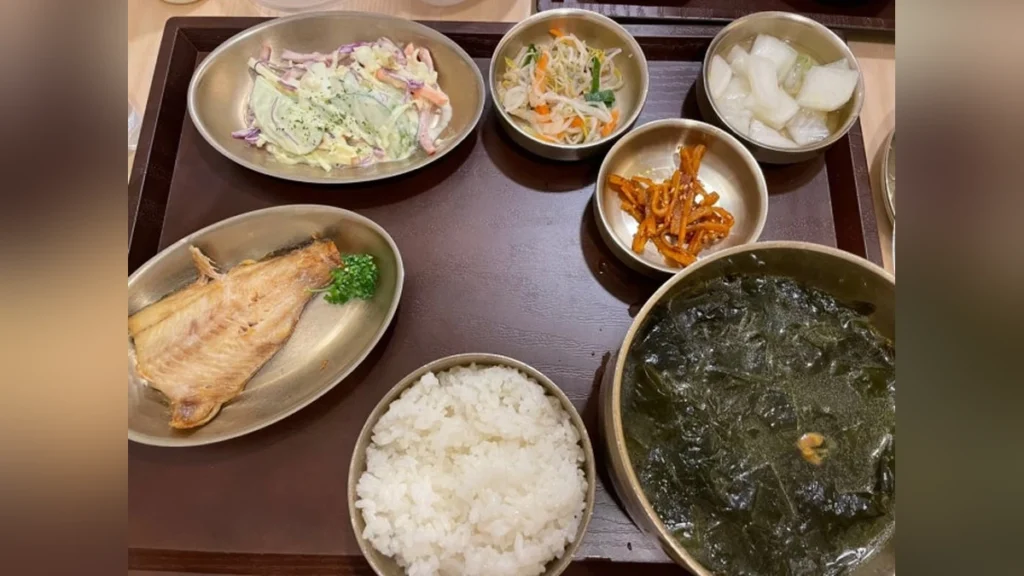
If there is one element of the Korean postpartum care center that consistently impresses both Korean mothers and foreign observers, it is the food. Nutrition at a sanhujoriwon is not hospital food — it is a carefully designed, professionally prepared dietary program specifically formulated for postpartum recovery, served hot, fresh, and with a level of intention that feels more like a therapeutic diet than a cafeteria meal.
Miyeokguk — Seaweed Soup
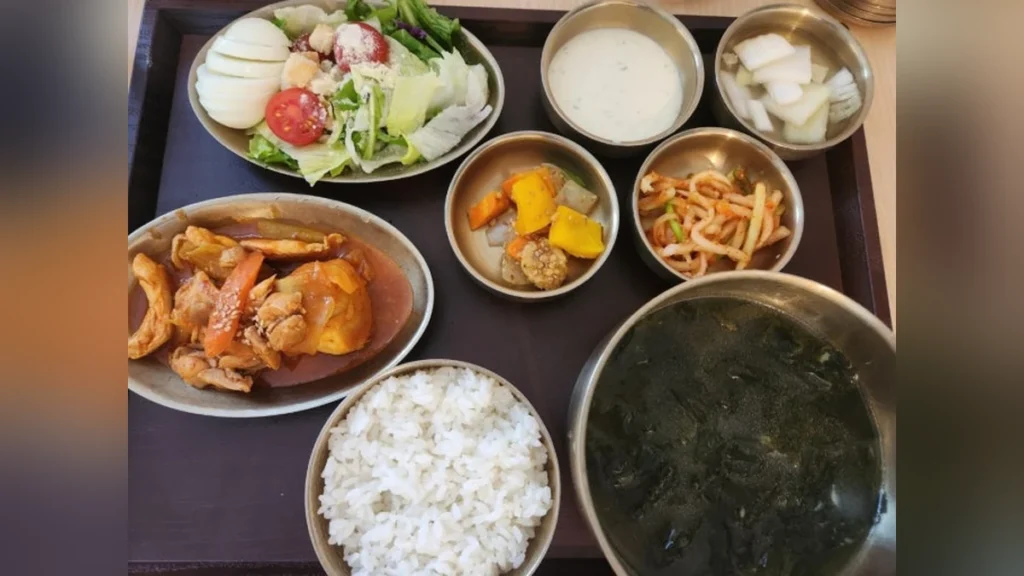
The most iconic and symbolically loaded dish in the Korean postpartum nutritional canon is 미역국 (miyeokguk) — seaweed soup. This dish holds a place in Korean birth culture that is difficult to overstate. Traditionally, the first food given to a new mother after delivery is miyeokguk, and it continues to be a central part of the postpartum diet throughout the recovery period.
The reasons are both cultural and nutritional. Miyeok — Korean sea mustard — is extraordinarily rich in iodine, calcium, iron, and folate. It supports thyroid function, aids in uterine contraction, helps replenish the mineral stores depleted during pregnancy and delivery, and is generally considered one of the most nutrient-dense foods available for postpartum recovery. At a sanhujoriwon, miyeokguk is served at virtually every meal — sometimes multiple times a day — in variations that include beef, abalone, clams, and other protein sources.
The cultural dimension of miyeokguk is equally powerful. In Korea, eating seaweed soup on your birthday is a universal practice — a way of honoring your mother and the labor she endured on the day of your birth. The association between miyeokguk and birth, between this bowl of warm soup and the act of bringing someone into the world, is one of the most emotionally resonant food traditions in Korean culture.
Warming Foods and Dietary Principles
Beyond miyeokguk, the postpartum diet at a Korean postpartum care center follows the traditional sanhujori principle of warming foods — dishes that support internal warmth, blood circulation, and recovery rather than cooling or raw foods that might tax a body still in recovery. Soups and stews are preferred over raw salads. Warm grains over cold dairy. Gently cooked proteins over heavy fried foods.
Specific foods commonly featured in the sanhujoriwon diet include nurungji (scorched rice soup, gentle on the digestive system), juk (rice porridge, easily digestible and warming), doenjang jjigae (fermented soybean paste stew, rich in protein and probiotics), and a variety of braised or steamed vegetable side dishes chosen for their nutritional density.
Breastfeeding Support Through Diet
For mothers who are breastfeeding, the kitchen at a Korean postpartum care center typically prepares additional nutritional supplements — lactation teas, warming soups, specific herbal preparations — designed to support milk production. The dietary staff often work in consultation with the nursing staff to adjust individual mothers’ meals based on their specific feeding situation, milk supply status, and any dietary restrictions.
Facilities and Amenities: What to Expect
The physical environment of a Korean postpartum care center varies significantly by facility and price point, but there are standard features that appear across most sanhujoriwon.
The Mother’s Room
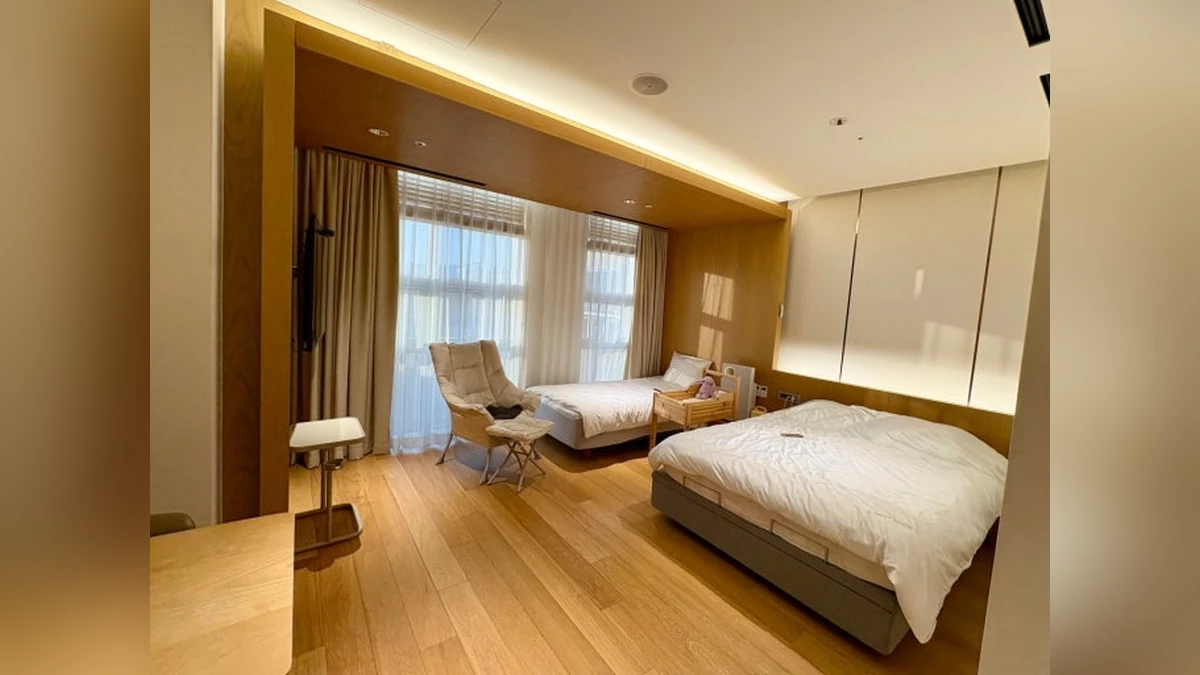
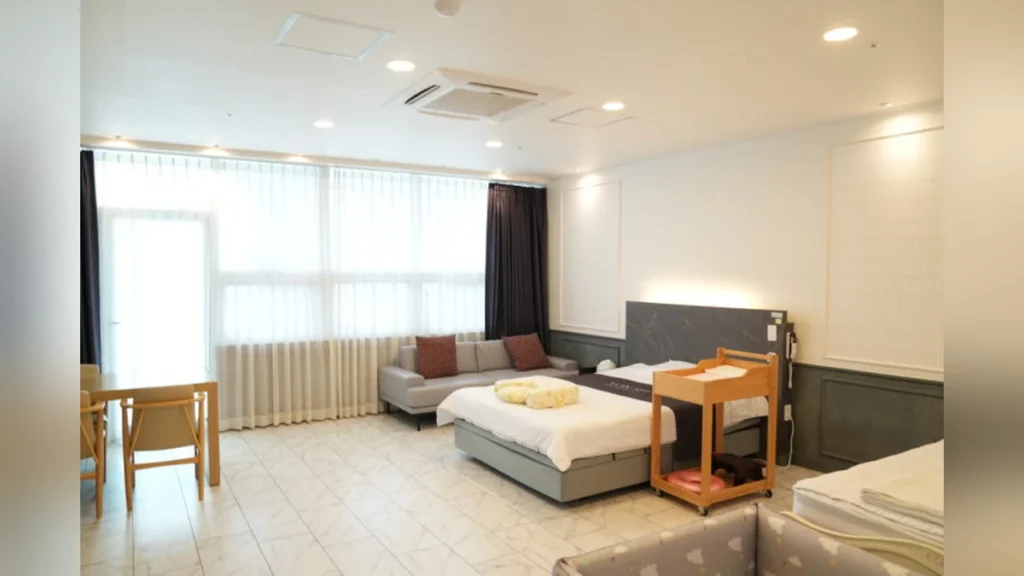
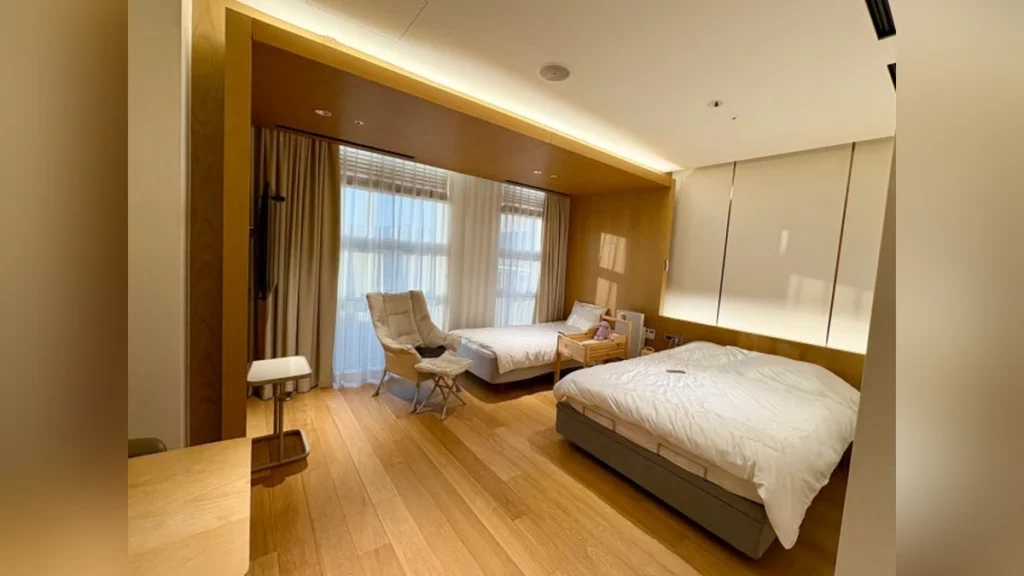
Private rooms are the norm at most sanhujoriwon. A standard room includes a hospital-grade adjustable bed, a bassinet or cot for when the baby is in the room, a private bathroom, a television, a small seating area, and storage space. Climate control is taken seriously — rooms are typically kept warm, consistent with the traditional principle that postpartum bodies should be protected from cold.
Premium rooms at higher-tier facilities may include larger floor space, improved furnishings, in-room bathtubs, enhanced privacy, and views. Some top-tier urban sanhujoriwon in cities like Seoul are genuinely luxurious in their appointments, with design aesthetics that would not look out of place in a high-end hotel.
Nursery
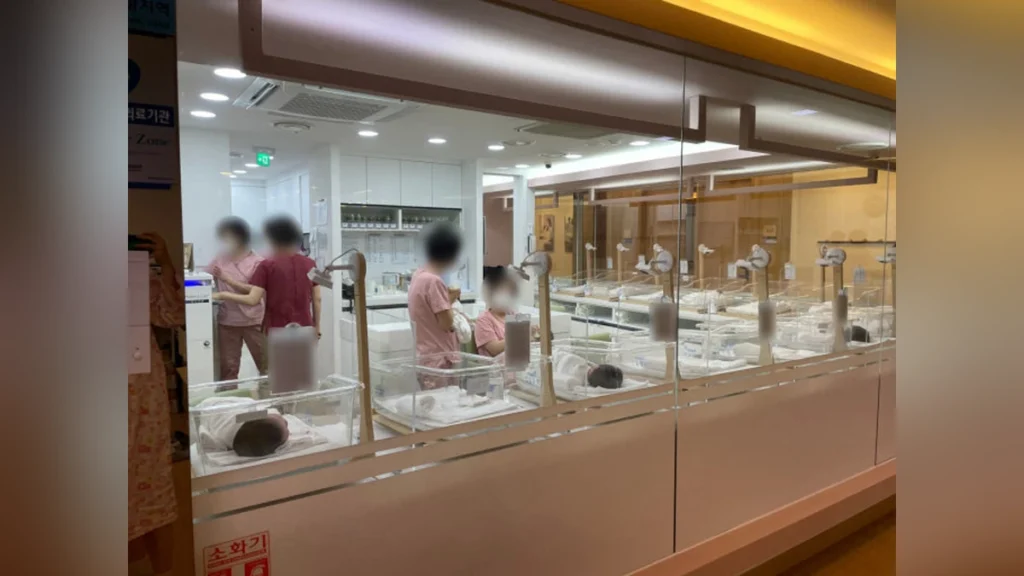
The central nursery is where newborns spend their overnight hours and significant portions of the day between feeding sessions. Well-run nurseries are visible through glass windows from a corridor, so mothers can see their babies at any time without needing to be inside. The reassurance of knowing your baby is visible, monitored, and cared for a few meters away is psychologically significant — it allows mothers to rest with genuine peace of mind rather than the half-sleep of a parent listening for every sound from a bassinet beside their bed.
Recovery and Therapy Spaces
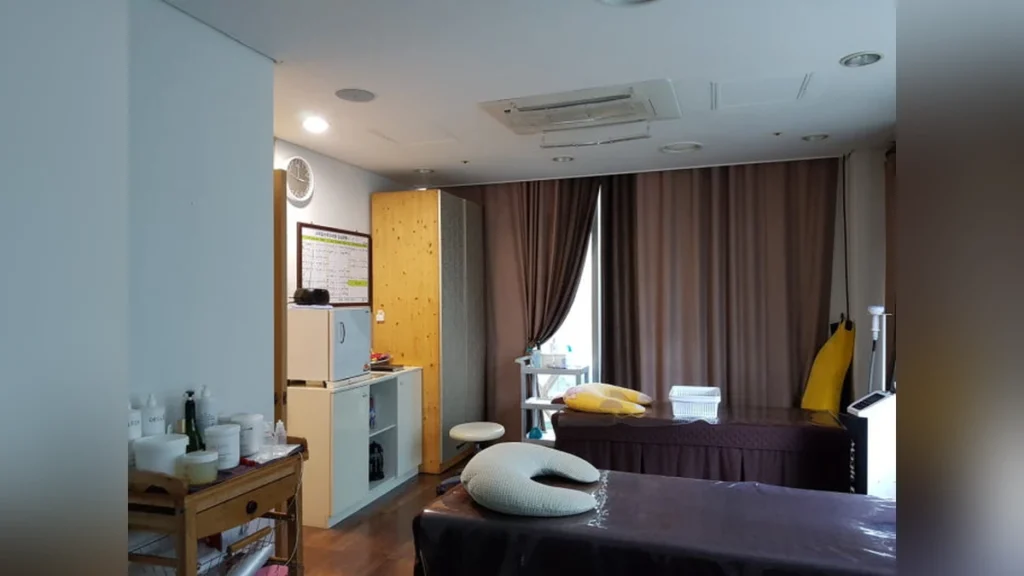
Most Korean postpartum care centers include dedicated spaces for recovery-oriented therapies. Abdominal binding and massage — a traditional Korean postpartum practice believed to support uterine involution and abdominal recovery — is offered at most facilities, either as part of the basic package or as an add-on service. Pelvic floor rehabilitation, relaxation massage, and skin care treatments are available at mid-to-upper-tier facilities.
Educational Facilities
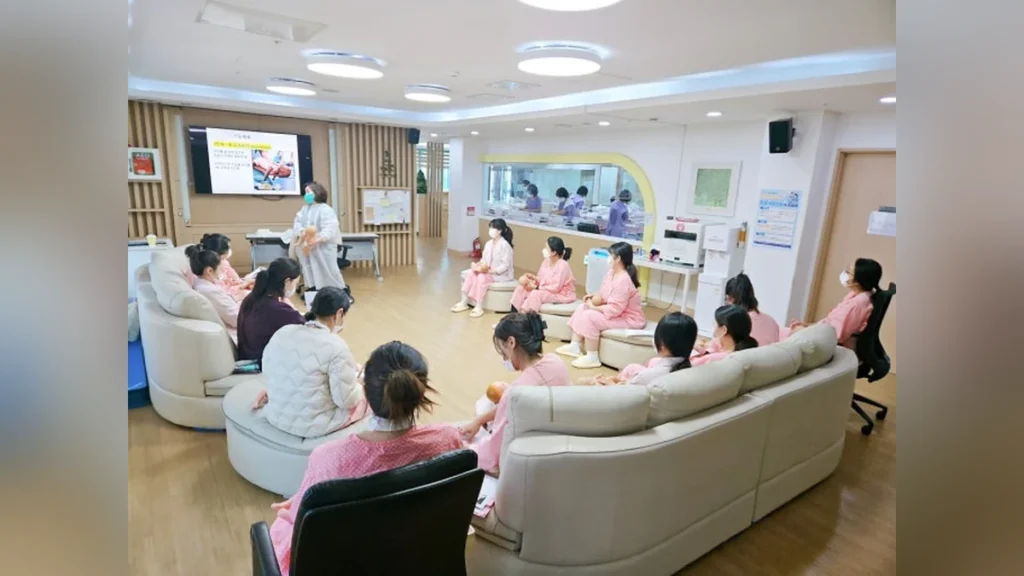
Classes in newborn care, breastfeeding technique, infant massage, and postpartum self-care are typically held in a dedicated classroom or demonstration area. These sessions are led by trained specialists — nurses, midwives, lactation consultants, or physical therapists — and are designed to prepare parents for the transition to home care before the end of their stay.
Common Areas
Most sanhujoriwon include a lounge or common area where mothers can socialize with each other during daytime hours. For many new mothers — particularly those who have relocated for work or who have limited local family support — the informal community that forms in this common area becomes one of the unexpectedly meaningful aspects of their sanhujoriwon experience. The shared context of new motherhood, the same recovery concerns, the same late-night feeding anxieties — these create bonds between strangers that often outlast the stay itself.
How Much Does a Korean Postpartum Care Center Cost?
Cost is one of the most important practical considerations around sanhujoriwon, and it is one of the most significant points of tension in conversations about access and equity.
Price Ranges
The cost of a Korean postpartum care center stay varies enormously depending on location, facility quality, room type, and duration. A general breakdown looks something like this:
Budget range: ₩1,500,000 – ₩2,500,000 for two weeks Smaller facilities in less central locations, standard rooms, basic services. Fully functional and safe, but without premium amenities or extensive therapy services.
Mid-range: ₩2,500,000 – ₩4,500,000 for two weeks The most common tier. Private rooms with solid amenities, full nursing staff, standard therapy services, good food program. This is where the majority of Korean mothers who use sanhujoriwon land.
Premium: ₩4,500,000 – ₩8,000,000 for two weeks Larger rooms, higher-end furnishings, expanded therapy menus, concierge-style service, premium food programs. Located primarily in affluent urban neighborhoods in Seoul and other major cities.
Ultra-luxury: ₩8,000,000 and above for two weeks Five-star quality facilities with interiors that genuinely rival luxury hotels, individual meal planning by professional nutritionists, comprehensive spa-style therapy programs, and the kind of service level associated with premium hospitality rather than healthcare. These facilities are a small but visible part of the sanhujoriwon landscape and attract attention disproportionate to their actual use numbers.
Government Support
Recognizing that access to postpartum care should not depend entirely on financial means, the South Korean government provides a subsidy program for sanhujoriwon use. Eligible mothers can receive a government voucher — currently providing a set amount that partially offsets the cost of a standard two-week stay. The program has been expanded and reformed multiple times since its introduction, and while it does not come close to covering the full cost of a mid-range or premium facility, it represents a meaningful policy commitment to making postpartum care accessible beyond the highest-income households.
Additional support is available through some municipal governments and health insurance schemes, and many employers — particularly larger Korean corporations — have begun offering postpartum care benefits as part of their maternity support packages.
Who Uses Sanhujoriwon — and Who Doesn’t
Usage of sanhujoriwon has increased dramatically over the past two decades. According to surveys conducted by Korean health authorities, the vast majority of Korean mothers who give birth in hospitals — currently the near-universal delivery setting in South Korea — go on to use a sanhujoriwon for at least some portion of their postpartum period.
This was not always the case. A generation ago, postpartum recovery was primarily a domestic affair managed at the home of the mother’s parents or in-laws, with female family members taking on the caregiving roles that sanhujoriwon now provide professionally. The shift away from this model has been driven by several converging factors: increased nuclear family structures with limited extended family availability, urbanization and geographic distance from family of origin, rising awareness of professional postpartum care standards, and the simple reality that as more Korean women have entered the workforce, the informal care networks that previously supported new mothers have become less reliable.
Not everyone uses sanhujoriwon, and not everyone who does uses them for the full two to four weeks. Cost remains the primary barrier for lower-income families even with government support. Some mothers — particularly those with strong family support networks and previous childcare experience — choose to recover at home with family assistance. And there is a small but vocal contingent of Korean mothers who choose home recovery as an ideological preference, prioritizing the bonding and autonomy of home life over the professional care of an institutional setting.
The Debate Around Sanhujoriwon: Criticism and Counterpoints
Korean postpartum care centers are not without critics, and the debates around them are worth understanding because they reflect genuine tensions in Korean maternal culture.
The Cost Accessibility Problem
The most substantive criticism is one of economic access. Despite government subsidies, a quality sanhujoriwon stay represents a significant financial commitment that is much more easily absorbed by middle-class and upper-income families than by lower-income ones. Critics argue that the current system creates a two-tier postpartum experience in which the quality of care a mother receives after childbirth is partly determined by her household income — a genuinely troubling inequity in a system that ideally should serve all new mothers equally.
The Separation Question
A second significant criticism concerns the routine separation of mother and newborn that is built into the sanhujoriwon model. The practice of placing newborns in the nursery overnight, while designed to support maternal rest, conflicts with international breastfeeding guidelines that recommend extended mother-infant contact and demand-based feeding in the early weeks. Some lactation experts have raised concerns that the scheduled, session-based breastfeeding model of sanhujoriwon may not always optimize milk supply establishment for every mother, particularly in the critical first days after delivery.
Most contemporary sanhujoriwon have responded to this criticism by offering rooming-in options — where the baby stays in the mother’s room throughout the day and night if the mother prefers — and by providing lactation consultants rather than simply nursing staff. The better facilities actively adapt their model to each mother’s feeding goals rather than applying a single protocol uniformly.
The Medicalization of Normal Recovery
A smaller body of criticism questions whether the institutionalization of postpartum recovery — turning a natural life transition into a professional service purchased in a clinical setting — represents a net gain or loss for mothers and families. Proponents of home-based postpartum care argue that the wisdom, warmth, and relational support of experienced female family members is not simply replaced but diminished when postpartum care is professionalized and outsourced to a facility.
This is a philosophical rather than medical argument, and it is one that Korean maternal culture holds with genuine complexity — acknowledging both the value of the sanhujoriwon model and the irreplaceable quality of family-centered care when that option is genuinely available and well-supported.
What Foreigners and Expats Need to Know
For foreign residents and expats living in Korea, sanhujoriwon are accessible and increasingly equipped to serve international mothers. Here is what is practically useful to know:
English-language facilities exist. Several sanhujoriwon in Seoul and other major cities with significant expat populations offer English-speaking staff and English-language documentation. These facilities are worth seeking out specifically if your Korean is limited, as the quality of communication with nursing staff about your recovery concerns and your baby’s care is important enough to justify the additional research.
Book early. Quality sanhujoriwon in desirable locations fill up quickly, particularly in Seoul. Most Korean mothers book their sanhujoriwon during the second trimester of pregnancy — often as early as four to six months before the expected delivery date. For expats who may not think about this until later in pregnancy, getting on a waiting list as soon as possible is strongly advisable.
Tour before you commit. Visiting a sanhujoriwon in person before booking is standard practice in Korea and strongly recommended. The quality of a facility’s actual environment, the demeanor of its staff, the cleanliness of its rooms and nursery, and the feel of the common areas are things that photographs and reviews communicate imperfectly. A direct visit gives you information that no amount of online research can fully replace.
Understand your insurance situation. For expats with Korean national health insurance or employer-provided health insurance, partial coverage of sanhujoriwon costs may be available depending on the policy. Check your specific coverage before booking and understand what documentation the facility provides for insurance claims.
Government subsidies may be available. Foreign residents who meet the eligibility criteria for Korean government postpartum care vouchers — which are based on residency and birth registration status rather than nationality in many cases — may be entitled to the same subsidy available to Korean citizens. This is worth verifying with your local 주민센터 (community center) or health authority.
What the Rest of the World Can Learn from Korea
The Korean postpartum care center model raises questions that are worth taking seriously well beyond Korea’s borders, because the postpartum period is one of the most consistently underprovided stages of healthcare in the world.
In most developed countries, new mothers are discharged from hospital within twenty-four to forty-eight hours of an uncomplicated vaginal birth. They go home to manage a newborn, physical recovery, hormonal upheaval, sleep deprivation, and the full weight of new parenthood with whatever support their immediate network provides — which, for many families in the modern world, is limited. Postpartum depression rates are significant in virtually every country that measures them. Breastfeeding discontinuation rates are high, with inadequate support cited as a major reason. Physical recovery complications — pelvic floor dysfunction, wound healing issues, musculoskeletal problems — are common and frequently undermanaged.
The Korean postpartum care center model does not solve all of these problems, but it addresses several of them with a directness and institutional seriousness that most other healthcare systems have not matched. It treats the postpartum period as requiring professional support rather than simply family goodwill. It provides structured rest at the moment when rest is most needed and least available. It offers breastfeeding support when breastfeeding establishment is most critical and most fragile. And it gives new mothers a community of peers going through the same experience at the same time — a resource whose mental health value is difficult to quantify but impossible to dismiss.
None of this requires a carbon copy of the Korean model to be valuable elsewhere. But the underlying principles — that postpartum recovery is a serious medical and physical transition that benefits from professional care, structured rest, and nutritional support — are universal, and their application in other healthcare contexts deserves far more attention than it currently receives.
Final Thoughts
The Korean postpartum care center is one of those institutions that, once you understand what it is and what it does, makes you wonder why the rest of the world has been managing without it. It is not perfect — the cost barriers are real, the separation debates are legitimate, and the best version of postpartum care will always incorporate elements that no institutional setting can fully provide. But as an expression of a culture’s commitment to taking the weeks after birth seriously — as a recovery period, as a transition requiring support, as a moment in a woman’s life that deserves more than a pamphlet and a discharge date — the sanhujoriwon represents something genuinely admirable.
For Korean mothers, it has become close to indispensable. For expat and foreign mothers living in Korea, it is an option that deserves serious consideration rather than dismissal as a cultural oddity. And for healthcare systems around the world still sending new mothers home with little more than good luck, the Korean postpartum care center model offers a working example of what it looks like to actually take postpartum health seriously.
The weeks after birth are hard. They do not have to be as hard as most of the world makes them. Korea figured that out a long time ago.