Korean Bathhouse Culture: Everything You Need to Know Before You Go
Korean Bathhouse Culture: Everything You Need to Know Before You Go
There is a place in Korea where you can soak in a hot tub, scrub every layer of dead skin off your body, sweat in a clay-lined sauna until your pores feel entirely new, eat a boiled egg and a cup of cold barley tea at midnight, take a nap on a heated floor, and wake up feeling more thoroughly rested than you have in months — all for somewhere between five and fifteen dollars. That place is the Korean bathhouse, and it is one of the most distinctive, most democratic, and most genuinely restorative experiences that Korean daily culture has to offer.
Korean bathhouse culture encompasses two overlapping but distinct institutions: the 목욕탕 (mogyoktang), the traditional neighborhood public bath, and the 찜질방 (jjimjilbang), the larger, more modern Korean spa complex that has become one of the defining social spaces of contemporary Korean life. Both are worth understanding. Both are worth visiting. And both, once experienced, have a way of making the bathroom at your hotel feel slightly inadequate by comparison.
This guide covers everything — the history, the etiquette, what to bring, what to expect inside, how to behave, and why Korean bathhouse culture is one of the things visitors most often say they wish they had known about sooner.
Table of Contents
- The Two Types of Korean Bathhouse
- A Brief History of Korean Bathhouse Culture
- The Mogyoktang: Korea’s Traditional Neighborhood Bath
- The Jjimjilbang: Korea’s Modern Spa Complex
- What to Bring — and What You Don’t Need to Bring
- Korean Bathhouse Etiquette: The Rules That Matter
- The Italy Towel: Korea’s Most Famous Exfoliation Tool
- The Heated Floor and Why Koreans Sleep There
- The Food Culture Inside Korean Bathhouses
- Korean Bathhouse Culture for Solo Travelers and Visitors
- Tips for First-Timers
- Final Thoughts
The Two Types of Korean Bathhouse
Before anything else, it helps to understand the distinction between the two main forms of Korean bathhouse, because they are meaningfully different experiences even though they share the same cultural roots.
The mogyoktang (목욕탕) is the older, simpler institution — a neighborhood public bathhouse where people go primarily to wash. It is typically a modest facility with a changing room, a washing area, and a series of hot and cold soaking baths. There may be a steam room or a small sauna. The clientele tends to be local and regular — the same faces every week, people who live nearby and come in the way others might go to a corner coffee shop. Mogyoktang are strictly gender-separated, and the bathing area is used entirely without clothing.
The jjimjilbang (찜질방) is the evolved, expanded version — a Korean spa complex that layers the bathing experience of a mogyoktang with a range of sauna rooms, communal rest areas, food service, and often entertainment facilities including television rooms, reading corners, and exercise areas. Where the mogyoktang is primarily about washing, the jjimjilbang is about the full experience of rest, heat, and communal relaxation over an extended period. The bathing sections are still gender-separated and clothing-free, but the communal areas — the sauna rooms, the rest halls, the food areas — are mixed gender, with everyone wearing the standardized shorts and T-shirt provided by the facility. Jjimjilbang operate around the clock and function as overnight stays for anyone who needs a cheap, safe, comfortable place to sleep.
Both institutions are deeply embedded in Korean daily and social life, and understanding both gives you a complete picture of what Korean bathhouse culture actually is.
A Brief History of Korean Bathhouse Culture
The concept of communal public bathing in Korea predates the modern bathhouse by many centuries, with roots in both practical necessity and cultural tradition. In traditional Korean society, access to hot water for bathing was limited by the constraints of domestic life — heating water in sufficient quantity for a full bath was labor-intensive, and for most ordinary households, a thorough wash at home was not a frequent occurrence. Public baths provided what private homes could not: abundant hot water, space to wash properly, and the social dimension of shared cleanliness.
Buddhist temples played an early role in Korean bath culture. Temple bathhouses — called 목욕간 (mogyokgan) — served both monks and laypersons, and bathing in the temple context carried spiritual as well as physical connotations of purification. Historical records from the Goryeo and Joseon periods reference communal washing facilities associated with temples and with royal court life.
The modern neighborhood mogyoktang became widespread during the 20th century, when rapid urbanization brought large numbers of people into apartment living without reliable access to private bathing facilities. Public bathhouses filled this gap with practical efficiency, and the habit of weekly or bi-weekly bathhouse visits became deeply ingrained in Korean domestic routines. For several generations of Koreans, going to the mogyoktang with a parent or grandparent was one of the defining rituals of childhood — the warm walk home afterward, the skin that felt clean in a way it never did from a quick shower, the sense of having been properly looked after.
The jjimjilbang emerged in its modern form in the 1990s, building on the mogyoktang tradition while adding the charcoal and clay sauna rooms that became the format’s signature. The timing coincided with a period of significant economic growth and expanding middle-class leisure culture in Korea, and the jjimjilbang quickly became a social institution that served an enormous range of needs — a date destination, a family outing, a place for groups of friends to spend an entire day, and a practical budget accommodation option that has saved the wallets of countless travelers and late-night workers ever since.
The Mogyoktang: Korea’s Traditional Neighborhood Bath
Walking into a traditional Korean mogyoktang is a straightforward, unhurried experience once you know the basic structure — and it is worth seeking out specifically because of the way it connects you to an older, more local layer of Korean daily life that the modern jjimjilbang does not quite replicate.
The Entry and Changing Room
You pay at the front desk — typically a very modest fee, often between three and seven thousand won — and are directed to the gender-appropriate changing room. You’ll find a row of lockers, usually with a key attached. You remove all of your clothes, lock them away, and enter the bathing area with nothing but a small towel if you choose to carry one.
The changing room in a traditional mogyoktang tends to have an unhurried, neighborhood quality to it. Regulars chat while drying off. Elderly men or women sit with complete ease, entirely unbothered by their own nakedness or anyone else’s. For first-time visitors from cultures where communal nudity in a public setting is unusual, this can require a brief mental adjustment — but within a few minutes, the atmosphere of matter-of-fact normalcy makes the self-consciousness dissolve.
The Washing Area
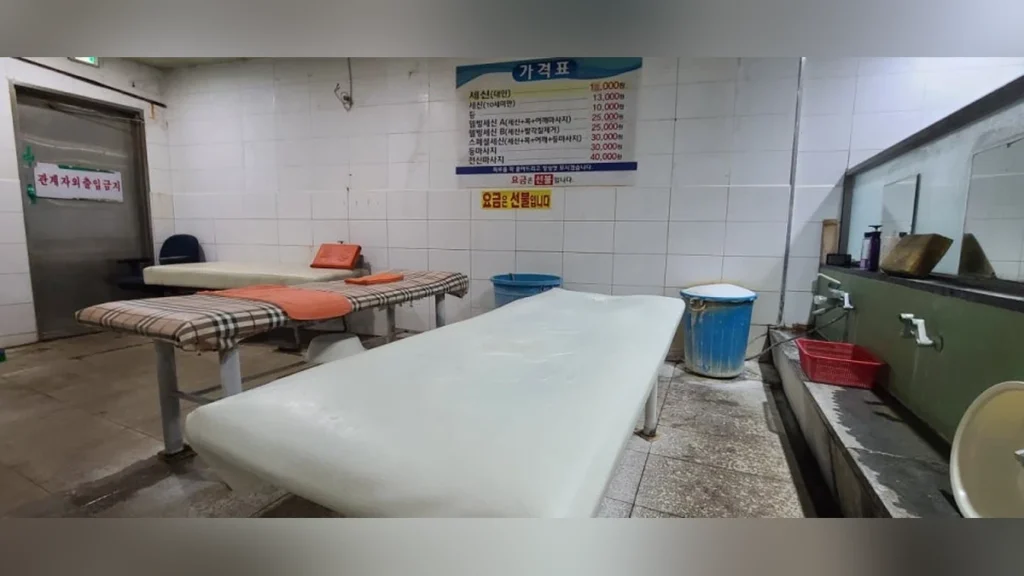
The main bathing area consists of individual washing stations — low stools in front of wall-mounted shower heads, with small plastic tubs for rinsing. You sit at a station, draw your water, and wash. This is where the actual cleaning happens — a thorough, careful wash using whatever soaps and shampoos you’ve brought or purchased at the front desk.
Korean bathhouse culture places high value on the quality and thoroughness of washing. A quick rinse is not the point. You take your time, work through your entire body systematically, and often soak in one of the large communal tubs between washing stages.
The Soaking Tubs
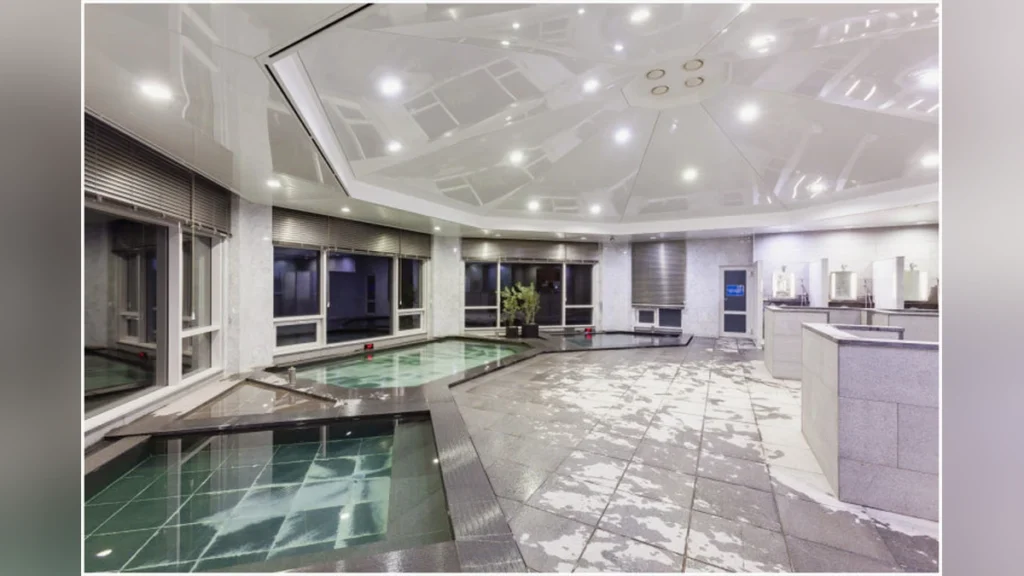
Most mogyoktang have multiple large soaking pools at different temperatures — a very hot tub, a warm tub, and a cold plunge pool. Moving between temperatures — hot to cold and back again — is a classic Korean bathhouse practice believed to improve circulation and leave the skin feeling extraordinary. The cold plunge in particular tends to shock first-timers but becomes one of the most anticipated parts of the sequence after one or two visits.
The Jjimjilbang: Korea’s Modern Spa Complex
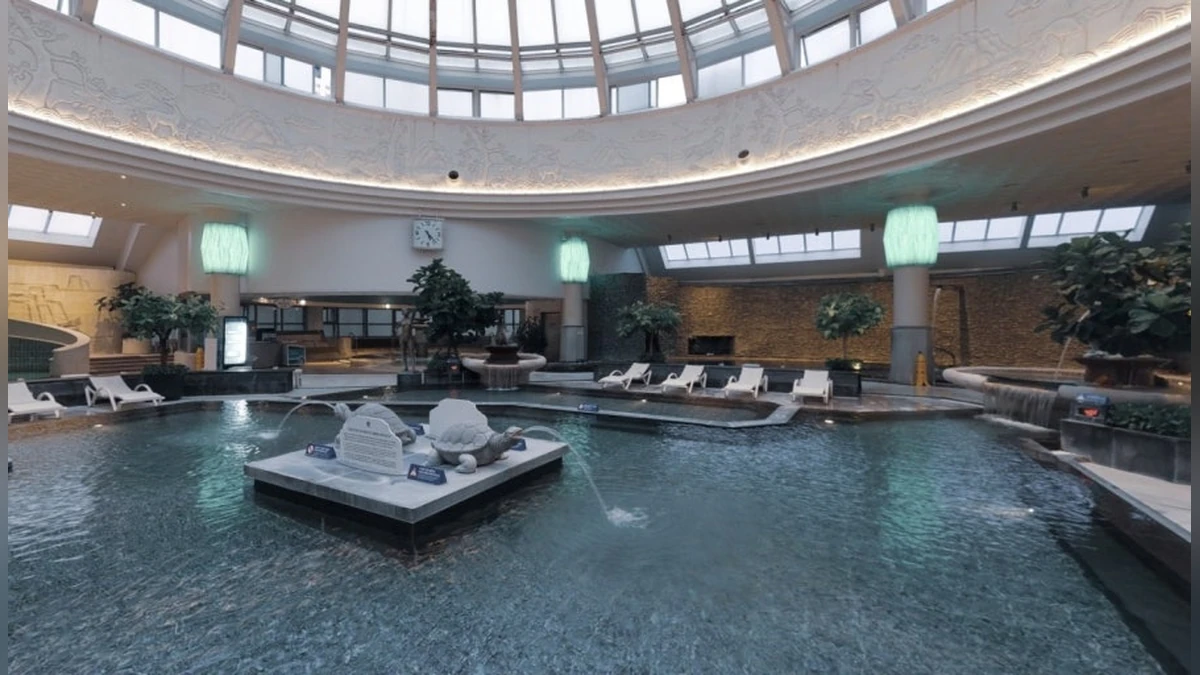
The jjimjilbang takes everything the mogyoktang offers and builds an entire world around it. Walking into a well-appointed jjimjilbang is closer to entering a self-contained leisure complex than simply visiting a bathhouse, and the range of things available inside can be genuinely surprising the first time.
Admission and the Uniform
Entry fees vary but typically run between ten and fifteen thousand won for a standard jjimjilbang, and sometimes higher for premium facilities. At the front desk you pay, receive a wristband with your locker number and any in-facility spending chip, and are handed a set of the facility’s standard shorts and T-shirt — usually a muted color, often light grey or dark orange, seemingly designed with the specific intention of making everyone look equally unpretentious.
These clothes are what everyone wears in the communal areas of the jjimjilbang. They are the great equalizer — in them, it is genuinely impossible to tell a businessperson from a student, a tourist from a local. The uniform is part of what gives the jjimjilbang its particular democratic quality.
The Sauna Rooms
The signature feature of the jjimjilbang is its variety of themed sauna rooms — each built from different materials and operating at different temperatures, based on the traditional Korean belief that different heat sources and mineral compositions have different health benefits.
The most famous is the 황토방 (hwangto-bang) — the yellow clay or loess room, typically heated to around 50–60°C. The clay walls are said to emit far-infrared rays that penetrate deep into the body, promoting circulation and detoxification. Whether or not you accept the health claims, the sensation of sitting in a warm clay room as your body releases heat in a slow, steady wave is genuinely profound.
The 소금방 (sogeum-bang) — salt room — is lined with Himalayan salt crystals or Korean sea salt blocks that tint the light warm pink and pink-orange and fill the room with a mineral quality. The 숯방 (sut-bang) — charcoal room — uses activated charcoal walls at higher temperatures, particularly popular for its claimed skin-clarifying properties.
Most jjimjilbang also include a very high-temperature room — called 불가마방 (bulgama-bang) — modeled after traditional Korean kilns and heated to 80–90°C. Staying in this room for more than a few minutes is genuinely challenging, but the sensation afterward — stepping out into the corridor and feeling the relatively cool air hit your thoroughly heated body — is one of the more memorable physical experiences the jjimjilbang offers.
The Communal Rest Area
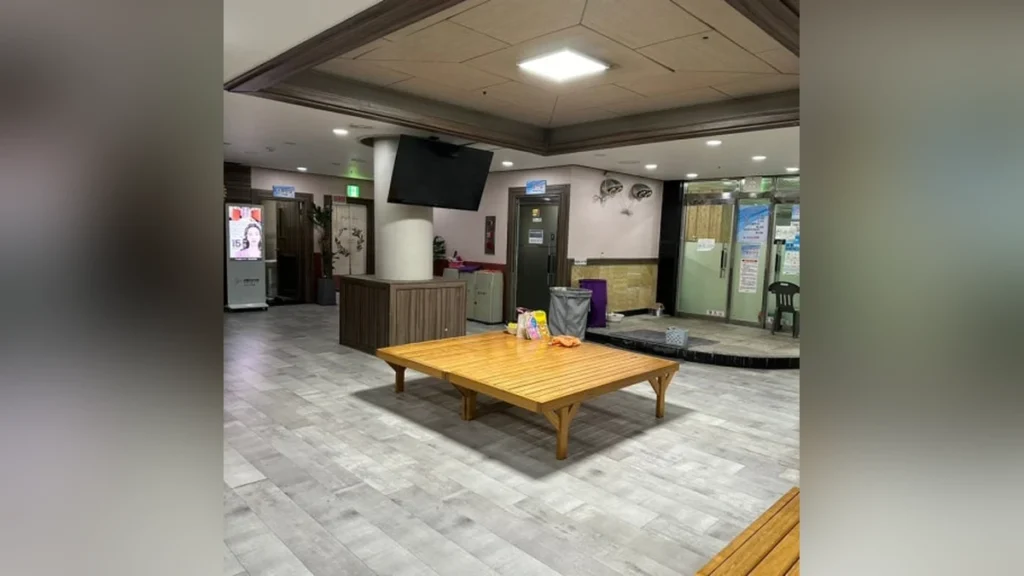
Between sauna sessions, most jjimjilbang visitors retreat to the large communal rest area — a wide, open-plan space with a heated ondol floor, scattered with thin mats and small wooden pillows. People sprawl in every direction: sleeping, watching television, reading, scrolling on their phones, eating snacks from the food counter, or simply lying in a state of warmly contented inactivity.
This rest area is the social heart of the jjimjilbang. It is where groups of friends settle in for the long haul, where couples lie side by side looking at the ceiling, where elderly regulars claim their corners with the authority of long tenure. There is a specific quality of relaxed, unguarded ease in a jjimjilbang rest area that is difficult to find anywhere else — something about the shared state of physical looseness that heat produces, the uniform that removes social markers, and the cultural permission to simply do nothing for as long as you want.
What to Bring — and What You Don’t Need to Bring
One of the most common sources of anxiety for first-time visitors is not knowing what to bring. The answer is simpler than most people expect.
What to Bring
Toiletries. Soap, shampoo, conditioner, face wash — anything you want to use in the washing area. Most jjimjilbang sell basic toiletries at the front desk or in vending machines, but bringing your own is cheaper and more reliable.
A change of underwear. You’ll want fresh underwear for after your bath. Everything else — towels, the facility uniform — is provided.
Cash or a card. Some older mogyoktang operate cash-only. Jjimjilbang generally accept cards, and many have in-facility payment via your wristband chip.
An optional small personal towel. Some people like to carry a small towel for use in the sauna rooms or as a personal drying cloth. It is not essential — facilities provide towels — but useful.
What You Don’t Need to Bring
A bathing suit. The bathing areas of both mogyoktang and jjimjilbang are clothing-free zones. A bathing suit would be distinctly out of place and would mark you immediately as someone who hasn’t quite understood the setup.
Your own large towel. Towels are provided at the front desk or available from dispensers inside.
Extra clothes for the communal areas. The facility uniform is provided with your admission fee and covers everything you need for the sauna rooms and rest areas.
A lot of money. Korean bathhouse culture is genuinely affordable. Even a long day at a well-appointed jjimjilbang — including food — is unlikely to cost more than twenty to thirty thousand won.
Korean Bathhouse Etiquette: The Rules That Matter
Korean bathhouse culture has a clear, well-understood code of behavior that most Koreans absorb through childhood experience. For visitors, knowing the key points in advance makes the whole experience more comfortable and prevents the social awkwardness of accidentally doing something wrong.
Shower before entering the soaking tubs. This is the most fundamental rule and the one most consistently observed. You wash at your individual station first — thoroughly — before entering any communal soaking pool. Getting into a shared bath without washing first is considered genuinely inconsiderate and is the kind of thing that draws looks.
Keep your towel out of the tub. Small personal towels should be left at the edge of the tub or folded on your head, not dragged into the water. Even a small amount of soap residue on a towel can cloud the shared water.
No phones in the bathing area. The bathing areas of Korean bathhouses are phone-free zones, primarily for privacy reasons. Everyone is unclothed, and photography is completely unacceptable. This rule is taken seriously and observed universally.
Keep your voice down. Korean bathhouses are not silent — there is conversation, the sound of water, television in some areas — but the general atmosphere is one of calm rather than excitement. Loud behavior stands out and is considered disruptive to the restful quality of the space.
Don’t stare. This sounds obvious, but is worth stating. Communal nudity in the bathing area is completely normalized and does not warrant comment, reaction, or extended attention. The social contract is that everyone looks straight ahead or at their own business, and this contract is observed with remarkable consistency.
Lie down properly in the rest area. In the communal rest areas of a jjimjilbang, people sleep and rest on thin floor mats. Lying diagonally across a crowded floor or occupying significantly more space than necessary is considered inconsiderate. Most regular visitors are naturally efficient with their space.
Return the facility uniform before leaving. The shorts and T-shirt provided at admission need to be returned to a designated bin before you exit. Leaving with them, intentionally or accidentally, is a source of embarrassment and a fee.
The Italy Towel: Korea’s Most Famous Exfoliation Tool
No discussion of Korean bathhouse culture is complete without the 이태리 타월 (Italy towel) — and despite the name, this is an entirely Korean invention with no particular connection to Italy beyond the fiber originally used to make it.
The Italy towel is a small, rough-textured rectangular mitt — somewhere in texture between a loofah and a piece of industrial-grade sandpaper — that is used to exfoliate the skin after soaking. When skin has been softened by hot water for twenty to thirty minutes, rubbing it with an Italy towel produces a phenomenon that never fails to astonish first-timers: long, grey-brown rolls of dead skin that peel away from the surface in satisfying, slightly alarming quantity.
This process — called 때밀이 (ttaemiri), or scrubbing — is one of the most beloved rituals of Korean bathhouse culture. Many Koreans consider a proper bath incomplete without it, and the deep cleanliness that results from a thorough ttaemiri session is qualitatively different from anything a regular shower produces. The skin afterward has a smoothness and a slight luminosity that persists for several days.
Italy towels are sold at the front desk of virtually every Korean bathhouse and at convenience stores throughout the country. They come in different textures — the green ones are standard, the yellow ones slightly softer, the red ones more abrasive. They cost almost nothing and are among the most practical and genuinely useful items to bring home from Korea.
If you visit a jjimjilbang or mogyoktang and skip the Italy towel, you have missed a defining element of the experience. Buy one. Use it after soaking for at least twenty minutes. Be prepared for the results.
The Heated Floor and Why Koreans Sleep There
One of the things that most surprises visitors to a jjimjilbang for the first time is how naturally and comfortably Koreans sleep on the floor of the communal rest area. There are no beds, no proper pillows — just a large heated ondol floor, thin rubber mats, and small wooden or plastic headrests that take some adjustment before they feel comfortable. And yet the quality of sleep that people get there is, by most accounts, remarkably good.
The reason is the floor itself. Korean ondol heating — the system of underfloor heating that has been part of Korean domestic architecture for thousands of years — produces a specific quality of warmth that rises gently from below rather than blowing from above. The heat is even, deep, and continuous in a way that promotes physical relaxation more completely than ambient room heating does. Lying on a properly heated ondol floor, particularly after several rounds of hot soaking and sauna, produces a physical heaviness and warmth that makes sleep not just possible but almost inevitable.
The wooden headrest takes more getting used to. Many first-timers spend several minutes trying to find the right angle before eventually giving up and using a rolled towel instead. This is completely normal and nobody will judge you for it.
The jjimjilbang’s overnight accommodation function is one of its most practically significant qualities. For the same price as a few hours of daytime use, you can stay the entire night in a warm, safe, clean facility with a locker for your belongings and as much soaking and sauna access as you want. For travelers who have missed a last train, for workers who have stayed too late in the city to make it home, for groups of friends who decide spontaneously to make a night of it — the jjimjilbang works as an accommodation option with a practical directness that is hard to beat at the price.
The Food Culture Inside Korean Bathhouses
Food at a Korean bathhouse is its own subject, and it is one that a surprising number of visitors discover with genuine delight.
Sikhye
식혜 (sikhye) — sweet rice punch — is the most iconic jjimjilbang drink. A cold, lightly sweetened beverage made from fermented rice, with a mild, gentle sweetness and small grains of rice floating at the bottom, sikhye is served in a paper cup from a large dispenser and consumed in enormous quantities throughout any given day at a jjimjilbang. It is cold, slightly sweet, and deeply refreshing after a round of sauna. It costs almost nothing. Drinking sikhye after sweating in a hot room is one of those small, specific pleasures that has become inseparable from the jjimjilbang experience.
Boiled Eggs
The 구운 달걀 (guwun dalgyal) — roasted eggs, or more commonly just 찜질방 달걀 (jjimjilbang eggs) — are eggs that have been slow-roasted in the high-heat sauna rooms until their whites turn a warm brown and their yolks become dense and crumbly. The flavor is richer and more complex than a standard boiled egg, with a pleasant nuttiness from the slow roasting process. They are sold in small bags at the food counter for a few hundred won each and eaten while sitting on the rest area floor with a paper cup of sikhye. This combination — jjimjilbang egg and sikhye — is so universally associated with the Korean bathhouse experience that it has become something close to a cultural emblem.
Full Food Service
Beyond the eggs and sikhye, most jjimjilbang have a full food service counter or small restaurant area serving Korean staples — ramen, gimbap, bibimbap, tteokbokki, and various other comfort foods. Eating a bowl of ramen at midnight on the heated floor of a jjimjilbang in paper shorts is an experience that sounds undignified in description and feels completely perfect in practice. The food is not fine dining, but it does not need to be — in context, it is exactly right.
Korean Bathhouse Culture for Solo Travelers and Visitors
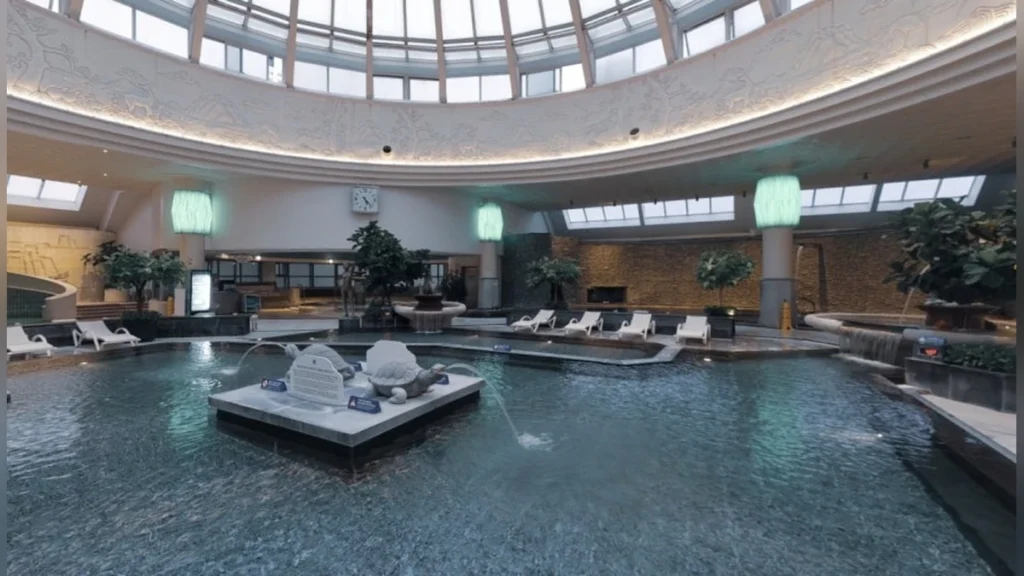
Korean bathhouse culture is genuinely welcoming to foreign visitors, and the experience is more accessible to non-Korean speakers than many people assume.
The process of entering and using a mogyoktang or jjimjilbang is largely self-evident — you pay, you receive a locker key or wristband, you follow the other guests through the changing area and into the bathing section. Most of the important information is communicated through signage, physical layout, and the behavior of people around you. In larger jjimjilbang in tourist-heavy areas of Seoul — particularly Hongdae, Sinchon, and the areas near major train stations — English signage is often available.
The communal nudity in the bathing area is the element that gives most foreign visitors pause, and it is worth addressing directly: yes, everyone is unclothed, and yes, this feels unusual for approximately the first three minutes, after which it feels completely normal. The Korean bathhouse is one of the most body-neutral environments you are likely to encounter anywhere in the world. There is no judgment, no performance, no self-consciousness visible in the other guests. The atmosphere is one of complete, practical normalcy, and it has a remarkably quick effect on visitors who allow themselves to settle into it.
Solo travelers in particular often find the jjimjilbang one of the most comfortable environments in which to be alone in Korea. The communal rest area provides company without demanding conversation. The food counter gives you something to do. The sauna rooms create a natural rhythm of activity. And the whole facility operates on the understanding that everyone there is simply taking care of themselves — which is exactly what solo travel calls for at the end of a long day.
Tips for First-Timers
Go on a weekday if possible. Weekend jjimjilbang — particularly in urban areas — can be crowded to the point of reducing the restful quality that makes the experience worthwhile. A weekday evening or early morning visit is quieter, more spacious, and more conducive to the genuine rest the facility is designed to provide.
Soak before you scrub. If you plan to use an Italy towel, give your skin at least twenty to thirty minutes in the hot tub first. The exfoliation only works properly on skin that has been thoroughly softened by heat and water — attempting it on insufficiently soaked skin produces minimal results and more discomfort.
Start with the warm sauna rooms, not the hottest one. The hottest rooms in a jjimjilbang — particularly the bulgama room — are not where you begin. Start with the yellow clay room or salt room at moderate temperatures, let your body acclimate to the heat over the first hour, and work your way toward higher temperatures as you become more comfortable. Going straight to the hottest room is the fastest way to feel dizzy and need to leave.
Drink water regularly. This sounds obvious but is worth emphasizing. Significant sweating in sauna rooms combined with inadequate water intake is genuinely depleting, and it is easy to forget to hydrate when you’re comfortable and relaxed. Most jjimjilbang have water dispensers in or near the rest area — use them consistently throughout your visit.
Budget more time than you think you’ll need. First-time visitors almost universally end up staying longer than they planned. The rhythm of soak, sauna, rest, eat, repeat is deeply satisfying and has a way of making hours pass without notice. Going in with a tight schedule is the main thing that prevents people from getting the full experience.
Bring flip-flops. Walking barefoot on wet bathroom floors is uncomfortable and unhygienic. Small rubber sandals or flip-flops kept in your locker and worn in the wet areas are a simple practical improvement that regular visitors all use.
Final Thoughts
Korean bathhouse culture is one of the experiences that visitors most consistently describe as having changed something small but real about how they think about daily life. Not in a grand way — no one leaves a jjimjilbang having had a revelation. But there is something about the combination of heat, cleanliness, communal ease, affordable accessibility, and complete lack of pretension that makes a well-spent afternoon or evening at a Korean bathhouse feel like one of the more quietly correct ways to spend time.
It is democratic in the best sense — an experience available to almost everyone, requiring almost nothing beyond the entry fee and the willingness to participate on the same terms as everyone else. It is restorative in a way that is physical and immediate and does not require belief in anything to work. And it is genuinely, specifically Korean — connected to a tradition of communal care and practical wellness that has been part of Korean daily life for centuries and shows no sign of disappearing.
If you are in Korea and you have not yet been to a jjimjilbang, go. Take your time. Bring an Italy towel. Eat the eggs. Drink the sikhye. Fall asleep on the warm floor in your paper shorts.
You will feel, afterward, remarkably well.