7 Breathtaking Places to See Snow Flowers in Korea
7 Breathtaking Places to See Snow Flowers in Korea
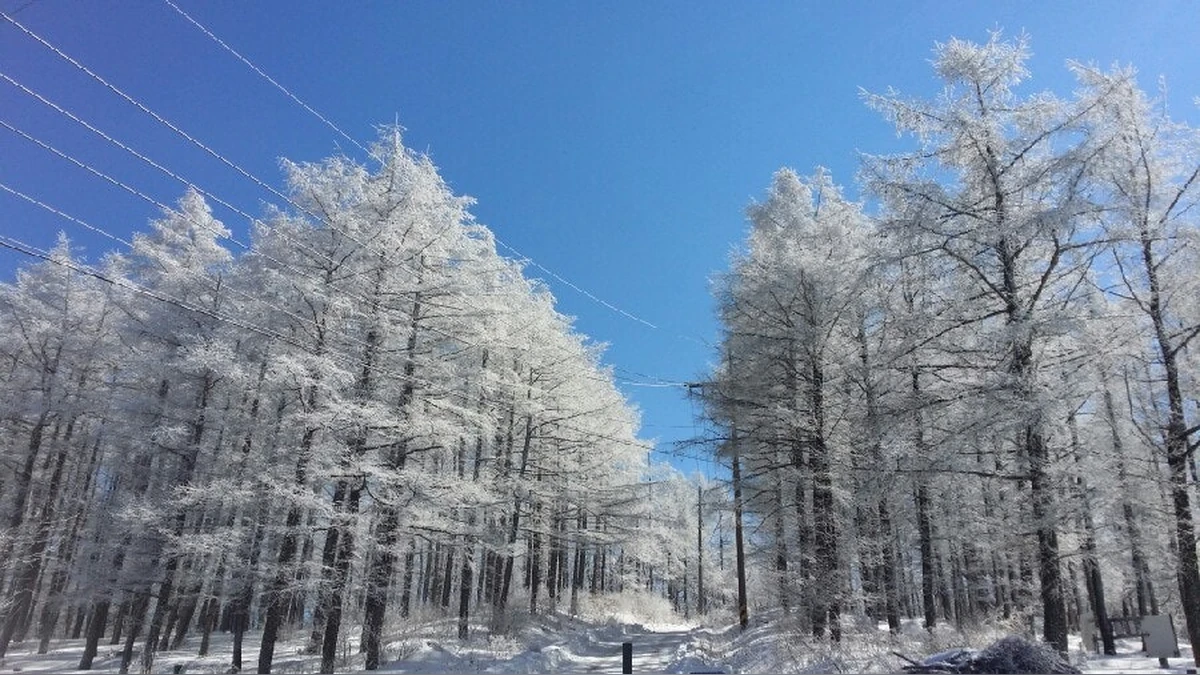
Snow flowers in Korea are one of those things that sound almost too poetic to be real — until you’re standing in the middle of a frost-covered mountain trail with snow-dusted branches arching overhead and silence all around you. Then it makes perfect sense.
The term “snow flower” refers to the beautiful natural phenomenon where snow and frost settle delicately onto tree branches, transforming forests and mountain ridges into something that looks more like a painting than a real landscape. Korea, with its cold winters and heavily forested mountains, is one of the best places in Asia to witness this — and yet it remains one of the most underrated reasons to visit.
If you’ve been putting off a winter trip to Korea, let this be the nudge you needed. Here are seven destinations where snow flowers are nothing short of extraordinary.
Table of Contents
- What Are Snow Flowers, and Why Does Korea Do Them So Well?
- Taebaeksan National Park — Gangwon-do
- Seoraksan National Park — Gangwon-do
- Deogyusan Mountain — Muju
- Odaesan National Park — Gangwon-do
- Hambaeksan Mountain — Gangwon-do
- Hallasan — Jeju Island
- Wondaeri Birch Forest — Gangwon-do
- Tips for Planning Your Snow Flower Trip
What Are Snow Flowers, and Why Does Korea Do Them So Well?
Before diving into the destinations, it’s worth taking a moment to understand what makes snow flowers in Korea so special. When temperatures drop sharply and moisture in the air freezes onto branches and leaves, it creates a delicate layer of white that mimics the look of blossoms in full bloom. The result is a winter forest that feels completely surreal — still, glittering, and impossibly quiet.
Korea’s mountainous terrain, combined with its cold, dry winters and significant snowfall in certain regions, creates ideal conditions for this phenomenon. Gangwon-do Province, in particular, consistently delivers some of the most dramatic snow flower scenery in the country. But as this list shows, the magic isn’t limited to one region.
The peak window for snow flowers in Korea is generally late December through February, with January often being the most reliable month. The earlier in the morning you arrive, the better — fresh overnight snow and low morning light make for the most stunning views.
1. Taebaeksan National Park (태백산국립공원) — Gangwon-do
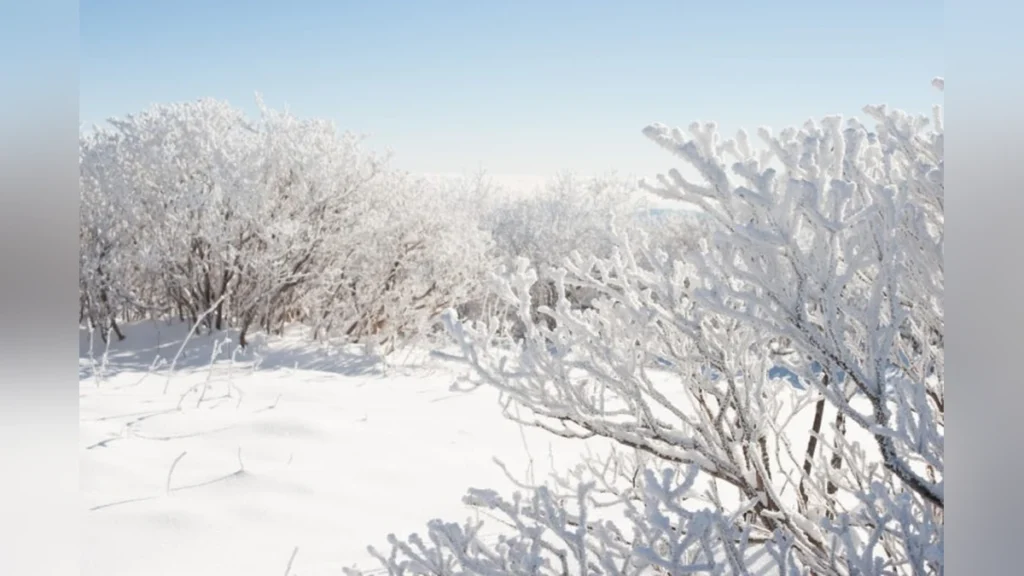
If there’s one mountain in Korea most closely associated with snow flowers, it’s Taebaeksan. Located in the eastern highlands of Gangwon-do, this peak sits at over 1,560 meters and receives some of the heaviest snowfall in the country. When snow flowers bloom here, the entire ridgeline transforms into a dense, otherworldly corridor of white-coated trees that stretches seemingly without end.
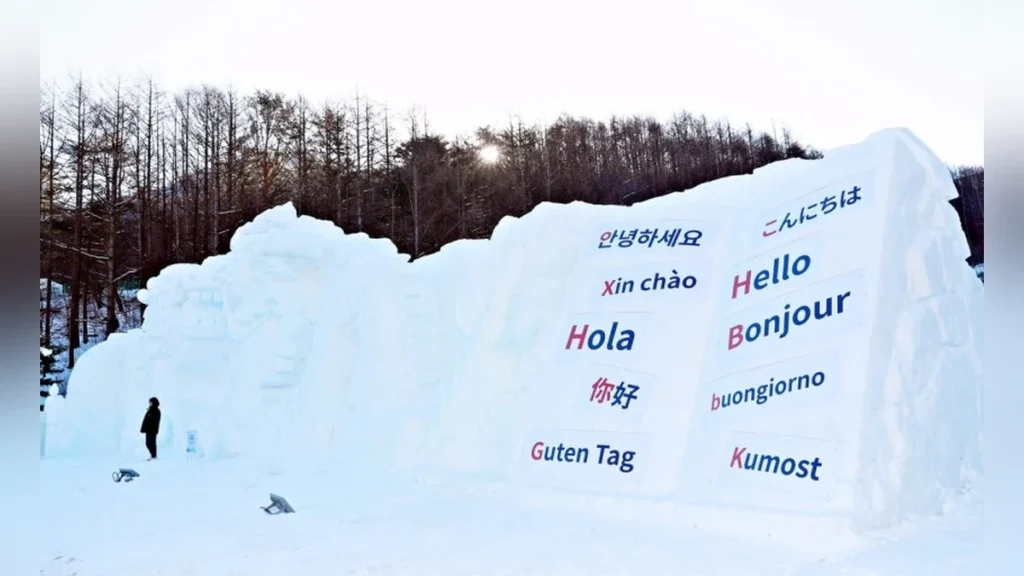
The park also hosts the annual Taebaeksan Mountain Snow Festival each January, which draws visitors from across the country. The festival features large-scale ice sculptures, an igloo café, snow sliding, and traditional winter games — making it a full day out even beyond the trail itself.
The most popular hiking route to the summit takes about two to three hours and is suitable for most fitness levels. The views from the top, with snow flowers covering the trees in every direction and the winter sky above, are the kind that stay with you for a long time.
2. Seoraksan National Park (설악산국립공원) — Gangwon-do
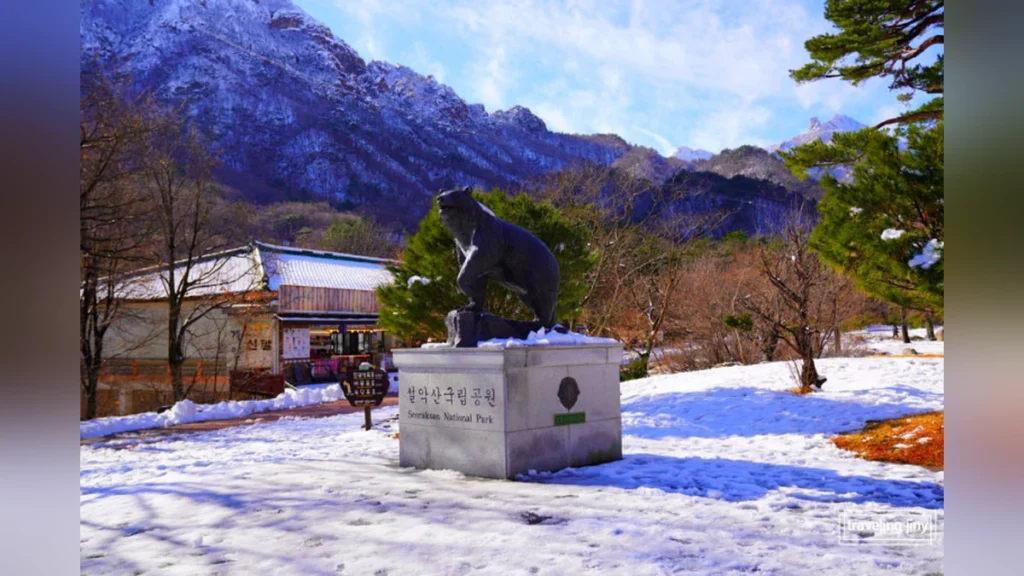
Seoraksan is one of Korea’s most beloved national parks in any season, but in winter it takes on a completely different character. The rocky granite peaks — dramatically jagged even in summer — become even more striking when dusted with snow and frost. Snow flowers cluster thickly along the forest trails, and the contrast between the dark rock faces and white-coated branches makes for some genuinely stunning scenery.
A cable car ride up to Gwongeumseong Fortress is a popular option for those who want to experience the high-altitude snow flowers without a long hike. From the top, you get sweeping panoramic views of the snow-covered landscape below — it’s well worth the ride. For those who prefer to hike, the trail toward Ulsanbawi Rock is one of the most rewarding winter routes in the park.
Being a UNESCO Biosphere Reserve, Seoraksan also carries a quiet sense of significance that makes the experience feel like more than just sightseeing.
3. Deogyusan Mountain (덕유산) — Muju
Deogyusan is a mountain that rewards you immediately. Thanks to the gondola that runs up to Seolcheonbong Peak — the second highest point in the park at 1,594 meters — you can reach some of the most spectacular snow flower scenery in Korea without needing to be an experienced winter hiker.
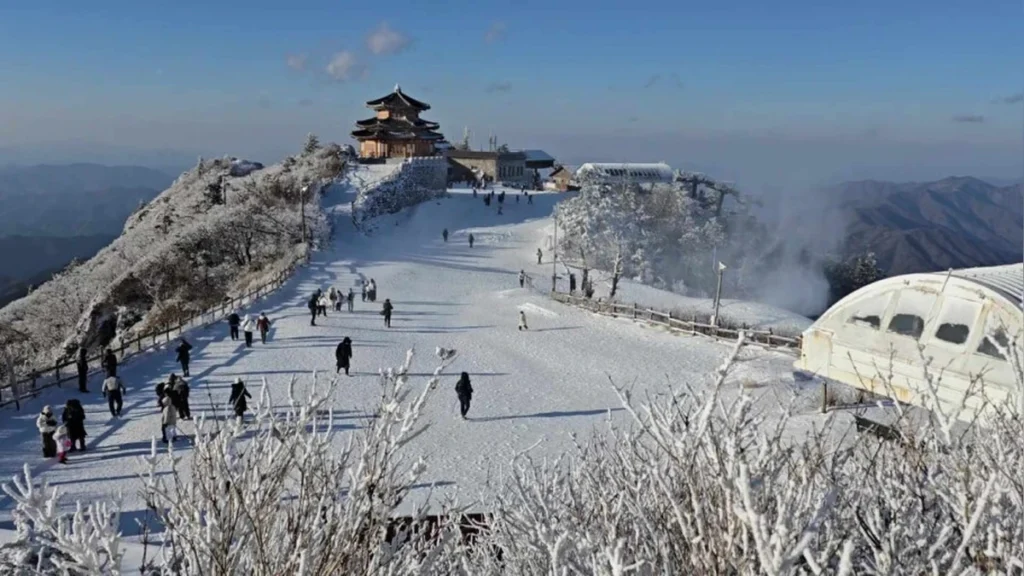
At the top, rime ice spreads like a crown across the long ridge, coating every branch and surface in a thick layer of white frost. The effect is dramatic and almost architectural — the kind of landscape that makes photographers arrive at dawn and stay until the light fades.
Deogyusan is also home to Muju Resort, making it one of the more convenient winter destinations in the country. You can ski in the morning, take the gondola up for snow flower views in the afternoon, and settle into a warm mountain meal by evening.
4. Odaesan National Park (오대산국립공원) — Gangwon-do
Odaesan offers a gentler, more meditative version of the snow flower experience. The park is known for its dense fir and pine forests, which hold snow beautifully on their wide, layered branches. Walking the trails here in winter feels genuinely peaceful — the kind of quiet that’s hard to find in most parts of modern life.
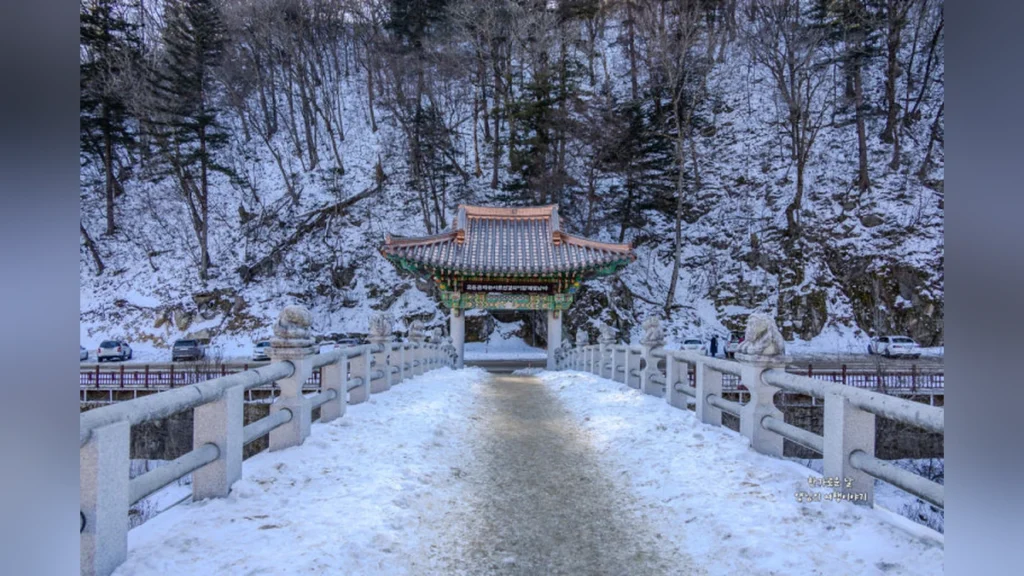
Woljeongsa Temple, located within the park, adds a meaningful cultural dimension to the visit. The approach to the temple is lined with tall fir trees, and when these are laden with snow flowers, the path becomes something truly beautiful. It’s one of those rare spots where nature and history feel completely in conversation with each other.
Odaesan is also conveniently close to the Pyeongchang area, making it easy to combine with other winter activities in the region.
5. Hambaeksan Mountain (함백산) — Gangwon-do
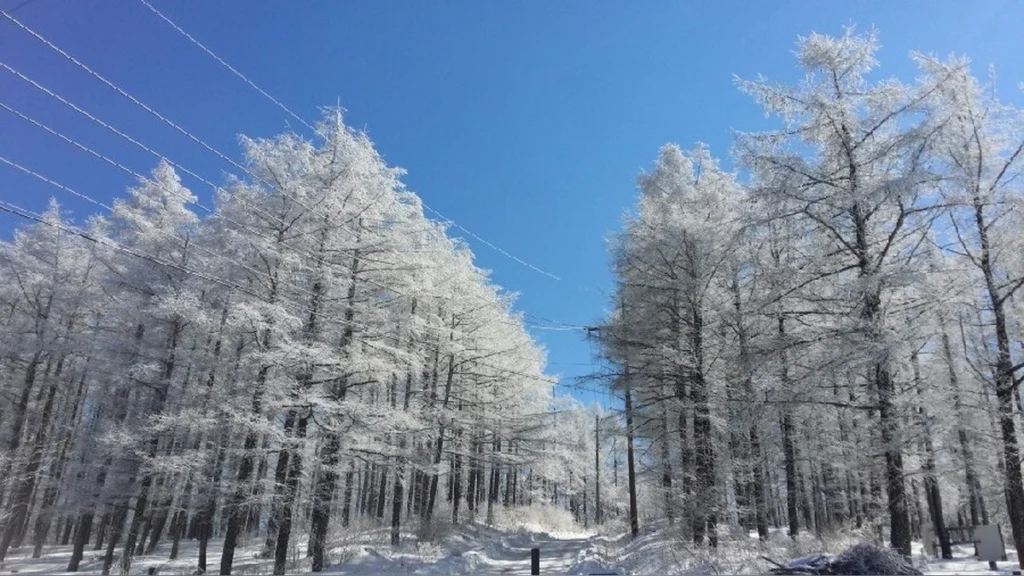
Hambaeksan may not be the most famous name on this list, but among those who know Korea’s winter landscapes well, it holds a special place. At 1,573 meters, it’s one of the highest peaks in the Taebaek mountain range, and the snow flowers here — particularly along the Manhangjae Pass — are famously thick and dramatic.
The Manhangjae Pass gained wider recognition recently after appearing in a popular Korean drama, where its snow-flower-covered scenery provided one of the most visually striking scenes of the show. Early morning mist settling into the valley combined with frost-covered trees creates a layered, almost cinematic landscape that’s genuinely unlike anything else in the country.
Because it’s slightly less trafficked than Taebaeksan, Hambaeksan tends to feel more peaceful, and you’re more likely to have stretches of the trail to yourself.
6. Hallasan (한라산) — Jeju Island
Snow flowers on Jeju Island feel almost impossible — how can a subtropical island known for palm trees and volcanic beaches also deliver one of Korea’s most beautiful winter hiking experiences? And yet, Hallasan manages exactly that.
At 1,950 meters, Hallasan is the highest peak in South Korea, and its upper elevations receive significant snowfall from December through February. Snow flowers bloom along the summit trails, and the view from the top — looking out over the island toward the sea — is staggering. Snow-covered volcanic terrain with a glimpse of deep blue ocean in the background is a combination you won’t find anywhere else.
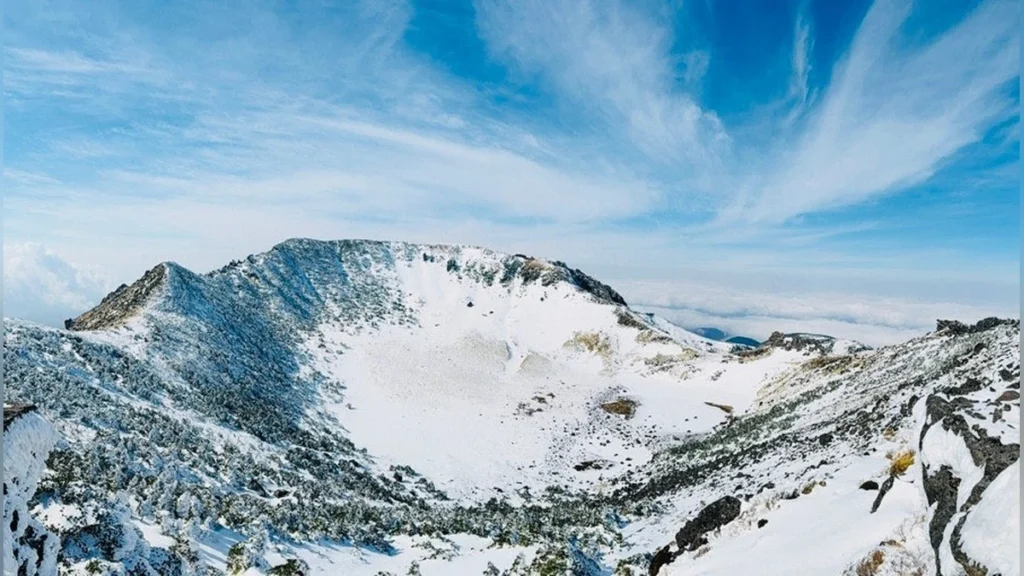
The trails to the summit require a reasonable level of fitness and proper winter hiking gear, but for those prepared, it offers arguably the most unique snow flower experience in the country. Jeju in winter also has far fewer crowds than the spring and summer seasons, which makes the whole trip feel refreshingly calm.
7. Wondaeri Birch Forest (원대리 자작나무숲) — Gangwon-do
The Wondaeri Birch Forest is a destination unlike anything else on this list. Located in Inje County, Gangwon-do, the forest is home to over 700,000 white-barked birch trees that cover the hillside in elegant rows. In summer, it’s already beautiful. In winter, when snow settles across every branch and the white trunks stand out against the pale sky, it becomes something close to magical.
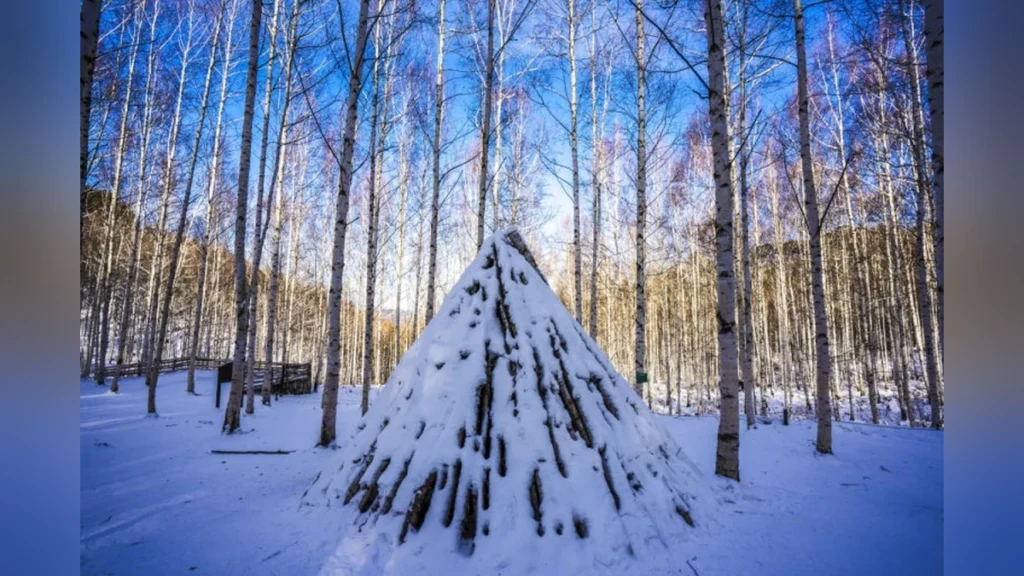
The contrast of the silvery-white bark against a blanket of snow creates a visual effect that’s almost monochromatic — soft, cool, and deeply calming. It’s a favorite among photographers, and for good reason. The forest trails are gentle enough for most visitors, and the atmosphere is unlike any other winter destination in Korea.
From late December through February, the forest feels like stepping into a different world entirely — quiet, stark, and breathtakingly beautiful.
Tips for Planning Your Snow Flower Trip
Timing is everything with snow flowers in Korea. The best conditions generally occur between late December and mid-February, with peak bloom varying by location and altitude. Higher peaks like Taebaeksan and Hallasan tend to offer the most reliable snow flower displays, while lower-altitude forests depend more heavily on recent snowfall.
Arrive early. Snow flowers are at their most pristine in the morning, before temperature rises and foot traffic disturb the frost. Arriving at sunrise — even if it means a very early start — almost always pays off.
Dress in proper layers. Winter hiking in Korea can be genuinely cold, especially at higher altitudes where wind chill adds significantly to the discomfort. Thermal base layers, a mid-layer, and a waterproof outer shell are the minimum. Don’t forget warm gloves, a hat, and waterproof hiking boots with good grip.
Check trail conditions before you go. Some summit trails close temporarily after heavy snowfall or during dangerous ice conditions. Most national parks post updates on their official channels, so a quick check before departure can save you a wasted journey.
Consider visiting on weekdays. Popular destinations like Taebaeksan and Seoraksan can get very busy on winter weekends, especially during festival periods. A weekday visit gives you a far more peaceful experience and much better conditions for photography.
Finally, take your time. Snow flower landscapes are fleeting — a day of sunshine or rain can strip the branches bare within hours. When you find yourself standing in a snow flower forest, put the phone down for a moment and just take it in. Some things are better felt than photographed.
Final Thoughts
Snow flowers in Korea have a way of making winter feel like a gift rather than something to endure. The cold, the silence, the frost-covered forests — all of it comes together into an experience that’s quietly profound in a way that’s hard to fully prepare for.
Whether you’re a seasoned hiker heading up to Taebaeksan before dawn or a casual traveler wandering through the birch forest at Wondaeri on a slow afternoon, the snow flowers will meet you where you are.
Pack your warmest layers, charge your camera, and give Korea’s winter the chance it deserves. 🌨️