What Is Cheonggukjang? Korea’s Strong Fermented Soybean Stew Explained
The Smell That Arrives First
Before anyone sees the bowl, the smell often arrives first.
It is thick.
Sharp.
Fermented in a way that fills the room quickly.
For someone unfamiliar with Korean food, the reaction is immediate.
Curiosity.
Surprise.
Sometimes hesitation.
That smell usually belongs to “Cheonggukjang” (청국장).
A fermented soybean stew known for its intensity.
What Cheonggukjang Is
“Cheonggukjang” (청국장) refers both to a fermented soybean paste and the stew made from it.
Unlike “Doenjang” (된장), which ferments for months, Cheonggukjang ferments quickly.
Sometimes only for a few days.
The soybeans are boiled, then kept warm to encourage natural bacteria to grow.
As fermentation progresses, the beans develop sticky threads and a strong aroma.
The paste is then cooked into a stew.
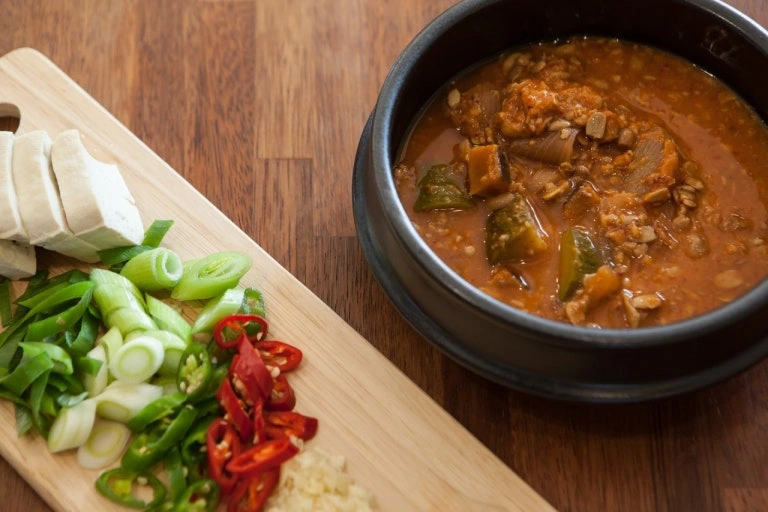
Usually with tofu, vegetables, and chili.
A Texture That Surprises
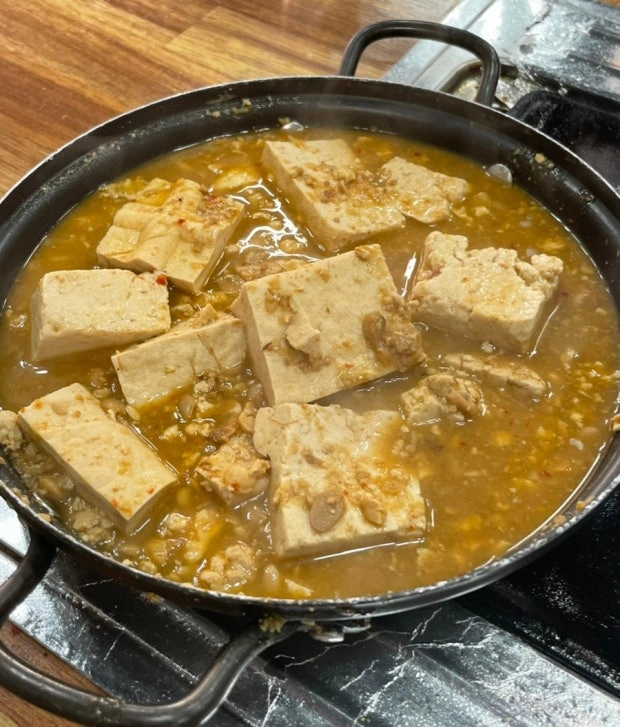
When Cheonggukjang cooks, the stew becomes thick.
The soybeans soften but remain visible.
Small strands may appear when the beans separate.
These threads are natural byproducts of fermentation.
They are not decoration.
They are evidence of the process itself.
The stew bubbles actively in the pot.
Steam rises quickly.
Why the Smell Is So Strong
The fermentation of Cheonggukjang produces powerful compounds.
The process involves bacteria similar to those used in other fermented soybean foods across East Asia.
But the shorter fermentation period produces a sharper aroma.
For people raised with it, the smell signals comfort.
For those encountering it for the first time, it can feel overwhelming.
Smell often carries memory.
Cheonggukjang carries a lot of it.
A Common Comparison
Visitors sometimes compare Cheonggukjang to Japanese “Natto.”
Both involve fermented soybeans and sticky strands.
The processes share similarities.
But the ways they are eaten differ.
Natto is often served directly over rice.
Cheonggukjang is usually cooked into stew.
Heat softens the texture and spreads the flavor through broth.
Historical Background
Cheonggukjang has deep agricultural roots.
Fermenting soybeans was a practical method for preserving protein during cold seasons.
The quick fermentation also meant food could be prepared relatively fast compared to long-aged soybean pastes.
In rural households, the preparation was simple.
Warmth, time, and natural microbes did most of the work.
The method reflected practicality rather than culinary spectacle.
Everyday Food
Cheonggukjang is often associated with home cooking.
It appears in small neighborhood restaurants and family kitchens.
Rarely in luxury dining settings.
The stew is usually served in a small earthenware pot.
Rice sits beside it.
The meal feels direct and filling.
Social Reactions
Because of its strong smell, Cheonggukjang sometimes divides opinion.
Some people love it deeply.
Others avoid it entirely.
Restaurants occasionally warn customers before serving it.
Not out of embarrassment.
But awareness.
The aroma travels far.
Fermentation and Korean Taste
Fermentation shapes much of Korean cuisine.
Kimchi.
Soy sauce.
Doenjang.
Cheonggukjang.
Each carries its own rhythm of time and bacteria.
These flavors developed in a climate with long winters and seasonal agriculture.
The result is a cuisine comfortable with strong tastes.
Intensity does not always mean excess.
Sometimes it means preservation.
The Bowl on the Table
When Cheonggukjang reaches the table, it rarely appears alone.
Rice accompanies it.
Side dishes surround it.
The stew sits in the center, still bubbling.
Someone lifts a spoon.
Steam rises.
The smell fills the space again.
For some people, it still feels strong.
For others, it feels reassuring.
The same scent.
Different memories.
In Korean kitchens, Cheonggukjang is rarely neutral.
It announces itself.
And once it does, the room changes slightly.
Not everyone agrees about the smell.
But everyone notices it.