Gyeongju Desserts: History, Symbolism, and Everyday Taste
The Taste of a Historic City
When people think of Gyeongju, they think of tombs, temples, and quiet fields.
The city feels ancient.
The air feels slower.
But near the bus terminals and around Hwangnidan-gil, there is always the smell of something sweet.
Gyeongju does not only preserve stone and wood.
It preserves bread.
Small, round, carefully wrapped bread.
Hwangnam Bread
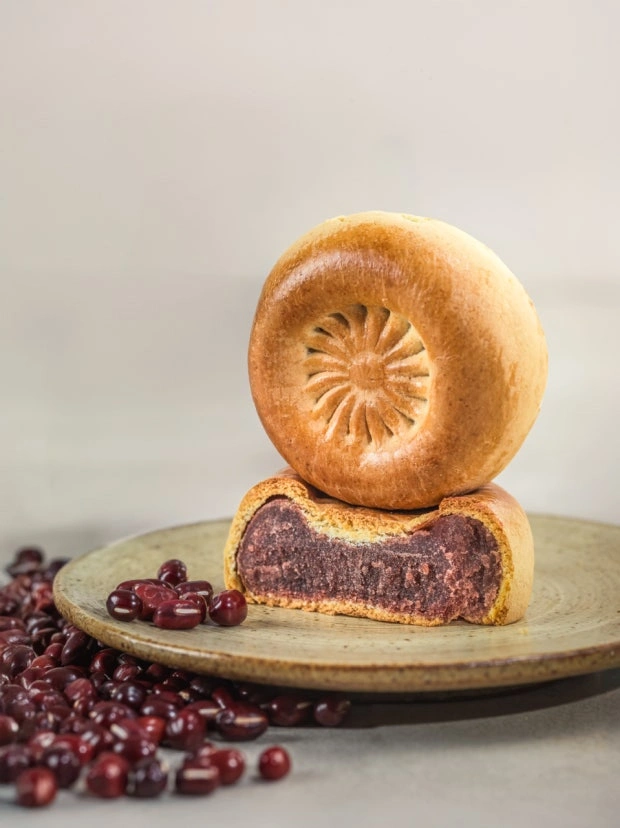
The most famous is “Hwangnam Bread” (황남빵).
It is round and modest in size.
Golden brown on the outside.
Filled almost entirely with red bean paste.
There is very little dough.
The filling dominates.
The bread originated in the 1930s in Hwangnam-dong, a neighborhood in Gyeongju.
The name simply reflects that place.
There is nothing exaggerated about it.
When people bite into it, they often expect Western-style sweetness.
But the sweetness is controlled.
The texture is dense, almost quiet.
It is often purchased in large boxes.
Rarely for oneself.
Usually as a gift.
The bread travels more than the buyer does.
It represents Gyeongju in other cities.
Chalbori Bread
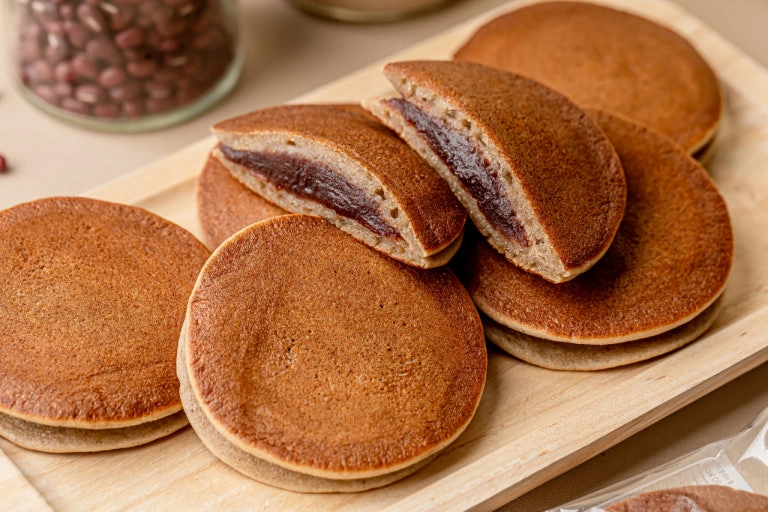
Another well-known snack is “Chalbori Bread” (찰보리빵).
“Chal” refers to glutinous texture.
“Bori” means barley.
Unlike Hwangnam Bread, this one is softer.
Two small pancake-like layers sandwich red bean paste.
The surface often bears a simple imprint — sometimes the outline of Cheomseongdae Observatory.
Barley has historical meaning in Korea.
It was once associated with difficult seasons and survival.
Rice symbolized abundance.
Barley signaled endurance.
Turning barley into a soft, sweet snack reflects change.
What was once hardship becomes souvenir.
Gyeongju Face Bread
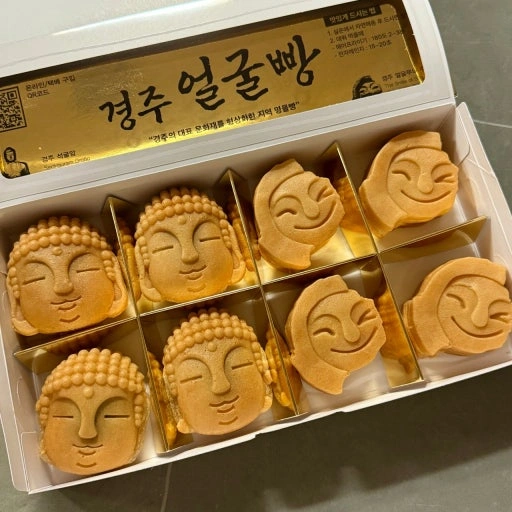
More recently, “Gyeongju Face Bread” (경주얼굴빵) appeared.
Its shape resembles the smiling face of a Silla-era gold crown figure or stylized heritage symbol.
It is playful.
Softer in marketing tone than older breads.
The filling varies — sometimes custard, sometimes chocolate, sometimes red bean.
This bread is clearly designed for photographs.
It belongs to a newer travel culture.
One where food is also image.
Yet it still draws from the city’s past.
The face is not random.
It echoes historical motifs.
Ten Won Bread
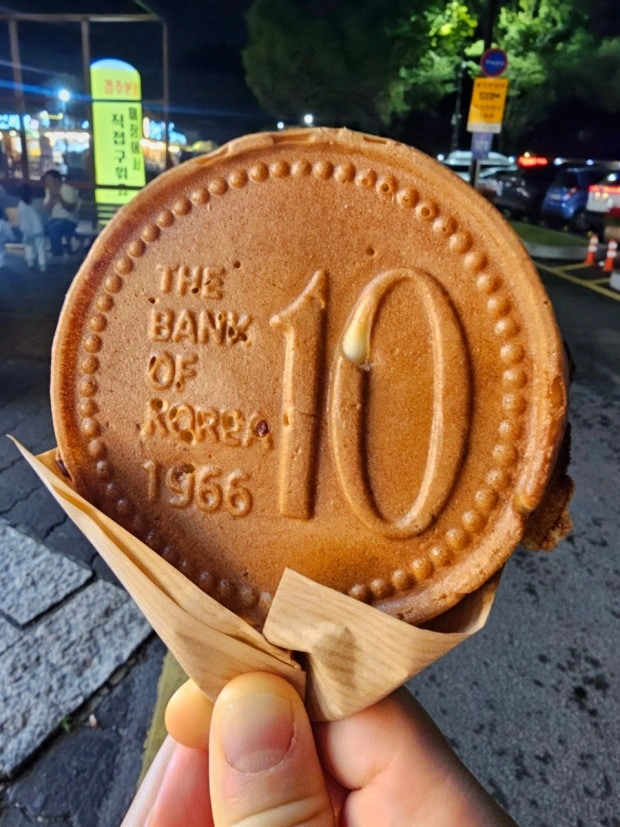
“Ten Won Bread” (십원빵) is shaped like a 10 won coin.
The coin itself carries the image of Dabotap Pagoda, located at Bulguksa Temple.
So when visitors eat Ten Won Bread in Gyeongju, they are consuming a version of a monument.
The bread is usually large, filled with melted cheese.
It is warm.
Stretchy.
Made quickly in front of customers.
Unlike Hwangnam Bread, it is rarely boxed.
It is eaten immediately, often while walking.
Old monument.
Modern street snack.
The layers of reference overlap quietly.
Common Misunderstandings
Visitors sometimes assume these breads are ancient recipes.
They are not.
Most originated in the 20th century.
But age alone does not determine cultural meaning.
In Korea, regional identity often attaches to specific foods — even relatively recent ones.
Gyeongju’s image as a “museum city” encourages foods that are shaped, stamped, or symbolically tied to heritage.
The bread becomes a portable landmark.
The Shape and the Meaning
It is noticeable that many Gyeongju snacks are round.
Round resembles coins.
Round resembles ancient tomb mounds.
Round feels complete.
The packaging is careful.
Boxes are structured.
Individual pieces are separated in neat rows.
Presentation matters.
These breads are rarely messy.
They are controlled in size and symmetry.
This reflects something about how Gyeongju presents itself — orderly, preserved, intentional.
Food as Memory
Gyeongju was the capital of Silla for nearly a thousand years.
Its historical weight is visible in architecture and landscape.
But history can feel distant.
Stone is silent.
Bread is not.
When families bring Hwangnam Bread back to Seoul or Busan, they are not only sharing taste.
They are sharing proof of having gone somewhere meaningful.
The sweetness is moderate.
The texture is stable.
Nothing overwhelms.
Like the city itself, the flavors do not shout.
They settle.
Eating in the Present
Today, tourists line up in front of original Hwangnam Bread stores.
They compare brands.
They debate texture.
Some prefer softer versions.
Some prefer denser red bean filling.
Young visitors photograph Ten Won Bread stretching with cheese.
Older visitors purchase large gift boxes.
Different generations approach the same food differently.
Yet the structure remains.
Round bread.
Symbolic imprint.
Careful packaging.
In Gyeongju, even snacks feel curated.
You taste barley.
You taste red bean.
You taste melted cheese.
And somewhere behind the sweetness, there is always the outline of a pagoda, a crown, or a tomb.
The city is ancient.
The bread is not.
But it carries the shape of memory.