Why Korean Buildings Are Painted: The History and Symbolism of Dancheong
The First Time You See It
When people first visit Korea and step into an old palace or temple, they often look up.
The ceilings are not plain.
The beams are not bare wood.
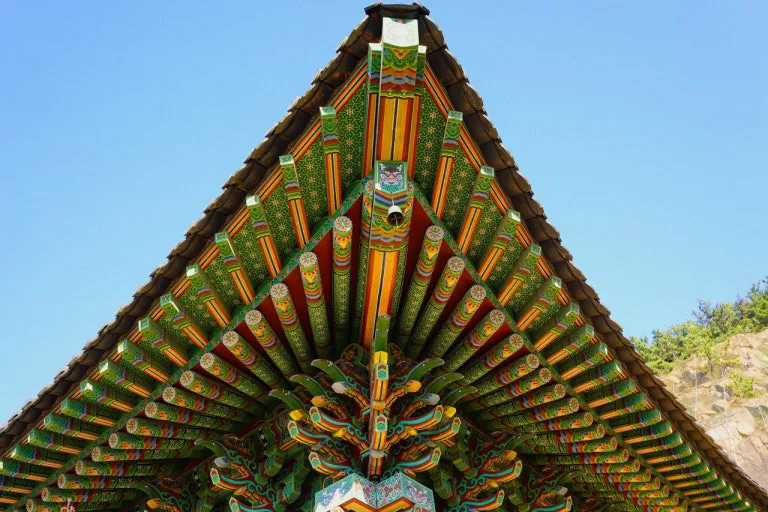
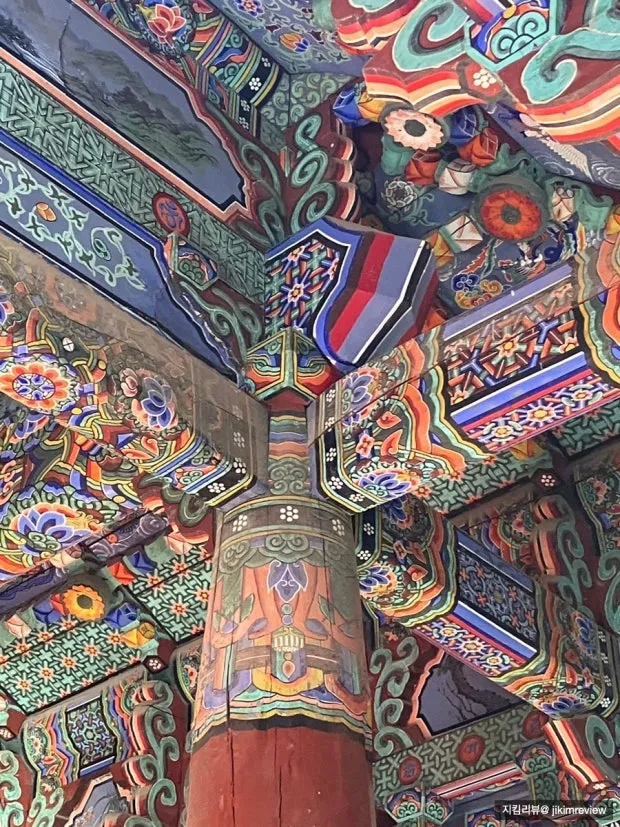
They are covered in color — deep green, red, blue, white, and sometimes gold.
It does not feel random. It feels deliberate.
But many visitors do not know what they are looking at.
This decorative painting style is called “Dancheong” (단청).
Literally, the word means “cinnabar and blue-green.”
“Dan” refers to red pigment.
“Cheong” refers to blue or green pigment.
At first glance, it seems like a simple description of color.
But Dancheong is not simply about painting wood beautifully.
It is about protection, hierarchy, memory, and belief.
The Origins of Dancheong
Dancheong began centuries ago, long before modern Korea existed as a nation-state.
Its origins trace back to the Three Kingdoms period. At that time, wooden buildings needed protection from humidity, insects, and decay.
Painting the surface was practical.
Color was originally protection.
Mineral-based pigments helped preserve the wood.
Layers of paint made structures last longer.
Over time, protection became pattern.
Pattern became system.
By the Goryeo and Joseon periods, Dancheong had become formalized.
It was no longer optional decoration.
Important buildings — palaces, temples, government offices — required it.
Ordinary houses did not.
Color began to indicate hierarchy.
How It Is Used in Real Life
When Koreans visit a temple today, they may not consciously analyze the ceiling.
But they recognize it.
It signals sacred space.
In palaces, Dancheong marks authority.
In Buddhist temples, it frames spiritual imagery.
Even modern restorations carefully repaint the patterns using traditional methods.
The designs follow symmetry but allow variation.
Lotus flowers, geometric frames, cloud motifs, mythical creatures.
Nothing is accidental.
Yet nothing feels loud.
The colors repeat in rhythm across beams and brackets, almost like visual breathing.
Common Misunderstandings
Many visitors assume Dancheong is purely decorative.
They think it is simply an artistic choice — a preference for bright colors.
But traditional Korean aesthetics are often described as restrained and subtle.
So the bright ceiling can feel contradictory.
Why would a culture associated with simplicity embrace such vivid color?
The misunderstanding comes from separating color from function.
Dancheong was never only decoration.
It marked importance.
It defined sacredness.
It protected material.
Brightness here is not indulgence.
It is structure.
The Five Colors and Their Meaning
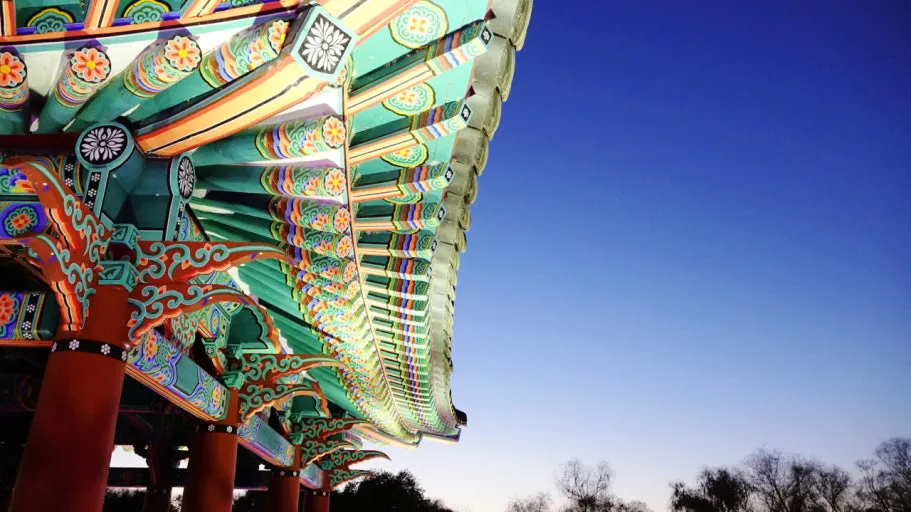
Traditional Dancheong often uses five primary colors.
These are connected to “Obangsaek” (오방색), the five directional colors.
Blue, red, yellow, white, and black.
Each corresponds to direction and element.
East and wood.
South and fire.
Center and earth.
West and metal.
North and water.
The system reflects an older cosmology influenced by East Asian philosophy.
Color is not random decoration.
It maps the universe.
When these colors appear on a beam, they quietly embed cosmic order into architecture.
The building becomes more than shelter.
It becomes symbolic space.
The Aesthetic Structure
Dancheong follows rules.
Patterns are organized by structural parts of the building.
The bracket system receives specific motifs.
The beams receive others.
There is hierarchy even within decoration.
The central section of a ceiling may carry the most complex design.
Outer edges may remain simpler.
This reflects social order.
In traditional Korea, hierarchy was visible.
Rank was displayed in clothing, in seating, in speech.
Architecture reflected that same logic.
Even paint obeyed structure.
The Social Background
Dancheong painters were not casual artists.
They were trained specialists.
The craft required knowledge of mineral pigments, layering techniques, symmetry rules, and symbolic vocabulary.
Their work was not signed.
The focus was the building, not the individual.
In a Confucian-influenced society, collective order often outweighed personal expression.
Dancheong fits within that value system.
It is elaborate but not self-centered.
Detailed but not chaotic.
It speaks of discipline more than emotion.
Why It Still Matters
Modern Korea is filled with glass buildings and concrete apartments.
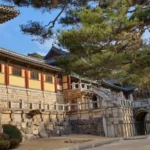
Yet historical palaces such as Gyeongbokgung and temples such as Bulguksa continue to maintain Dancheong.
Not because it is trendy.
Not because it is nostalgic decoration.
But because it carries continuity.
When repainting is required, artisans follow traditional color formulas.
The work is slow.
The patterns remain structured.
Even today, Dancheong does not chase modern taste.
It preserves a visual memory of how space once meant something layered — protection, hierarchy, cosmology, belief.
Visitors look up and see color.
What they are actually seeing is a system that survived centuries of weather, war, and reform.
The wood is old.
The paint is renewed.
The order remains.