Two-Jjonku Explained: A Viral Korean Snack
The Phrase That Spread First
Before people described the flavor, they repeated a sentence.
“Crispy inside, chewy outside.”
In Korean, it is often phrased as
“속은 바삭, 겉은 쫀득.”
That line attached itself to Two-Jjonku (두쫀쿠) as if it were part of the product name.
The earlier explanation that described it as a simple chocolate-coated crunchy snack was incomplete.
Texture, not chocolate, is the center of this trend.
What Two-Jjonku Actually Emphasizes
Two-Jjonku is structured around contrast.
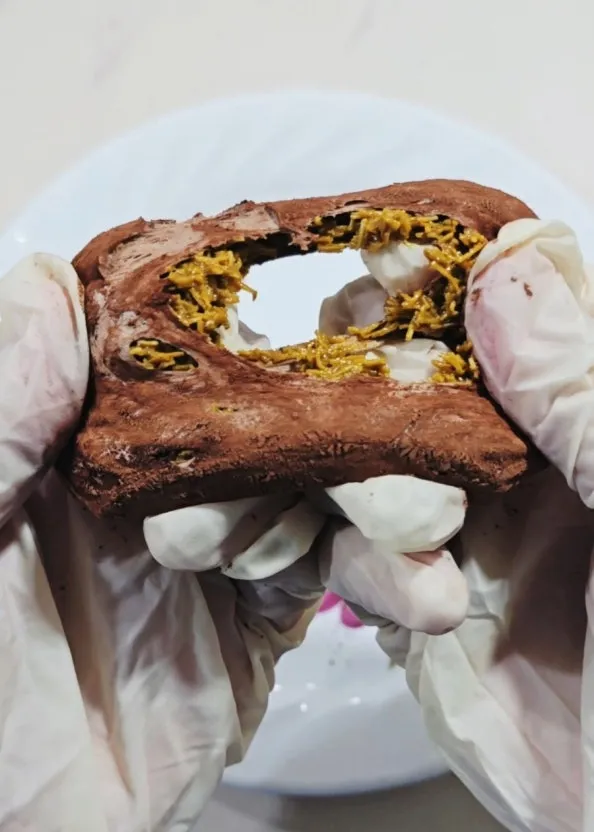
Inside, there is a crisp element that breaks cleanly when bitten.
Outside, the coating is not hard chocolate in the usual brittle sense. It has a slightly elastic, chewy quality.
That outer chew is what distinguishes it from standard chocolate wafer bars or fully crisp-coated snacks.
The bite does not end immediately.
It stretches slightly before separating.
That is the point.
Why “Chewy Outside” Matters
In Korean snack culture, texture descriptions travel faster than ingredient lists.
“쫀득하다” (jjon-deuk-ha-da) does not translate cleanly into English. It is not simply “chewy.” It implies elasticity, density, a slight resistance that feels satisfying rather than tough.
Koreans often seek that texture in rice cakes, breads, even ice cream.
Two-Jjonku fits into that preference.
It is not just crispy.
It resists.
The Sound and the Name
The name “두쫀쿠” sounds playful and rhythmic. The middle syllable “쫀” echoes the word “쫀득.”
Whether intentionally or not, the phonetic association reinforces the expectation of chewiness.
When people film themselves biting into it, the moment is split:
First, a crisp snap.
Then, a softer pull.
That dual sensation becomes the selling point.
Convenience Store Circulation
Like many Korean snack trends, Two-Jjonku gained momentum in convenience stores.
These stores are testing grounds. New textures and limited releases appear frequently. If something catches attention—often through short video clips—it spreads quickly.
The phrase “Have you tried it yet?” becomes less about curiosity and more about timing.
Texture becomes social currency.
Not Just Another Chocolate Snack
The earlier framing of Two-Jjonku as primarily a chocolate-based crisp snack did not fully capture its identity.
Chocolate is present, but not the focus.
The focus is the contrast:
Crisp core.
Chewy shell.
If the outer layer were fully hard, the trend would likely fade quickly. If the inside were soft, it would lose its snap.
It exists in between.
Why Texture Trends Work in Korea
Korean food trends often revolve around mouthfeel.
Cheese that stretches.
Rice cakes that pull.
Breads that tear softly.
“쫀득” is almost a category on its own.
Two-Jjonku aligns with that cultural preference. It does not introduce a new flavor profile. It intensifies a familiar sensory expectation.
That may be why it spread.
After the First Bite
Without knowing the phrase “속은 바삭, 겉은 쫀득,” the snack might feel pleasant but ordinary.
With the phrase in mind, the eater anticipates the dual sensation.
Expectation shapes experience.
You listen for the crunch.
You wait for the chew.
The snack delivers both.
And in a culture that values subtle variations in texture, that small difference is enough.
Two-Jjonku is not revolutionary.
But it understands what Koreans notice first.
Not sweetness.
Not branding.
The way it feels when you bite.