Eyeglasses in Korea: What to Know Before You Visit a Korean Eye Store
If you’ve ever needed glasses while traveling — or just wanted a fresh pair at a price that doesn’t make your eyes water — eyeglasses in Korea might be one of the best-kept secrets in the country. Whether you’re living here long-term or just passing through, Korean eye stores offer something genuinely hard to find elsewhere: fast, affordable, and surprisingly thorough optical care all under one roof.
This guide covers everything you need to know before walking into a Korean 안경원 (an-gyeong-won), from how the process works to what you’ll pay and how to navigate it without speaking a word of Korean.
Table of Contents
- Why Eyeglasses in Korea Are Worth the Hype
- How Korean Eye Stores Work
- What to Expect During Your Visit
- Price Guide: How Much Do Glasses Cost in Korea?
- Popular Frame Brands and Styles at Korean Opticians
- Can Foreigners Get Glasses in Korea?
- Tips for Getting the Best Experience
- Final Thoughts
Why Eyeglasses in Korea Are Worth the Hype
Korea has built a well-deserved reputation for affordable, high-quality optical care. Walk down any busy street in Seoul, Busan, or Daegu, and you’ll notice eye stores on almost every block — sometimes two or three in a row. That’s not a coincidence.
The sheer density of opticians means competition is fierce, which works entirely in your favor. Prices are low, service is fast, and the quality of lenses and frames is consistently good. In many parts of the world, a single pair of prescription glasses can run you hundreds of dollars. In Korea, you can walk out the same day with a complete pair — frame and lenses — for a fraction of that cost.
That alone makes eyeglasses in Korea a compelling reason to stop into a local 안경원, even if you weren’t originally planning on it.
How Korean Eye Stores Work
Korean eye stores — called 안경원 (angyeongwon) — are more than just shops where you pick out frames. Most of them function as full-service optical centers where you can:
- Get a comprehensive eye exam
- Order prescription glasses or sunglasses
- Buy contact lenses (both daily and monthly)
- Have existing glasses adjusted or repaired
What sets the Korean model apart is the one-stop-shop experience. There’s no need to see a separate ophthalmologist before getting glasses. The optician at the store will conduct the eye exam on-site, usually free of charge or included in the cost of your glasses. This makes the entire process remarkably efficient.
Most 안경원 also have an in-house lens lab, which means your glasses can be ready within 30 minutes to an hour in many cases. For simple prescriptions and standard lenses, same-day service is the norm rather than the exception.
What to Expect During Your Visit
Step 1: The Eye Exam

When you walk in, staff will usually ask if you need an eye exam or if you already have a prescription. If you need an exam, you’ll be directed to a small testing area where they use computerized equipment to measure your vision. This part typically takes about 10 to 15 minutes.
The exam includes a basic vision check, a refraction test to determine your prescription, and sometimes an assessment of eye pressure or overall eye health depending on the store. It’s thorough for what is essentially a walk-in service.
Step 2: Choosing Frames
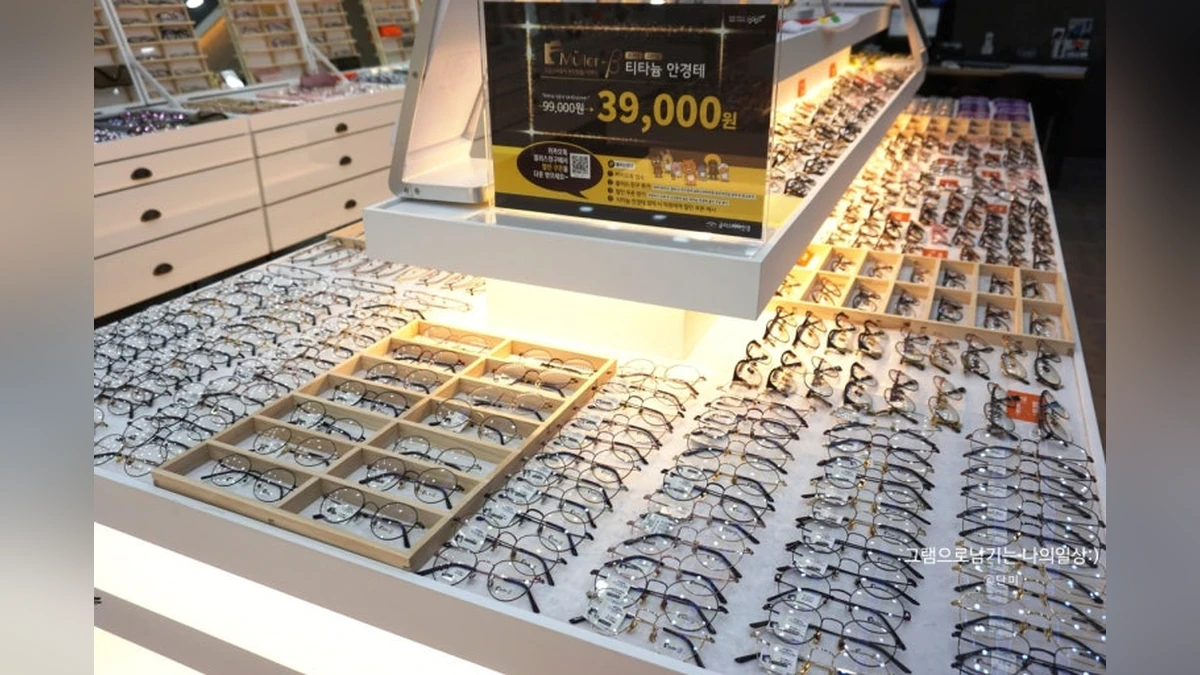
After the exam, you’ll move on to the frame section — which, depending on the store, can range from a modest selection to a dizzying wall of hundreds of options. Staff are generally helpful in guiding you toward styles that suit your face shape, and they won’t rush you.
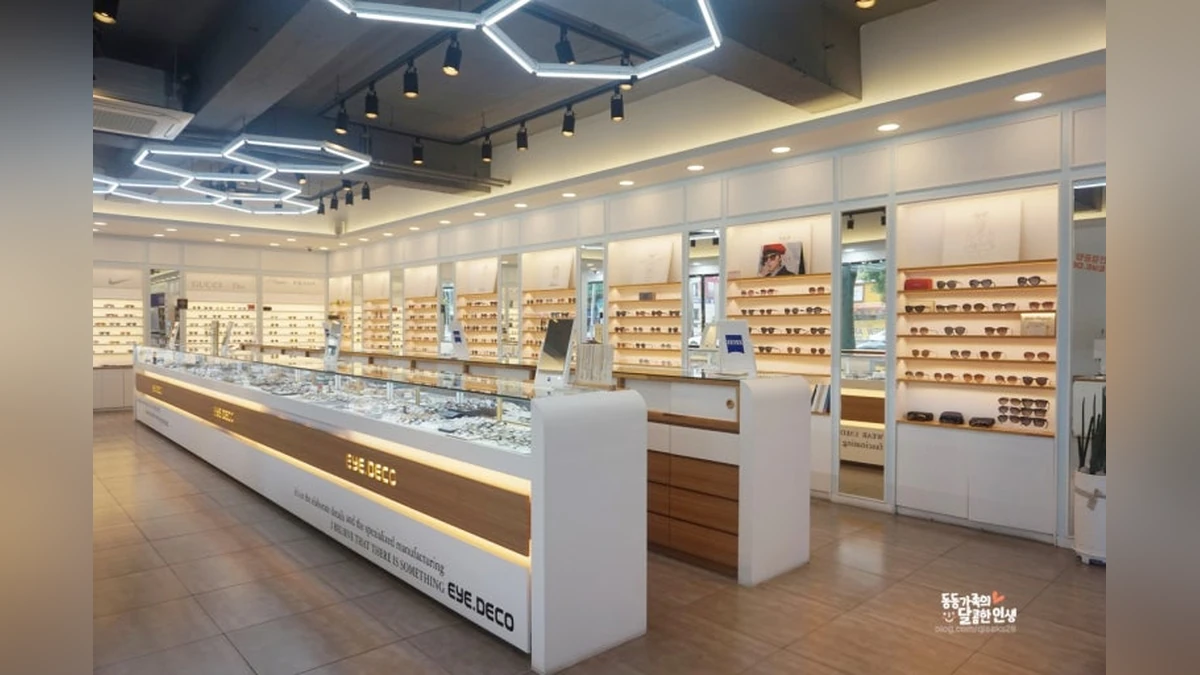
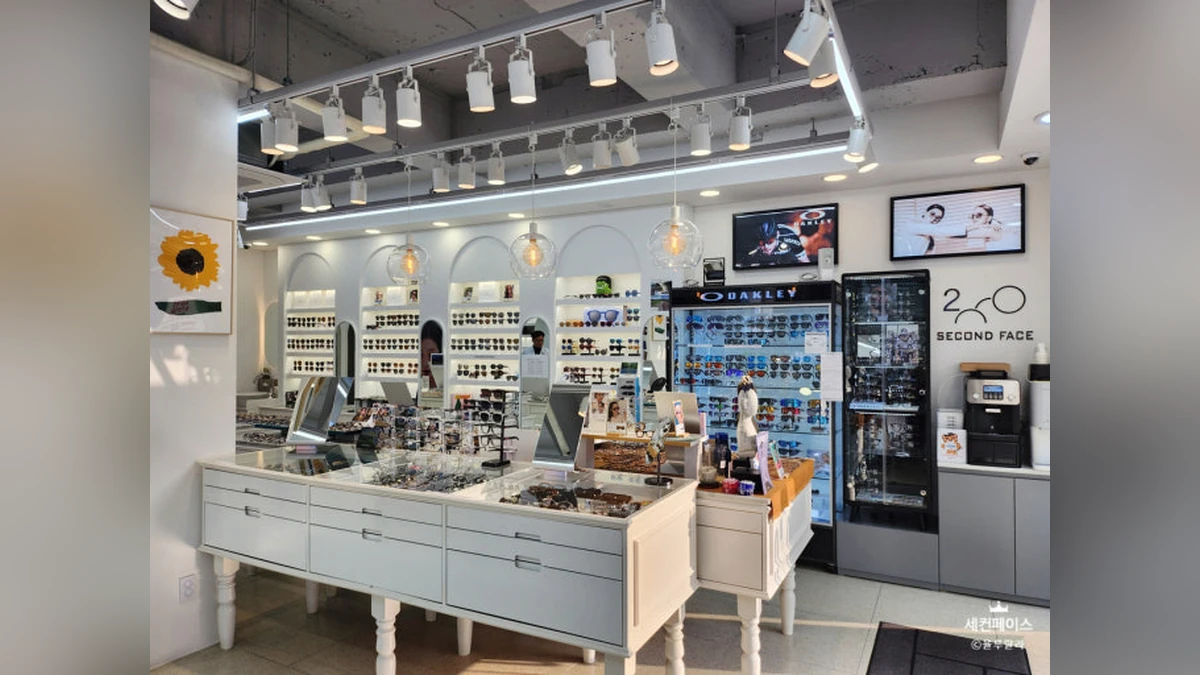
Korean optical stores tend to stock a wide mix: affordable in-house brands, popular Korean designer labels, and international names like Ray-Ban or Oakley in larger stores.
Step 3: Lens Selection
Once you’ve picked your frame, you’ll be asked about lens type. Options typically include:
- Standard single-vision lenses
- Blue light blocking lenses
- Thin lenses (higher index, great for stronger prescriptions)
- Progressive (multifocal) lenses
- Photochromic (transition) lenses
The staff will usually recommend a lens based on your prescription strength. Thinner lenses cost more but make a noticeable cosmetic difference for stronger prescriptions.
Step 4: Pickup
For most standard prescriptions, your glasses will be ready within 30 to 60 minutes. You’ll try them on, and the optician will make any minor adjustments to the frame fit on the spot before you leave.
Price Guide: How Much Do Glasses Cost in Korea?
One of the biggest draws of getting eyeglasses in Korea is how affordable the whole experience can be. Here’s a general breakdown of what to expect:
Basic complete pairs (frame + standard lenses): ₩30,000 – ₩80,000 These are typically entry-level frames with basic single-vision lenses. Perfectly functional and often still quite stylish.
Mid-range complete pairs: ₩80,000 – ₩200,000 This is the sweet spot for most people. You’ll find decent Korean brand frames paired with decent quality lenses, including thin or blue light options.
Designer or high-end frames: ₩200,000 – ₩500,000+ International brands, luxury Korean designers, or premium frame materials like titanium fall into this range.
Progressive lenses: Add approximately ₩100,000 – ₩200,000 depending on the quality and brand of lens.
Eye exam: Usually free when purchasing glasses, or around ₩5,000 – ₩10,000 on its own.
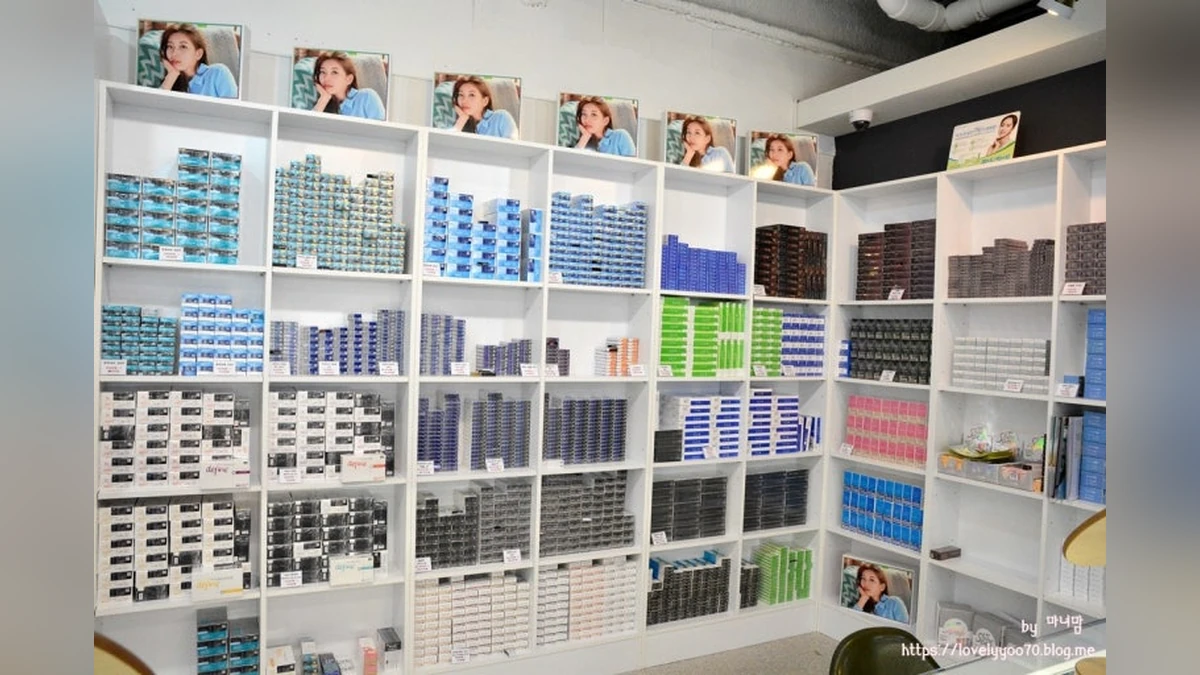
Contact lenses: Daily disposables typically run ₩20,000 – ₩40,000 per box of 30. Monthly lenses vary by brand.
Compared to most Western countries, even the mid-to-high range is quite reasonable, especially when you factor in the speed and quality of service.
Popular Frame Brands and Styles at Korean Opticians
Korean eyewear has its own aesthetic, and it’s one that’s influenced global fashion trends in recent years. You’ll find a strong preference for:
- Slim metal frames — Lightweight and minimalist, extremely popular among younger Koreans
- Round or oval shapes — A timeless look that suits a variety of face shapes
- Transparent acetate frames — Clean, modern, and very on-trend
- Oversized styles — Bold options for those who want their glasses to make a statement
Well-known Korean optical brands you’ll encounter include Gentle Monster (high fashion, premium price), Lash, and various house brands sold under the store’s own label. Many smaller 안경원 carry their own private-label frames that are genuinely stylish without the brand markup.
If you’re looking for something specific — say, very lightweight titanium frames for everyday wear, or a specific lens technology — it’s worth checking out a few different stores, as stock varies.
Can Foreigners Get Glasses in Korea?
Absolutely, and it’s easier than you might think. Getting eyeglasses in Korea as a foreigner is completely straightforward in most stores.
Language: While staff may not always speak fluent English, the process itself is largely visual and hands-on. You can show your existing glasses as a reference, or if you have a written prescription from home, most Korean opticians can read international prescription formats without any issues.
In cities like Seoul and Busan, and in tourist-heavy areas, you’re more likely to find English-speaking staff. Smaller towns and local neighborhood stores may require a bit more patience, but gestures and a smile go a long way.
Prescription from home: If you bring a copy of your current prescription, the optician can typically use it directly without requiring a new eye exam. Just note that prescriptions older than one to two years may prompt them to recommend a fresh check.
Payment: Most stores accept credit cards, and cash is always welcome. Some newer stores also accept mobile payment apps, though this is more relevant for residents than visitors.
Turnaround time: For most foreigners visiting for a short time, the same-day turnaround is a genuine lifesaver. As long as your prescription isn’t unusually complex, you can realistically walk in with no appointment and leave with new glasses within the hour.
Tips for Getting the Best Experience
Here are a few practical things to keep in mind when getting eyeglasses in Korea:
Bring your existing glasses. Even if you have a written prescription, having your current glasses on hand allows the optician to cross-check measurements and verify that everything looks right.
Ask about the lens index. If you have a prescription above ±3.00, ask about higher-index lenses (1.67 or 1.74). The upgrade cost is usually modest and the visual and cosmetic difference is significant.
Don’t be shy about frame adjustments. Korean opticians are used to adjusting frames for different face shapes, and they’ll do it for free. If your glasses don’t sit quite right, ask them to adjust the nose pads or temple arms.
Compare a few stores. On busy commercial streets, you’ll often find several 안경원 within walking distance of each other. It’s worth taking a quick look at two or three before committing, especially for frames — prices and styles can vary.
Check the warranty. Most reputable stores offer a warranty on lenses and frame repairs, usually for six months to a year. Ask before you buy.
Take your time with the eye exam. Don’t rush through it. If anything feels off during the testing — letters that still look blurry, for instance — say so. A good optician will re-test until the prescription feels right.
Final Thoughts
Getting eyeglasses in Korea is one of those unexpectedly enjoyable experiences that a lot of visitors stumble upon and end up raving about. The combination of speed, price, quality, and the sheer variety of stylish frames makes Korean eye stores genuinely hard to beat.
Whether you need a new prescription pair, want a backup set, or are just curious about those sleek minimalist frames you keep seeing on Koreans around you — an 안경원 is well worth a visit. You don’t need an appointment, you don’t need to speak Korean, and you very likely won’t need to wait more than an hour from walk-in to walk-out with your new glasses on.
If you’re in Korea and even slightly considering it, just go. Chances are there’s one within a few minutes’ walk anyway.