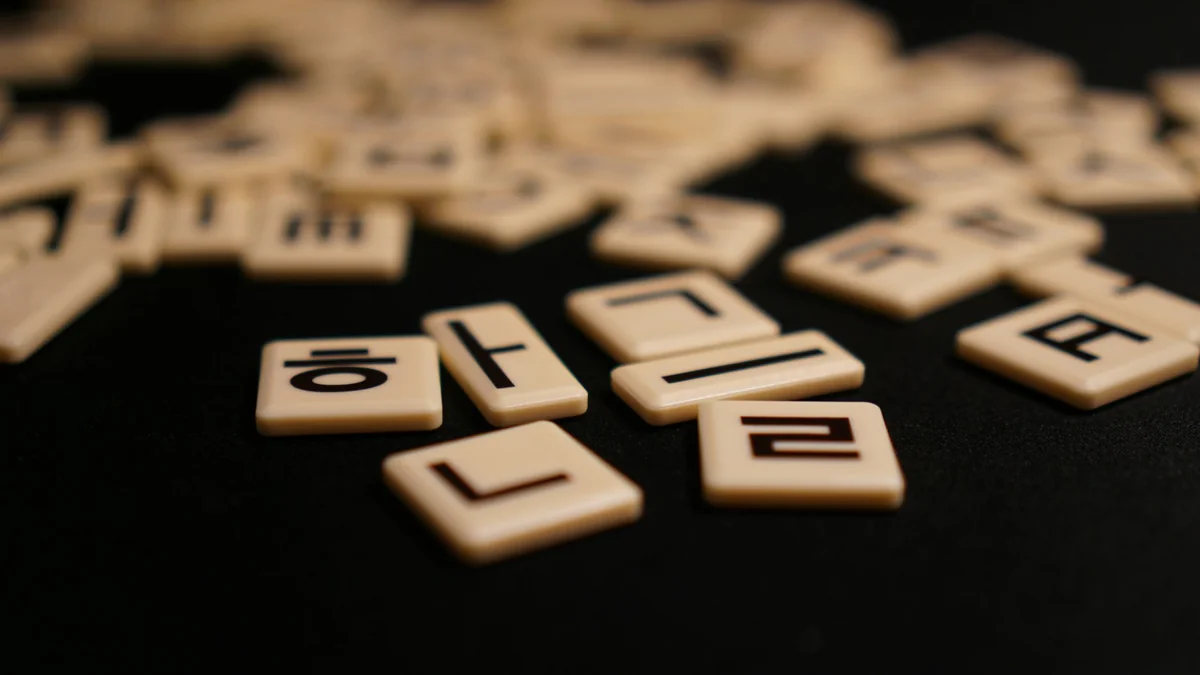
Why Korean Is Surprisingly Easy to Learn: The Science Behind Hangul
If someone told you that you could learn to read an entirely new writing system in a single afternoon, you might raise an eyebrow. But when it comes to Hangul — the Korean alphabet — that claim is far less of an exaggeration than you’d think. King Sejong famously stated that “a wise man can learn it in a morning, and even a fool can learn it in ten days.”
So what exactly makes Korean so approachable? Is it just hype, or is there genuine science backing it up? Let’s dig in — because the answer turns out to be pretty fascinating.
A Writing System Born from Intention

Most of the world’s writing systems — think Latin, Arabic, or Chinese — evolved organically over thousands of years. Nobody sat down and designed them. They just… happened.
Hangul is completely different.
Hangul was created in the 15th century by King Sejong and his team of scholars. Before Hangul, Koreans used Classical Chinese characters, which were tough for everyday folks to master. King Sejong wanted everyone — peasants, merchants, and scholars alike — to be able to read and write.
That intentionality is the key to everything. When a writing system is designed rather than inherited, it can be built with the learner in mind from the very beginning. And King Sejong’s scholars absolutely delivered on that promise.
International linguists and historians have recognized Hangul as “the world’s best alphabet,” “one of the great intellectual achievements of Mankind,” and “alphabet’s epitome, a star among alphabets.”
High praise — but is it earned? Let’s look at what’s actually going on under the hood.
The Shapes Mirror Your Mouth — Literally
Here’s where things get genuinely cool.
What makes the Korean alphabet “scientific” is that its letters correspond to the places of articulation in the mouth. In plain English: the shape of each consonant was designed to show you where in your mouth the sound is produced.
Take the letter ㄱ (which sounds like a “g” or “k”). Its shape actually mimics the position of your tongue when making that sound — blocking the back of the throat. Now look at ㄴ (an “n” sound). It shows the tongue raised to the front of the mouth, where the “n” sound originates.
You’re not just memorizing arbitrary squiggles. You’re reading a map of the human vocal tract.
The first five consonants — ㄱ, ㄴ, ㅁ, ㅅ, and ㅇ — form the core principles. Each one traces the shape of a different part of the mouth: the tongue blocking the throat, the tongue against the upper gums, the closed lips, the shape of a tooth, and the circular shape of the throat itself.
Once you understand that logic, the rest of the consonants start making sense too. By simply adding a stroke to these basic consonants, you can form letters with stronger, aspirated pronunciation — like ㅋ, ㅌ, ㅍ, and ㅊ. The system builds on itself in a way that feels almost intuitive once you see the pattern.
Vowels with Philosophy Built In
The vowels are a whole different kind of elegant.
Hangul’s ten vowels represent the three concepts of Yin (Earth) and Yang (Heaven), with Man at the intersection of the two. It sounds poetic, but it also translates into a genuinely practical system.
The basic shapes — a horizontal line (earth), a vertical line (man), and a dot (heaven/sun) — combine in predictable ways. Adding a tiny extra stroke creates y-vowel sounds: ㅑ (ya) is simply ㅏ with one additional stroke, and ㅕ (yeo) is ㅓ with the same treatment.
Compound vowels are formed by combining two vowel symbols — for example, ㅏ (a) and ㅣ (i) combine to create ㅐ (ae). This highly logical construction means learners can often intuit how to pronounce many vowels just by recognizing these components.
In other words, you’re not grinding through a giant vocabulary of random sounds. You’re working with a small set of building blocks that stack together in consistent, learnable ways.
The Block System: Compact and Readable
One of the most visually striking things about written Korean is how the letters cluster into small square blocks rather than running in a flat horizontal line. This isn’t just for aesthetics — it’s functional.
In Korean, you form a square or block for each syllable, combining consonants and vowels. Unlike English, where letters simply string one after another, Korean groups sounds into compact visual units.
So the syllable “han” (한) isn’t written as three separate characters laid out in a row — it’s stacked into one neat block: ㅎ (h) + ㅏ (a) + ㄴ (n) = 한.
This block structure does something clever for your brain. Korean syllables are grouped into blocks of 2–4 letters, forming easy-to-read sound units, and Hangul is read from left to right, top to bottom — just like English. The reading direction is already familiar. The blocks also make it easier to recognize word boundaries at a glance, which speeds up reading comprehension as you progress.
24 Letters. That’s It.
Here’s a number worth pausing on: 24.
There are 24 letters in the Korean alphabet — 14 consonants and 10 vowels. If you understand these basic letters, you can read essentially everything written in Korean.
Compare that to Chinese, which traditionally requires knowledge of thousands of characters to achieve basic literacy. Or Japanese, which uses three overlapping writing systems simultaneously. Korean, by contrast, gives you a finite, learnable set of tools and then asks you to combine them.
There are also loan words in Korean that come from English — like “taxi,” “bus,” and “camera” — so you’ll find yourself understanding signs and menus almost immediately after learning the alphabet, simply because the sounds are familiar.
That kind of early win does a lot for motivation.
What Linguists Say
This isn’t just the enthusiasm of language hobbyists. The academic community has taken Hangul seriously for decades.
Hangul contributes to the science of reading through an understanding of reading mechanisms that are essential for all writing systems. Writing systems have generally evolved based on the ecological principle that visual signs are culturally selected to match objects in natural scenes. Hangul is a notable exception — purposely invented rather than naturally evolved.
UNESCO registered the Hunminjeongeum — the original document explaining Hangul’s creation — in its Memory of the World Register, recognizing its cultural and historical significance.
That’s the United Nations’ cultural body formally acknowledging that a writing system is historically remarkable. Not many alphabets can say that.
Hangul in the Digital Age

There’s one more angle worth considering: how well does Hangul hold up in our smartphone-driven world?
Surprisingly well, it turns out. Its systematic structure makes it ideal for digital processing, typing, and display. The syllabic blocks are easily represented in computer systems, and the logical structure makes text prediction and processing highly efficient.
If you’ve ever watched someone type in Korean on a phone, you might have noticed how fast they go. That speed isn’t just practice — it’s the design of the system itself, which maps neatly onto a keyboard grid and allows for rapid, predictable input.
So, How Long Does It Actually Take?
Here’s the honest answer: most dedicated beginners can learn to read Hangul within a few hours to a couple of days. Reading and understanding Korean — that’s a longer journey, of course, because vocabulary and grammar take time no matter what language you’re studying.
But that initial hurdle of the writing system? Hangul is not hard to learn because it is one of the most logical and phonetic writing systems in the world. Most people find they can grasp the basic mechanics and logic in under an hour.
That’s a genuinely rare thing in language learning. And it means that unlike many other languages, Korean gives you an early confidence boost — something you can actually read within your first sitting — which makes all the difference when you’re just getting started.
A Final Thought
Language learning is rarely described as elegant. It’s usually repetitive, humbling, and slow. But Hangul stands out because it was designed to be understood — not by scholars or elites, but by ordinary people who just wanted to communicate.
King Sejong could not have imagined K-pop, Korean dramas, or the global wave of interest in Korean culture that would come centuries later. But the alphabet he commissioned in 1443 has aged remarkably well — still scientific, still learnable, and still a genuinely rewarding first step for anyone curious about the Korean language.
If you’ve been thinking about giving it a try, the afternoon is younger than you think.
Have you started learning Hangul? Drop your experience in the comments — whether you picked it up in a day or it took a bit longer, we’d love to hear your story.