Why Is Jirisan Important in Korean Culture? Geography, Legends, and History
A Mountain That Feels Larger Than Geography
When people first hear about Jirisan, it is often introduced as a mountain.
A large one.
A famous one.
But in Korea, Jirisan is rarely spoken of as just a mountain.
It carries a different kind of presence.
Older.
Heavier.
More like a landscape of memory.
The Meaning of the Name
The name “Jirisan” (지리산) is often translated as “the mountain of wisdom.”
“Ji” suggests wisdom or understanding.
“Ri” can imply reason or principle.
“San” simply means mountain.
The interpretation varies depending on historical texts, but the general association with wisdom remained.
For many Koreans, the name already suggests something contemplative.
Not only a physical place, but a place connected with thought and reflection.
The Geography
Jirisan is one of the largest mountain ranges in South Korea.
It stretches across several provinces — South Gyeongsang, North Jeolla, and South Jeolla.
Its highest peak is Cheonwangbong, rising over 1,900 meters above sea level.
The mountain does not appear as a single sharp peak.
Instead, it spreads outward in long ridges and deep valleys.
Large forests cover the slopes.
Rivers begin there.
In winter, snow settles quietly across the ridgelines.
In spring, the valleys fill with wildflowers.
A National Park
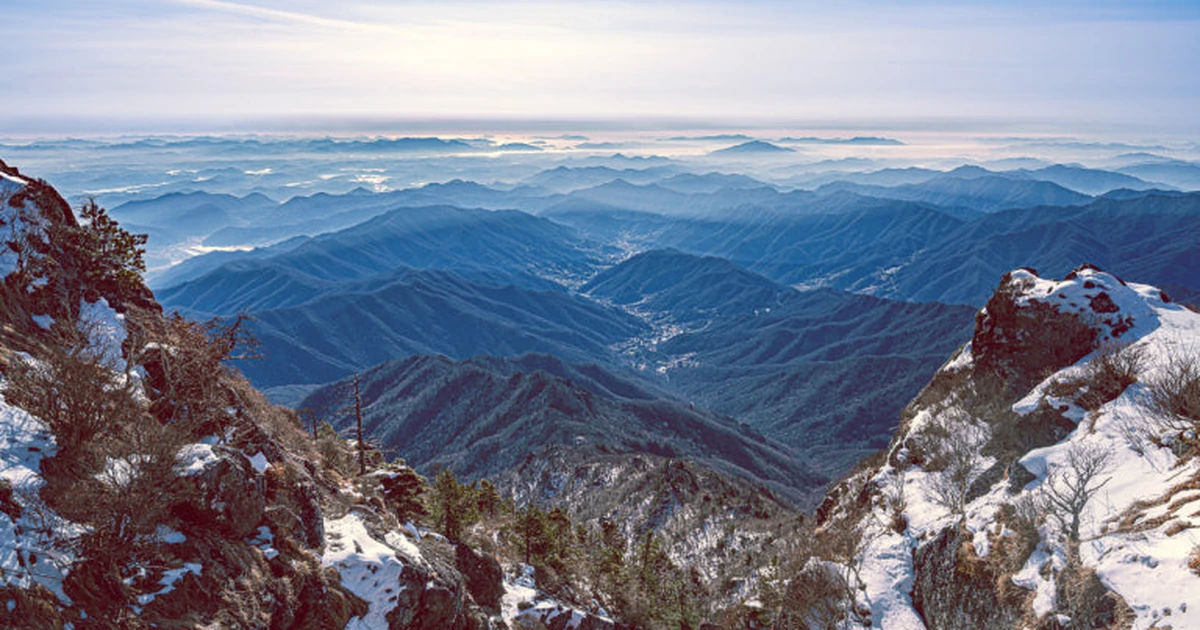
Jirisan National Park was established in 1967.
It became the first national park designated in South Korea.
The park protects vast forests, wildlife habitats, and ancient temples scattered through the mountains.
The scale is noticeable.
Walking trails can stretch for hours across ridges and valleys.
The landscape changes slowly.
Forests open.
Streams appear.
Mist settles between peaks.
The Temples in the Mountains


Jirisan is also known for its Buddhist temples.
Among the most well-known is Hwaeomsa (화엄사).
Temples like this are not placed randomly.
They are built along valleys where water flows and mountains surround the space.
In Korean Buddhist tradition, mountains often become places of retreat.
Monks travel deeper into the landscape to practice.
The environment becomes part of the discipline.
Silence matters.
Distance matters.
Historical Memory
Jirisan has also carried difficult history.
During the Korean War and the years that followed, the mountain region became a refuge for guerrilla fighters and displaced villagers.
Its forests and remote valleys made it difficult to control.
Stories from that time still circulate among older generations.
The mountain is therefore remembered not only for beauty but also for hardship.
A Place of Walking
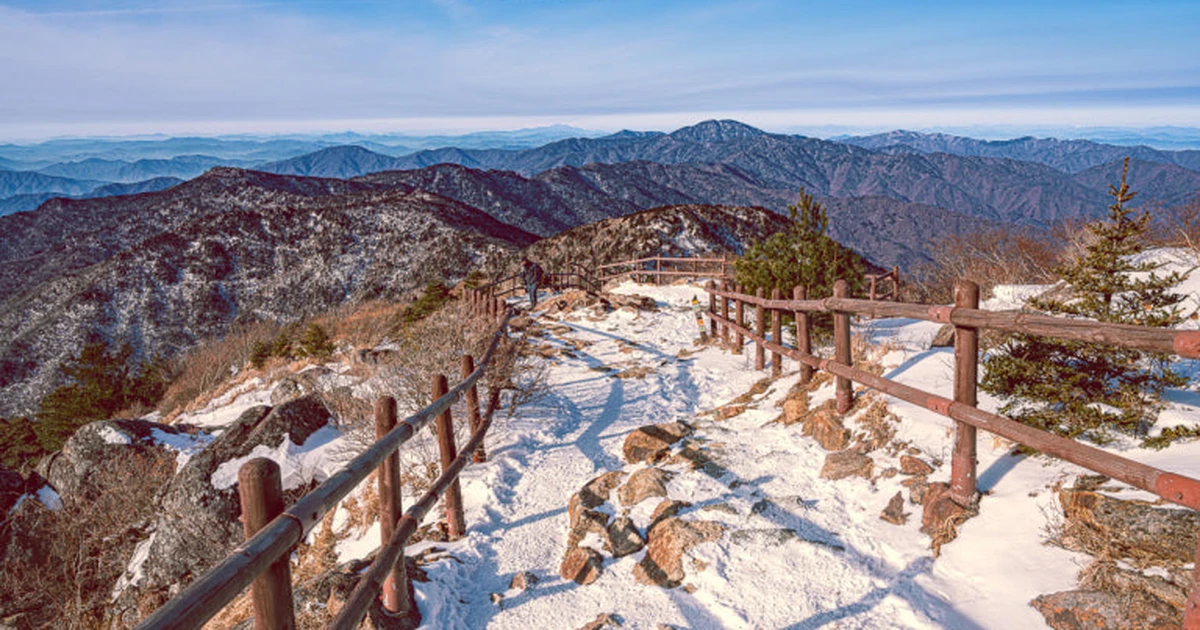
Today, many people visit Jirisan for hiking.
One famous route is the long ridge trail connecting multiple peaks.
Some hikers attempt the entire path in a single journey lasting several days.
Others climb only to Cheonwangbong for sunrise.
Watching the sun rise over the ridges is considered a memorable experience.
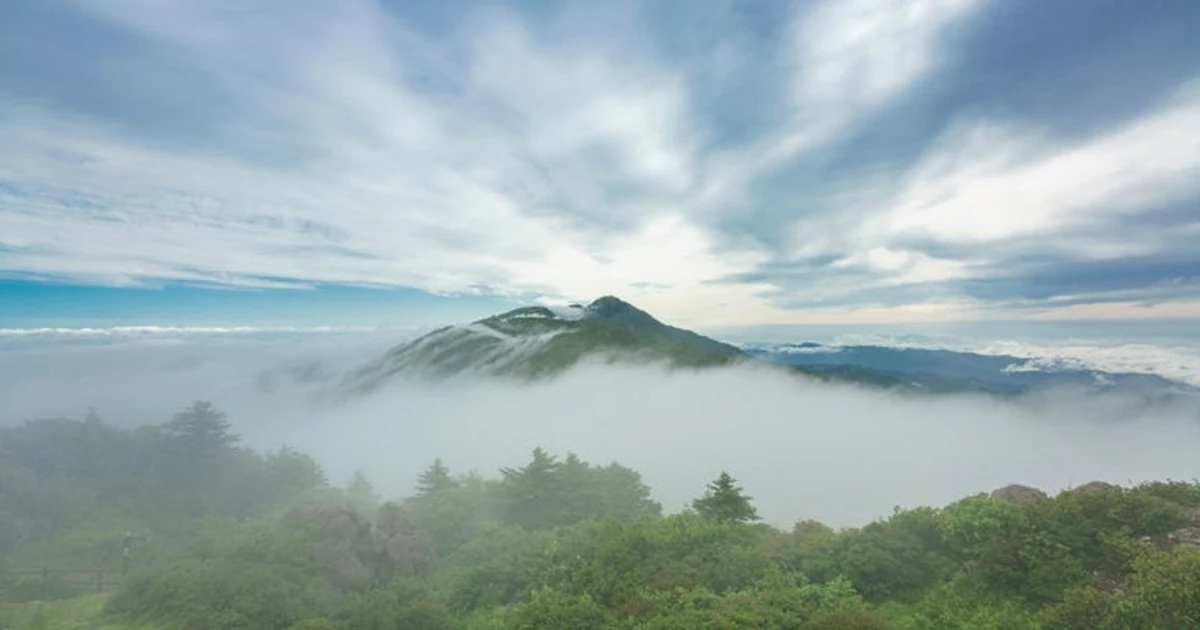
Clouds sometimes settle below the peaks.
The mountains appear like islands above a white sea.
A Common Misunderstanding
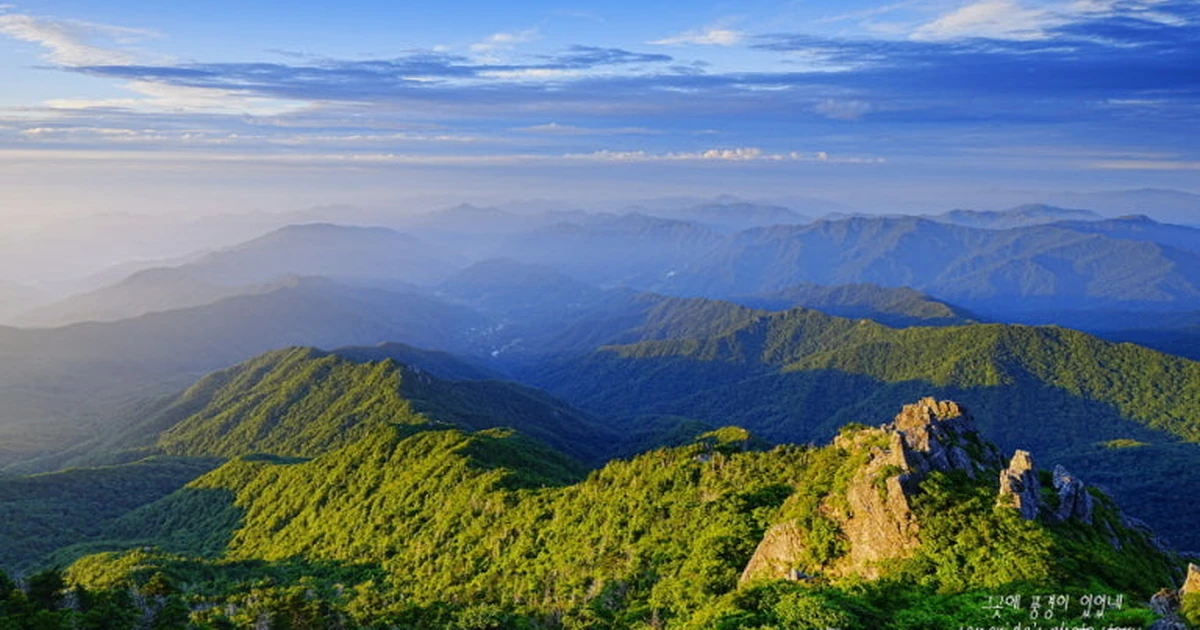
Some visitors expect dramatic cliffs or towering rock faces.
Jirisan is not built that way.
Its slopes are broad and forested.
The mountain reveals itself gradually.
The experience often involves long walking rather than sudden viewpoints.
Patience becomes part of the journey.
The Cultural Role of Mountains
Mountains hold a particular place in Korean cultural imagination.
Historically, they were seen as places of spirits, hermits, and meditation.
Villages often formed near the foothills.
The mountains provided water, wood, and protection.
At the same time, they represented distance from ordinary life.
Jirisan embodies that dual meaning.
It is both near and far.
The Mountain Today
Modern highways and small towns surround the outer edges of the park.
Visitors arrive with hiking backpacks and cameras.
Trail markers guide the routes.
Yet deeper inside the forest, the landscape feels quieter.
Wind moves through tall trees.
Streams run over stone.
The mountain does not speak loudly.
It does not demand attention.
But over hours of walking, its scale becomes clear.
The ridges extend beyond the next valley.
And beyond the next.
Jirisan does not reveal itself quickly.
It unfolds slowly.
Step by step.