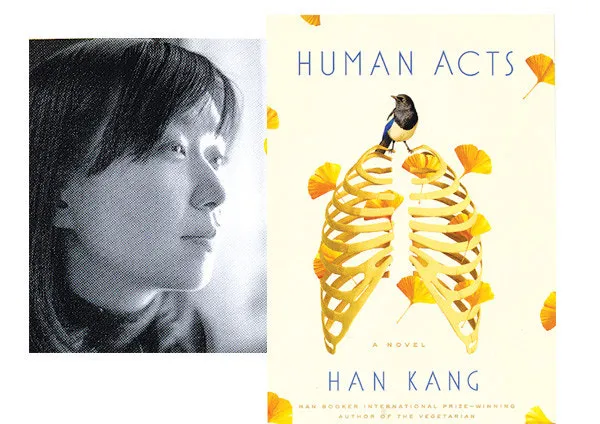
Why Human Acts Still Hurts: Han Kang and Korean Memory
When Literature Touches a Wound
There are novels you admire.
There are novels you finish.
And there are novels you endure.
When Koreans speak about Human Acts, the tone is rarely casual. The title in Korean, “소년이 온다,” translates literally to “The Boy Is Coming.” It sounds gentle. Almost lyrical.
But the story is not gentle.
The novel is rooted in the events of the Gwangju Uprising, a pro-democracy movement in May 1980 that was violently suppressed. For many Koreans, Gwangju is not just history. It is unfinished memory.
When Han Kang received the Nobel Prize in Literature, conversations in Korea did not only celebrate literary achievement. They returned, quietly, to Gwangju.
Because Human Acts does not fictionalize suffering in a distant way.
It stays inside it.
The Meaning of “The Boy Is Coming”
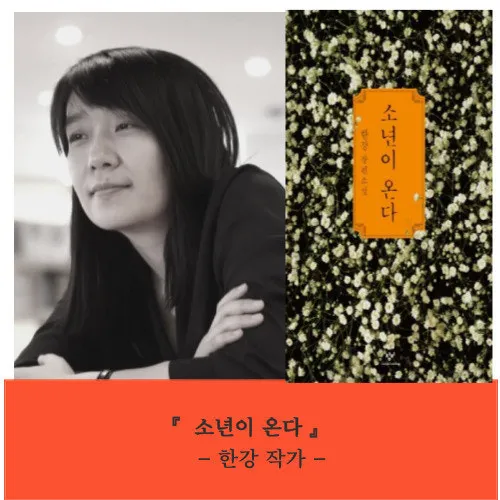
The Korean title, “소년이 온다,” carries a subtle tension.
It is present tense.
The boy is coming.
Not “came.”
Not “will come.”
He is always arriving.
In the novel, the “boy” refers to a real historical victim of the Gwangju massacre. But the narrative does not remain in one body or one voice. It moves between perspectives—dead and living, witnesses and survivors.
The boy becomes more than a person.
He becomes memory approaching you.
The grammar matters. The present tense refuses closure.
Writing About Gwangju in Korea
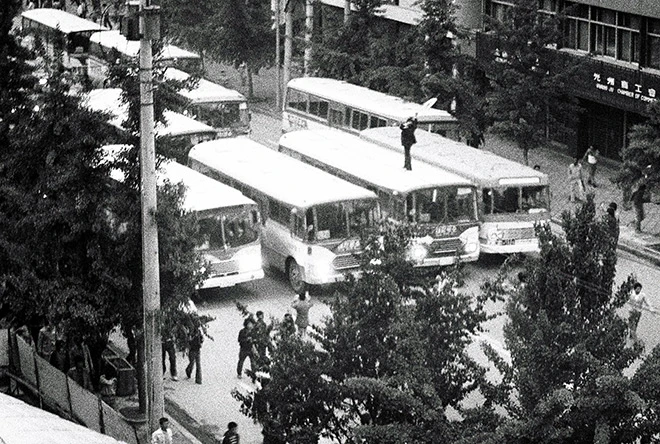
For years, Gwangju was politically sensitive. Open discussion was limited. Families of victims carried grief privately. Public acknowledgment came slowly.
By the time Human Acts was published in 2014, Korean society had already undergone decades of democratization. The events of 1980 were officially recognized as a massacre.
But recognition is not the same as emotional resolution.
Korean culture often manages trauma with restraint. There is a tendency to endure rather than dramatize. Public mourning can be formal, structured.
Han Kang’s writing does not shout. It does not accuse loudly.
It lingers.
The violence in Human Acts is described with clarity but without spectacle. That restraint intensifies the effect.
Han Kang’s Literary Voice
Han Kang’s prose is known for its quiet intensity.
In earlier works like The Vegetarian, she explored bodily autonomy and violence in more symbolic ways. In Human Acts, the violence is historical and specific.
Yet the language remains measured.
There are passages where the narrative voice shifts into second person—“you.” This device dissolves distance between reader and subject. It suggests complicity, memory, or shared vulnerability.
Her writing does not offer catharsis.
It offers confrontation.
The Nobel Moment
When Han Kang was awarded the Nobel Prize in Literature, Korean reactions were layered.
There was pride, of course. Korea has produced globally recognized cultural exports in film and music. But literature carries a different weight. It travels more slowly. It is less visible.
The Nobel Prize felt like an acknowledgment not only of a writer, but of a language.
Korean literature, long translated unevenly into other languages, suddenly stood at the center of global attention.
But again, the celebration was not loud for long.
The focus returned to the content of her work—to what had been written, and why.
Memory and Silence
In Korea, collective trauma often exists alongside rapid modernization.
Skyscrapers rise where protests once occurred. Cafés fill streets that once held demonstrations. Daily life overlays history.
Human Acts resists that overlay.
It insists on returning to the bodies. To the physicality of death. To the bureaucratic language that once attempted to minimize it.
Reading the novel in Korea feels different from reading it abroad.
For some, it is a reminder of family stories. For others, it is the first intimate encounter with an event previously learned in textbooks.
The book does not resolve guilt. It does not assign simple moral clarity.
It asks what it means to remain human inside systems of violence.
Why This Novel Matters in Korea
Korean society often moves forward quickly.
Economic growth, technological advancement, cultural production—these are visible narratives.
But beneath them lie episodes of suppression, censorship, and state violence.
Human Acts does not allow speed.
It slows the reader down. It forces attention.
The boy keeps coming.
In present tense.
After the Applause
A Nobel Prize can elevate a writer into symbolic territory. It can also simplify them into a headline.
Han Kang’s recognition does not erase the difficulty of her work. If anything, it makes that difficulty more visible.
Korean readers returning to Human Acts after the Nobel announcement often describe a renewed heaviness.
Not because the story changed.
But because the world was now watching.
The novel remains what it always was: a quiet, persistent confrontation with memory.
The boy is still coming.
And in Korea, that sentence does not feel abstract.