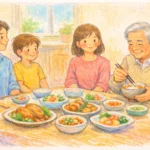
Why a Bowl of Seaweed Soup Carries So Much Meaning in Korea
The Soup Koreans Do Not Choose Casually
There are foods you crave.
And there are foods that arrive with timing.
Miyeokguk is not something Koreans usually order because they feel like it. It is not the soup you add impulsively to a meal. It comes attached to days, to conditions, to people.
Most Koreans can remember the first time they learned this, without anyone explaining it.
You see it on the table, and you know what kind of day it is.
The Literal Meaning of Miyeokguk
Miyeokguk is seaweed soup.
Miyeok is seaweed. Guk is soup.
That is all the word contains.
The soup is dark, almost murky, simmered with soaked seaweed and usually beef or anchovy stock. The flavor is deep but restrained. It coats the mouth rather than announcing itself.
Nothing about the name suggests emotion.
Nothing about the ingredients demands attention.
And yet, this soup rarely feels neutral.
When Koreans Eat It
Miyeokguk is eaten after giving birth.
It is eaten on birthdays.
It is eaten when the body is weak, when recovery is expected.
These occasions are not interchangeable, but the soup moves between them easily.
A woman who has just given birth eats miyeokguk for days, sometimes weeks. A child eats it once a year, on a birthday, often without understanding why. An adult eats it again when illness slows the body down.
The soup follows vulnerability.
Birthdays That Are Not About the Person
To many outsiders, the most surprising detail is this: Koreans eat miyeokguk on their birthday not to celebrate themselves, but to remember their mother.
This explanation is often repeated, but rarely expanded.
Eating miyeokguk on your birthday points backward.
It marks the day you were born, not the day you achieved anything.
The soup does not say congratulations.
It says: someone endured something so you could be here.
This is why some Koreans feel slightly uncomfortable enjoying their birthday too openly. The day is theirs, but not entirely.
How It Is Actually Served
Birthday miyeokguk is not festive food.
There may be cake later. There may be laughter. But the soup itself is quiet. It appears early, often in the morning.
A bowl placed in front of you.
No announcement.
No explanation.
You eat it because it is there.
Some children dislike the texture, the softness of the seaweed, the way it slides. They eat anyway. Or they leave some behind. No one scolds them harshly.
The meaning does not require enthusiasm.
Common Misunderstandings
Miyeokguk is often explained as “healthy soup.” This is true, but insufficient.
It is rich in minerals. It is believed to help with blood circulation and recovery. These beliefs matter, especially in postpartum care.
But if health were the main reason, Koreans would eat it more often.
They do not.
Another misunderstanding is that miyeokguk is comforting food. For some, it is. For others, it feels heavy, serious, even burdensome.
Comfort is not its primary role.
A Soup Connected to the Body
Miyeokguk is tied to the body in a way many Korean foods are not.
It is associated with blood loss, healing, rebuilding. With internal processes that are not visible or polite to mention.
This is one reason it feels inappropriate in certain situations. Before exams, for example, some students avoid miyeokguk.
Seaweed is slippery.
Slipping is associated with failure.
This superstition may sound irrational, but it persists. Not because people believe deeply in it, but because the soup already carries weight. Adding more meaning feels risky.
Food That Is Not for Celebration
Miyeokguk rarely appears at parties.
It is not shared widely. It is usually eaten individually, even when others are present. Everyone may have a bowl, but each bowl feels private.
Unlike stews meant to be ladled out, miyeokguk feels assigned.
This is your bowl.
This is your day.
This is your condition.
The soup respects boundaries.
The Mother in the Background
In Korean households, miyeokguk is often cooked by mothers, for others.
A mother cooks it for a daughter who has given birth.
For a child on their birthday.
For a family member who is unwell.
It is rarely cooked for oneself.
This pattern quietly reinforces an idea: care flows outward, not inward.
When someone cooks miyeokguk for themselves, it can feel lonely. Not wrong, just exposed.
Taste as Memory
Ask Koreans about miyeokguk, and many will talk about a specific version.
My mother’s was thicker.
My grandmother used anchovies.
Ours had more sesame oil.
The soup becomes a memory before it becomes a preference.
You may not crave it, but you recognize it.
You may not love it, but you trust it.
The taste does not surprise. It reassures by repeating itself.
Eating It as an Adult
As Koreans grow older, miyeokguk changes position.
On birthdays, some stop eating it. Living alone, they forget. Or they choose not to mark the day that way.
Others return to it deliberately. Cooking it themselves for the first time can feel strange. Heavy. Almost ceremonial.
You stand at the stove, stirring seaweed, and realize you are stepping into a role.
The soup tastes the same.
You do not.
A Soup That Points Downward
Many Korean foods point outward: toward guests, toward abundance, toward noise.
Miyeokguk points downward. Toward the body. Toward memory. Toward the unseen.
It is not impressive food. It does not photograph well. It does not travel easily.
But it remains.
An Ending That Does Not Close
Miyeokguk does not explain itself.
It appears when it is needed, and disappears again.
Most days, it is absent.
And when it is there, Koreans do not ask what it means.
They already know. Or they do not need to.
They eat quietly,
and let the soup do what it has always done.