Visiting the National Museum of Korea: Location, Admission, and What to Expect
The National Museum of Korea: A Place Koreans Visit Quietly
In Seoul, there are places people recommend loudly. And then there are places they recommend quietly.
The National Museum of Korea often belongs to the second category.
It is not trendy. It is not dramatic. No one goes there to take a loud photo. And yet, when Koreans want to show someone what this country remembers about itself, this is where they bring them.
The building stands in Yongsan, in the center of the city but slightly apart from its speed.
Where It Is, and How People Arrive
The museum is located in Yongsan District, Seoul.
Its official name is the National Museum of Korea (국립중앙박물관).
If you are using the subway, the simplest way is to take Line 4 or the Gyeongui–Jungang Line to Ichon Station. From Exit 2, it is a short walk. The path is open and spacious. You will see families walking slowly, students in groups, older couples moving at an unhurried pace.
No one rushes toward the museum.
There are buses that stop nearby as well, and taxis are common in this area. For those who drive, there is a large underground parking lot, though weekends can feel crowded.
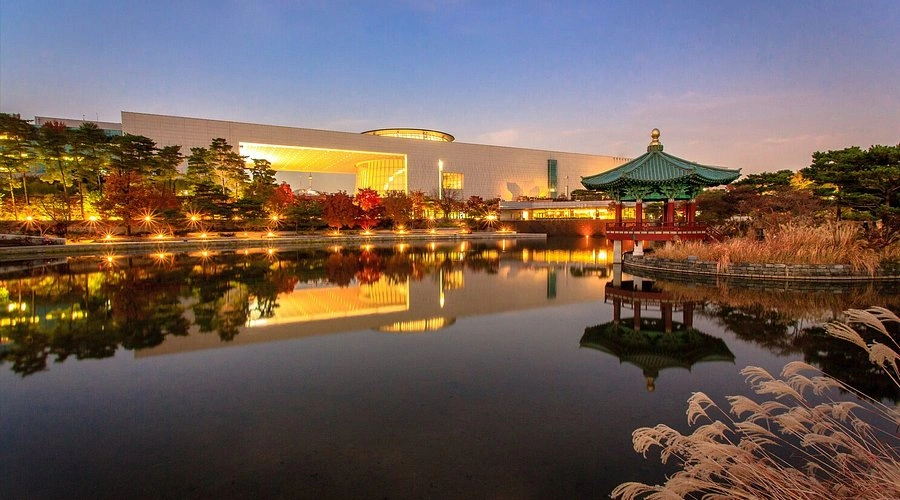
But the approach itself feels intentional. The open plaza in front of the building creates distance from the city’s noise. The wide steps, the reflecting pond, the long horizontal structure — all of it slows you down before you enter.
It does not feel accidental.
Entering the Museum
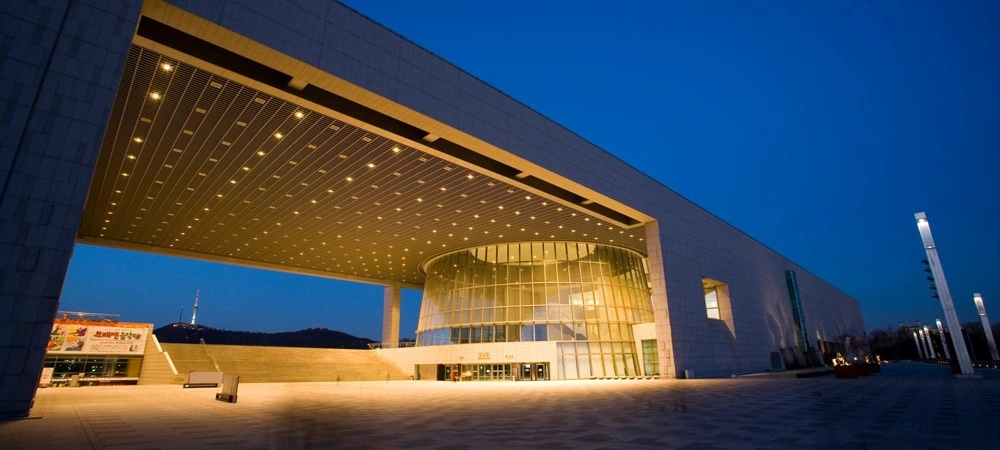
One thing that surprises many visitors is this: general admission is free.
You do not need to buy a ticket to see the permanent exhibitions. You walk inside, pass through a simple security check, and that is it.
Special exhibitions sometimes require a separate ticket. Those are usually clearly marked, and tickets can be purchased on-site or online.
The museum is closed on Mondays. It is open from Tuesday to Sunday, typically from morning until early evening, with extended evening hours on certain days. Koreans often check the website before going, not because it is complicated, but because habits here lean toward confirmation.
The entrance process is quiet and efficient. There are no dramatic announcements, no bright welcome signage. The staff speak gently. Even children tend to lower their voices once inside.
No one tells them to.
What “Free” Means Here
When foreigners hear that admission is free, they sometimes react with suspicion.
Why would something this large, this central, be free?
In Korea, national museums carry a particular meaning. They are considered part of public memory. Charging a fee for permanent exhibitions would suggest that history is something to be purchased. That idea feels uncomfortable here.
Of course, there are practical reasons. The government funds the institution. Special exhibitions generate revenue. But culturally, “free” signals something else: this belongs to everyone.
It is not generosity. It is an assumption.
What People Actually Do Inside
Many first-time visitors expect a dramatic experience. They imagine something theatrical.
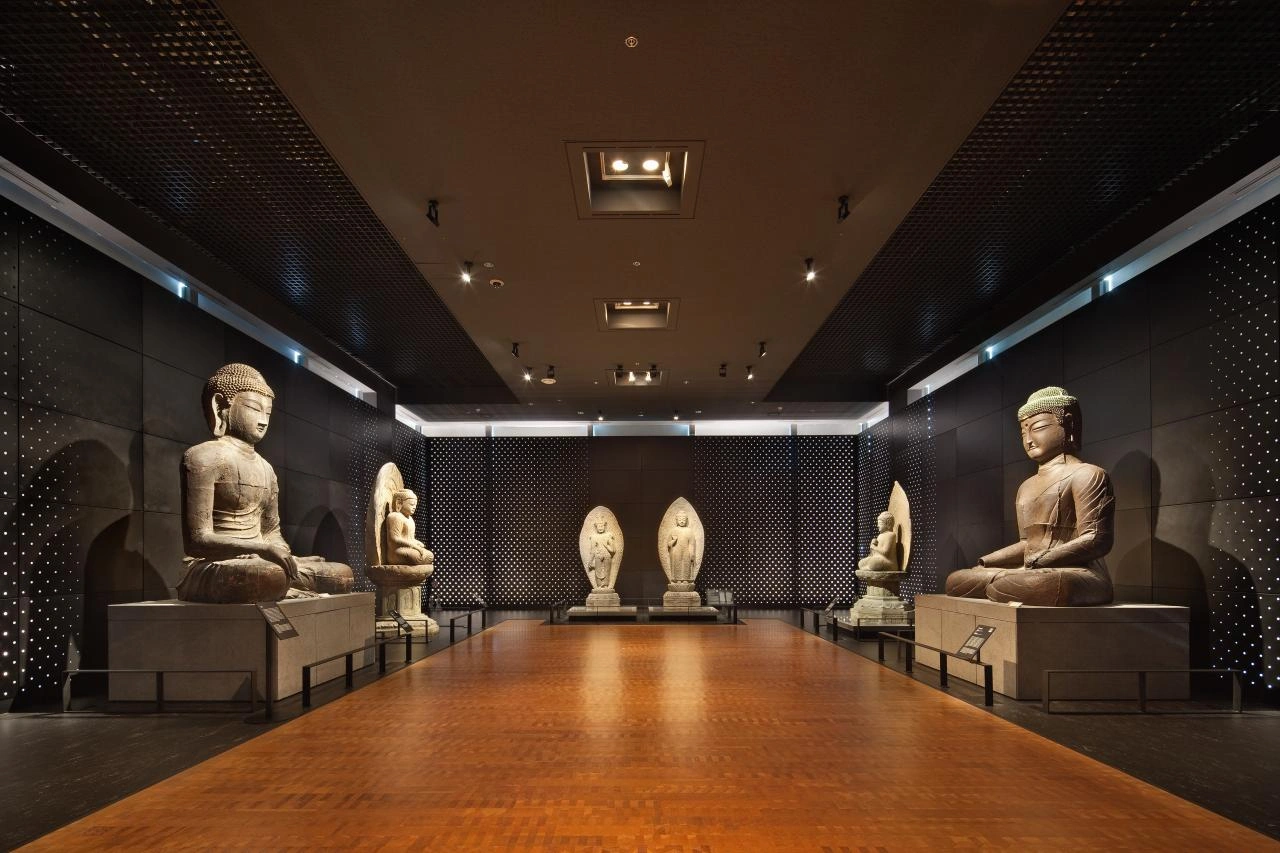
Instead, the museum unfolds chronologically and quietly. Prehistoric artifacts. Ancient kingdoms. Buddhist sculpture. Celadon ceramics. Calligraphy. Paintings.
School groups move through with notebooks. Parents explain objects to their children in soft voices. Elderly visitors stand for a long time in front of a single artifact, hands behind their backs.
The building itself encourages this behavior. The ceilings are high, the corridors wide. There is space between objects. Nothing feels crowded visually.
Time stretches.
Some visitors stay for hours. Others walk only through one section and leave. There is no pressure to complete it. No suggested route that feels mandatory.
The museum does not insist on being consumed fully.
Common Misunderstandings
Some visitors leave saying it felt “too quiet” or “not interactive enough.”
That reaction is understandable.
The museum does not try to entertain aggressively. It does not overwhelm with digital spectacle. Interactive displays exist, but they do not dominate. The emphasis remains on the objects themselves.
In a culture where restraint is valued, this approach makes sense.
The museum assumes that silence is not emptiness. It assumes that looking slowly is not boredom. These assumptions are not universal.
Another misunderstanding concerns scale. Because admission is free, some expect something modest. Instead, the museum is vast — one of the largest in Asia. Its size can feel almost excessive. You may not finish in one visit.
Koreans often do not try.
Practical Visiting Information
- Location: Yongsan District, Seoul
- Nearest Subway: Ichon Station (Line 4, Gyeongui–Jungang Line), Exit 2
- Admission: Free for permanent exhibitions
- Special Exhibitions: Separate ticket required
- Closed: Mondays
- Typical Hours: Morning to early evening (check official website for updated schedules)
(https://www.museum.go.kr/MUSEUM/main/index.do) - Parking: Available, paid
The surrounding area includes a large park, which many people walk through before or after their visit. Some bring coffee and sit outside. Others take photographs near the pond.
It can become busy on weekends, especially during special exhibitions, but even then, the atmosphere rarely becomes chaotic.
Why Koreans Keep Coming Back
The museum is not a place most Koreans visit only once.
Children go on school trips. University students return for assignments. Adults come when relatives visit from abroad. Older generations come alone.
There is something steady about it.
The National Museum of Korea does not argue about identity. It does not explain what you should feel. It simply places objects in sequence and lets them remain there.
Over time, Koreans become accustomed to this quiet presence in the city.
It is a building that holds memory without demanding emotion.
When people leave, they do not usually say much. They step back into Yongsan, into traffic, into the subway system.
And the noise resumes.
The museum stays behind, still and open again tomorrow.