Tteokguk: The Symbol of New Beginnings in Korea
Seollal, and the Bowl That Appears Once a Year
In Korea, the year does not begin loudly.
There are fireworks on television. Countdown clocks. New calendars sold at convenience stores. But Seollal arrives differently. It arrives quietly, often in the cold, usually at home.
And almost without discussion, a bowl appears on the table.
It is not festive in color.
It does not look abundant.
It is just soup.
Rice cake soup. Tteokguk (떡국).
The Literal Meaning of Tteokguk
Literally, tteokguk is soup with sliced rice cakes.
Nothing more is hidden in the word.
The rice cakes are long, white cylinders, sliced thinly on a diagonal. The broth is clear or lightly cloudy, usually made from beef brisket or anchovies. Garnish is restrained: shredded egg, seaweed, a few strands of meat.
If described plainly, it sounds ordinary. Almost plain.
And yet, this is the food of the first day of the year.
How It Is Actually Eaten
Tteokguk is eaten on Seollal morning. Not later. Not whenever it feels right.
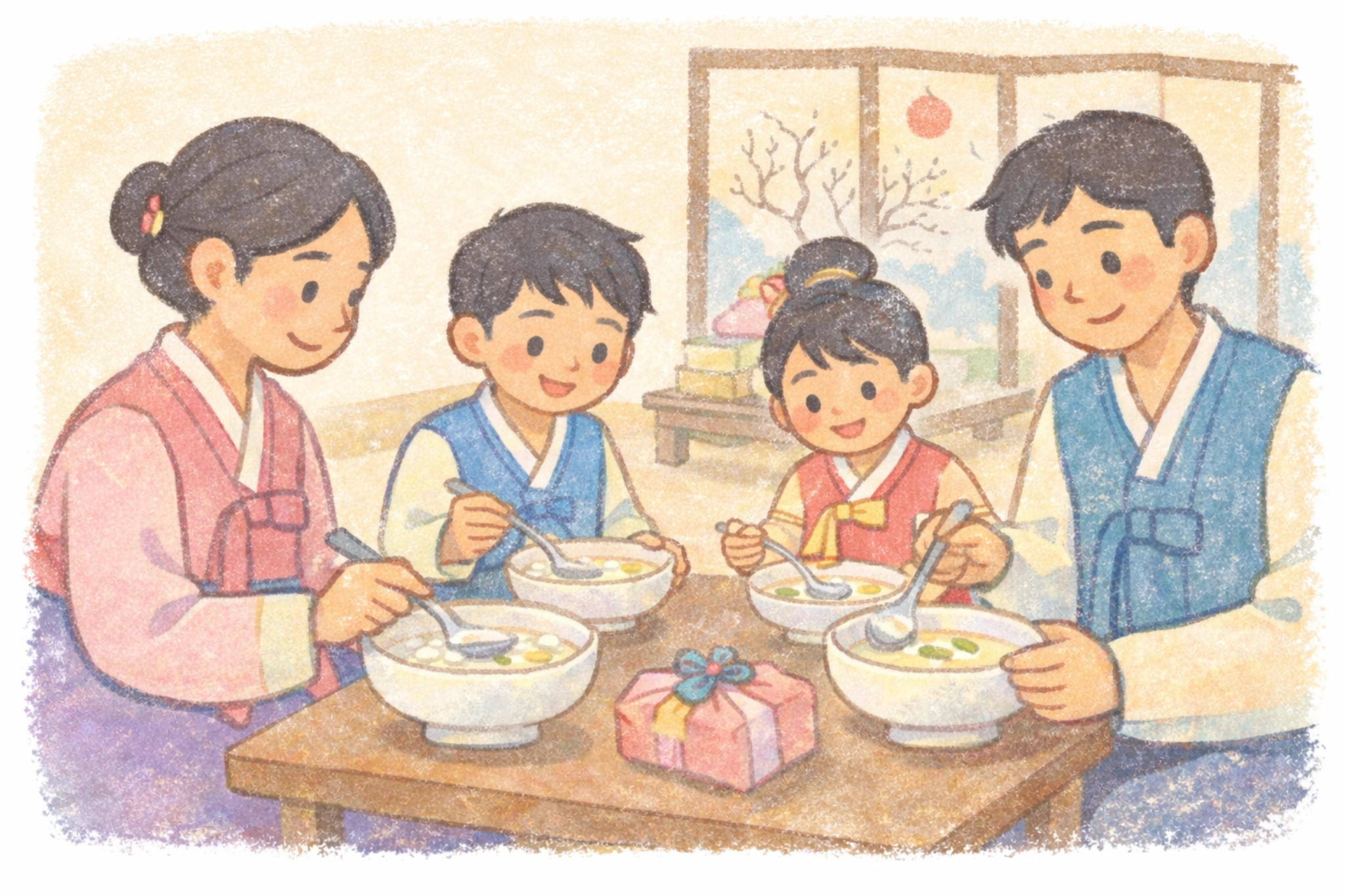
It comes after waking up early, after putting on slightly uncomfortable clothes, after bowing to elders. The soup is hot, but the atmosphere is controlled. No one says much while eating.
Someone may ask, “Did you eat tteokguk?” (떡국 먹었어?)
The question sounds casual, but it is not about hunger.
It means: has the year begun for you?
A Soup That Makes You Older
There is a common saying in Korea: you gain a year by eating tteokguk.
This is not metaphorical in the poetic sense. For a long time, age itself was counted collectively. Everyone became a year older together at the new year.
The bowl marks the shift.
Before the soup, you are still last year’s self.
After it, you are not.
Children joke about refusing tteokguk so they do not age. Adults joke less. They eat quietly.
Common Misunderstandings
Many outsiders assume tteokguk is eaten because it is delicious or celebratory. It is not particularly indulgent. No one craves it in July.
Others think the white color symbolizes purity or a fresh start. This explanation exists, but it is rarely felt in the moment.
Koreans do not sit in front of the bowl thinking about symbolism. They eat it because it is there. Because it has always been there.
The meaning comes afterward, if at all.
Why Rice Cakes
Rice cakes are dense. They are filling. They last.
Historically, rice cakes were not everyday food. They required time, labor, and enough rice to spare. Eating them at the start of the year suggested continuity. Survival. The hope that there would be enough again.
The long shape of the rice cake is sometimes said to represent longevity. The round slices, coins.
These explanations are repeated often. But repetition does not always mean conviction.
Sometimes tradition continues simply because stopping it would feel stranger.
Seollal as a Pause, Not a Celebration
Seollal is often described as a major holiday, but it does not feel like a party.
It is quieter than Western New Year celebrations. More restrained. The mood is heavy with movement: travel, preparation, obligation. People return to places they no longer live in. They sit next to relatives they see only once a year.
The soup fits this mood.
It is warm, but not exciting. Familiar, but not comforting in a dramatic way.
It does not distract. It reminds.
Eating Together, Separately
Families eat tteokguk together, but not always closely.
Some eat quickly. Some linger. Some leave rice cakes floating untouched at the bottom.
No one comments.
The act matters more than the appetite.
Even people who no longer believe in the ritual still eat the soup. Even people who complain about Seollal still expect it.
Skipping tteokguk feels more radical than skipping the holiday itself.
The Weight of Repetition
Every year, the soup returns unchanged.
The same taste.
The same garnish.
The same question: “Did you eat?”
This repetition carries weight. It compresses time. Childhood and adulthood blur around the same bowl.
You remember being small and being told to eat more.
You remember eating quickly before leaving the house.
You remember eating alone.
The soup does not record these memories, but it allows them.
A Non-Final Thought
Tteokguk is not impressive food.
But on Seollal morning, without it, the day feels unfinished.
The year might still come. Time will move regardless.
But something would feel unsaid.