The Cultural Significance of Call Buttons in Korea
The Small Button on the Table
Some visitors notice it before the menu.
Others only realize it after sitting for a while, wondering why no one seems to be trying to get the server’s attention.
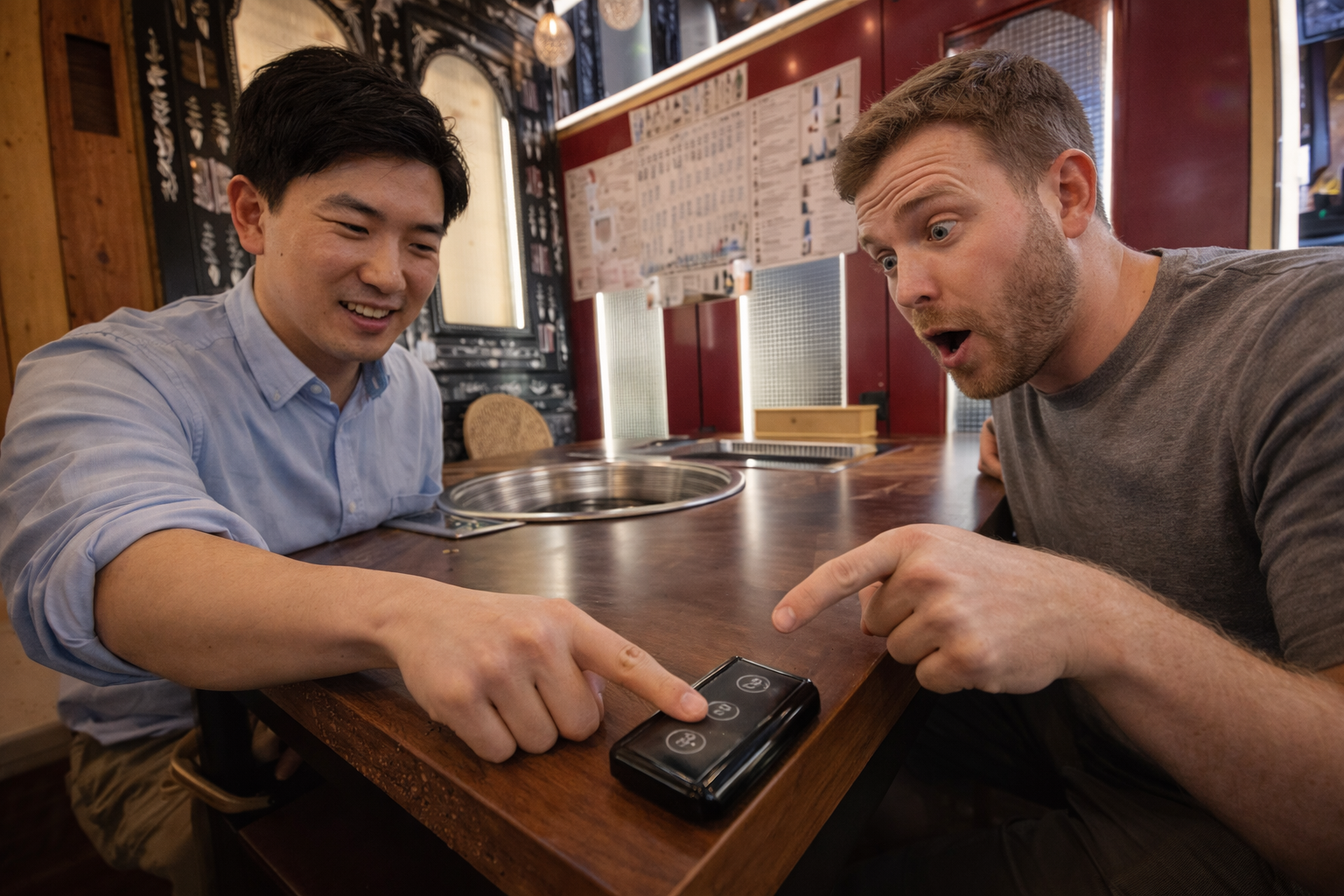
A small plastic button sits on the table. Sometimes it is square, sometimes round. It may blink faintly. It may not. No one explains it. No sign points to it. And yet, at some moment, someone presses it without hesitation.
A sound rings out somewhere behind the counter.
What the Button Literally Does
The call bell is simple.
You press it, and the staff is alerted that your table needs something.
It is not decorative. It is not an emergency device. It is not special. It exists so that you do not need to wave your hand, raise your voice, or make eye contact across a busy room.
In Korean, people might casually say, “Press the bell” (벨 눌러), without further explanation.
How It Is Actually Used
In practice, the bell is used for everything and nothing.
Water refills.
Ordering more side dishes.
Asking for the bill.
Calling someone over because the grill is burning.
No apology is attached to pressing it. No hesitation is expected. People press it once, maybe twice, and then wait.
The staff does not rush. They do not look offended. They simply come.
The button replaces a whole set of social gestures.
What Outsiders Often Misunderstand
Some visitors feel uncomfortable touching it.
It feels demanding. Mechanical. Too direct.
In other cultures, calling a server often involves negotiation—eye contact, timing, politeness strategies. Pressing a button can feel like skipping those steps, as if you are ordering a person rather than requesting help.
Others worry about bothering the staff.
They wait. They look around. They whisper. They eventually flag someone down anyway.
Koreans notice this, but rarely comment.
Why Calling Out Is Avoided
In many Korean restaurants, calling out loudly feels more disruptive than pressing a bell.
The dining space is already loud. Tables are close. Voices overlap. Adding another human voice directed across the room can feel unnecessary, even slightly rude.
The bell makes no personal demand.
It is impersonal, neutral, contained.
No one is singled out. No one is summoned by name.
Efficiency Without Warmth
The call bell reflects a certain attitude toward service.
Service is expected, not performed emotionally.
The goal is responsiveness, not friendliness.
This does not mean the staff is cold. It means the interaction is minimized. The bell allows both sides to avoid small talk, apologies, or repeated checking-in.
No hovering.
No smiling for reassurance.
No “Are you okay over here?” every few minutes.
The Absence of Eye Contact
In many Korean dining spaces, servers do not scan tables constantly.
This is not neglect. It is restraint.
Watching customers too closely can feel intrusive. Leaving them alone is considered respectful. The bell shifts responsibility to the customer: call when you need something.
Until then, you are not watched.
Power Without Performance
The button gives customers control, but quietly.
You do not need to assert yourself.
You do not need confidence or volume.
You simply press.
This is especially noticeable in group settings. One person presses the bell, and no explanation follows. The group continues talking.
The interaction stays small.
When There Is No Bell
Interestingly, when a restaurant does not have a call bell, people become visibly uncertain.
They hesitate.
They wait longer than necessary.
They glance toward the counter without committing.
The absence of the bell creates more social tension than its presence ever does.
A Cultural Preference for Systems
The call bell fits into a broader Korean preference for systems over improvisation.
A system removes ambiguity.
It reduces emotional labor.
It makes behavior predictable.
You do not wonder if you are being rude.
You do not wonder if the server noticed you.
You pressed the button. That is enough.
Not Everything Needs to Be Said
The bell speaks so people do not have to.
No “excuse me.”
No “sorry to bother you.”
No explanation of urgency.
Just a sound.
Then footsteps.
And then the conversation at the table resumes, as if nothing happened.