Rows of Korean food delivery scooters parked outside in winter with delivery boxes attached

Korea’s Fast Delivery Culture Explained

How Delivery Became Ordinary in Korea If you stay in Korea long enough, you begin to notice how casually people talk about delivery. “Shall we order?” (시킬까?)“It’s coming.” (오고 있어) There is no special tone in their voice. No sense of indulgence. Delivery is not reserved for special occasions or lazy evenings. It is folded
Bicycle parked on a quiet city street at night with blurred lights in the background

Light, Safety, and Habit: Korea After Midnight

Why Korean Streets Stay Bright Even After Midnight If you walk through a residential neighborhood in Korea late at night, something may feel unusual. It is past midnight. Shops are closed. The sidewalks are nearly empty. And yet the streets are still bright. Not dimly lit. Not quietly glowing. Bright. The convenience store sign is
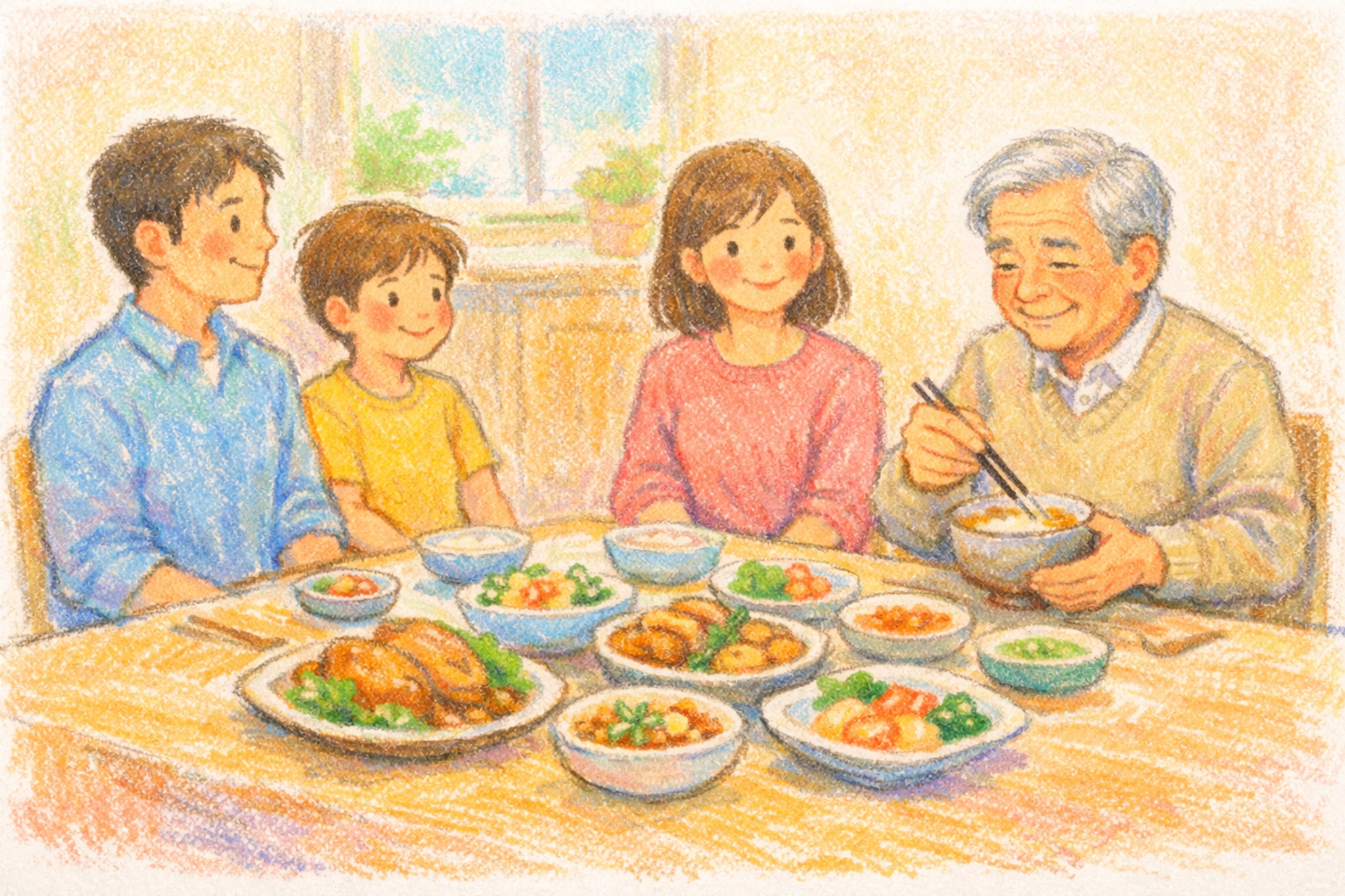
Pastel crayon illustration of a family sitting at a dining table, waiting respectfully as the eldest man begins the meal

The Quiet Rule at Korean Dining Tables

The Moment Before the First Spoon At a Korean table, there is often a pause. The food has arrived. Steam rises. The spoons are laid out within reach. Everyone is seated. No one is eating yet. Someone is waiting. To outsiders, the delay can feel unnecessary, even inefficient. The food will cool. People are hungry.
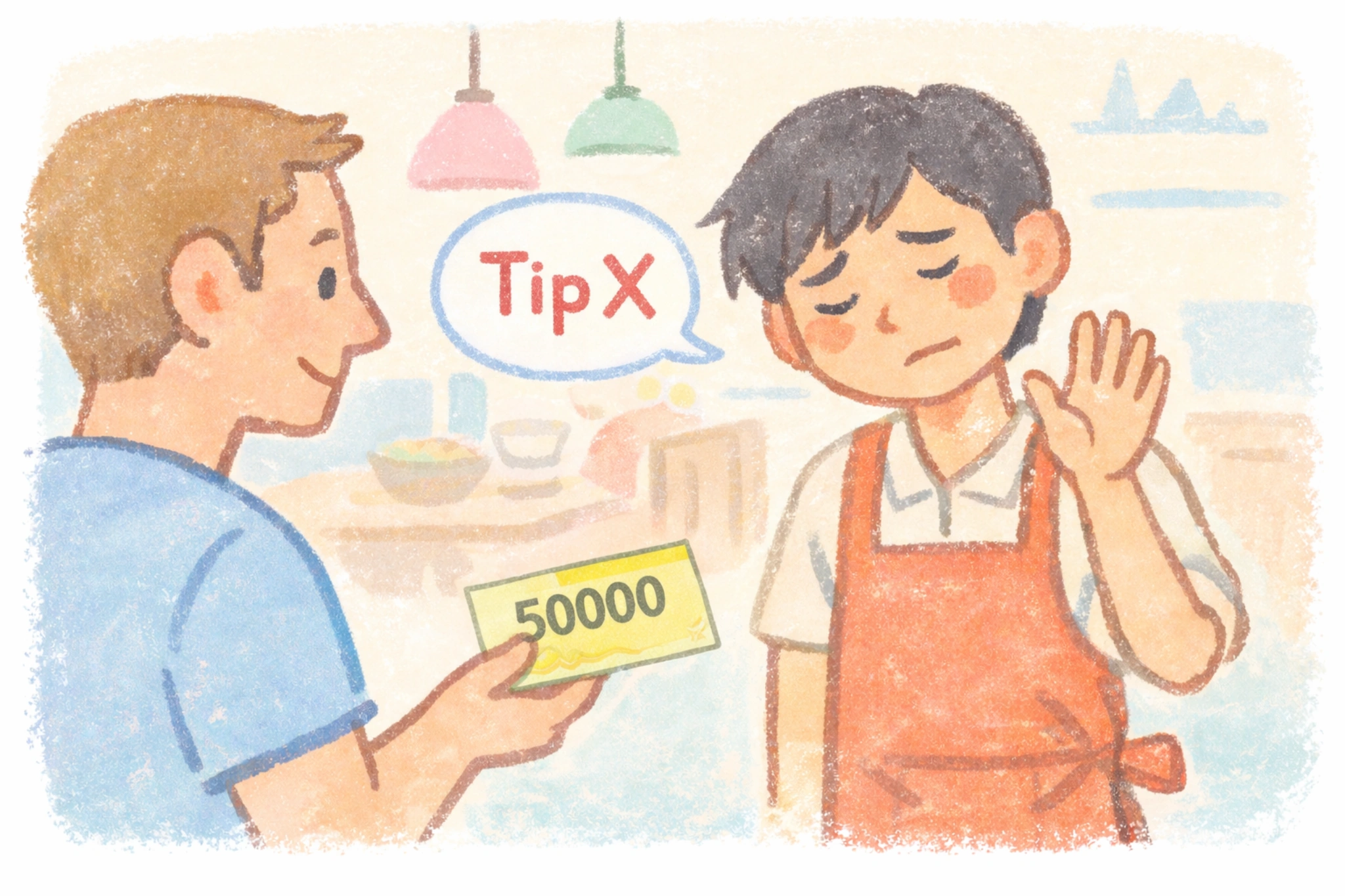
Flat crayon-style illustration of a foreign customer offering money to a Korean restaurant worker who politely refuses a tip, shown with a “Tip X” speech bubble.

Why Tipping is Uncommon in Korea

Why Koreans Do Not Accept Tips For many visitors, the moment arrives unexpectedly. The meal is over. The service was attentive. Someone stood nearby, ready to clear the table or bring the receipt. You reach for your wallet and add a little extra, just to be polite. Just to say thank you. And then the

The Role of Bowing in Korean Communication

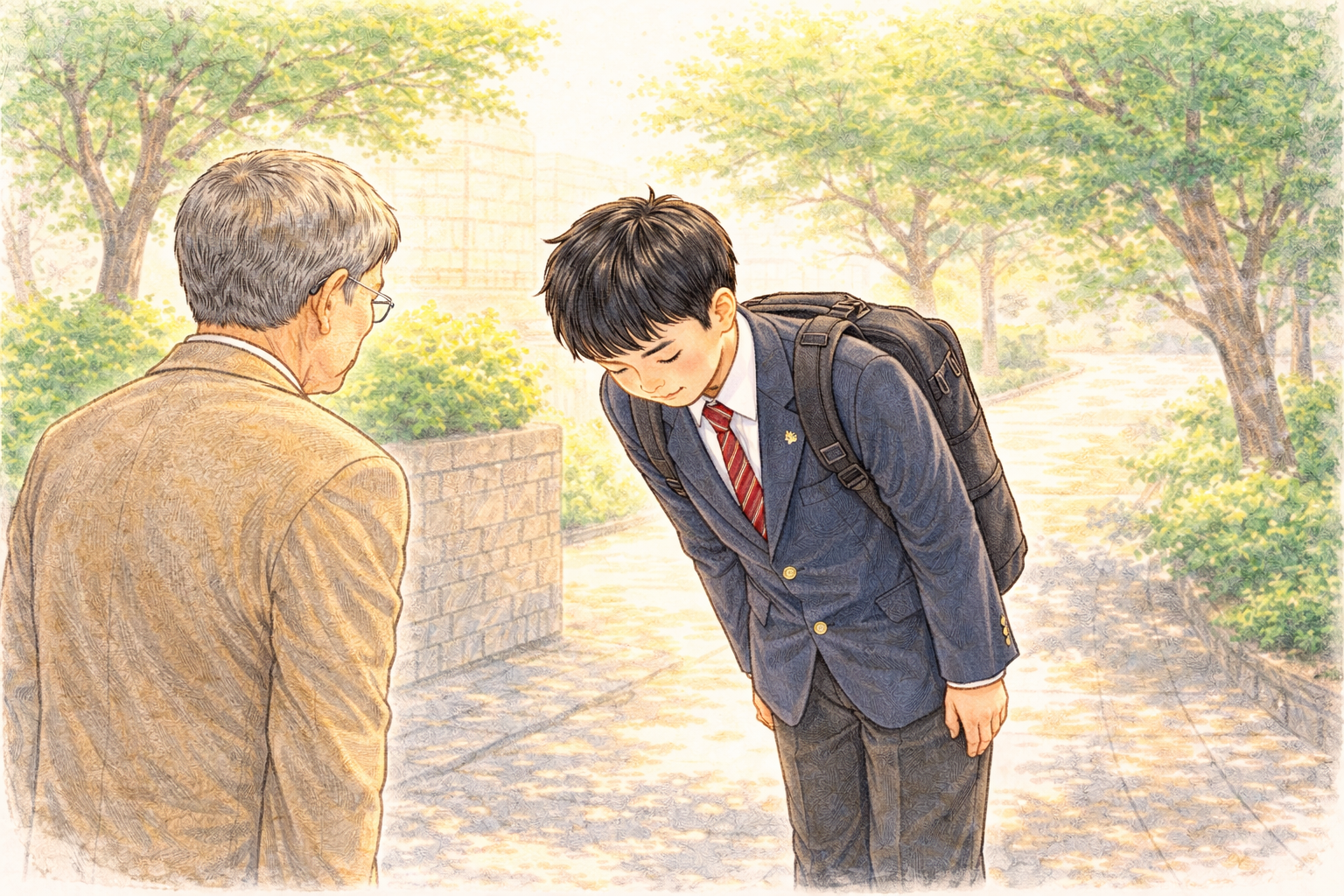
The Small Movement That Comes First Before words, the body moves. A slight bend of the neck.A pause.Eyes lowering, just briefly. Sometimes the bow is deep. Sometimes it barely exists. But it happens so often that many Koreans don’t register it as a choice. They just do it. To someone unfamiliar, this constant lowering of

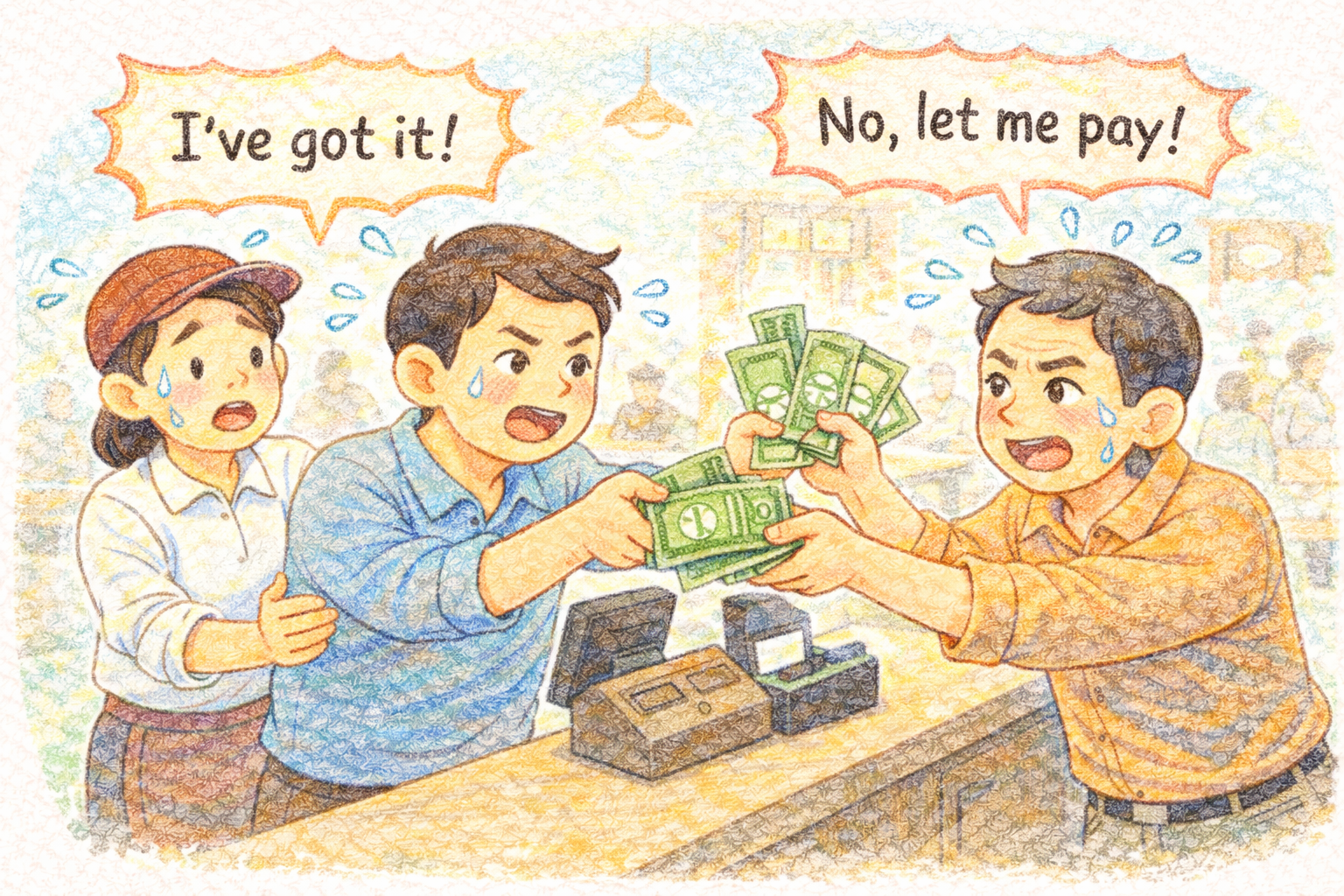
The Dynamics of Bill Payment in Korean Culture

The Awkward Moment at the End of the Meal The food is gone.The table is quiet for a second. Then someone reaches for the bill. Immediately, another hand moves faster. “No, I’ll pay.” (내가 낼게)“No, no, I will.” (아니야, 내가 낼게) Voices overlap. Hands block each other. The cashier waits, already familiar with this scene.