Seoul Travel Guide Part 5: Hidden Alleys, Newtro Nights & the Seoul Most Visitors Never Find
Every city has two versions of itself. The first is the one that shows up in guidebooks and on highlight reels — the landmarks, the famous views, the places everyone goes because everyone else goes. The second is quieter, harder to find, and considerably more rewarding once you reach it. It’s the version that reveals itself slowly, through wrong turns and accidental discoveries and the willingness to spend an afternoon with no agenda beyond following whatever alley looks interesting.
This final chapter of the Seoul series is about that second version of the city.
Parts One through Four have taken you through the royal palaces, the creative neighborhoods, the food markets, and the south-side modernity of Gangnam and the Han River. This last chapter covers the places that don’t fit neatly into any of those categories — the 1920s hanok village that functions as both a time capsule and a cafe district, the industrial neighborhood that transforms into the city’s most atmospheric drinking scene after dark, the hilltop park with the best night view in Seoul that most visitors never find, and the local market that offers everything Gwangjang does with fewer crowds and more of the city’s actual daily life.
These are the neighborhoods that make people fall in love with Seoul in a different way — not with a gasp, but with the slow accumulation of small perfect moments.
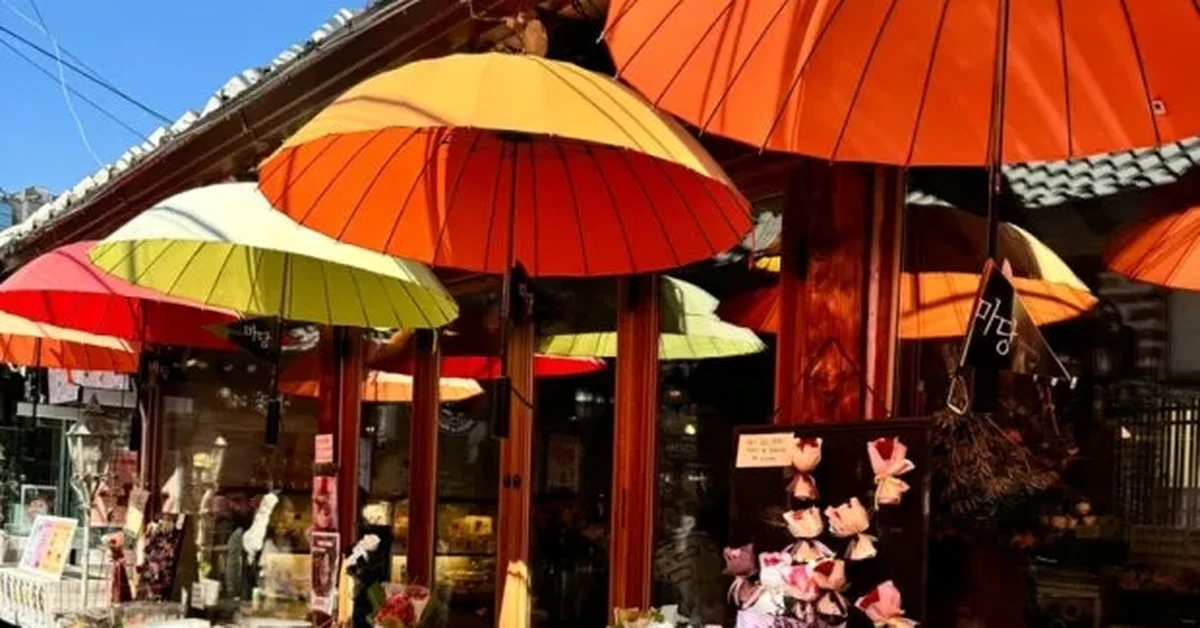
Ikseon-dong — Where the 1920s Never Quite Ended

Ten minutes on foot from the palace district of Part One, tucked behind the busier lanes of Insadong, sits a neighborhood that most visitors to Seoul would walk right past without realizing it was there.
Ikseon-dong is Seoul’s oldest surviving planned hanok neighborhood — a dense cluster of small traditional wooden houses built in the 1920s during the Japanese colonial period by a developer named Jung Se-kwon, who constructed them specifically for working-class and middle-class tenants. Unlike the aristocratic estates of Bukchon, which were designed to impress, Ikseon-dong’s hanok were designed to be lived in — small, practical, packed tightly together in narrow lanes that wind without obvious logic between tiled rooftops.

Through most of the late twentieth century, the neighborhood was simply forgotten. Young residents left for newer apartments. Elderly residents stayed. Redevelopment plans were proposed and stalled repeatedly. By the time young entrepreneurs began arriving around 2014 — drawn by the combination of cheap rents and the rare opportunity to run a business inside a genuinely historic building — most of the hanok had been empty for years.
What happened next is one of the more elegant transformations in contemporary Seoul. The new occupants didn’t demolish or radically renovate. They worked with the structures they found — preserving the wooden beams, the tiled roofs, the cramped courtyards — and built contemporary interiors inside them. Minimalist concrete and glass appeared behind traditional wooden gates. Bamboo grew in courtyards that had been paved over. Soufflé pancakes and specialty espresso started emerging from buildings a century old.
The result is a neighborhood that feels genuinely unlike anywhere else in Seoul, or possibly anywhere else at all. Every turn in Ikseon-dong produces a small surprise. A door that looked like a solid wall opens into a cafe barely big enough for six tables. A courtyard that seemed like a gap between buildings turns out to have a garden and a counter serving matcha lattes. The GPS on your phone becomes useless — the alleys are too narrow and too tightly packed for accurate positioning — which means navigation reverts to the more satisfying method of simply walking in the direction that looks interesting and seeing what you find.
The neighborhood is small enough to explore completely in two to three hours, and it’s compact enough that doing so doesn’t feel rushed. The best approach is to arrive early on a weekday morning — around 9am, when the first cafes open and the lanes are quiet enough to see the architecture without crowds in the frame — and simply walk. No list, no must-visits, no route. The hanok reveal themselves at their own pace, and that pace is the right one.
For those who want a reference point: the Cheongsudang cafe, with its bamboo courtyard and famous soufflé pancakes, has become Ikseon-dong’s most photographed spot and is worth finding for the interior alone. The queue is shortest immediately at opening time on weekdays. The evening scene in Ikseon-dong — cocktail bars and small restaurants operating behind the same wooden doors that hide the daytime cafes — runs later and quieter than the more famous nightlife districts, which gives it a particular appeal for anyone who finds Hongdae overwhelming.
Getting there is simple. Take the subway to Jongno 3-ga Station and exit through Exit 4 or 5. The hanok alleys begin within a two-minute walk heading north.
Euljiro — The Neighborhood That Reinvented Itself Twice

Euljiro occupies a central position in old Seoul, running east from City Hall through a district that was the commercial and industrial heart of the city through much of the twentieth century. Printing presses, hardware stores, electrical suppliers, sign makers, and small workshops of every kind packed its streets for decades, serving the practical infrastructure needs of a city growing at extraordinary speed.
By the 2000s, much of that industry had declined or relocated, and Euljiro’s reputation as a destination had faded accordingly. Young people moved on to Hongdae and Itaewon. The old workshops stayed, attended by aging craftsmen who had been working the same machines for thirty years.
Then, around 2017, something shifted. Young artists and designers — the same generation that had transformed Seongsu-dong — discovered Euljiro’s old buildings and coined a name for what they were doing with them: 힙지로, Hipjiro, a play on Euljiro that captures the meeting of “hip” with the old commercial district’s character. Former printing shops became bars. Electrical supply stores opened their side rooms to pop-up galleries. The narrow alleys that had been purely functional — connecting one workshop to another, shortcutting between streets — became destinations in themselves.

The dual nature of Euljiro is one of the things that makes it genuinely fascinating. During daylight hours, the neighborhood is still largely what it always was. Hardware vendors display their stock on sidewalks. Printers operate behind glass fronts. Sign painters mix colors in workshops open to the street. The smell of cutting fluid and machine oil mingles with whatever coffee is roasting at the specialty cafe in the converted warehouse next door. It’s a neighborhood that feels simultaneously alive and suspended in time.
After dark, the transformation is complete. Unmarked doors that appeared to be storage rooms during the afternoon turn out to be the entrances to basement bars with carefully chosen record collections and inventive cocktail menus. The Manseon Hof alley — Euljiro’s most famous nighttime destination — fills with dozens of outdoor plastic tables under fluorescent lights, where office workers end long days over cold draft beer and dried pollack. The simplicity is the point. There’s nothing glamorous about sitting at a plastic table under bare bulbs in an alley between hardware stores, eating dried fish and drinking cheap beer. And yet the experience has a warmth and an authenticity that no designed bar with a carefully curated aesthetic can manufacture.
Coffee Hanyakbang, tucked into an alley so narrow that you can touch both walls simultaneously, is the cafe that best captures Euljiro’s spirit in daylight — a retro interior with mother-of-pearl details, excellent hand-drip coffee, and the particular pleasure of having found something that wasn’t looking for you.

The Sewoon Arcade, running perpendicular through the area, adds another layer of complexity. Built in 1968 as Korea’s first megastructure, this brutalist concrete complex stretches across multiple city blocks on a skybridge that spans several streets. It nearly faced demolition before a regeneration project preserved and revitalized it. Today, electronics stalls on the lower floors share the building with DIY maker spaces, rooftop gardens, and installations from architects and artists who found the structure too interesting to ignore. Walking through it is like moving through a particular moment in Korean modernization — the optimism and ambition of the 1960s preserved in concrete and fluorescent light.
The nearest subway stations for Euljiro are Euljiro 3-ga Station on Lines 2 and 3, or City Hall Station on Lines 1 and 2 for the western end. The neighborhood is best visited in the late afternoon and evening — arriving around 4pm lets you see both the daytime workshop character and the nighttime transformation in a single visit.
Naksan Park — Seoul’s Best View That Nobody Talks About
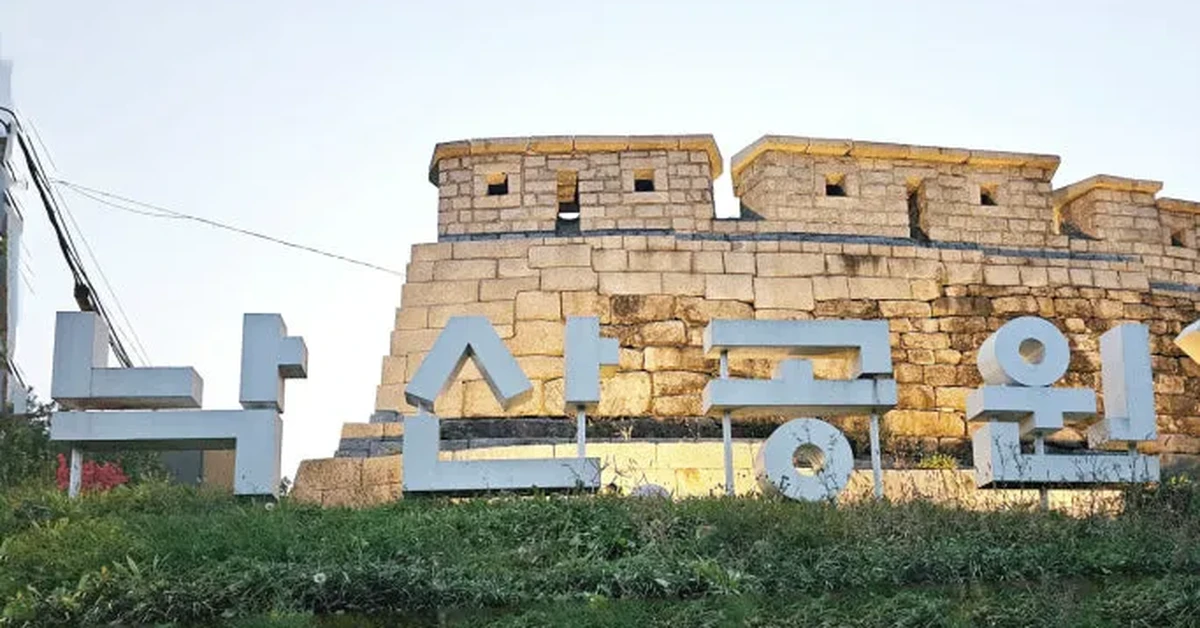
Seoul has no shortage of viewpoints. Namsan Tower is the famous one. The observation decks of Lotte World Tower and the 63 Building provide the highest perspectives. But the view from Naksan Park, a small hilltop green space in the northeastern corner of the old city, is the one that tends to stop people in a way the commercial observation decks can’t quite manage — because it’s free, it’s quiet, and it places you not above the city but within it, at just the right elevation to feel the full expanse of Seoul spreading in every direction while still being close enough to see individual rooftops and alleys below.
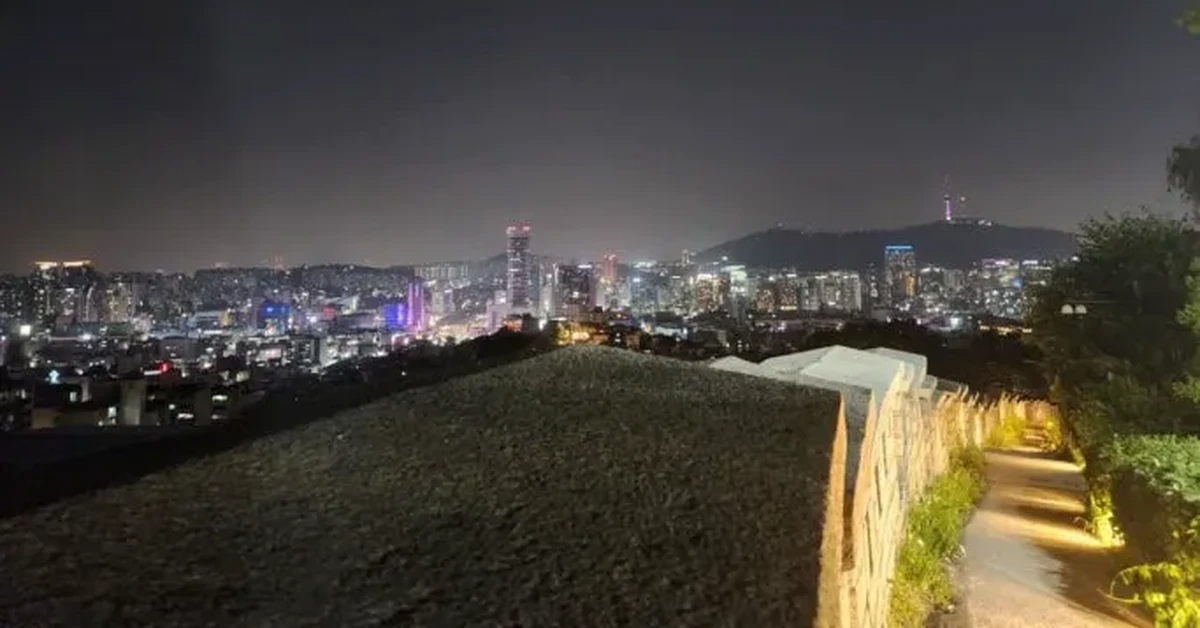
Naksan Hill sits along the historic Seoul City Wall — the ancient fortification that once enclosed the entire Joseon Dynasty capital, sections of which still run across the ridge lines of the mountains surrounding the city center. The park follows the wall’s path, and walking along the illuminated ramparts at night — the old stones lit from below, the city glowing in every direction beyond them — is one of Seoul’s most quietly spectacular experiences.
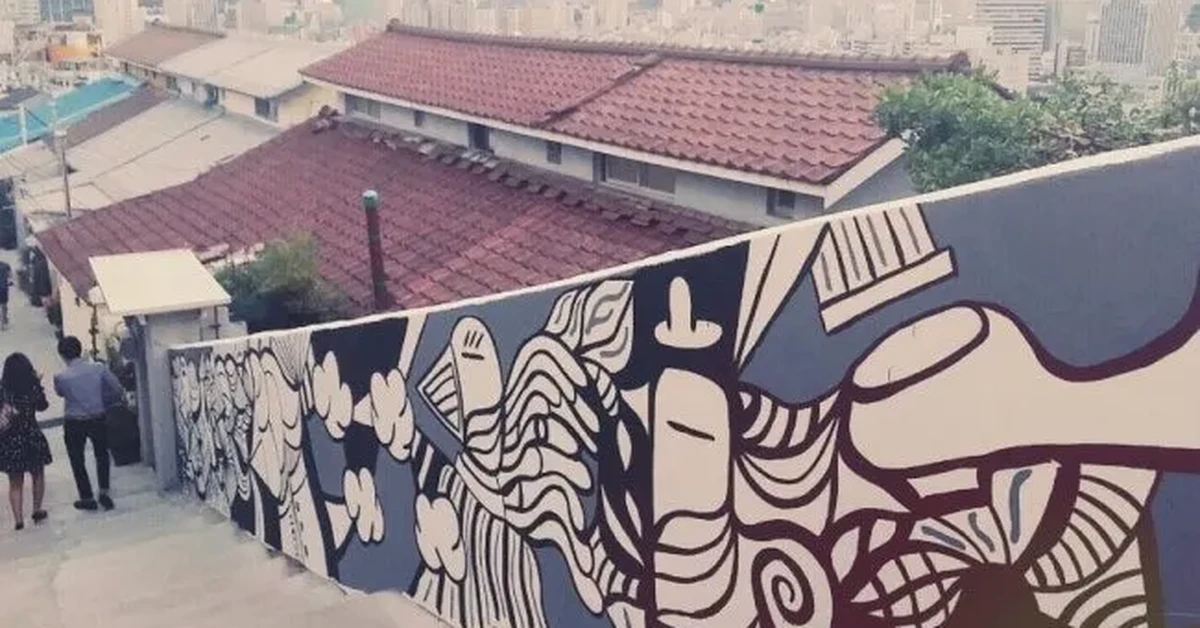
The view looks north toward Bugaksan Mountain and the ridge above Gyeongbokgung. To the west, the lights of Jongno and central Seoul stretch toward the Han River. To the south, the cluster of towers around Dongdaemun Design Plaza glows with its own particular light. And directly below, the rooftops of Iheha-dong’s mural village — a neighborhood of alleys covered in paintings done by artists and students from the nearby university — descend the hillside in colorful steps toward the city.
The mural village is worth exploring on the way up to or down from the park. The murals range from simple and cheerful to seriously accomplished, and the neighborhood’s hillside character — steep alleys, close-built houses, the sound of the city muted by the elevation — gives the whole place a peaceful atmosphere that contrasts sharply with the energy of the areas at the base of the hill.
Getting to Naksan Park requires some walking regardless of which approach you take. The most common route is from Hyehwa Station on Line 4 — exit through Exit 2 and walk uphill following the signs for the Seoul City Wall path. The walk takes about twenty minutes from the station and climbs steadily the entire way. The reward at the top is commensurate with the effort. Bring water.
The park is free and open at all hours. The best time to visit is approximately forty-five minutes before sunset, which gives you the golden light of the late afternoon on the rooftops below, then the transition to dusk, and finally the full city illumination that makes the view genuinely extraordinary. A flask of something warm on a cool evening makes the whole thing considerably more pleasant.
Mangwon Market — The Local Alternative
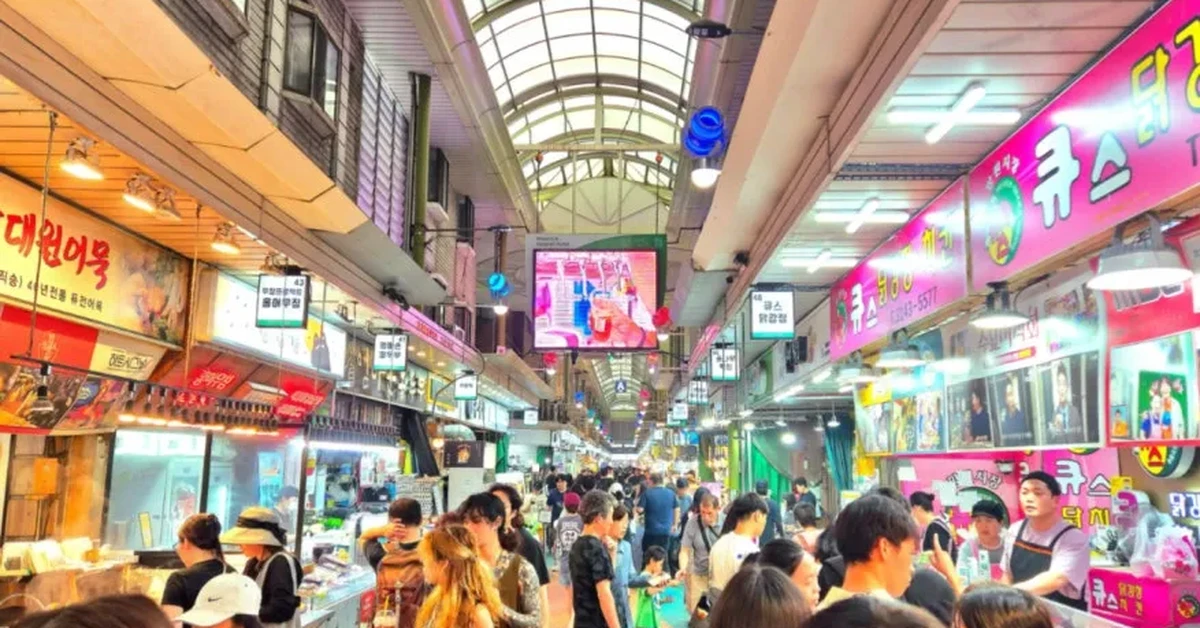
Every series about Seoul food eventually encounters Gwangjang Market — the famous one, the Netflix one, the one that everyone recommends. And Gwangjang is genuinely excellent, as Part Three of this series covered in detail. But there is another market, about fifteen minutes away by subway, that offers a version of the same experience with a fraction of the tourist traffic and arguably a stronger sense of what Seoul’s daily food culture actually looks like when it isn’t performing for visitors.
Mangwon Market sits in the Mapo district, west of Hongdae, in a neighborhood that has developed its own character over the past decade as a more genuinely local alternative to the tourist-heavy areas nearby. The market itself is small by Seoul standards — a covered arcade of food stalls and small restaurants that takes perhaps twenty minutes to walk end to end — but its density of good things to eat per square meter is exceptional, and the atmosphere on a weekend morning, when locals come to shop for produce and grab breakfast at their regular stalls, is exactly the kind of living food culture that most visitors are looking for.

The market is particularly celebrated for its street snacks. Tteokbokki here has a devoted following among locals who claim the version sold at specific stalls is superior to anything in the more famous markets. Pajeon — scallion pancake — is another staple, crispy at the edges and chewy at the center in a way that only a pan that’s been seasoned over years of use can produce. Fresh tofu, handmade banchan, and the kind of produce that gets to the market directly from farms rather than through multiple layers of distribution are all available at prices that make Myeongdong look like a premium tax.
The neighborhood surrounding the market has developed into one of Seoul’s more interesting residential areas for visitors to spend time in. Independent bakeries, specialty coffee shops, and small restaurants owned by young chefs who chose Mangwon specifically because they wanted to cook for their actual neighbors rather than tourists, populate the streets around the market in a density that rewards a slow morning of wandering.
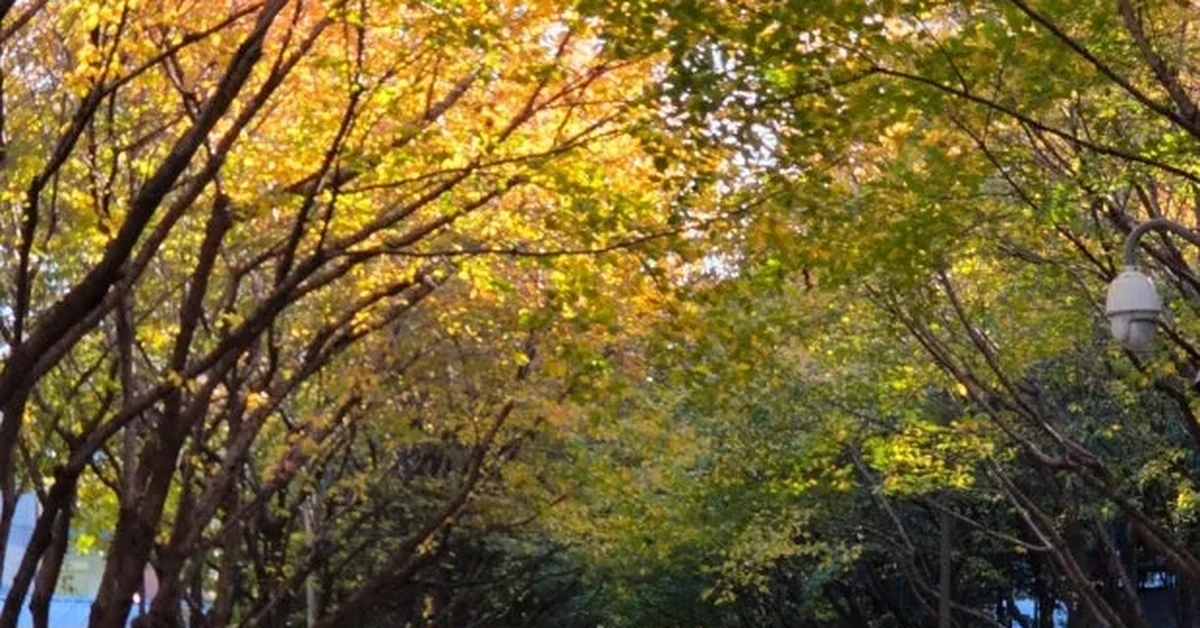
The Gyeongui Line Forest Park — the same converted railway that runs through Yeonnam-dong, covered in Part Two — extends into the Mangwon neighborhood, providing the same kind of walkable green corridor here that it does further east. An hour spent following the park path from the Hongdae area into Mangwon, stopping at the market, and then continuing along the riverside in the direction of Hapjeong creates one of the more satisfying half-days in this part of Seoul.
To get there, take Line 6 to Mangwon Station, Exit 2. The market is a five-minute walk from the exit.
Cheonggyecheon Stream — The City’s Living Room Floor

One more place deserves mention in this final chapter, not because it’s hidden — it runs through central Seoul, visible from dozens of bridges, listed in every guidebook — but because it’s the kind of place that most visitors walk across without ever actually descending to.
Cheonggyecheon Stream was restored in 2005, when the elevated highway that had been built over it in the 1970s was demolished and the stream was uncovered, cleaned, and developed into a 5.8-kilometer linear park running through the heart of the city. The result is something Seoul didn’t have before: a ground-level, human-scale, water-adjacent space threading through one of the densest urban environments in the world.
Walking along the stream rather than across it is the distinction that matters. At street level, Seoul is a city of traffic and scale. At stream level — reached by staircases at regular intervals along its length — you’re suddenly two meters below the road grade, surrounded by water and planted banks, with the sounds of the city reduced to a muffled backdrop. Office workers eat lunch on the stone steps at midday. Young people sit on the low walls at night, feet dangling toward the water. The light reflects differently down here, and the pace slows in a way that feels structural rather than voluntary.

The stream connects Gwanghwamun in the west to Dongdaemun in the east, which means a walk along its length takes you through the geography of central Seoul in a completely different register than anything above ground can offer. Doing it at dusk, when the office buildings are lighting up and their reflections begin appearing in the water, is the kind of small urban pleasure that travels poorly in description and stays well in memory.
Putting the Five Chapters Together
Looking back across the five parts of this series, what they describe collectively is a city of such range and depth that no single visit can fully capture it. The Seoul of the royal palaces and the Seoul of the Euljiro alleys are separated by twenty minutes on the subway and something closer to five centuries in character. The Seoul of Gwangjang Market at noon and the Seoul of Naksan Park at night are the same city looking at itself from different angles.
That range is the real reason Seoul rewards repeat visits in a way that few cities do. Most of what’s covered in these five chapters will still be there on a second trip. But some of it — the pop-up that opened in Seongsu last week, the new cafe in a hanok that didn’t exist a year ago, the makgeolli stall that appeared in a Euljiro alley and may or may not be there next month — will have changed. Seoul moves fast, and the version of it that any particular traveler encounters is a snapshot of a city that is perpetually in the process of becoming something slightly different.
The best advice for any Seoul trip is the same advice that applies to almost anywhere worth visiting: arrive with curiosity instead of a checklist, walk more than you planned to, eat things you can’t identify, and stay long enough for the city to stop feeling like a performance and start feeling like a place where actual life happens.
That feeling, once it arrives, is what makes Seoul one of the most rewarding cities in the world to know.
Series Summary — Five Days, Five Sides of Seoul
For anyone planning an itinerary based on this series, here is the simplest possible summary of what each chapter covers and how it fits together.
Day One covers the historic north — Gyeongbokgung, Bukchon, Changdeokgung, Insadong, and Jongmyo. Start early and move slowly. The architecture and history reward patience.
Day Two covers the creative west and east — Seongsu-dong in the morning, Hongdae and Yeonnam-dong in the afternoon and evening. Best on a weekday to manage crowds at Seongsu.
Day Three is dedicated entirely to eating — Gwangjang Market, Namdaemun, and Myeongdong street food. Arrive hungry and pace yourself.
Day Four crosses the river — COEX, Bongeunsa, Garosu-gil, and Banpo Han River Park with the fountain show at 9pm. Bring a picnic for the river.
Day Five is for discovery — Ikseon-dong in the morning, Euljiro in the afternoon and evening, with Naksan Park at sunset and Mangwon Market whenever appetite and energy allow.
Five days is enough to see the shape of Seoul. To feel it properly takes longer. But it’s a start.
Thank you for following this five-part Seoul series. Whether you’re planning your first visit or your fifth, we hope these chapters gave you something useful — or at least something to look forward to.
Have you found your own hidden corner of Seoul? Share it in the comments. This city is too good to keep to yourself.

