Korea’s Study Cafes: The Quiet Revolution Changing How a Nation Learns
Korea’s Study Cafes: The Quiet Revolution Changing How a Nation Learns
Published: March 2026 | Category: Korean Culture | Reading time: ~7 min
Picture this: it’s 11pm on a Tuesday. Most of the world has already wound down for the night. But somewhere in Seoul — in Gangnam, in Sinchon, in a quiet residential neighborhood near a university — a study cafe is still full of people. Heads down, headphones in, coffee cups steaming beside neat rows of notebooks and open laptops. Nobody is talking. Everyone is working.
This is the 스터디카페 (study cafe), and if you want to understand modern Korean life, it’s one of the best places to start looking.
What Exactly Is a Study Cafe?
If you’re imagining a regular cafe with a few students hunched over laptops in the corner, think bigger. A Korean study cafe is an entirely different animal.
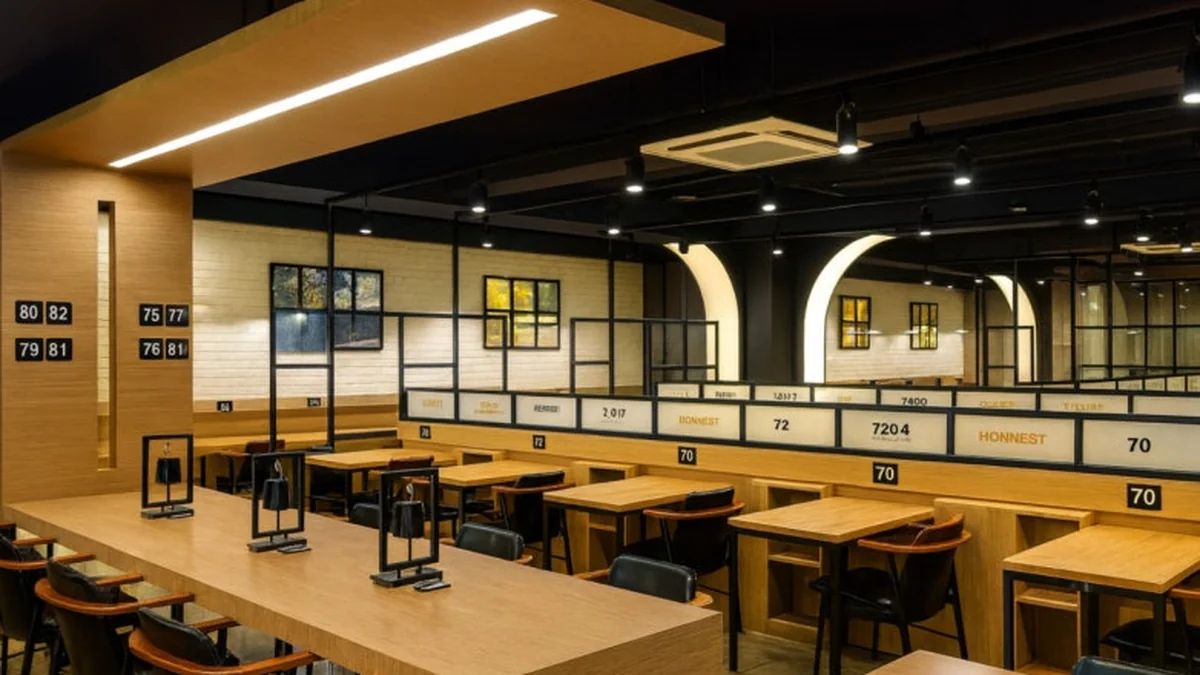
Rather than ordering a drink and claiming a table, you pay for a dedicated seat — your own private desk, separated from the person next to you by a partition wall. The space is quiet by design. No background music blaring, no casual conversation drifting over from the next table. Just focused, intentional silence.
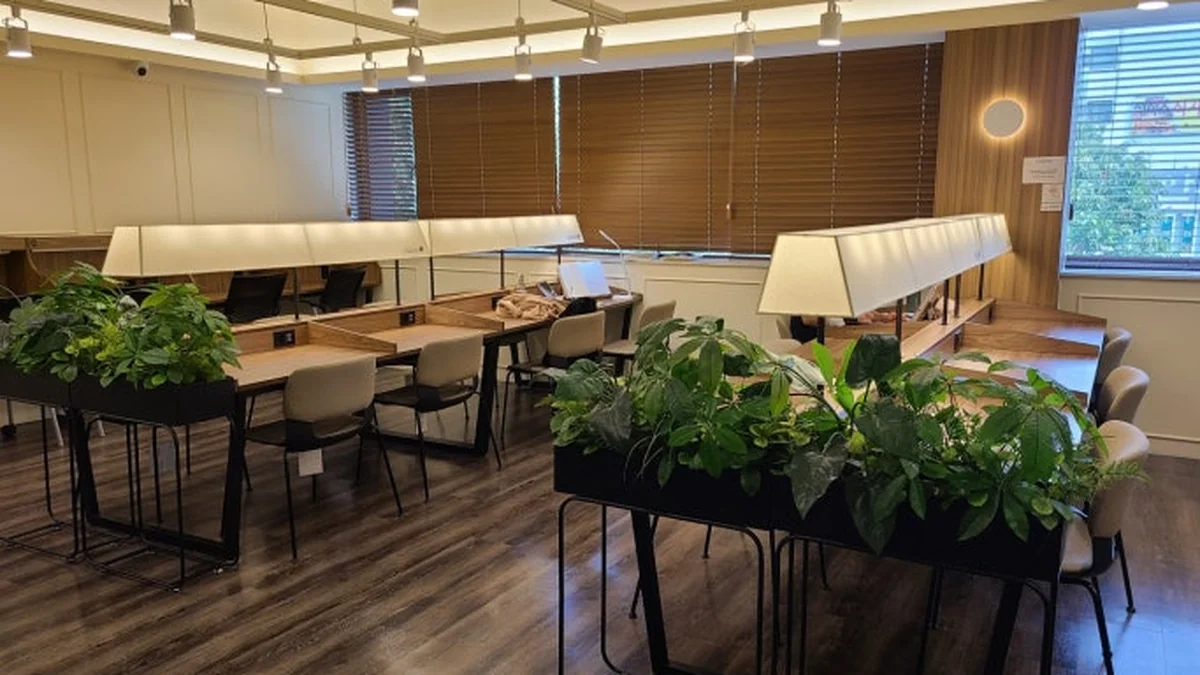
Study cafes are usually divided into different sections, such as study spaces, laptop areas, or group study zones. This means you can choose the space that suits your needs. Some spots are completely individual, fully enclosed like a small private booth. Others are open-plan desks arranged side by side in long rows. Group rooms are available for teams who need to work together but still want to stay in a productive environment.
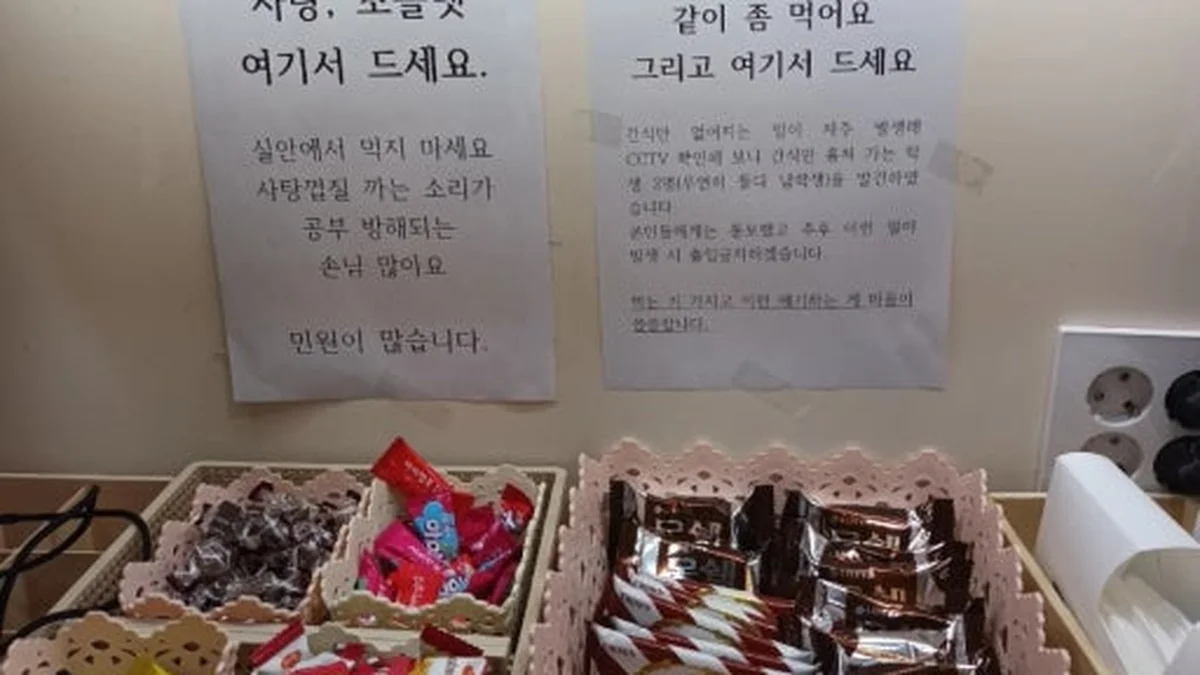
Food and conversations are not allowed in the study area, so there is little worry about being disturbed. That rule might sound strict at first, but once you sit down and feel the focused atmosphere settle around you, it starts to make a lot of sense.
How It Actually Works
Walking into a study cafe for the first time can feel a little unfamiliar, but the system is straightforward once you understand it.
You check in at a kiosk near the entrance, select your seat type and how long you plan to stay, and pay for your time. Most study cafes use a digital check-in system, and your desk assignment is displayed on a screen. You take your seat, set your things down, and that space is yours for as long as you paid for.
Space is available at around 3,000 won — about $2 — for a two-hour visit and 7,000 won for six hours. You can also save unused time and use it later. A day pass costs 10,000 won, and a monthly pass is available for 100,000 won.
For regular visitors, a monthly pass makes particularly good sense. Pass holders can leave their stuff on their desks, monitored 24 hours under cameras. That means you can essentially have a personal study spot that’s always waiting for you — which, for anyone grinding through an exam season or a demanding academic semester, is genuinely valuable.
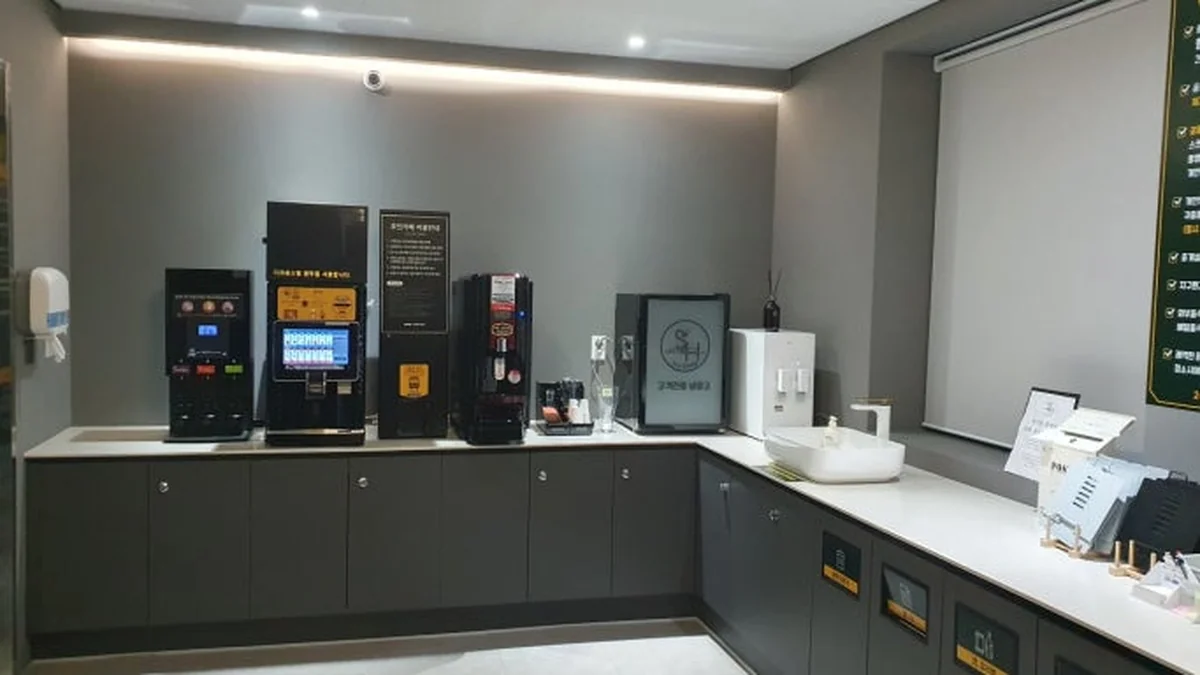
Most study cafes also include a small break room or lounge area. Bomnal, a popular study cafe in Seoul, had a break room equipped with a coffee machine and some snacks. Students can refresh their brain with a cup of tea and regain energy before going back to their desks. That rhythm — focused work, short break, back to the desk — turns out to be remarkably effective.
The Environment: Why It Works So Well
There’s a reason people keep coming back, and it isn’t just the affordable pricing.
One of the key distinctions between a library and a study cafe is the level of openness. In a study cafe, you are free to enjoy a drink, work on your laptop, or have quiet conversations in specifically designated areas. Libraries can feel rigid. Regular cafes can feel chaotic. A study cafe sits comfortably in between — structured enough to keep you focused, relaxed enough that you don’t feel like you’re in an exam hall.
The physical design matters too. These cafes are designed with the needs of students in mind — offering ample charging stations, free Wi-Fi, and even soundproof rooms for those who crave silence. Every detail is arranged to remove friction. Your phone is charging, your internet is fast, and the only thing left to do is open your books.
One international student who visited a study cafe called Gongbon described her first experience like this: she was particularly impressed by the streamlined check-in process and the availability of spacious, distraction-free desks. Noting the conducive atmosphere for concentration, she found herself more productive compared to studying at home.
That last part — more productive than at home — is something you’ll hear again and again from people who use study cafes regularly. And it turns out, there’s real psychology behind it.
The Psychology of Paying to Study
Here’s a question worth asking: why pay to sit at a desk when you could just study at home for free?
It’s a fair challenge, and Koreans hear it from foreigners all the time. But the answer reveals something interesting about how motivation actually works.
When you pay for a seat, you create a small but meaningful commitment. You’ve spent money to be here. Leaving early feels like a waste. Scrolling through your phone feels harder to justify. The act of paying primes your brain for focus in a way that your kitchen table simply doesn’t.
There’s also the effect of the environment itself. The modern Korean consumer chooses a cafe that offers a temporary escape from the pressures of a hyper-competitive society. Studying alone in an apartment can feel isolating and unmotivating. Sitting in a room full of other people who are all clearly working hard creates an invisible but powerful social pressure — the good kind, the kind that pushes you to keep going.
Korean students even have a name for videos that tap into this feeling: 같이 공부해 (gachi gongbuhae), which roughly means “let’s study together.” These are livestreams and recordings of people sitting at their desks and studying in silence, watched by thousands of viewers who want to feel like they’re not studying alone. Study cafes are the real-world version of that feeling.
Who Goes to Study Cafes?
The short answer: almost everyone.
Study cafes are scattered around cities, often concentrating in areas with dense student populations, such as around high schools or universities. Interestingly, study cafes are not exclusive to students; even working professionals frequent these spots when seeking a focused work environment.
High school students show up during exam season, cramming for the 수능 (suneung) — Korea’s notoriously high-stakes college entrance exam. University students come for term papers, group projects, and online lectures. Young professionals use study cafes for language certifications, side projects, or simply to escape a noisy apartment.
Remote workers who need somewhere quiet to focus have also become a growing segment of study cafe visitors. With Korean apartments often small and home environments not always ideal for deep work, the study cafe functions as an affordable, reliable third space.
The “cagong” culture refers to students and workers who stay in cafes for long periods. While they provide a reliable baseline of occupancy, they can plateau sales if table turnover is too slow. Many cafes now strategically install dividers and power strips to embrace this demographic for sustainability.
Study Cafe vs. Regular Cafe: A Real Difference
It’s worth pausing to distinguish study cafes from the broader cafe-studying culture that Korea is also famous for.
Plenty of Koreans study at regular cafes — and the country’s dense cafe scene makes that very practical. Regular cafes serve a social function. They’re warm, beautiful, and full of energy.
But when you genuinely need to get something done — when there’s a deadline, an exam, a presentation — a regular cafe often isn’t enough. The music is too loud, the ambient noise too unpredictable, and the guilt of sitting at a table for three hours over a single americano starts to creep in.
That’s where study cafes earn their place. They’re not designed for lingering or socializing. They’re designed for output. And in a society as academically and professionally competitive as Korea, that distinction matters enormously.
The Aesthetic Side: Not Just a Desk in a Box
One thing that catches first-time visitors off guard is how thoughtfully designed most study cafes are.
Korea’s broader cafe culture places enormous value on aesthetics, and study cafes have absorbed that DNA. Many are genuinely beautiful spaces — warm lighting, clean minimalist interiors, real plants placed between partitions, murals on the walls, carefully chosen background color palettes.
Bomnal, which means “spring” in Korean, is decorated like a park, with real plants, fake trees, and an air purifier. The refreshing environment helps focus. That kind of intentional design is common across the category. Walking into a well-designed study cafe doesn’t feel like entering an office or a library — it feels like entering a space that was built to make you feel calm and capable.
Some study cafes lean fully into their aesthetic concepts. Forest themes, minimalist Nordic designs, cozy warm-toned spaces — there’s a variety that reflects the same spirit of differentiation driving Korea’s broader cafe scene. The study might be serious, but the space doesn’t have to feel punishing.
A Reflection of Korean Study Culture
To understand the study cafe, you have to understand something about Korean society more broadly.
Korea is a country where education is taken seriously — sometimes with an intensity that surprises people from outside. The 수능 (suneung), Korea’s national college entrance exam, is a single-day test that can define years of a student’s future. Preparation for it can consume years of a student’s life. Afterschool academies, known as 학원 (hagwon), are packed until late at night. Libraries are full on weekends.
In that context, the study cafe isn’t a quirky trend. It’s a logical response to a genuine need. Students need focused environments outside of school and home. Libraries have closing times and strict rules. Regular cafes are social spaces. The study cafe fills a gap that most other countries haven’t even identified yet.
The study cafe phenomenon has become a multi-million dollar industry, with chains expanding across cities and new concepts continuing to emerge. It’s a market that grew because the need was real — and it shows no signs of slowing down.
Tips for First-Timers
If you’re visiting Korea and want to try a study cafe — whether for actual studying, remote work, or just the experience — here are a few things worth knowing before you walk in.
Most check-in systems are in Korean, so it helps to have a translation app ready, though the interface is usually simple enough to navigate with a bit of patience. Bring your own headphones if you have noise preferences — some people prefer silence, others work better with light background music through earbuds. Chargers and power strips are almost always provided, but bringing your own cables is always a safe move.
Respect the quiet. Even in designated laptop zones, keeping noise to a minimum is expected and appreciated. The whole premise of the space rests on everyone contributing to the same focused atmosphere. And if you step out to the break room for a coffee, it’s perfectly fine — that’s what it’s there for.
Finally, don’t be surprised if you end up staying longer than planned. There’s something about the atmosphere — the quiet, the shared purpose, the steady hum of focused people — that tends to keep you there.
Final Thoughts
The study cafe is one of those Korean inventions that seems almost obvious in hindsight — and yet no other country has quite replicated it at scale.
It solves a real problem. It respects the time and energy of the people who use it. It’s affordable, well-designed, and built around a clear understanding of what people actually need when they sit down to do serious work.
Whether you’re a student, a professional, or a traveler with a few hours to spare and a project to finish, stepping into a Korean study cafe is a genuinely worthwhile experience. It might just change how you think about what a productive environment can look like.
Have you ever visited a study cafe in Korea? Did it live up to the hype — or exceed it? Leave your thoughts in the comments. We’d love to hear what your experience was like.