Korea in Summer: The Flower Season Nobody Talks About (But Absolutely Should)
Everyone who has been to Korea in spring will tell you about the cherry blossoms. They’ll show you their photos. They’ll describe the petals on the pavement and the pink tunnels and the way an entire country seemed to hold its breath for one glorious week.
What fewer people tell you is what comes after.
Korea’s summer flower season doesn’t have the same international profile as spring. It doesn’t generate the same volume of travel content or fill hotel booking platforms the same way. Cherry blossoms have been photographed millions of times and marketed to the world with the full force of Korean tourism’s considerable promotional machinery.
Summer flowers work differently. They are slower. Quieter in the way things are when the heat makes you stop and actually look. A single lotus floating in a dark pond at 7 in the morning. A hillside of sunflowers tilting toward the same sky. The particular color of lavender in late afternoon light when the air smells like something you can’t quite name.
Korea in summer is not the same country as Korea in spring. It is hotter, more humid, occasionally punctuated by monsoon rain that turns streets into rivers. It is also, if you know where to go, extraordinarily beautiful in a way that requires a little more effort to find and rewards that effort completely.
This is the guide to finding it.
May into June — Purple Before the Heat Arrives
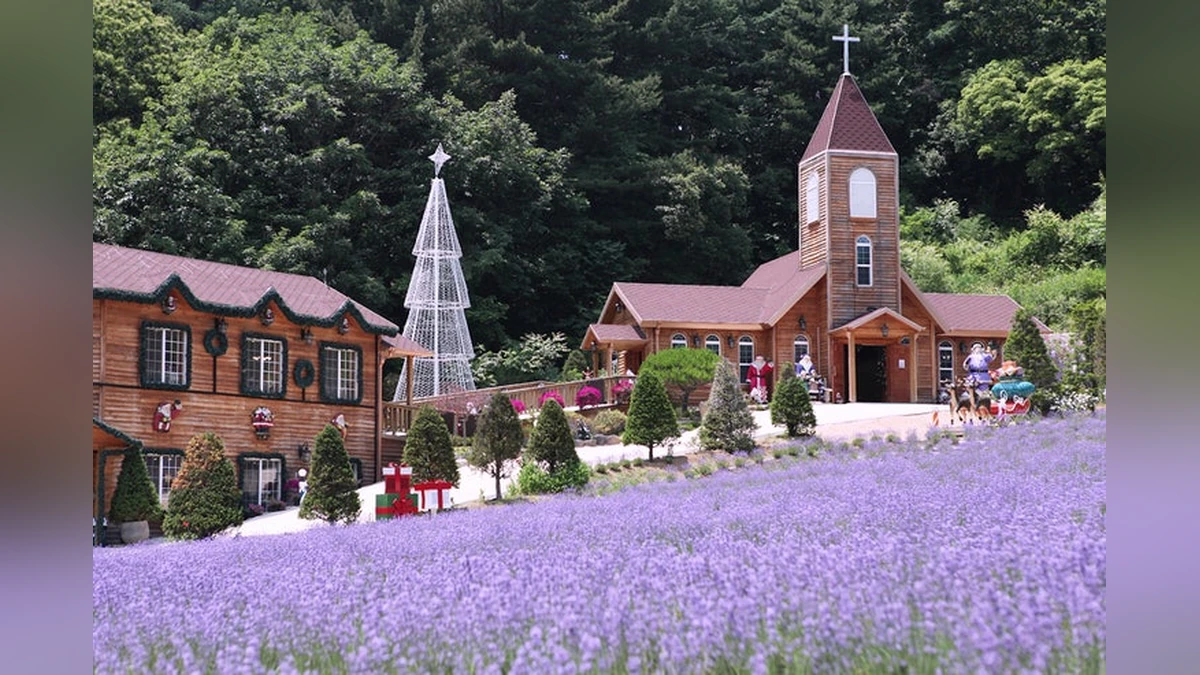
Lavender opens the Korean summer — technically arriving in late spring but belonging fully to the mood of early summer, before the humidity really settles.
Korea does not grow lavender naturally. It is a Mediterranean plant that arrived here through deliberate cultivation on specialized farms, and what it produced was something unexpected: fields that feel almost implausibly European transplanted into Korean countryside, surrounded by hills and traditional architecture and the specific quality of provincial Korean light that makes every landscape photograph look slightly too good to be real.
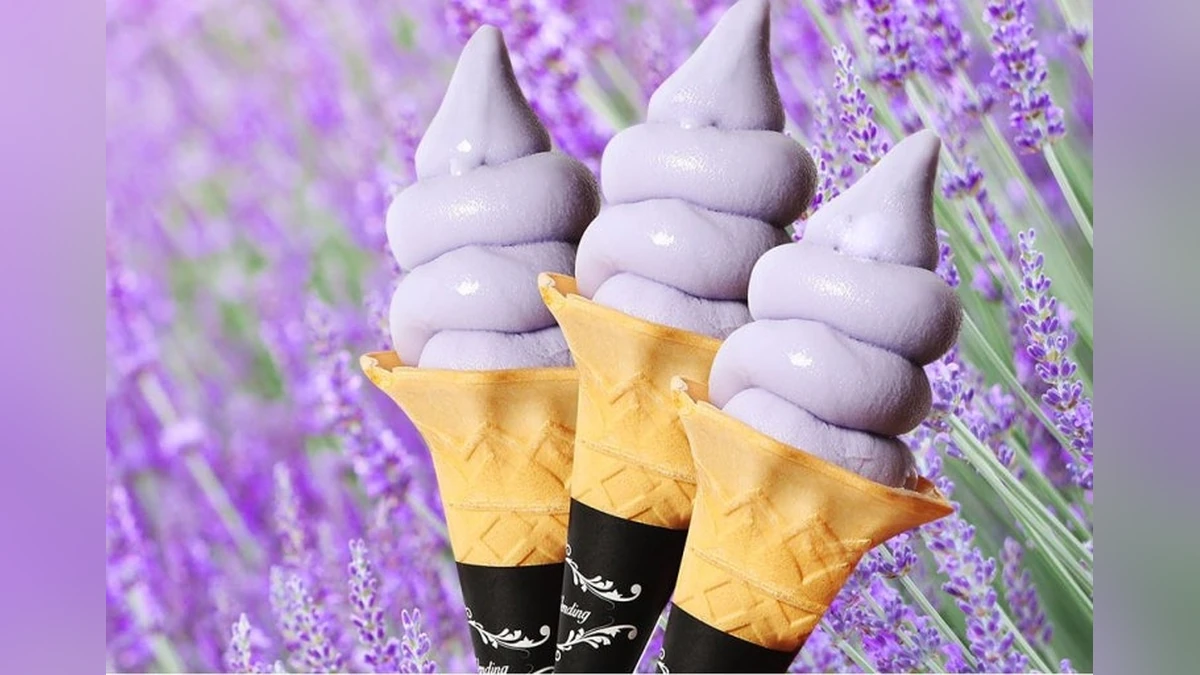
Herb Island in Pocheon, Gyeonggi-do — about 90 minutes from Seoul — is Korea’s most accessible lavender destination and hosts its Lavender and Daisy Festival from May through June. Over 200 varieties of herbs fill the garden, but it is the lavender that people come for: rolling sections of deep purple stretching to the treeline, the scent hitting you before you’ve fully entered the garden, the specific photograph that every visitor takes (cup of lavender latte, field behind, afternoon sun) that looks like it was staged and somehow always turns out genuinely lovely.
The workshops here are worth knowing about. You can press lavender into terracotta pots to take home, harvest stems to make tea, or attend candle and soap-making sessions that use the actual flowers from the field. These experiential programs run throughout the festival period and require no reservation for most activities — but the soap workshop fills up quickly on weekends.
For the more ambitious lavender experience, Herb One in Jeongeup, North Jeolla Province, operates at a completely different scale. Nearly 100,000 pyeong of farmland, with lavender planted across 30,000 pyeong of it — figures that don’t mean much until you’re standing at the edge of the fields in early June and understanding that the horizon in that direction is entirely purple. It is one of the most visually complete lavender experiences in Asia, comparable to Hokkaido’s famous fields in Furano without the international price tag attached. Roughly three hours from Seoul by bus; the journey is long enough that combining it with Jeonju or Gochang into a two-day trip makes practical sense.
Gochang Blue Farm in Jeollabuk-do offers a third option — lavender fields alongside traditional Korean architecture, where the specific combination of purple fields and tiled roofs and stone walls produces something that feels distinctly Korean rather than transplanted European. Peak bloom: late May to late June.
June — Hydrangeas Arrive and Change the Color Palette Entirely
If spring belongs to pink, Korean summer belongs to blue.
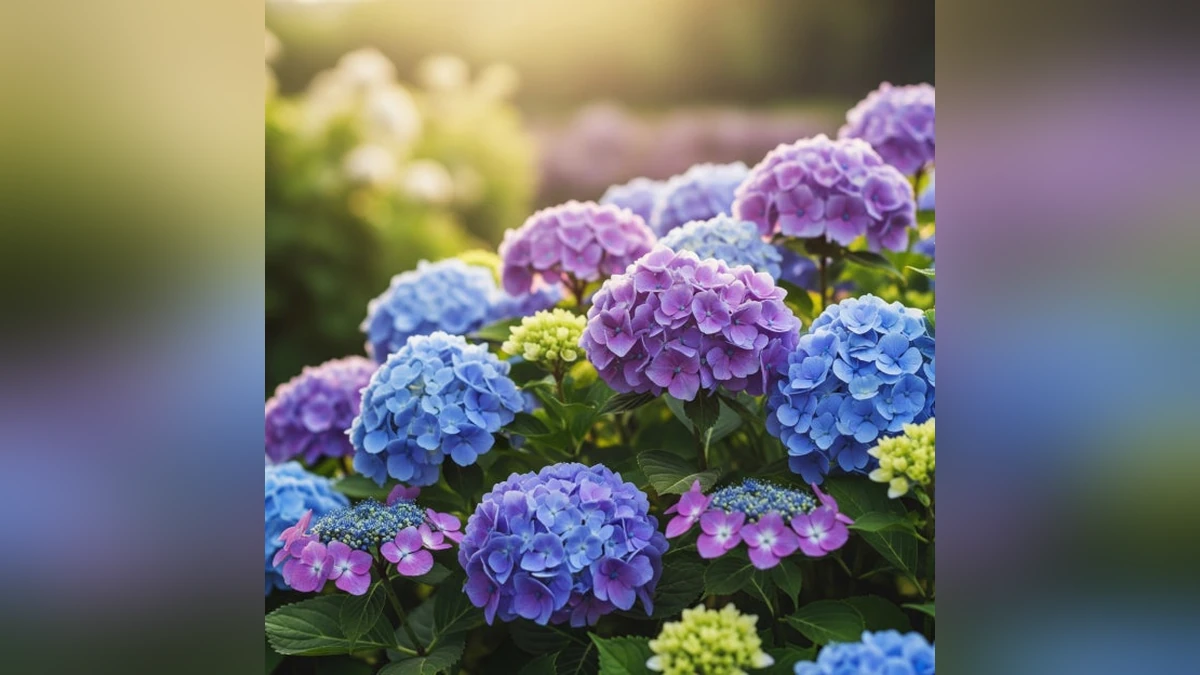
Hydrangeas (수국, suguek) bloom in June with the full range of the flower’s characteristic color shifting — from ice-blue to soft purple to pink to white, the variation determined by soil acidity rather than the variety planted, which gives Korean hydrangea gardens their remarkable range within a single space.
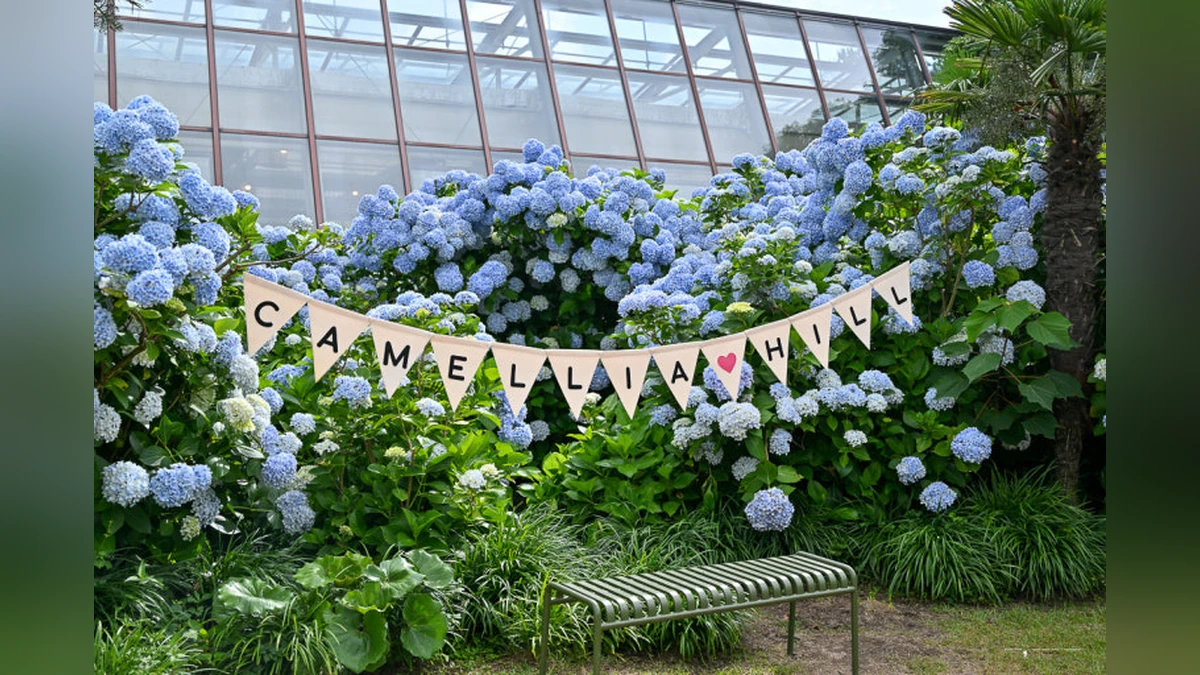
Camellia Hill on Jeju Island transforms completely between seasons. The garden that draws visitors in winter for its red camellia display becomes something entirely different from late spring through July: hydrangea paths winding through the trees, glass greenhouse sections that extend the blooming season earlier than the outdoor plants, a visual softness that contrasts with the hard volcanic geometry of the surrounding landscape. Hydrangea festival period: April through July.
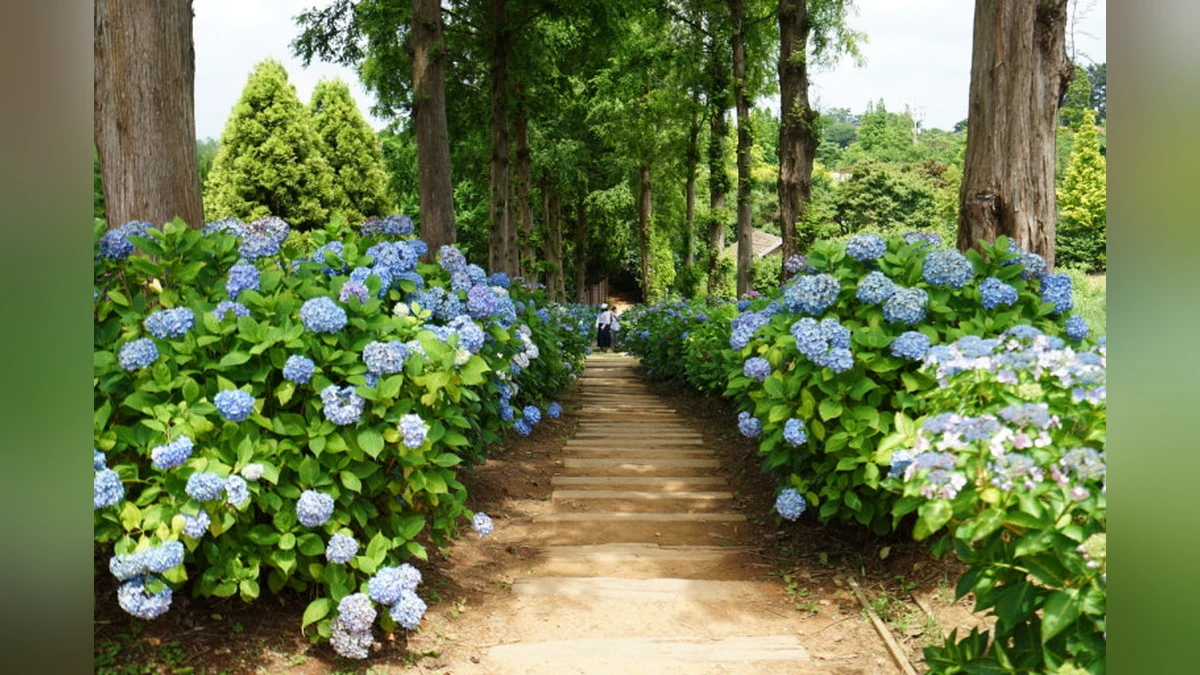
Farm Kamille in Taean, South Chungcheong Province, hosts its Hydrangea Festival from mid-June to late July in a European-style garden setting that pairs hydrangeas with metasequoia tree paths — tall, evenly spaced conifers whose straight lines frame the soft cloud-like flowers in a way that photographs as deliberately composed as anything in formal garden design. The Korea Tourism Organization has designated Farm Kamille as a wellness tourism destination, which means the experience is designed to be slow: herb foot baths, herbal teas, the unhurried atmosphere of a garden that expects you to stay rather than pass through.
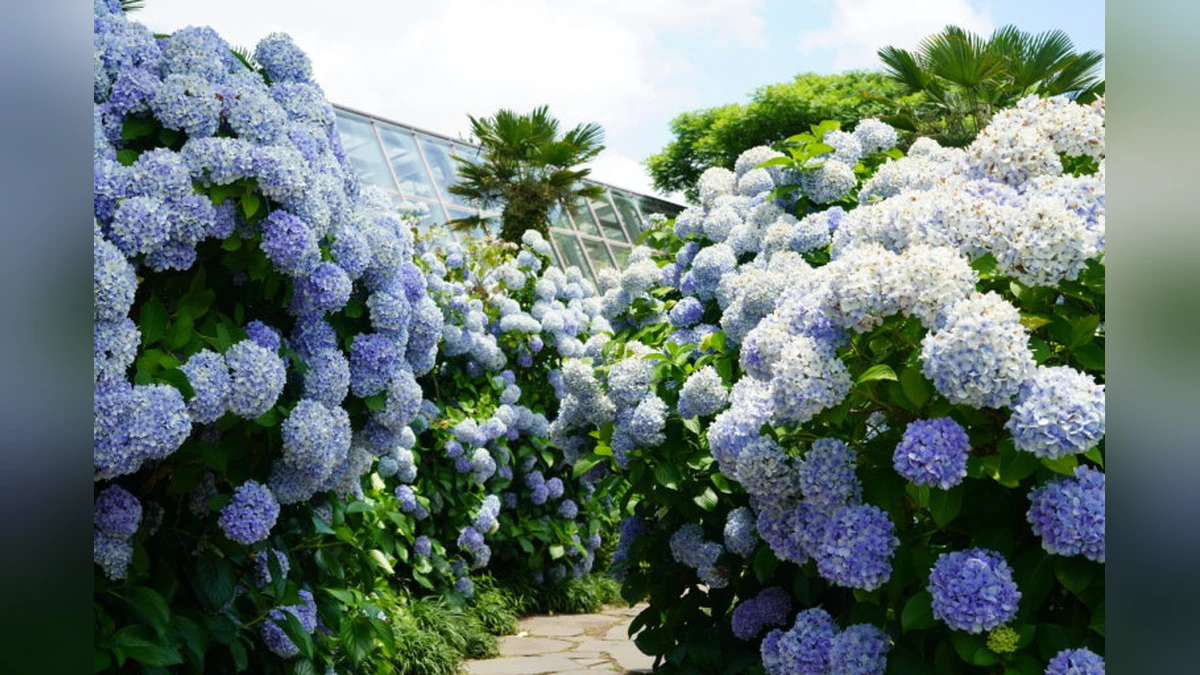
In the parks and roadsides of Seoul and other Korean cities, hydrangeas line walking paths through July with a casualness that makes them easy to overlook — until you stop and notice that the entire border of a park has turned blue overnight. Seoul’s Hangang Parks host hydrangea plantings along several riverside stretches, and neighborhoods like Seongsu and Hannam have small hydrangea gardens that become popular photography spots in June without the organized festival structure of the larger destinations.
June to July — The Trumpet Creepers (A Flower You Didn’t Plan to See)
There is a moment in Korea’s summer gardens where you round a corner and encounter something you didn’t expect at all.
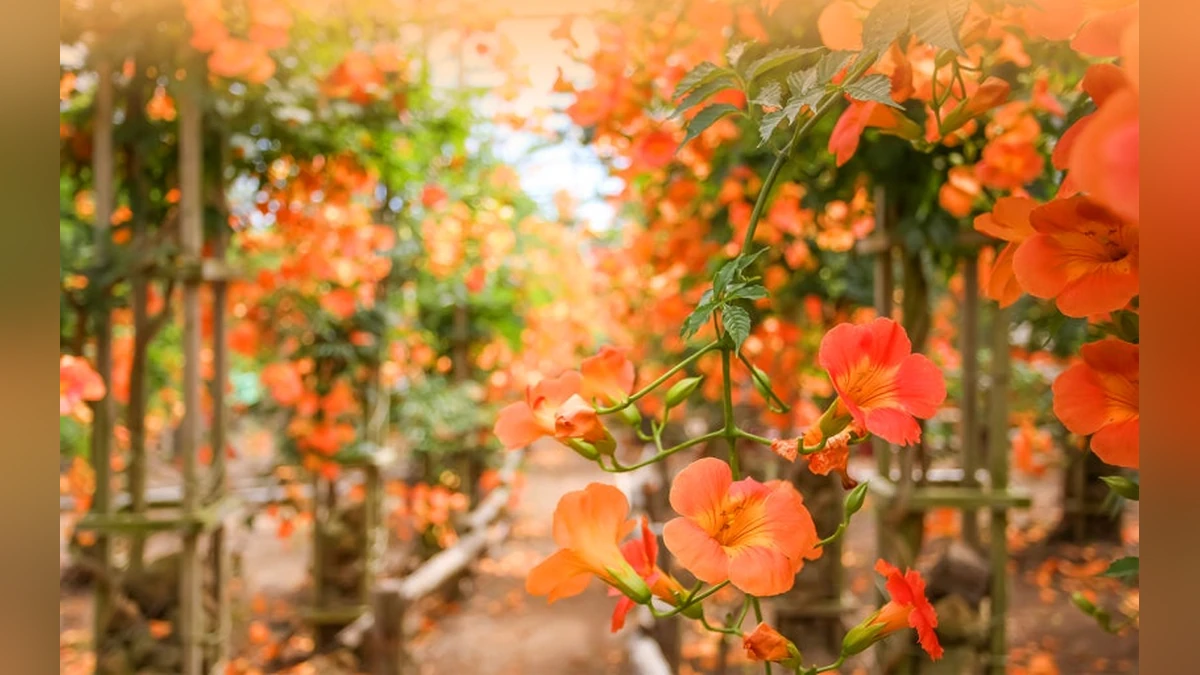
The trumpet creeper (능소화, neungso-hwa) is a climbing woody vine that produces brilliant vermillion blooms — vivid orange-red, trumpet-shaped, hanging in clusters from whatever surface the vine has reached. In Korea it grows over walls, pergolas, and arbors throughout June and July, and the visual of a structure completely draped in cascading orange blossoms against a summer sky is striking in a way that photographs have not adequately prepared you for.
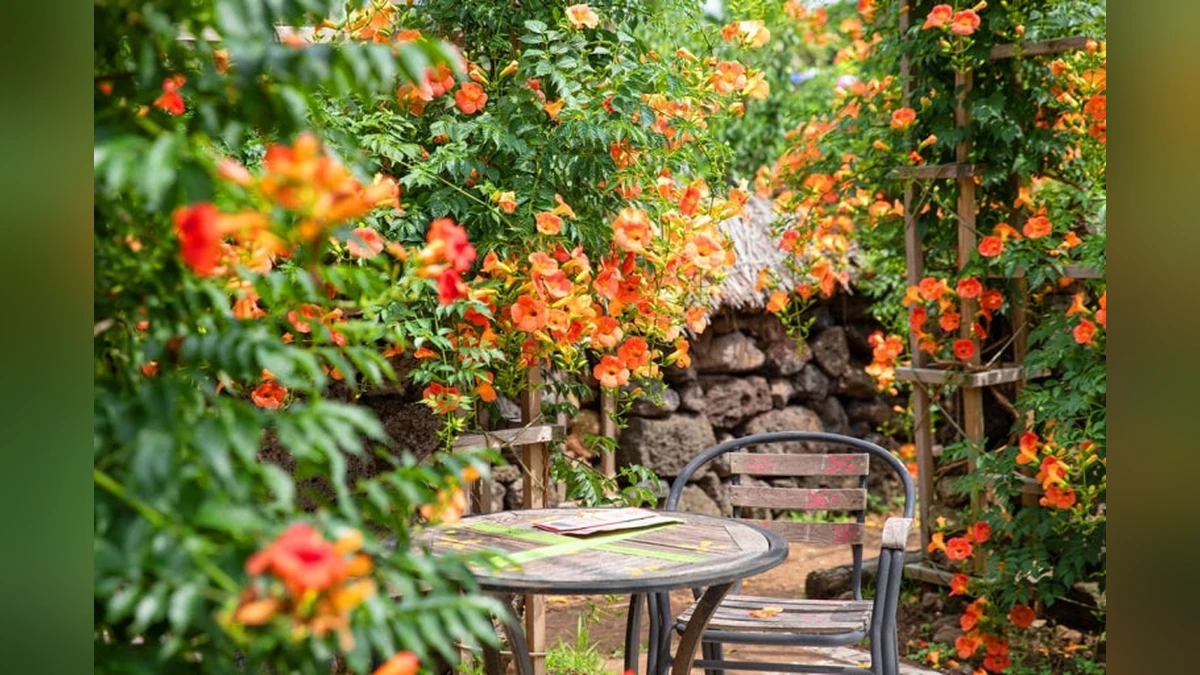
Vicheollin in Jeju hosts what is billed as Korea’s largest trumpet creeper festival from mid-May to mid-July, with flower tunnels draped entirely in the orange blooms that visitors walk through at close range — the color overhead, the light filtered orange, the fragrance specific enough to remember. The site also includes hydrangea paths, a Shasta daisy garden, and a verbena garden, making it a legitimate half-day destination rather than a single-attraction stop.
For Seoul visitors, the trumpet creeper wall at Ttukseom along the Han River is accessible without any festival or entrance fee — simply a stretch of vine-covered wall that erupts in orange each June, reachable by cycling along the Han River path or by renting Seoul’s public bike Ddareungi from Jayang or Seongsu stations. It is one of those things that appears in Seoul Instagram content every year without quite becoming famous enough to be considered a tourist destination, which means visiting it remains comfortable and unhurried.
July — The Lotus
If you have never seen a lotus field at full bloom in high summer, this is the season to understand why this flower has occupied the imagination of every East Asian civilization for thousands of years.
The lotus does not merely grow in water. It rises above it. The flowers sit on their tall stems above the broad flat leaves, white or pink or deep rose depending on the variety, impossibly composed in their setting — a flower that looks as though it was designed rather than evolved, as though someone made a deliberate decision that what the world needed was something that combined perfect geometric form with the most impractical possible growing conditions.
In Korea, the lotus carries specifically Buddhist associations that have shaped its presence in the landscape for over a millennium. You find them in the ponds of temples, in the old royal gardens, in agricultural wetlands that have been cultivated for centuries alongside rice. The flower’s ability to emerge clean and untouched from muddy water became a defining metaphor for Buddhist teachings on transcendence.
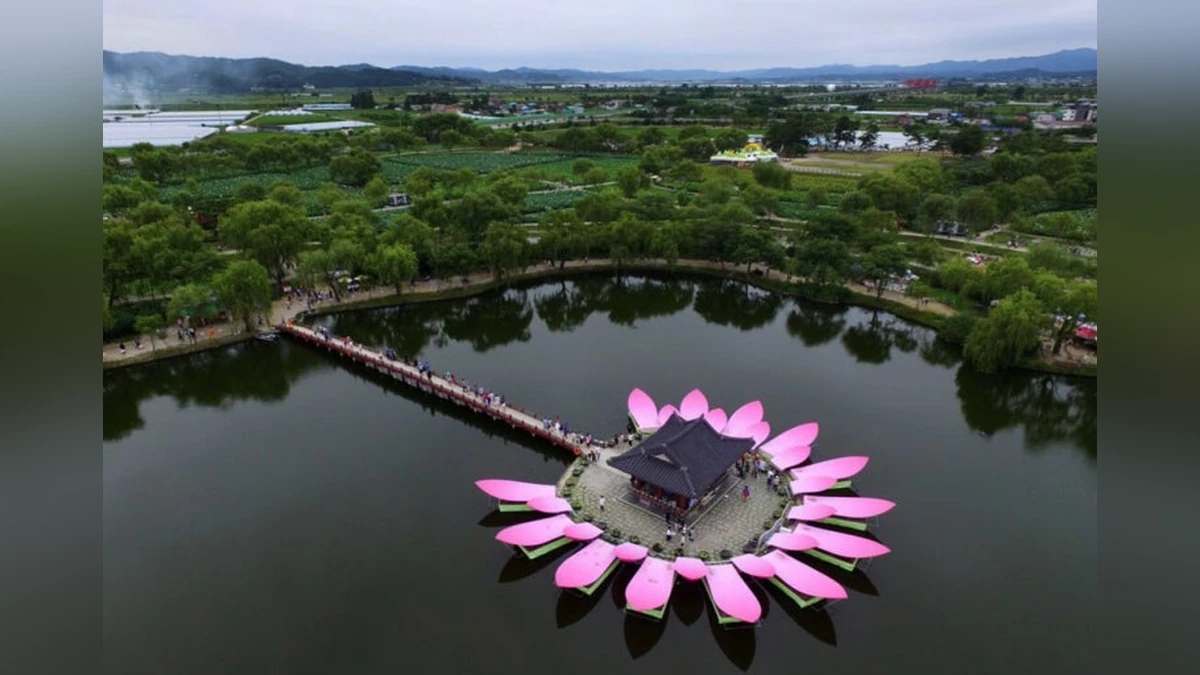
Buyeo’s Gungnamji Pond is where Korea’s lotus season has its cultural heart. The pond dates to the ancient Baekje Kingdom — Korea’s first artificial royal garden pond, believed to have been built around the 7th century. During the Buyeo Seodong Lotus Festival (2026: July 4–6), the 380,000-square-meter pond fills with fifty varieties of lotus in bloom, the wooden bridges and traditional pavilion creating a composition that has appeared in Korean art for a very long time and earns that visual heritage. The festival includes night canoe rides through the illuminated flowers — paddling through a dark pond surrounded by lit-up lotus blossoms while listening to the sounds of summer — which is the kind of experience that is difficult to describe accurately without sounding like you’re exaggerating.
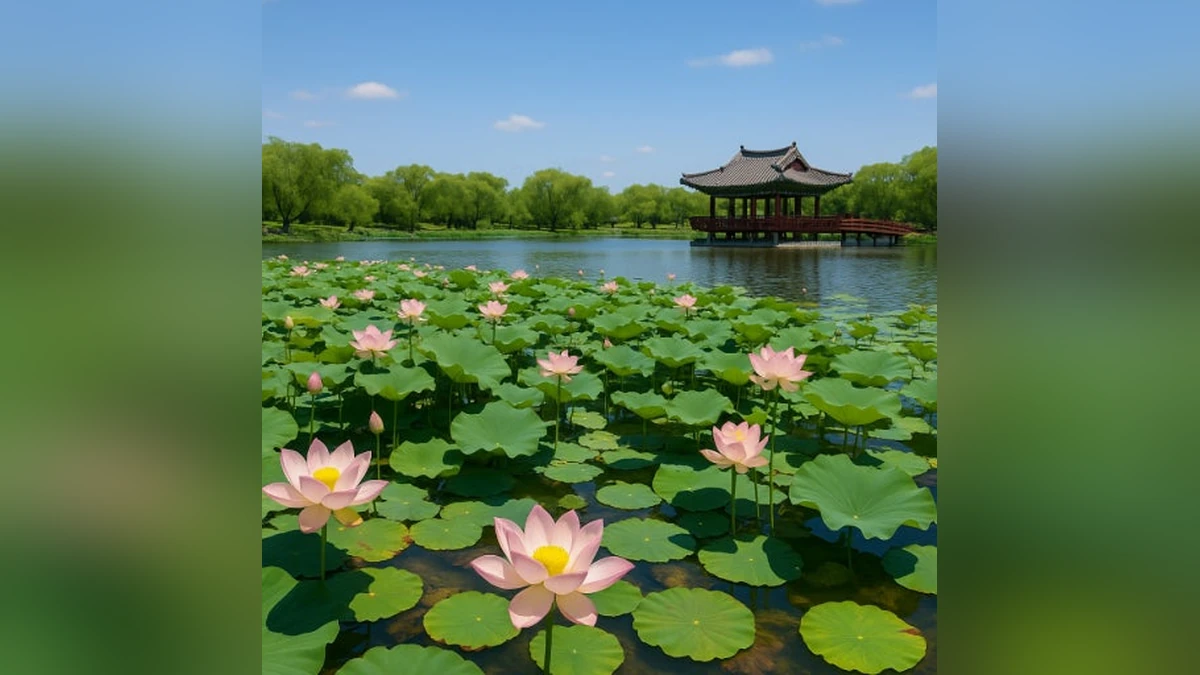
Muan White Lotus Festival in South Jeolla Province centers on a different lotus entirely: the white lotus, grown across 330,000 square meters of farmland in a display that is, by sheer scale, one of the most visually overwhelming summer flower experiences in Korea. The Muan area has cultivated white lotus for its culinary uses — lotus root dishes, lotus leaf rice, lotus tea — for centuries, and the festival combines the flower viewing with a comprehensive engagement with that food culture. The lotus root and flower products available here are worth bringing back.
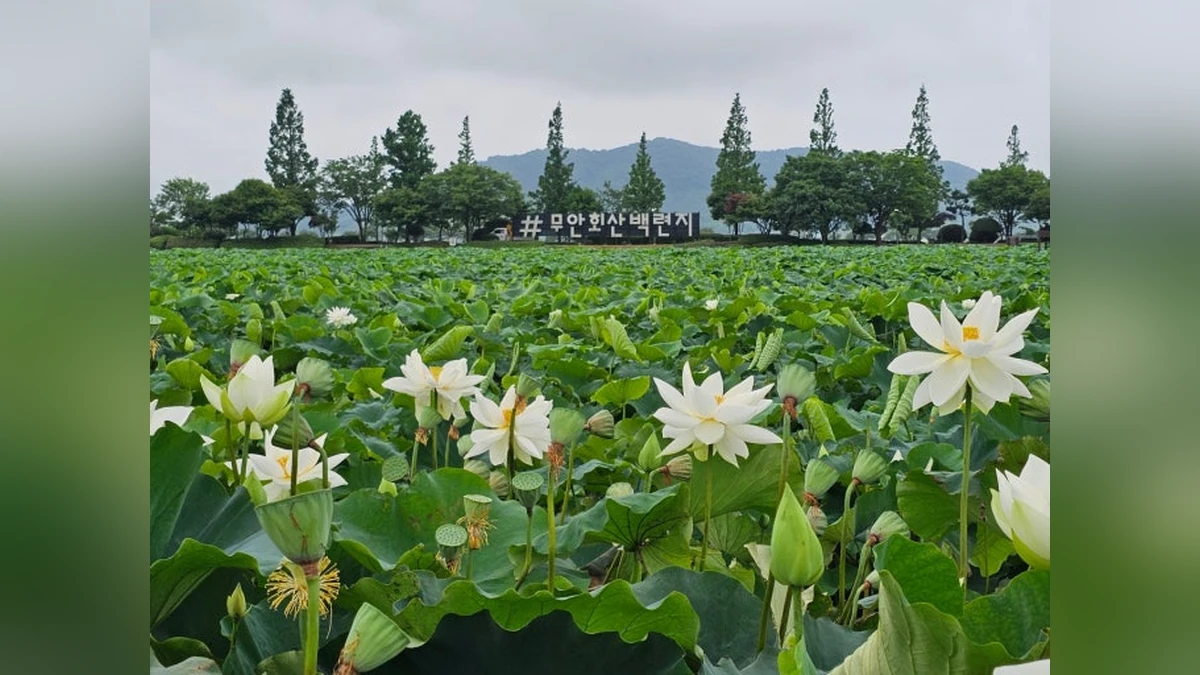
A practical note about lotus viewing: the flowers open fully in morning and begin to close by early afternoon. Visit before 10am for the best visual experience. This is not a recommendation — it is the difference between seeing the flowers at their most spectacular and arriving to find them halfway closed.
Yangpyeong Lotus Festival in Gyeonggi-do brings the experience within day-trip range of Seoul — about 90 minutes by public transit, with a lotus garden large enough to warrant a few hours of slow walking. The Yangpyeong setting, along the North Han River valley, adds the particular combination of water, mountains, and summer humidity that makes lotus viewing feel properly Korean rather than generically botanical.
July to August — Sunflowers in the Mountains
해바라기. Haebaragi. The Korean name for sunflowers means literally “gazing at the sun” — an accurate description of the flower’s heliotropism and also, when you encounter a large sunflower field in Korean summer, a reasonable description of what you find yourself doing too.
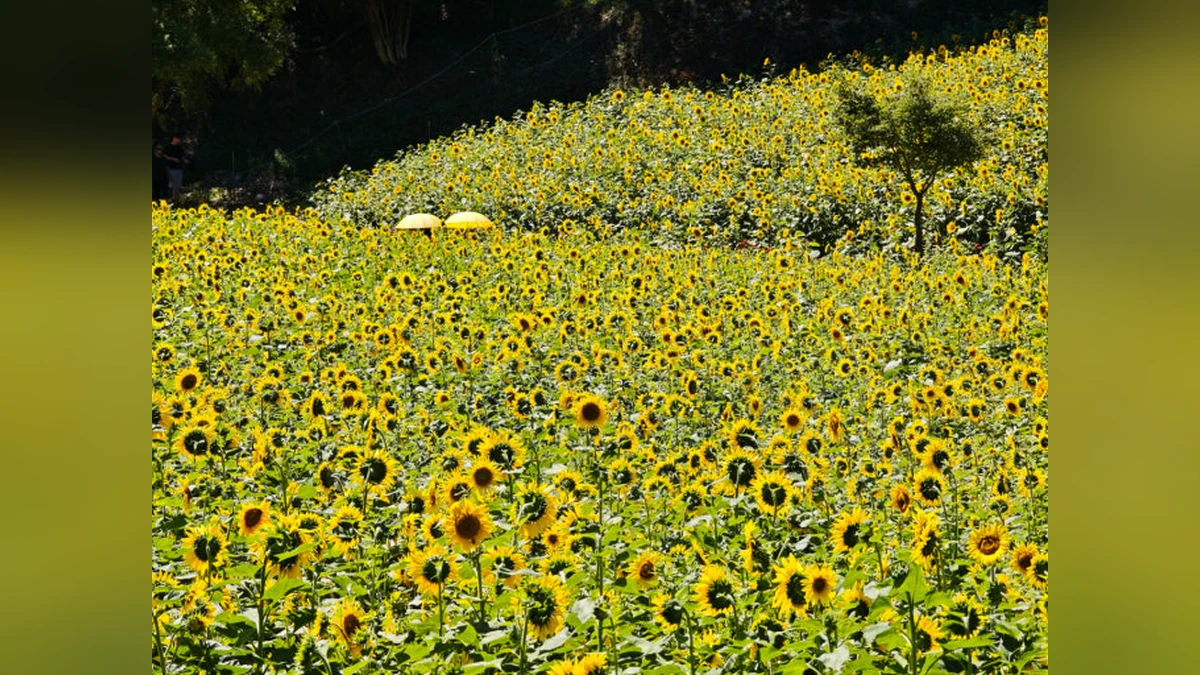
Taebaek Sunflower Festival in Gangwon-do Province is the one that earned the national reputation. The city of Taebaek sits at over 700 meters elevation — one of the highest cities in Korea — and the cooler mountain air that results means sunflowers here bloom later than at lower altitudes, arriving in July through August when much of the country is in the deepest heat of summer. The festival site at Gunaenmi Village covers the largest sunflower field in Korea, with walking trails through the yellow rows and over 300 species of wildflowers growing alongside the sunflowers. The elevation makes this a genuine escape from Seoul’s summer temperatures — arriving from the capital and stepping into Taebaek’s mountain air is a physical relief that enhances everything that follows.
Gyeongju’s sunflower fields are a different experience — sunflower cultivation scattered across the region’s characteristic landscape of ancient burial mounds, traditional villages, and mountain ridges, where the yellow flowers against the specific topography of Korea’s ancient capital creates a combination unlike anything the flower produces in a flat field.
For Seoul residents, Seoraeseom island in the Han River transitions from canola yellow to sunflower yellow as summer deepens, offering the flower within cycling or walking distance of the city center on a car-free island that gives the experience a particular urban-pastoral quality.
A Summer Strategy
Summer in Korea requires a different approach from spring.
The heat is genuine. July and August bring temperatures and humidity combinations that make extended outdoor activity demanding in a way that late March never does. The monsoon season (장마, jangma) typically runs through much of July, bringing heavy rain that can close outdoor festivals or make flower fields significantly less appealing to walk through. Planning around this is not pessimism — it is the practical reality of experiencing Korea in its warmest months.
The most reliable approach: visit flower destinations early in the morning, when temperatures are manageable, light is optimal for photography, and crowds are thinner. For most summer flower experiences, 7 to 10am represents the window where everything is working in your favor simultaneously.
Several of Korea’s summer flower destinations are not in Seoul. Getting to Buyeo, Muan, Taebaek, and Jeongeup requires transportation planning — buses and occasionally local trains, with journey times of two to three hours from the capital. The Korea Tourism Organization’s Visit Korea shuttle buses connect major cities to remote festival sites during peak festival periods, which simplifies access considerably for travelers without cars. Checking the shuttle schedule before confirming your festival dates is worth doing.
The reward for the extra effort is access to a summer Korea that most visitors never find — not the hot, tourist-season version of the country, but the version that exists in the space between downpours, in a lotus field before the day starts, in the mountain air above Taebaek where the sunflowers face a sky that is, at that altitude and that hour, the specific blue that summer only achieves in the mountains.
Next in this series: Korea in Autumn — Cosmos Fields, Buckwheat Blossoms, and the Pink Muhly Season
Which summer flower destination would you visit first? Leave it in the comments — and if you’ve been during summer, tell us what surprised you most.