Korea in Spring: A Month-by-Month Guide to the Most Beautiful Flower Season in Asia
There is a moment every year, somewhere in the last week of March, when Korea exhales.
Winter packs up. The mountains that spent months in grey-brown silence suddenly remember they know how to be green. And then, beginning at the southern tip of the peninsula and moving northward over four quiet weeks, something extraordinary happens across the entire country at once — a slow, unstoppable wave of color that transforms cities, mountain paths, riverbanks, and small-town streets into one of the most visually spectacular natural events anywhere in Asia.
Korean spring is not one thing. It is a sequence — a relay race of flowers that hands the baton from one bloom to the next, from late March all the way through May. Miss the cherry blossoms by a few days? The azaleas are just waking up. Done with azaleas? The tulip fields are at peak. The canola fields are turning Jeju yellow. The wisteria is just beginning to fall.
You cannot run out of spring in Korea. You can only run out of time.
This guide follows the blooms in order — south to north, early to late — so you can plan around what’s happening when, whether you have three days or three weeks.
Late March — The South Wakes First
Korea’s cherry blossom season begins not in Seoul but on Jeju Island, where the warmer climate gives the south a two-to-three-week head start on the capital.
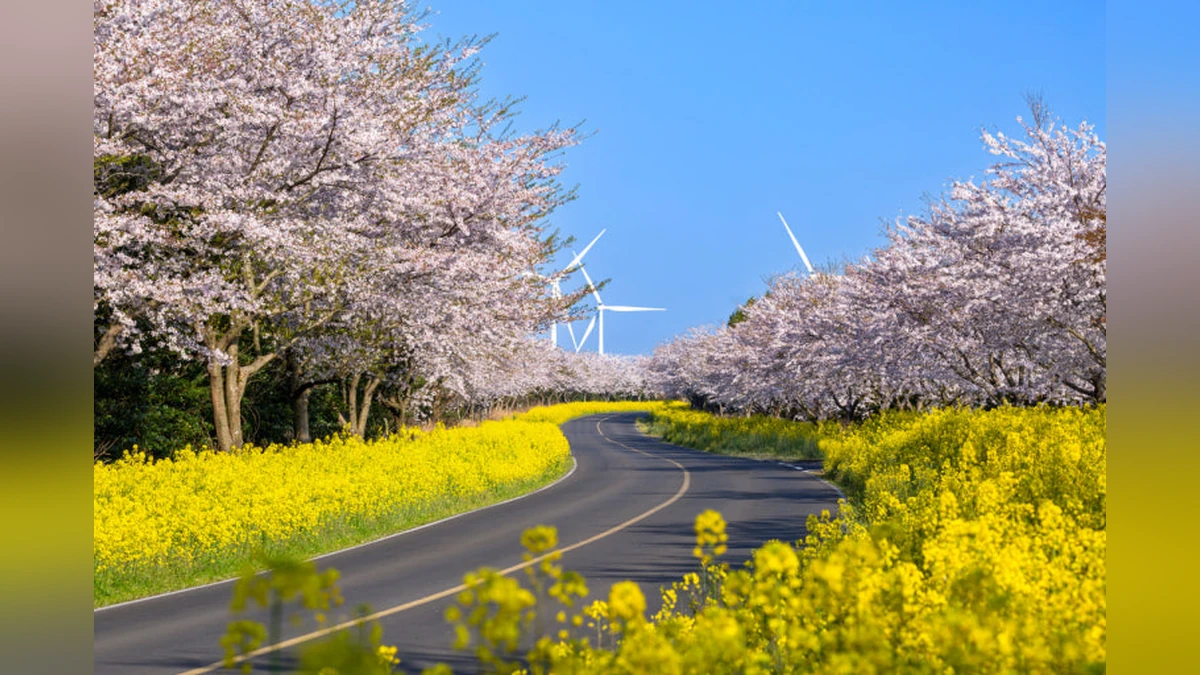
Jeju’s Double Bloom is the first great spectacle of the Korean spring — and it is genuinely unique. Nowhere else in Korea do cherry blossoms and canola flowers bloom at the same time, in the same place. The Noksan-ro Canola Flower Road, a ten-kilometer stretch designated one of the 100 Most Beautiful Roads in Korea, offers the specific visual of pale pink cherry blossoms against a carpet of brilliant yellow canola, with white wind turbines rising in the background. The combination is almost aggressively beautiful and has made Noksan-ro one of the most photographed roads in the country. Peak timing: late March to early April.
The cherry trees on Jeju are also distinct from those found further north. The native King Cherry — 왕벚나무 — blooms larger and richer pink than the Yoshino variety planted in most mainland cities. Jeju’s Jeonnong-ro street, lined with trees some over a century old, forms a cherry blossom tunnel that rivals Jinhae on pure spectacle and sees a fraction of the crowd. Peak bloom lasts three to five days. Plan accordingly.
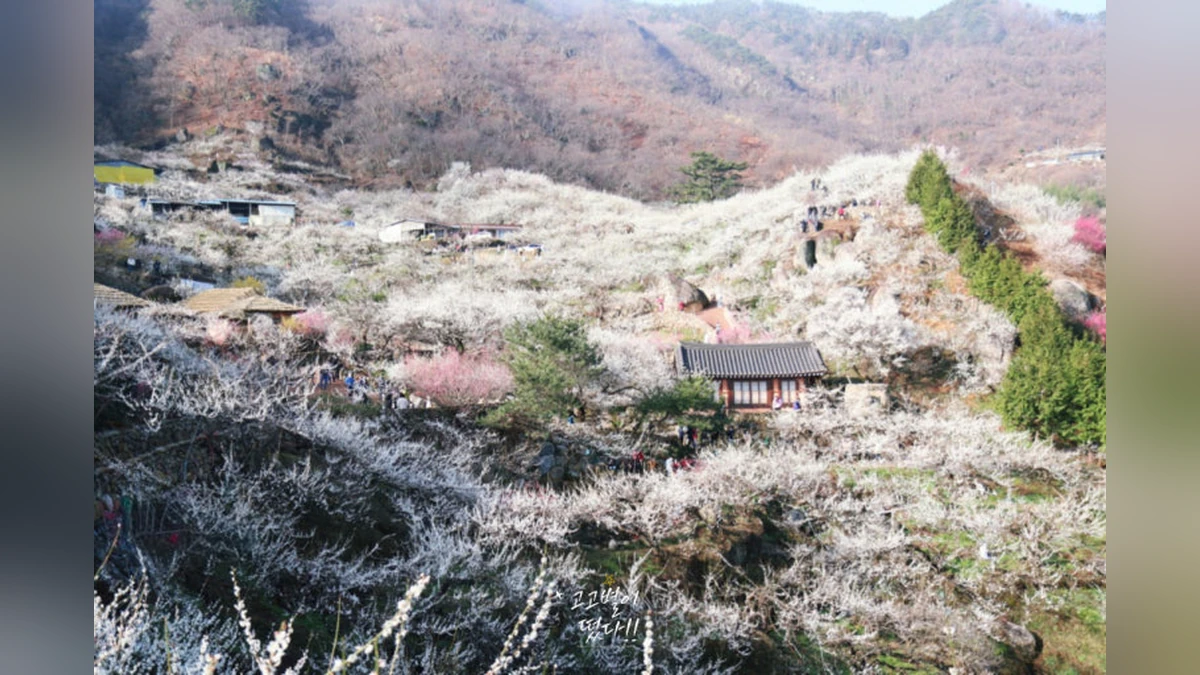
While still in the south, Gwangyang’s plum blossom festival typically runs slightly ahead of the cherry season — white and faintly pink plum flowers blooming across a valley in South Jeolla Province, quieter and less crowded than anything that follows.
Late March to Early April — Jinhae
If you visit Korea in spring once and want to see cherry blossoms the way Korea does them best, go to Jinhae.
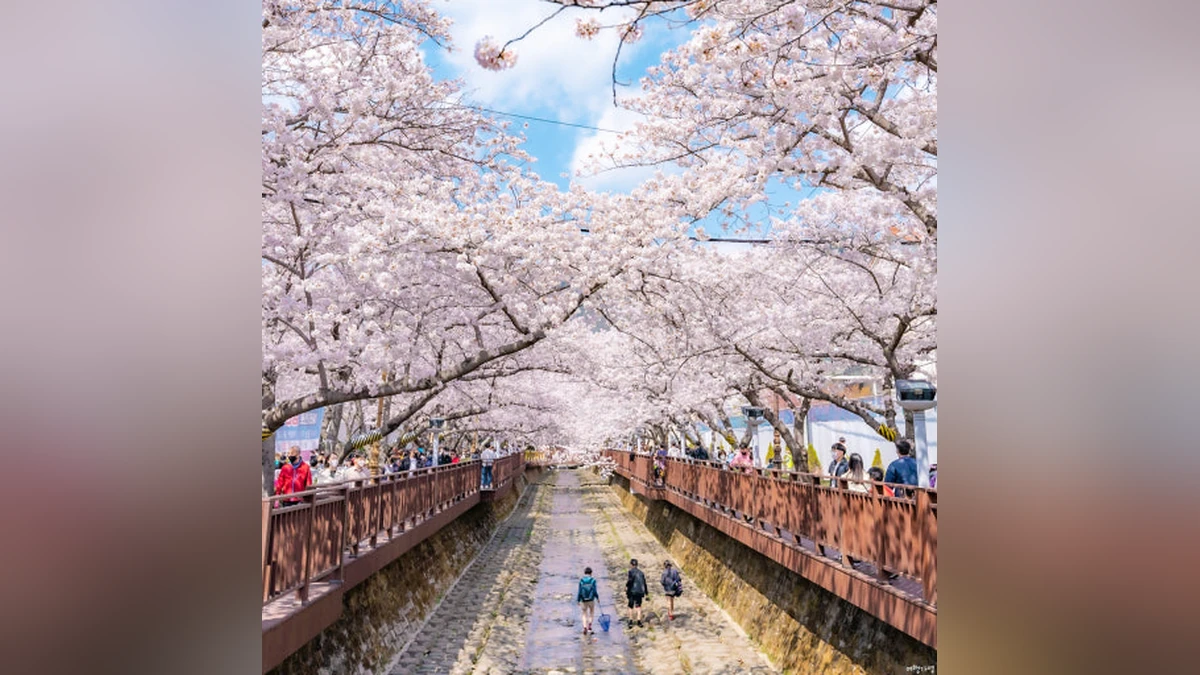
The numbers are straightforward: 360,000 cherry blossom trees. A coastal city transformed so completely that the streets, streams, and hillsides lose their everyday character entirely under the weight of pale pink. The Jinhae Gunhangje Festival (2026: March 27 – April 5) is the country’s largest cherry blossom festival and draws enormous crowds — but the crowds themselves become part of the experience in a way that isn’t true of more sedate destinations.
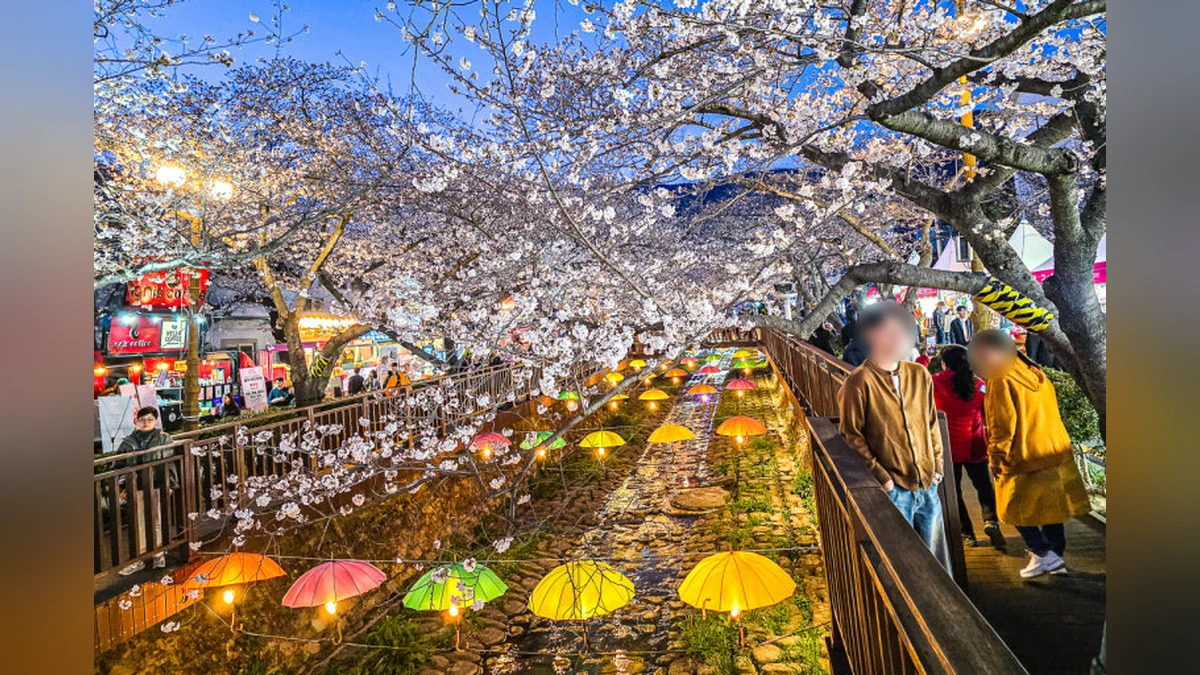
The landmarks that have made Jinhae famous are earned. Yeojwacheon Stream — a 1.5-kilometer stretch where cherry blossom trees lean over a narrow canal from both banks, their branches nearly touching above the water — creates the specific tunnel of pink that has appeared in more travel photographs than perhaps any other single spot in Korea. Walk it early in the morning, before the crowds arrive, and it is the kind of place that produces long silences in people who are not normally given to silence.
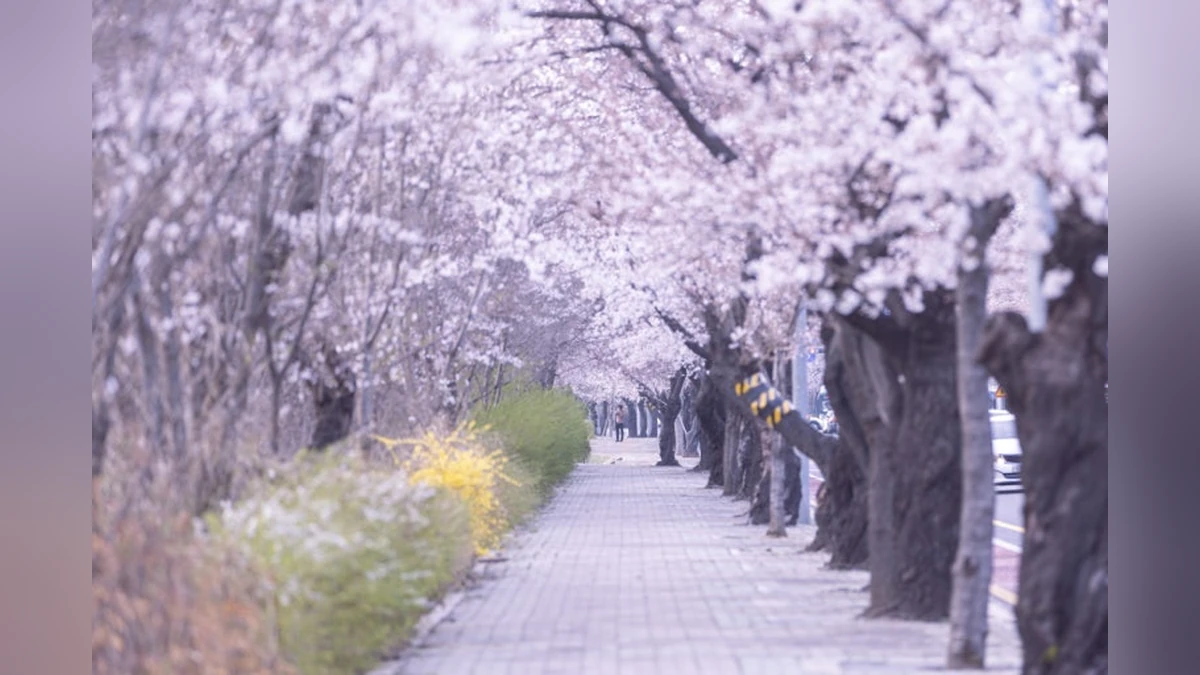
Gyeonghwa Station is a working train station where an 800-meter stretch of railway track runs between two rows of cherry trees. Trains still pass through slowly, and watching one move through the blossom canopy at low speed is as cinematic as it sounds. The station has become so famous as a photography spot that visitor management now regulates the platform hours during festival period — arrive before 9am for space to breathe.
Practical note: Jinhae hotels fill months in advance for festival dates. Stay in Busan (40 minutes by bus) or Changwon and make a day trip. Weekday visits are categorically different from weekends — plan for Tuesday or Wednesday if your schedule allows.
Early to Mid-April — The Wave Reaches Seoul
The cherry blossom front moves north predictably, reaching Seoul approximately two weeks after Jinhae. In 2026, the Korea Forest Service forecast Seoul’s peak bloom window as April 7–12, arriving slightly earlier than the historical average.
Seoul has its own geography of cherry blossoms, and the best spots differ meaningfully in character.
Yeouido’s Yunjung-ro — 1,886 cherry trees along a 1.7-kilometer road beside the Han River — is the most famous and the most crowded. The Yeouido Spring Flower Festival (2026: April 3–7) brings food trucks, busking performances, and designated photo zones alongside the blossoms. The scale is legitimately impressive. Come at night, when the trees are lit from below and the crowds thin, for a version of the experience that feels worth the visit.
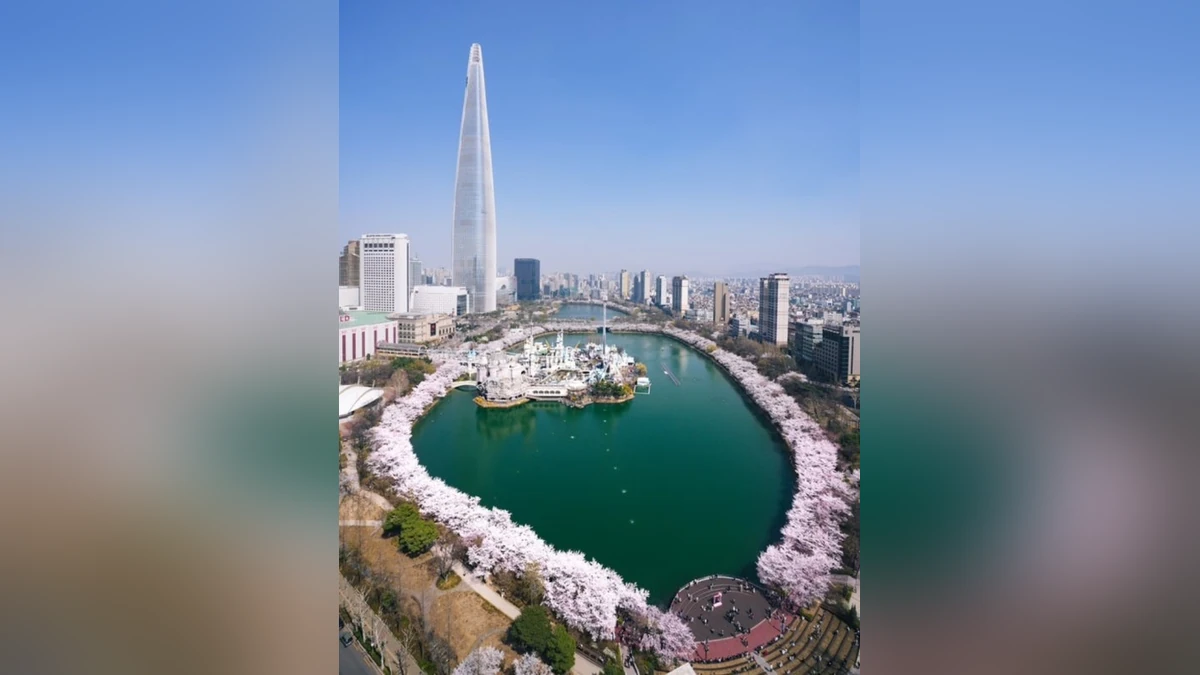
Seokchon Lake offers something the open road cannot: the cherry trees ring a lake, which means their reflections double the display. The nearby Lotte World Tower creates a dramatic backdrop — an architectural counterpoint to organic pink that photographs in a way that looks almost designed. About a thousand trees. Less heaving than Yeouido. Still busy.
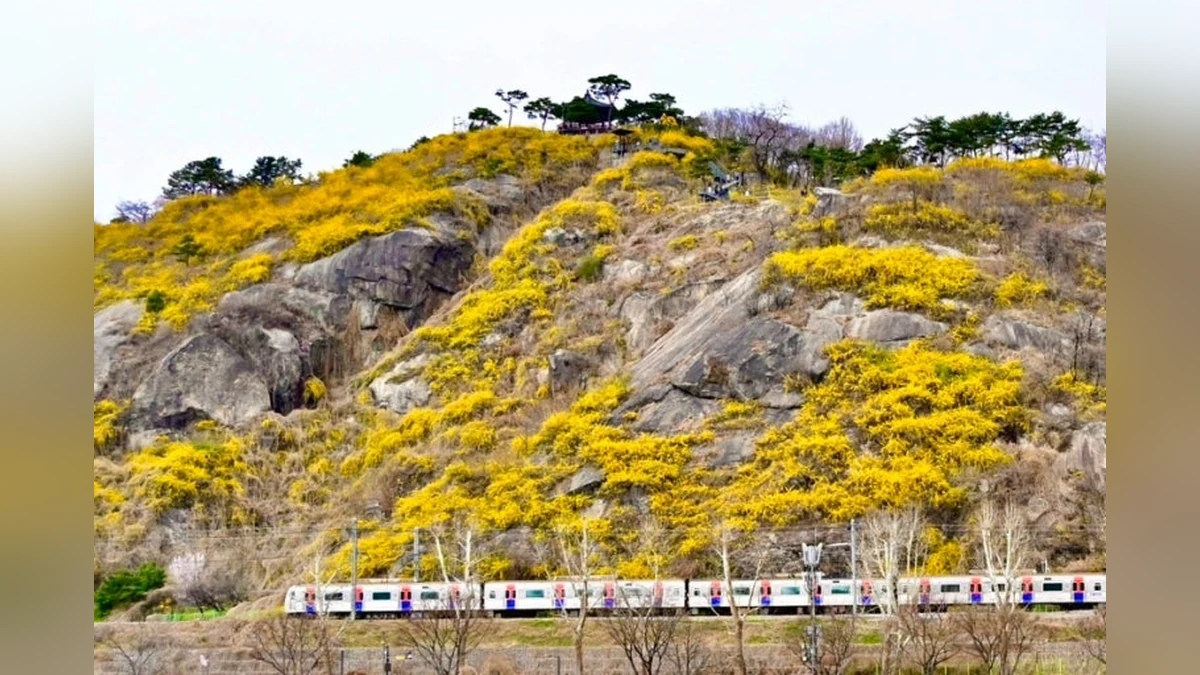
Eungbongsan Mountain is where Seoul shows you a different side of spring entirely. The hillside turns the particular gold-yellow of forsythia — Korea’s other great spring flower, blooming simultaneously with the cherries and often overlooked in the rush to photograph pink. Climb toward the octagonal pavilion at the peak and you get panoramic views of cherry blossoms spreading across the city below you, with Seoul Forest and the Han River in the distance. A very good morning.
Gyeongui Line Forest Park in Yeonnam-dong — the converted railway green space that has become one of Seoul’s most beloved urban promenades — is lined with cherry trees that transform the already pleasant walking path into something genuinely lovely. Narrower than Yeouido, more neighborhood in character, and consistently underrepresented on the tourist map.
Mid to Late April — After the Cherry Blossoms
Here is the thing most visitors miss: spring in Korea doesn’t end when the cherry blossoms fall. The petals come down in a second visual event — soft pink snow drifting through streets and collecting on windshields — and then the next act begins.
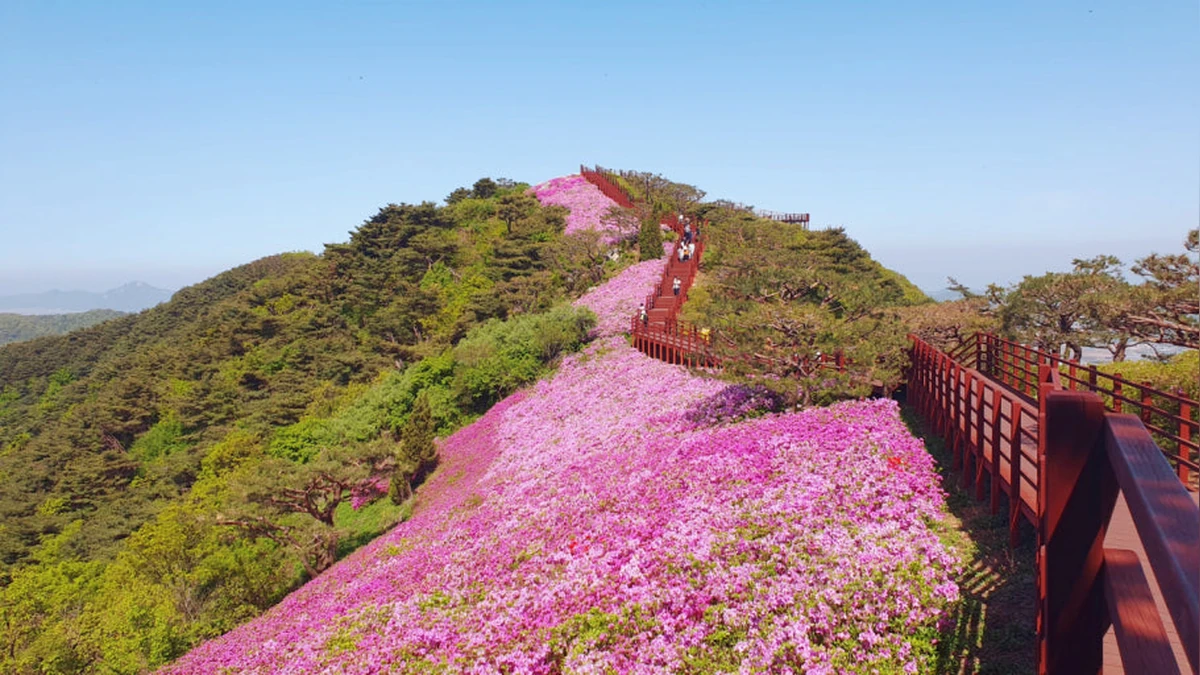
Azaleas. The transition from cherry to azalea is one of the seasonal pleasures of Korea that rewards people who stay or return. The mountains near Seoul turn shades of magenta and coral. Goryeosan Mountain on Ganghwa Island (festival period: early April) covers itself so completely in deep pink azaleas that the whole hillside looks dipped. The hike is accessible enough for most fitness levels and the views from the top justify the effort. Yeosu’s Yeongchuisan Mountain runs its azalea festival in late March — earlier than most — and has grown in popularity as the city’s infrastructure has improved. The festival now includes a 12-kilometer trail run that attracts participants from across the country alongside the traditional flower viewing.
Wisteria. A relative newcomer to Korea’s spring consciousness, wisteria has become a social media phenomenon in its own right. The purple cascading flowers bloom for only two to three weeks in late April, but the visual density of a wisteria pergola or arch in full bloom is distinctive enough that dedicated visitors travel specifically to see it. Locations near Namhansanseong Fortress in Gyeonggi-do have become well-known for their wisteria structures, and the brief season creates an urgency that drives foot traffic to rival cherry blossom spots.
April to May — Tulips and Canola Beyond Jeju
Two major festivals extend spring well into May and offer the kind of scale that makes Korea’s flower culture feel like something the country takes genuinely seriously.
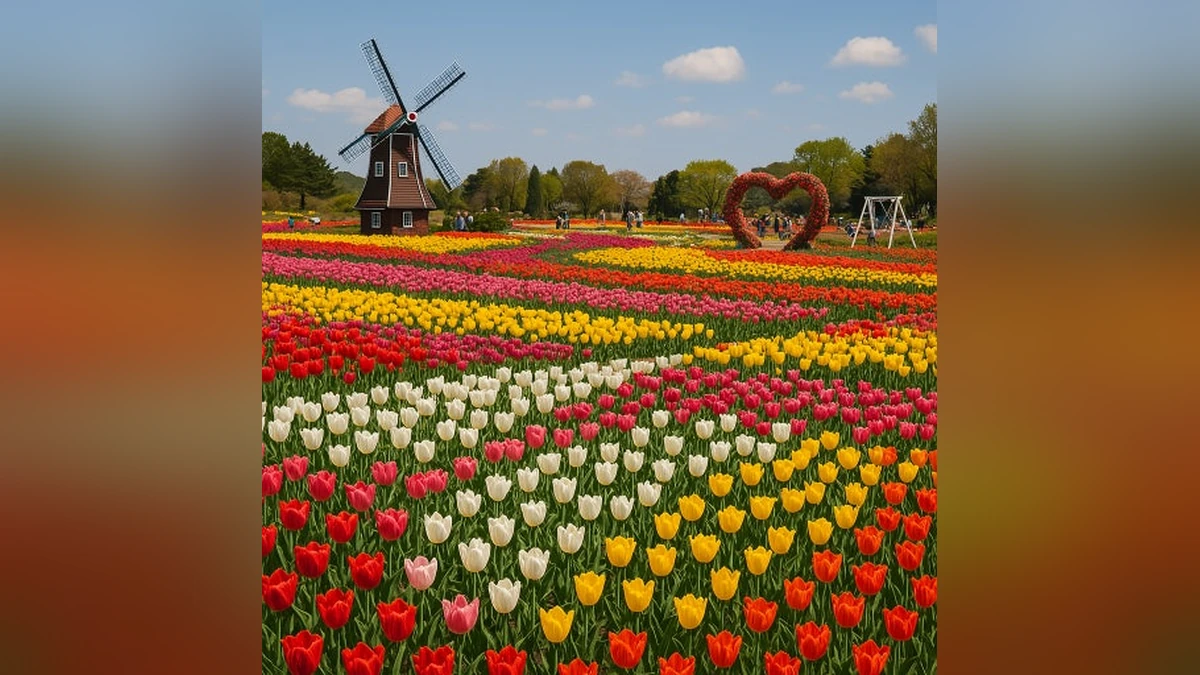
Taean World Tulip Festival (2026: April 1 – May 6) at Korea Flower Park in South Chungcheong Province is, by verifiable global ranking, one of the top five tulip festivals in the world. 1.5 million tulips in over 200 varieties, planted in the careful stripe patterns that make tulip fields so immediately satisfying to look at. Bold horizontal bands of red, yellow, purple, and white against a coastal backdrop — it is nothing like the understated beauty of cherry blossoms and is entirely its own kind of spectacular. Families with children find it particularly manageable: the terrain is flat, the paths are wide, and the color density rewards even the shortest attention spans.
Seoraeseom Canola Festival brings Jeju’s yellow wave to Seoul’s Han River from mid-April. The small river island near Banpo Bridge fills with canola flowers in brilliant yellow, which against the city skyline and the wide water creates a visual combination that is distinctly Seoul — nature and urban density making something together that neither produces alone.
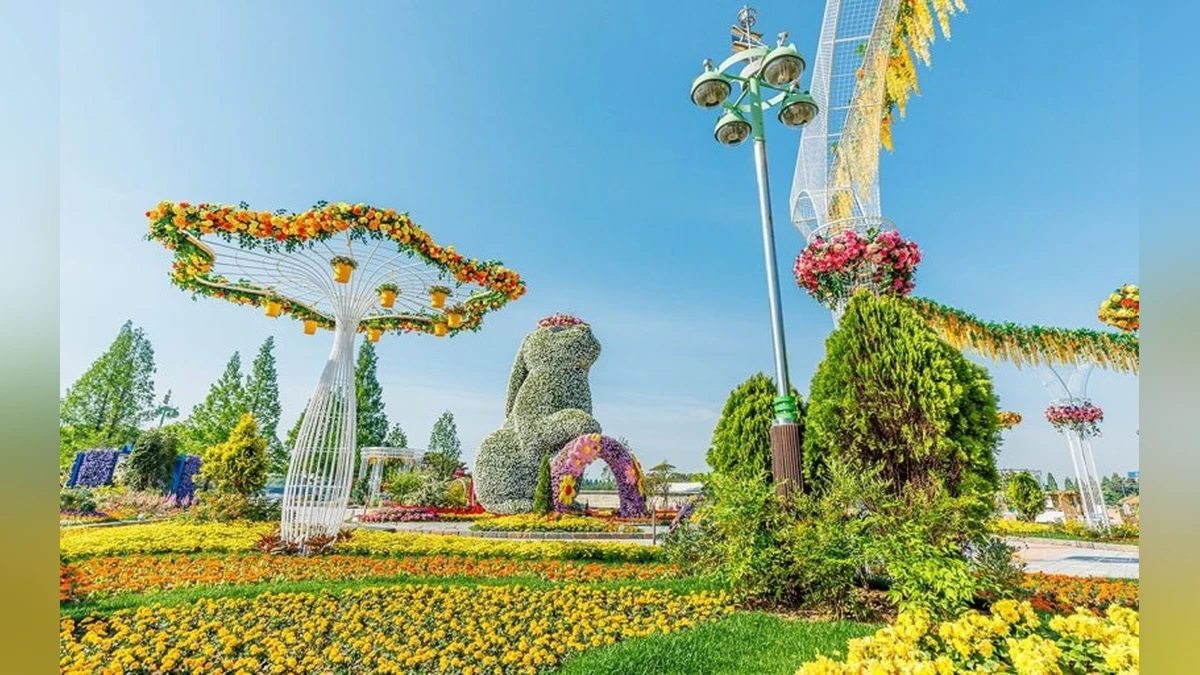
The Goyang International Flower Exhibition at Ilsan Lake Park runs in late April and expands the season’s palette with formal garden displays, international flower varieties, and the specific pleasure of a large cultivated park in full spring motion.
Planning Your Spring in Korea
The single most useful piece of advice for spring travel in Korea is simple: follow the bloom south to north.
With two weeks or more, you can catch peak cherry blossoms in Jeju in late March, move to Jinhae in early April, visit Gyeongju (the ancient capital, whose cherry-lined roads and historic stone monuments make it one of the best contexts for blossom viewing in the country), arrive in Seoul for peak week, then catch the tail end of the season in Gangneung on the east coast, where cherry trees ring Gyeongpo Lake against a backdrop of sea.
A few practical notes worth keeping in mind:
Train and bus bookings to Jinhae, Jeju, and Gyeongju fill weeks in advance during peak bloom. Book accommodation and transport as early as possible — this applies even more firmly in 2026 after several years of recovering tourism demand. Weekday visits to popular spots produce a materially different experience from weekends. Instagram tags are the most reliable real-time blooming tracker: search the Korean name of any location (진해 벚꽃, 여의도 벚꽃, etc.) and filter to recent posts to see actual current conditions rather than forecast dates. Many festivals now operate no-car zones and advance reservation systems for specific paths — check official festival websites before assuming walk-up access.
One final thought: spring in Korea is genuinely one of the most beautiful things the country produces. The combination of a deeply embedded cultural attachment to flower seasons, centuries of tradition around appreciating blooms, and the sheer scale at which Korea plants and celebrates its spring flowers creates an experience that is hard to match anywhere. The crowds are real. The beauty is also real. Plan for both, and neither will surprise you.
Next in this series: Korea in Summer — Sunflowers, Lavender, and Lotus Festivals Across the Peninsula
Which spring destination is on your list? Drop it in the comments below — and if you’ve been, tell us which bloom was your favorite.