Coin Noraebang: Korea’s Best-Kept Secret for Stress Relief (and the Best ₩500 You’ll Ever Spend)
Picture this. You’ve had a long day of walking around Seoul. Your feet hurt, you’re slightly overstimulated from the city, and you have about thirty spare minutes before meeting someone for dinner. You pass a small entrance down a half-flight of stairs, illuminated by a bright sign reading 코인노래방. You go in. You find an empty room the size of a large wardrobe. You insert a coin. And for the next three songs, you sing your heart out to nobody but yourself and a tambourine.
You walk out feeling, inexplicably, completely fine.
This is the coin noraebang experience. It is one of the most Korean things you can do in Korea, it costs almost nothing, and it is available twenty-four hours a day within about a five-minute walk of wherever you happen to be standing.
What Noraebang Actually Means
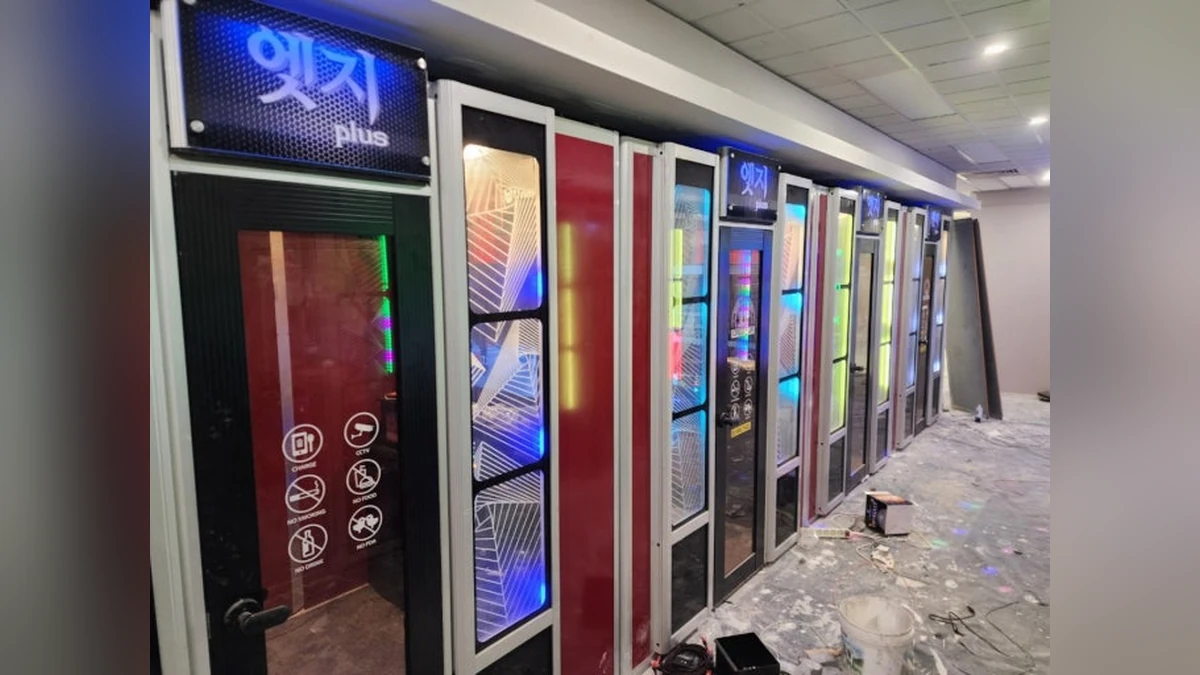
Noraebang (노래방) breaks into two words: norae (노래) meaning song, and bang (방) meaning room. Singing room. It is Korea’s version of karaoke — but with one essential difference from the Western model that changes everything.
In the West, karaoke typically means singing in front of strangers at a bar. You wait your turn, you stand at a microphone, and the entire room is your audience whether you want it to be or not. For many people, this is the primary reason they have never done karaoke despite being curious about it. The performance anxiety is real and the stakes feel high.
Korean noraebang operates on a completely different premise. You get a private room. Just you, your friends, or entirely alone — and a microphone, a TV with lyrics, a tambourine, and a song catalog with tens of thousands of entries. Nobody outside the room hears you. Nobody judges. The singing is for you, not for an audience.
This single structural difference is why noraebang became one of the most embedded social rituals in Korean life and why its coin-operated evolution became something even more interesting.
What Makes Coin Noraebang Different
The traditional noraebang model charges by the hour and works best with a group. You book a room, pay for the time, order snacks and drinks, and make an event of it. It is genuinely wonderful and worth doing at least once — the rooms at full-service noraebangs are larger, better equipped, and the experience has a party energy that groups find irresistible.
But coin noraebang solved a different problem: what if you only want to sing two songs? What if you’re alone? What if you have twenty minutes between appointments and just need to let something out?
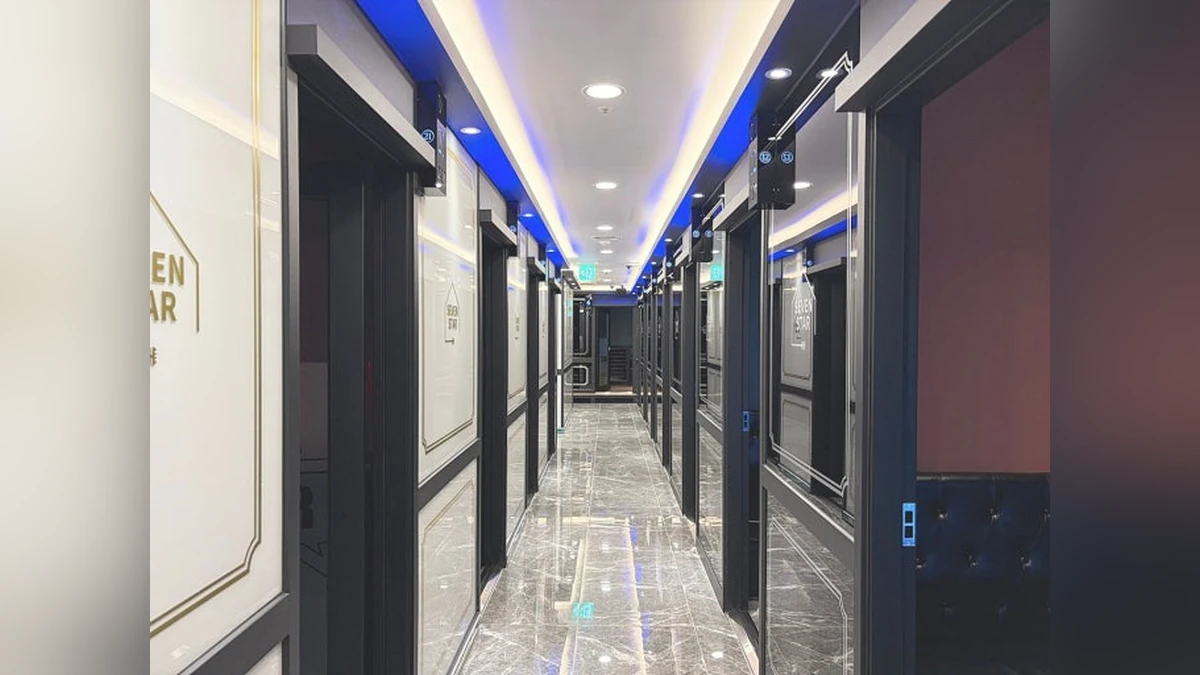
The coin noraebang strips the format back to its absolute essentials. Tiny rooms — comfortably fitting one person, workable for two, occasionally used by three people who are not bothered by closeness. Payment is per song rather than per hour: the standard rate is ₩500 per song, roughly the equivalent of a few cents. You insert your payment, the machine activates, you select your song, you sing it. You can continue as long as you keep inserting coins — or you can sing exactly one song and leave. There is no minimum. There is no obligation.
Most locations are unmanned or nearly so. A counter might be staffed, but many coin noraebangs now operate entirely through machines — you find an empty room (a light outside the door shows availability), pay directly into the machine inside, and manage the entire experience without interaction. This is intentional. The format is designed for spontaneity.
The Bang Culture Context
To understand why coin noraebang fits so naturally into Korean daily life, it helps to understand the broader bang culture that the country has developed.
Bang means room, and Korea has cultivated an entire ecosystem of room-based leisure spaces that offer private, self-directed experiences at low cost. The PC bang (PC room) lets you game on a high-spec computer for a few thousand won an hour. The manhwa bang (comics room) offers a vast library of Korean comics in a comfortable reading space. The jjimjilbang (sauna room) provides bathing facilities and sleeping areas for the night. The study cafe offers quiet focused work space. Each of these fills a specific gap between what urban apartment living can provide and what people actually need — privacy, comfort, specific equipment, a defined space to be in for a defined purpose.
Coin noraebang fits this pattern perfectly. Seoul apartments are not soundproof. Most residents cannot sing at volume without disturbing neighbors. The desire to sing — really sing, loudly, with echo effects and a backing track — is a genuine human need that has no obvious outlet in dense urban living. Coin noraebang provides that outlet at a price that makes it as casual as buying a coffee.
Who Goes and Why
One of the most revealing things about coin noraebang is the range of people who use it and the range of reasons they do.
Students are the most visible demographic — groups of two or three friends spending an hour singing K-pop between or after classes, the combined cost barely touching their budget. For Korean university students especially, coin noraebang occupies the same casual-hangout territory that cafes hold in other countries: a low-commitment, affordable place to spend time together.

Office workers use it differently. The image of someone in work clothes disappearing into a coin noraebang for two songs at lunchtime — or on the way home after a particularly hard day — is common enough in Korea to be unremarkable. The soundproofed walls make it a space where you can release something that has been building all day without any social consequence. You go in tense. You come out reset. The mechanism is not complicated: singing loudly, physically, to a song you know well is one of the most effective stress-release behaviors available to humans, and coin noraebang makes it available on demand for the price of a coin.
Solo visitors are not rare or unusual. They are, in many locations, the majority. The coin noraebang has normalized solo singing in Korea to the point where walking into a booth alone carries no social meaning at all. For solo travelers visiting Korea, this is one of the most genuinely low-pressure cultural experiences available — no language skill required, no social performance, just a machine and a microphone.
The Tambourine
It would be wrong to discuss Korean noraebang without acknowledging the tambourine.
Every noraebang room — coin or full-service — comes equipped with at least one tambourine. Its presence is non-negotiable and its role is specific: the tambourine is for whoever is not currently singing. Rather than simply waiting for their turn, the person holding the tambourine is actively participating in the performance, providing rhythm, energy, and the kind of enthusiastic accompaniment that makes the whole room feel more alive.
The tambourine democratizes the noraebang experience in a quietly important way. Not everyone is a confident singer. Not everyone wants to hold the microphone. But everyone can shake a tambourine convincingly, and the act of doing so transforms passive waiting into active participation. The friend who insists they don’t sing is still fully in the moment, still contributing to the energy of what’s happening.
In coin noraebang’s tiny solo rooms, the tambourine sits on the machine as both prop and invitation. Whether you use it is entirely your business.
How It Works in Practice
Walking into a coin noraebang for the first time is easier than it looks.
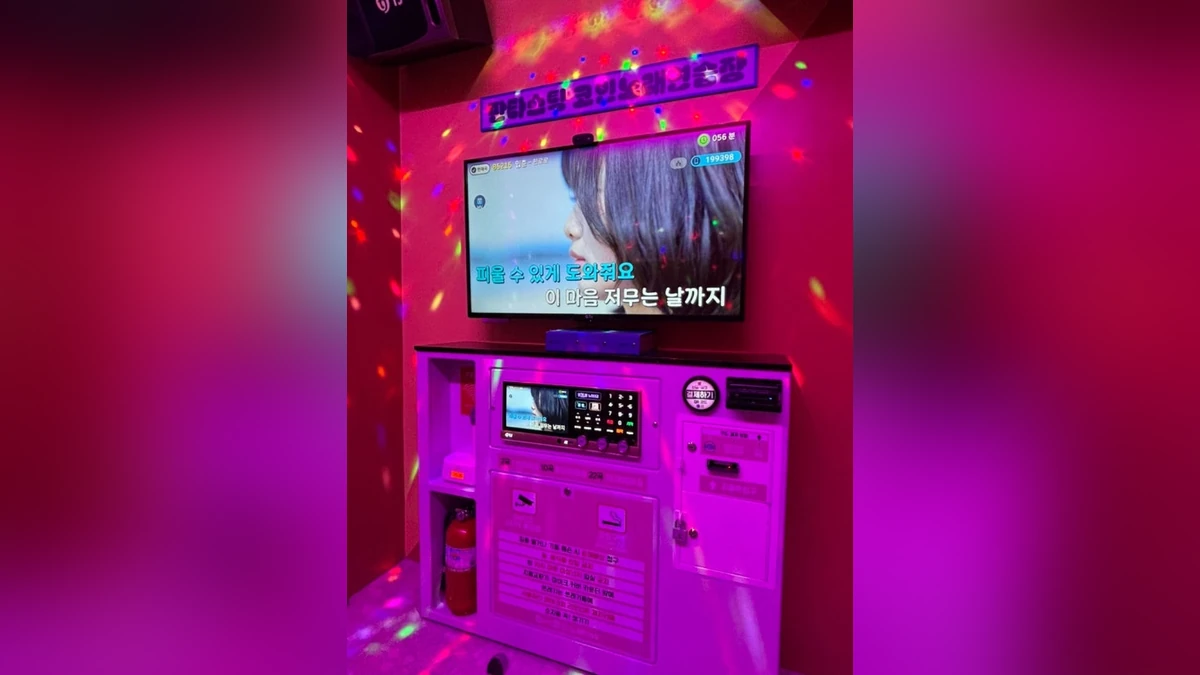
The rooms are small — typically a bench seat, a screen on the wall, a machine with a payment slot, a microphone (always with a disposable hygiene cover, which the location provides), a songbook, and the tambourine. The machine interface has gotten significantly more digital in recent years: while the format originated with literal coin insertion, most locations now accept card payments and QR code payments through apps like Kakao Pay and Toss alongside the original coins. Many have bilingual interfaces at this point, making the experience accessible without Korean language skills.
Song selection works through the remote or machine touchscreen. A thick songbook near the machine lists everything in the catalog — Korean songs organized by genre, international songs organized alphabetically — each with a number code. You enter the code, the track queues, the lyrics appear on screen with a color indicator showing which syllable you’re on. International songs are well-represented at most locations: English pop, ballads, classic rock, current chart hits — the catalogs are deep enough that virtually any song you want to sing is findable.
Pricing at most Seoul locations runs to ₩500 per song for a standard track. Some specialty songs or locations may charge slightly more. The machine displays clearly how many songs you have remaining, and adding more is as simple as inserting another coin or making another payment.
A Practical Note on Scoring
Many coin noraebang machines have a scoring function that grades your singing after each song — a number from zero to one hundred based on pitch accuracy, timing, and in newer machines, vibrato and breath control.
The scoring is not particularly reliable as a measure of actual singing quality, and most regular users ignore it or treat it as a game rather than genuine feedback. But it creates something interesting in the experience: a small incentive to try harder on specific sections, a moment of suspense before the number appears, and — if you hit a high score — a brief flash of satisfaction that is entirely disproportionate to its meaning.
Some locations give a free song as a reward for a perfect score of one hundred. The conditions required to achieve this vary by machine, but the possibility is mentioned on enough signs inside coin noraebangs that it has become a minor challenge for regular visitors.
For Visitors to Korea
Coin noraebang requires no preparation, no Korean language ability beyond being able to recognize numbers, and no social confidence whatsoever. It is self-service, unmanned, and completely private.
Finding one is effortless: searching 코인노래방 in Naver Maps or Kakao Maps from anywhere in a Korean city returns results within minutes of your location. In Hongdae, Sinchon, Gangnam, Hongdae, and most major commercial areas, you will pass multiple locations without specifically looking for them. Most are open twenty-four hours.
The experience takes exactly as long as you want it to take. Three songs and out: fifteen minutes. An hour of working through a playlist you’ve been building in your head: entirely possible for a few thousand won. The format accommodates every version of the impulse.
If you go to Korea and do not visit a coin noraebang at least once, you will have missed something that is hard to describe accurately before you’ve done it and immediately obvious once you have. It is the private room, the tambourine, the slightly too-loud echo on the microphone, the complete absence of anyone watching. It is one of the best versions of being alone with a song that exists anywhere in the world.
Have you tried coin noraebang in Korea? What song did you sing first? Tell us in the comments — no judgment, promised.