Seoul Travel Guide Part 4: Gangnam, the Han River & the City’s Modern Soul
The first three parts of this series have taken you through the royal palaces of old Seoul, the creative neighborhoods of the city’s younger generation, and the food markets that have been feeding the city for centuries. Part Four shifts the lens one more time — south of the Han River, into the neighborhood that the rest of the world has heard of more than almost any other part of Korea.
Gangnam.
The name carries a lot of weight. It carried that weight before a certain song made it globally famous in 2012, and it carries a different, more layered kind of weight now. For visitors who arrive expecting pure glamour and find something more complicated — a Buddhist temple sitting directly behind a mega-mall, a tree-lined street of independent boutiques five minutes from Korea’s most expensive real estate, a riverside park where people cook instant noodles on public gas stoves and consider this a perfect evening — the neighborhood tends to be far more interesting than the reputation suggested.
This chapter covers Gangnam properly. The underground cathedral of COEX. The thousand-year-old silence of Bongeunsa. The particular pleasures of Garosu-gil. And the Han River at night, when the city lights up, the fountain at Banpo Bridge starts its show, and Seoul reveals a version of itself that no palace or market can quite replicate.
Understanding Gangnam’s Geography
Gangnam literally means “south of the river” — a designation that refers to the areas south of the Han River, the broad waterway that cuts through the middle of Seoul from east to west. The term covers a wide swathe of the southern city, but the areas most relevant to visitors cluster around two subway lines: Line 2, which runs through the heart of Gangnam, and Line 9, which connects the western parts of the district to the airport and the northern Han River parks.
The logical starting point for most visitors is the COEX area, served by Samseong Station on Line 2 or Bongeunsa Station on Line 9. From there, the Han River and Banpo Bridge are accessible by a short taxi or bus ride to the southwest. Garosu-gil sits a couple of stops west at Sinsa Station. The entire area is cleaner, wider, and more grid-like than the older neighborhoods north of the river — the streets were designed for the modern city, which means they’re easy to navigate but occasionally lack the sense of discovery that narrower, older parts of Seoul offer.
That said, Gangnam consistently surprises visitors who arrive with low expectations. The layers are there — you just have to look past the surface.
COEX and the Starfield Library

Start underground, and start early.
COEX Mall is one of the largest underground shopping complexes in Asia, covering over 400,000 square meters of retail, dining, entertainment, and event space. On a cold or rainy day, it functions as a self-contained city — you can spend hours here without once stepping outside, moving between department stores, a multiplex cinema, a casino, an aquarium, and dozens of restaurants without ever needing a coat. On any day, it serves as a practical anchor for the surrounding Gangnam neighborhood.
But the reason most travelers make a specific point of visiting COEX isn’t the shopping. It’s the Starfield Library.
Located in the central atrium of the mall, the Starfield Library is one of the most visually arresting spaces in Seoul. Two 13-meter bookshelves rise on either side of a wide open corridor — floor-to-ceiling books accessible by rolling library ladders, warm lighting that makes the spines glow at certain hours, and a design that manages to feel both grand and genuinely welcoming. Entry is completely free. The books are open to browse. Seating areas are scattered throughout.

The library doesn’t function as a working research library — it’s more an architectural and cultural statement, a declaration that books and public space and commerce can coexist in a way that elevates all three. Whether or not you have any interest in the specific titles on the shelves, spending twenty minutes standing inside this space is one of the more quietly memorable things you can do in Gangnam. The best light falls around 11am on clear days. Weekday mornings offer the most space and the most reflective atmosphere. On weekends, particularly in the afternoon, the Instagram crowds arrive in force.
The COEX Aquarium, housed in the basement of the same complex, is worth considering if your group includes children or if you simply enjoy good aquariums. With over 650 species of marine life across fifteen themed zones — including white beluga whales, penguins, and an open ray tank — it’s among the better commercial aquariums in Korea.
Bongeunsa Temple — The Quiet Behind the Mall

Walk out the back of COEX, cross the street, and you’re standing in front of one of the most interesting juxtapositions in Seoul: Bongeunsa Temple, a working Buddhist temple founded in 794 CE, sitting in almost direct shadow of glass-and-steel towers that are among the most expensive addresses on the peninsula.
The temple has survived everything Seoul has thrown at it over twelve centuries — invasions, occupations, fires, and now the relentless encroachment of one of the world’s most intense urban development environments. It doesn’t just survive; it genuinely thrives. The complex is large, beautifully maintained, and actively used by both monks and lay practitioners throughout the day.
Walking through the main gate into Bongeunsa feels like turning down the volume on the city. The stone-paved pathways, the old wooden halls with their painted eaves, the enormous gilded Buddha visible through the main shrine hall’s open doors, the smell of incense that settles into the air as you move deeper into the complex — all of it creates an atmosphere of calm that is made more remarkable, not less, by the fact that skyscrapers are visible just beyond the temple walls.

The Mireuk Daebul — a 23-meter standing stone Buddha carved in 1996 — is the temple’s most striking individual element and the first thing visible from the street. It’s enormous, serene, and somehow deeply personal despite its scale. Monks pass in quiet procession. Students sit in meditation. The contrast with the mall five minutes behind you is so complete it feels almost surreal.
Entry to Bongeunsa is free, and respectful visitors are welcome at all hours. The temple hosts regular templestay programs — overnight and weekend experiences that include meditation sessions, Buddhist tea ceremonies, and guided practice — which are bookable through the temple’s official channels for those who want a deeper experience. Even a thirty-minute visit during a day of Gangnam sightseeing shifts the register of the whole day in a way that’s hard to explain until you’ve experienced it.
Garosu-gil — The Street That Gets It Right

A short subway ride west from COEX brings you to Garosu-gil — which translates, simply enough, as “tree-lined street” — and the name describes exactly what you find: a long avenue shaded by ginkgo trees, lined on both sides with a mix of boutiques, cafes, restaurants, and galleries that manages to feel curated without feeling artificial.
Garosu-gil developed in the late 1980s and 1990s as an arts and fashion district, drawing designers, architects, and creative professionals into a neighborhood that was then relatively affordable by Gangnam standards. That original energy has been somewhat diluted by the arrival of international brands and the inevitable gentrification that follows a neighborhood finding its reputation — but the tree canopy, the human scale of the streetfront, and the density of genuinely independent operations still give it a character that sets it apart from the more corporate feel of central Gangnam.
The main street runs roughly eight hundred meters and is best explored at a slow walk, both sides, with attention to the smaller lanes that branch off perpendicular to the main road. The side streets, known locally as the garoshil area, are where the most interesting independent fashion labels and design studios tend to operate — often tucked behind unmarked doors or announced only by a small handmade sign at street level.
For coffee, Garosu-gil has established a strong reputation for high-quality independent cafes. The concentration of specialty coffee shops here is among the highest in the city, and the competition keeps the standard consistently high. For food, the side streets offer a range of Korean and international options at mid-range prices — more affordable than the restaurants closer to Apgujeong and Cheongdam, and often just as good.
The ginkgo trees that line the main street turn brilliant yellow in late October and early November, at which point Garosu-gil transforms into one of the most photographed streets in Seoul. If your visit falls anywhere near that window, this is the time to come.
Apgujeong and Cheongdam — For the Curious

A short walk or taxi ride east of Garosu-gil brings you to Apgujeong and Cheongdam, which together form the most concentrated high-fashion district in Korea. The flagship stores of every major Korean and international luxury brand are clustered in this area, and the street architecture — designed as much to be photographed as to function — gives the whole district a different visual quality from the rest of Seoul.
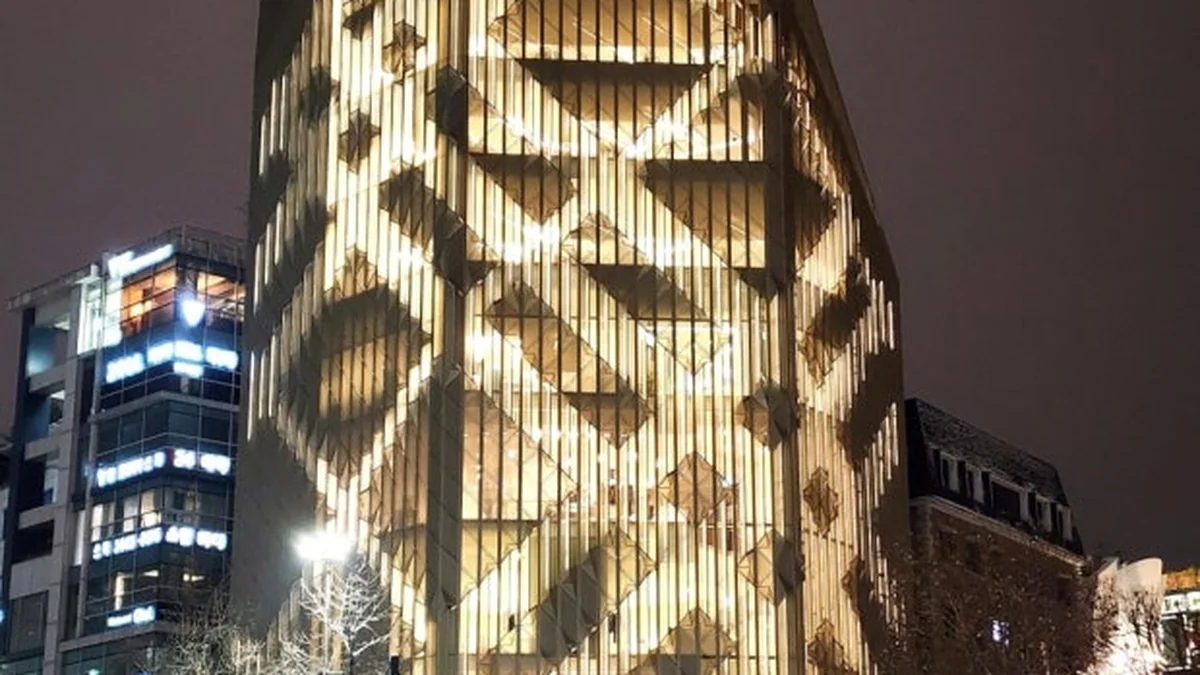
This isn’t a place most travelers need to budget significant time for unless fashion and design are specific interests. But two things are worth noting.
The first is the broader aesthetic ambition on display. The buildings that house these flagship stores are, in many cases, genuinely extraordinary pieces of architecture — the kind of investment in physical space that most retail environments in other countries wouldn’t justify. Walking through the district and simply looking at the buildings, from a purely architectural perspective, is its own kind of rewarding.

The second is the food scene in the surrounding residential streets. Apgujeong has developed a restaurant culture that caters to one of Seoul’s most demanding and knowledgeable dining demographics, and the quality across cuisines — Korean, Japanese, Italian, modern fusion — is consistently exceptional. A dinner here at the right restaurant is the kind of meal that tends to end up as a trip highlight.
The Han River — Seoul’s Living Room
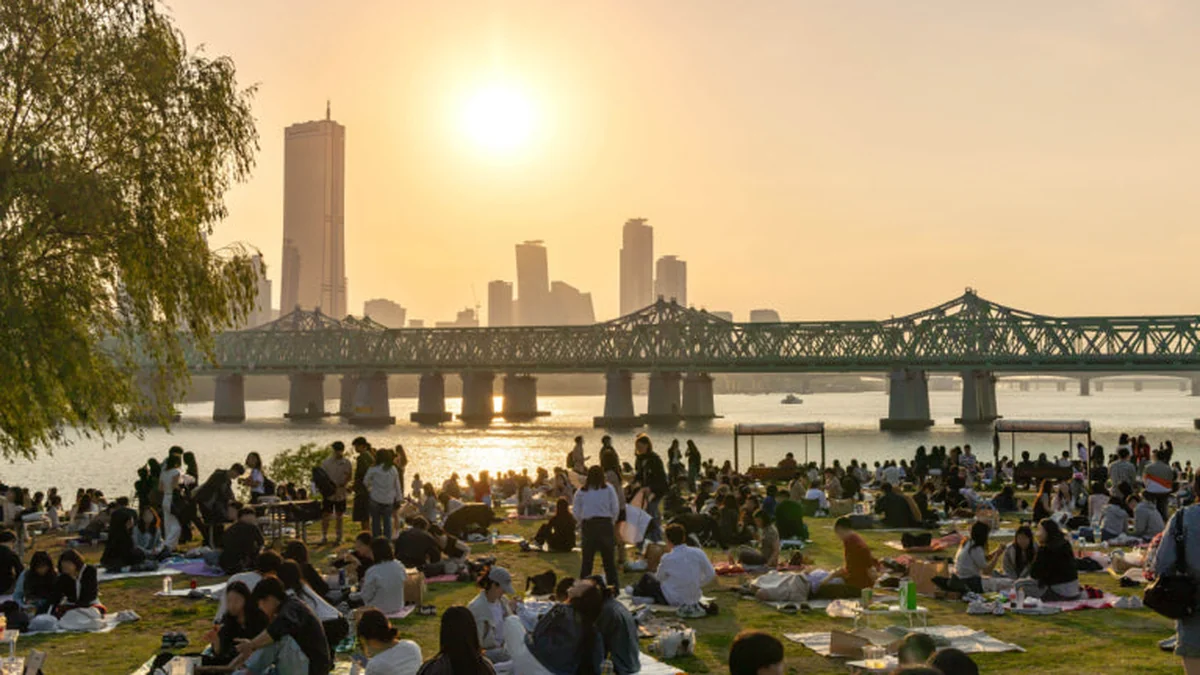
No visit to the Gangnam side of Seoul is complete without time on the Han River, and the most rewarding way to spend that time is at Banpo Hangang Park, particularly in the evening.
The Han River parks are a fundamental part of Seoul’s civic identity — a network of green spaces along both banks of the river that function as the city’s shared outdoor living room. They’re free to enter, well-maintained, and genuinely beloved by Seoulites in a way that makes spending time in them feel participatory rather than touristic. On a warm evening, the grass along the Banpo riverside fills with couples and friend groups spread on picnic blankets, convenience store bags rustling as people set up their riverside dinners of instant noodles, fried chicken, and cold beer.
This riverside picnic culture is one of Seoul’s most characteristically local pleasures, and it’s accessible to any visitor with a T-money card and a willingness to follow the example of everyone around them. The CU convenience store inside the park stocks everything you need — ramen with designated cooking stations where you can actually boil your noodles on-site, snacks, drinks, and picnic essentials. The cost of a full riverside dinner for two runs under 20,000 won. The experience is worth considerably more than that.
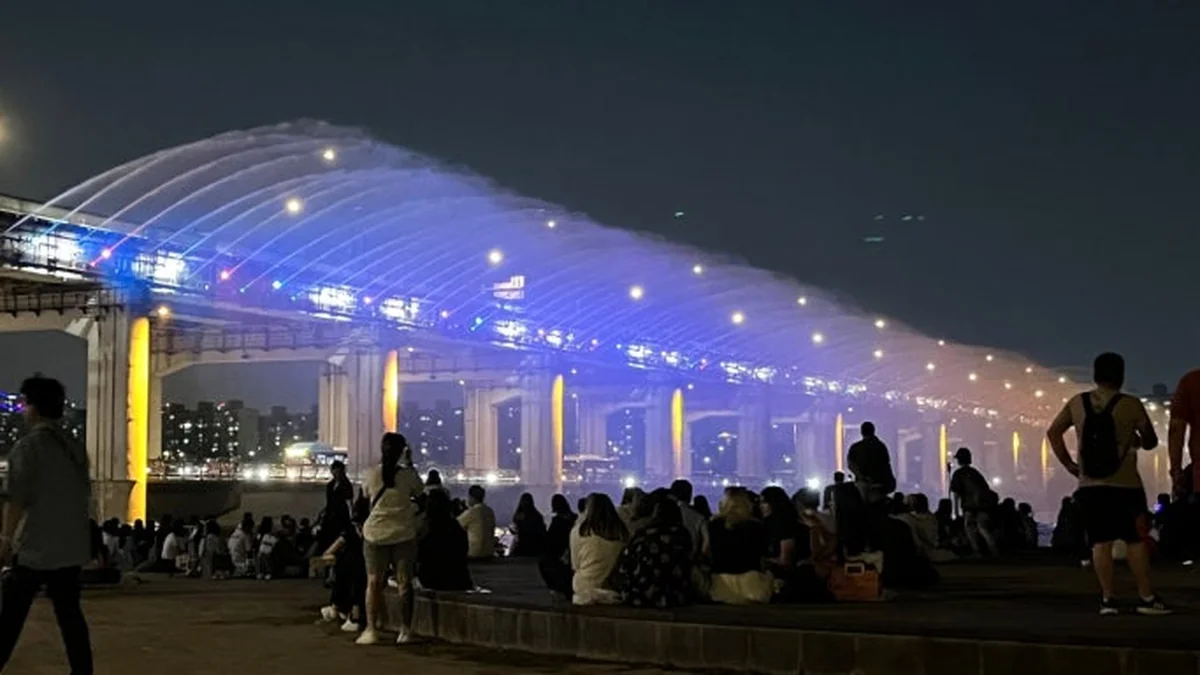
The Banpo Bridge Moonlight Rainbow Fountain is the visual anchor of the riverside experience. The world’s longest bridge fountain — a Guinness World Record holder — runs 380 nozzles along the full 1.14-kilometer length of Banpo Bridge, shooting 60 tons of water per minute in synchronized jets illuminated by 200 LED lights in constantly shifting colors. The show runs multiple times each evening between April and October, with each performance lasting approximately twenty minutes. The 9pm show is the most atmospheric — full darkness, the city lights reflected in the water below the falling jets, and crowds settled on the grass in various states of contented quiet.
Getting there is straightforward. Take Line 3, 7, or 9 to Express Bus Terminal Station and use Exit 8-1, then walk approximately 15 minutes to the riverside. Arrive at least 30 minutes before the show you plan to watch — the grass fills up on warm evenings, and finding a good spot requires some patience once the crowd has settled.
Some Sevit, also known as Sebitseom, floats on the river at the southern end of Banpo Bridge — three man-made islands that house cafes, restaurants, and event spaces. The view of the Han River from the floating island cafes is among the more unusual in the city, and stopping here for a coffee before the fountain show begins is a comfortable way to spend the pre-show hour.
The Han River by Bike
For those with an extra few hours and functioning legs, the Han River cycling and walking paths are one of the genuine gifts of Seoul’s urban infrastructure. Dedicated cycling lanes run along both banks for dozens of kilometers — smooth, well-maintained, and separated from vehicle traffic in a way that makes them genuinely enjoyable rather than stressful.
Ttareungi, Seoul’s public bike-sharing system, has docking stations throughout the riverside park areas and operates on a pay-per-ride basis using a T-money card or a mobile app. A single thirty-minute ride costs 1,000 won. The path west of Banpo toward Yeouido Han River Park — roughly 3 kilometers in that direction — passes under the bridges, beside the river, and through some of the most open, sky-heavy scenery you’ll find within the city limits. Cycling it in the early evening, as the light drops toward the water and the city comes on in stages behind you, is one of the experiences that turns a Seoul trip from good into something more.
Lotte World Tower — Seoul from Above
For the definitive aerial view of Seoul, Lotte World Tower’s Seoul Sky Observatory is the current benchmark. At 555 meters, the Lotte World Tower is Korea’s tallest skyscraper and among the tallest buildings in the world — and the observation deck on floors 117 to 123 offers a 360-degree panorama that includes the Han River, the mountains ringing the city, the full expanse of Gangnam, and on clear days the northern neighborhoods including the royal palaces of Part One.
Entry to Seoul Sky costs 29,000 won for adults and includes a high-speed elevator ride that ascends to the observation deck in approximately one minute — fast enough to make your ears pop. The glass floor panels at certain sections of the deck allow you to look straight down 500 meters to the street below, which produces a predictably vertiginous sensation that most people find more entertaining than frightening once the initial shock passes.
The best time for the observation deck is a clear late afternoon, when you can watch the city transition from daylight to dusk to full illumination. At night, the view of Seoul’s light grid spreading in every direction is extraordinary. On a clear day, visibility extends far enough to see mountains well beyond the city’s administrative boundaries.
A Suggested Full-Day Route
For a complete Gangnam and Han River day, a rhythm that flows naturally without feeling rushed goes something like this.
Start at COEX by 10am for the Starfield Library at its best light. Cross to Bongeunsa Temple for thirty to forty-five minutes of quiet before the midday visitor flow builds. Return to the Gangnam Station area for lunch — the underground food halls here offer some of the most varied and affordable dining options in the district. Take the subway or a short taxi to Garosu-gil for the afternoon, allowing two hours for the tree-lined street and its side lanes. As the late afternoon arrives, head toward Banpo Hangang Park — pick up a convenience store picnic on the way, find a spot on the grass as the light changes, and stay for the 9pm fountain show.
It’s a day that moves between underground and sky, ancient and contemporary, commercial and natural. That range is, in many ways, the most accurate summary of what Gangnam actually is.
Practical Notes
Gangnam is more car-dependent than the northern parts of Seoul, and traffic during rush hour — roughly 8 to 9am and 6 to 8pm — can make taxis slow. The subway is almost always faster at those times. Outside of rush hour, taxis from central Gangnam to Banpo run about 8,000 to 12,000 won and take fifteen to twenty minutes.
The Banpo Bridge fountain operates from April to October only. In winter, the riverside parks are still beautiful and completely walkable, but the fountain show doesn’t run. Check the official schedule before planning an evening around it, as weather cancellations do occur.
English signage in Gangnam is generally good. The COEX complex, Bongeunsa, and Lotte World Tower all have English-language staff and information. Garosu-gil’s independent shops vary — some staff speak English comfortably, others don’t, but the language barrier rarely creates genuine difficulties.
Final Thoughts on Part Four
Gangnam rewards visitors who arrive without a fixed narrative about what it should be. It is not purely the land of luxury brands and cosmetic surgery clinics, though those things exist here. It is not the sterile commercial zone that older descriptions of it sometimes suggest. It is a full, living district with a Buddhist temple at its heart, a river at its edge, and a street of ginkgo trees that turns gold every autumn with or without anyone watching.
The Han River, in particular, is something that Seoul doesn’t promote loudly enough. Sitting on the grass at Banpo Park with cheap food and the fountain turning colors above the dark water — that particular combination of accessibility, beauty, and genuine local life is hard to find in any major city in the world. Seoul has it, and it doesn’t cost anything to sit there.
That might be the best thing about this whole part of the city.
Up next — Part 5: Seoul’s Hidden Alleys — Ikseon-dong, Euljiro, Naksan Park, and the parts of the city that most visitors never find.
Have you spent an evening at Banpo Han River Park? Did the fountain show live up to the hype — or was the riverside picnic the real highlight? Tell us in the comments.