Taejongdae, Busan: The Complete Travel Guide to Korea’s Most Dramatic Coastline
There’s a saying in Korea that even gods and goddesses visit Taejongdae when they need to rest. Standing at the edge of the cliffs, watching the waves hit the ancient rock formations below while pine forests rustle quietly behind you, it’s not hard to see why that story stuck around for a thousand years.
Taejongdae is one of those places that earns its reputation honestly. Located at the southernmost tip of Yeongdo Island in Busan, this coastal park has been drawing visitors for centuries — and in 2026, it remains one of the most rewarding half-day trips you can take anywhere in South Korea. It’s dramatic, it’s deeply calming, and it’s completely free to enter.
This guide covers everything you need to know — how to get there, what to see, how long to spend, and the small practical details that make the difference between a good visit and a great one.
A Little Background
The park takes its name from King Taejong Muyeol, the 29th ruler of the Silla Kingdom and the king credited with unifying the Three Kingdoms of ancient Korea. According to legend, he loved visiting this stretch of coastline to practice his archery and enjoy the sea views. Another story ties the name to King Taejong of the Joseon era, who performed rain rituals here during a severe drought in 1419 — and apparently, they worked.
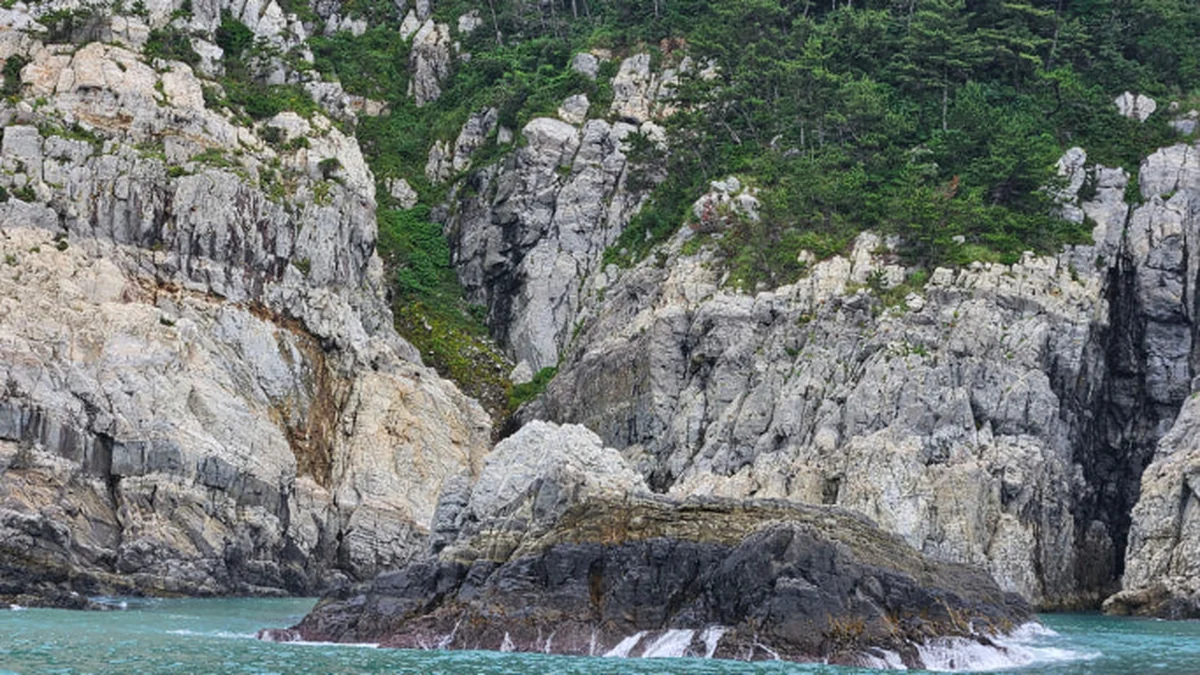
The geological story is just as compelling. Taejongdae sits on Yeongdo Island, and the cliffs that make it so visually striking are made of layered sedimentary rock that has been sculpted by centuries of wave action. Those stacked horizontal lines you see in the rock face aren’t just beautiful — they’re a record of millions of years of geological history, which is part of why the area carries official status as a designated monument of Busan.
Today the park covers a significant stretch of coastline, includes over 200 species of trees, and offers a loop trail of about 4.3 kilometers that winds past every major viewpoint. It’s the kind of place that works equally well for serious hikers, casual strollers, and people who simply want to sit somewhere beautiful and do nothing for a while.
Getting There
Taejongdae sits on Yeongdo Island, which is connected to the mainland by bridge, so reaching it requires no ferry. That said, it does sit at a bit of a distance from Busan’s central areas, so planning your transit in advance makes the trip smoother.
The most straightforward route from central Busan is to take Subway Line 1 to Nampo Station and exit through Exit 6. From there, buses 8, 30, 66, or 186 will take you directly to the Taejongdae stop. The bus ride runs roughly 40 to 50 minutes depending on traffic.
If you’re coming directly from Busan Station — which is where KTX high-speed trains from Seoul arrive — buses 88 and 101 run straight to the Taejongdae entrance without requiring a subway transfer. This is often the most convenient option for visitors arriving from other cities.
Taxis are also a practical choice, particularly if you’re traveling in a small group. The address to show the driver is 24 Jeonmang-ro, Yeongdo-gu, Busan. Journey time from Busan Station by taxi is typically around 20 to 30 minutes.
If you have a T-money card, it works on all the buses and makes hopping on and off considerably easier. Cards are available at convenience stores and subway stations throughout the city.
The Danubi Train — To Ride or to Walk?

Once you pass through the park entrance, you’ll face a choice that every Taejongdae visitor has to make: take the Danubi Train, or walk the loop yourself.
The Danubi Train is a colorful, slow-moving tourist tram that circles the 4.3-kilometer coastal road and stops at all the major highlights. The name comes from a Korean word meaning “admiring the scenery,” and that’s genuinely what it does — it moves slowly enough that you can properly take in the views without feeling rushed. The round-trip ticket costs approximately 4,000 won, and the train departs roughly every 20 minutes from the main square near the entrance.
Walking the full loop is absolutely doable — it takes around one and a half to two hours at a comfortable pace, and being on foot lets you stop exactly when and where you want. The path itself is well-maintained and clearly marked. That said, there are sections with significant elevation change, and if you plan to descend to the rocky coastline near the lighthouse, you’ll be tackling a fairly long staircase in each direction. Comfortable footwear is not optional here.
The practical recommendation for most visitors is a combination approach: take the Danubi Train out to the lighthouse area, spend proper time there on foot, and then either walk part of the route back or catch the train again. On busy weekends, buying your train ticket as soon as you arrive is wise — queues can get long once the mid-morning crowds arrive.
One thing worth knowing: if it has been raining, the train occasionally suspends service due to wet road conditions. If that happens, the walk is still completely enjoyable — the wet cliffs and misty sea views have their own kind of beauty.
What to See
The Observatory and Cliffs
The first major stop on the Danubi route is the Taejongdae Observatory, and it delivers the park’s signature view. On a clear day — and Busan gets plenty of those — you can see all the way to Tsushima Island in Japan, roughly 50 kilometers across the Korea Strait. The rock formations below the observatory are Taejongdae’s most photographed subject: dark layered cliffs dropping straight into blue-green water, with waves breaking constantly against the base.
The observatory area has a small café and snack stalls, which makes it a natural rest stop. Don’t rush through here — this is the heart of the park, and the view changes character depending on the light, the wind, and the state of the sea.
Yeongdo Lighthouse and the Coastal Rocks
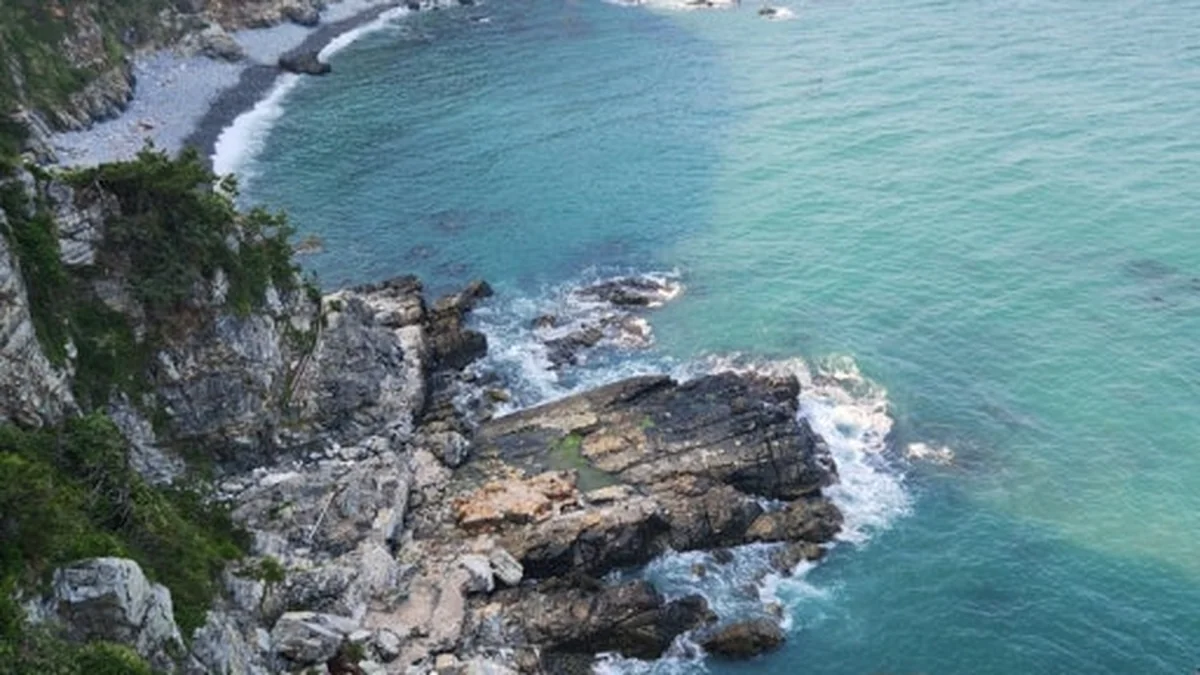
From the observatory, a long staircase leads down to the water’s edge and the area around the Yeongdo Lighthouse. This is the most physically demanding part of the visit, but also one of the most rewarding. At the bottom, the scale of the cliffs above you becomes clear in a way it simply isn’t from the top, and the sound and force of the waves against the rocks feels genuinely powerful.
Near the lighthouse, you may find haenyeo — Korea’s traditional female free-divers — selling fresh seafood at small stalls: sea urchin, octopus, raw shellfish pulled from the water nearby. It’s informal, it’s seasonal, and it’s exactly the kind of spontaneous local experience that makes a place feel real rather than curated.
Taejongsa Temple

Set a little inland from the coastal trail, Taejongsa Temple is a small but atmospheric Buddhist temple tucked into the forested hillside. It doesn’t announce itself loudly — you can almost stumble past it if you’re not paying attention — but spending ten or fifteen minutes here offers a genuinely different kind of quiet from the sea views. In late June and July, the hydrangeas that bloom around the temple grounds are remarkable, and the combination of purple flowers, stone lanterns, and pine canopy makes it one of the most photogenic corners of the entire park.
Sinseon Rock

Near the lighthouse area, Sinseon Rock is a striking coastal formation associated with a local legend about gods and goddesses resting here. Whether you’re drawn to the mythology or just the geology, it’s worth a pause. The light catches the wet rock surfaces in ways that are hard to predict and harder to photograph correctly — which is reason enough to simply stand and look rather than immediately reaching for your camera.
The Ocean Flying Theme Park
A short distance from the main Taejongdae park, the Taejongdae Ocean Flying Theme Park is a newer addition to the area and worth considering if your group includes people who want something more active alongside the natural sightseeing.

The park’s headline attraction is a 653-meter zipline that runs from a clifftop café down toward the sea, offering a bird’s-eye view of the coastline that no hiking trail can replicate. There’s also an immersive media art space called MOEI, and several viewpoint cafés designed to take full advantage of the panoramic setting. A comprehensive package ticket for multiple activities runs around 40,000 won. It’s a sharp contrast to the quieter pace of the natural park, but the two complement each other well as part of a full day out.
Practical Information
Entrance and Hours
Entering Taejongdae Resort Park is free. The park opens at 4am in summer (5am in winter) and closes at midnight. The Danubi Train operates during daylight hours, with the last service typically around 6:30 to 7pm depending on the season — arriving by early afternoon gives you comfortable time with the train still running.
Best Time to Visit
Spring and autumn are the standout seasons. April through early June brings mild temperatures, clear skies, and the kind of sea light that makes the cliffs look their absolute best. September through November is similarly pleasant, with the added bonus of autumn colors in the forest areas.
Summer is warm and the views are beautiful, but weekends in July and August can be genuinely crowded. Arriving before 10am makes a noticeable difference. Winter visits are possible and have their own appeal — the coastline in cold, windy conditions is dramatic in a completely different way — but dress accordingly, as the exposed cliffs catch wind from every direction.
Weather and Safety
The coastal rocks near the lighthouse are off-limits during high winds or heavy rain, and the park enforces this sensibly. Check conditions before heading down the stairs. If the rocks are closed, the views from the upper observatory are still completely worth the trip.
Getting Around
Naver Maps is significantly more accurate than Google Maps for navigating public transport in Busan. Download it before your trip and use it for bus arrival times, which are displayed in real time at most stops.
A Suggested Half-Day Route
If you have around four to five hours, here’s a rhythm that tends to work well. Arrive by 9am before the crowds build. Buy your Danubi Train ticket at the main square. Take the train to the observatory, spend 20 to 30 minutes taking in the view, then descend the stairs to the lighthouse and coastal rocks — allow at least 45 minutes here, more if the haenyeo stalls are set up. Walk back up, make a short detour to Taejongsa Temple, then catch the Danubi Train back to the entrance. If energy allows, walk across to the Ocean Flying Theme Park for the afternoon.
It’s a satisfying arc — natural scenery, a little history, fresh seafood, and the sense of having genuinely reached the edge of the city.
Final Thoughts
Taejongdae doesn’t try to impress you with bells and whistles. It doesn’t need to. The cliffs have been doing their job for millions of years, and they’re very good at it.
What makes a visit here memorable isn’t any single attraction — it’s the accumulation of small things. The sound of waves you can feel in your chest. The unexpected flash of color from a temple courtyard. The taste of sea urchin from a woman who dove for it herself that morning. The moment you realize you can see another country across the water.

Busan is a city that rewards exploration beyond its famous beaches, and Taejongdae is one of the clearest examples of why. If you have even half a day free during your time in the city, this is exactly the kind of place worth spending it.
Have you visited Taejongdae? Did you take the Danubi Train or walk the whole loop? Drop your experience in the comments — we’d love to hear what the cliffs looked like on the day you were there.