Beyond Jeju: Three Korean Islands That Will Completely Surprise You
Most people who visit South Korea have heard of Jeju. It shows up on every travel list, every airline route board, every recommendation from a well-meaning Korean friend. And look — Jeju deserves its reputation. It’s beautiful, dramatic, and genuinely worth a visit.
But here’s something that often gets buried in the conversation: South Korea has over 3,000 islands.
Three. Thousand.
If you tried to visit one per day, it would take you nearly a decade to work through the list. And while most of those islands are tiny, uninhabited specks in the Yellow Sea or the South Sea, a surprising number of them are full, living, breathing places with their own history, food culture, landscapes, and character — places that most international travelers walk right past on their way to the airport.
This post is about three of those places. Three islands that offer something completely different from each other, and something completely different from Jeju. Whether you’re in Seoul for a weekend or making your way around the southern coast, at least one of these should absolutely be on your list.
First, a Word About Korean Island Diversity
Before diving into specific recommendations, it’s worth appreciating just how varied Korea’s islands actually are.
The west coast islands — scattered across the Yellow Sea — tend to be flatter, windswept, and steeped in fishing culture. The tidal flats here are some of the richest in the world, and the seafood reflects that. Villages on these islands have a quiet, unhurried quality that feels very far removed from Seoul, even when you’re only a couple of hours away.
The south coast islands are different again. Here the sea is warmer, the terrain more dramatic, and the views — of layered green hills meeting glittering water — feel almost cinematic. This is also where you’ll find some of Korea’s most famous coastal roads, winding along cliffs with the kind of scenery that makes you pull over every ten minutes.
And then there are the islands further out — the ones that require a longer ferry ride, the ones that feel genuinely remote. These places operate at a different pace entirely. Fishing boats come in before dawn. Grandmothers sell dried fish on the dock. The sky at night is darker than you’d ever see near a city.
All of this exists within a single country the size of Indiana. It’s one of the things that makes Korea such a rewarding place to travel slowly.
1. Ganghwado — History at the Edge of Seoul
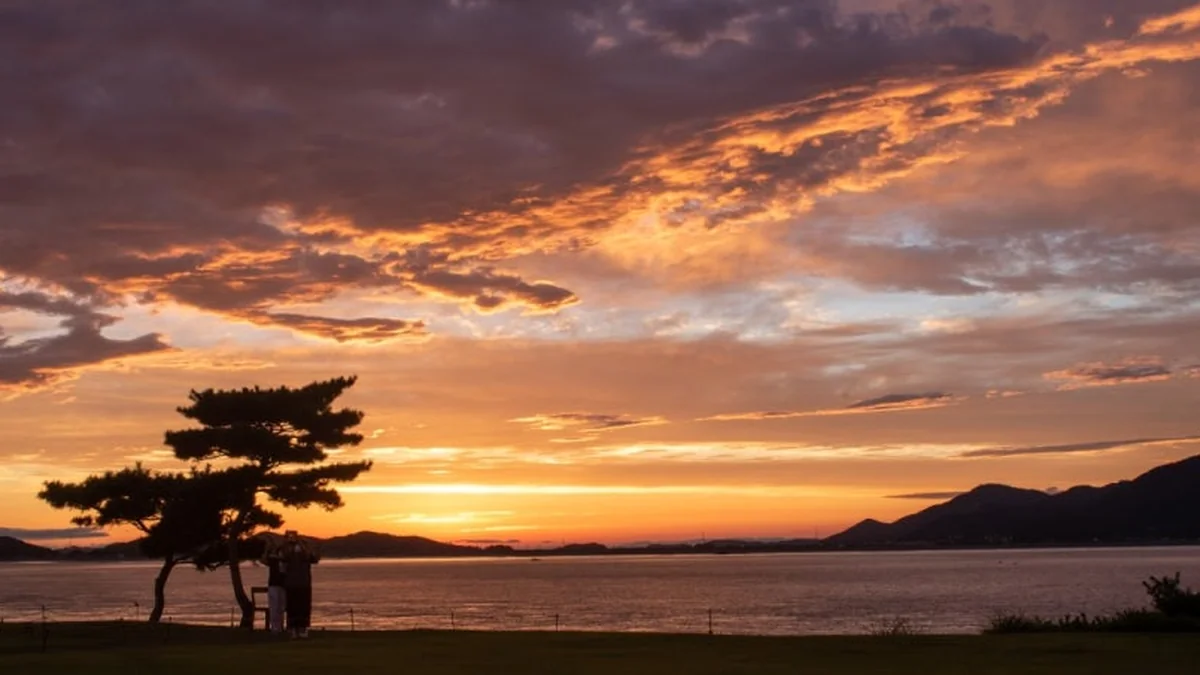
If you’re based in Seoul and you have a free weekend, Ganghwado is one of the most satisfying escapes the city has to offer. It sits just west of Incheon, separated from the mainland by a narrow channel, and it’s accessible by road — no ferry required. You can be standing on the island in under two hours from central Seoul.
What you’ll find there is something relatively rare in modern Korea: a place where the weight of history is still genuinely palpable.
Ganghwado has been at the center of Korean history more than once. When Mongol forces invaded the Korean peninsula in the 13th century, the Goryeo royal court retreated here and held out for nearly three decades. The ruins of Goryeogung Palace — the court’s refuge during that long siege — still stand on the island, modest but moving in their quiet way.
Centuries later, Ganghwado found itself at the center of a different kind of conflict. In the 19th century, as Western powers began pressing at the edges of the Joseon Dynasty, Ganghwado was the site of repeated naval confrontations — with France in 1866, with the United States in 1871, and with Japan in 1876. The fortress walls and battlements built to defend the island during that era are still visible today, and walking along them with the sea stretching out below gives you a tangible sense of the anxious, shifting world those defenders were navigating.
For history aside, the island also holds Jeondeungsa Temple, believed to be one of the oldest Buddhist temples in Korea — some accounts trace its origins back to 381 CE. The temple sits within a walled fortress complex on a forested hillside, and the combination of ancient architecture, autumn foliage, and mountain quiet makes it one of the most atmospheric spots in the greater Seoul area.
Ganghwado also has a thriving ginseng culture — the island’s climate produces high-quality ginseng, and you’ll find it at roadside markets, in local restaurants, and in dedicated shops throughout the island. Trying a bowl of ginseng chicken soup here, after a morning of walking the old walls, is one of those simple travel experiences that sticks with you longer than you’d expect.
Getting around is easiest by car, though local buses do connect the major sites. The island is large enough that a full day barely scratches the surface — an overnight stay at a small guesthouse lets you see the tidal flats in the early morning light, which is genuinely worth waking up for.
2. Namhae — Korea’s Treasure Island
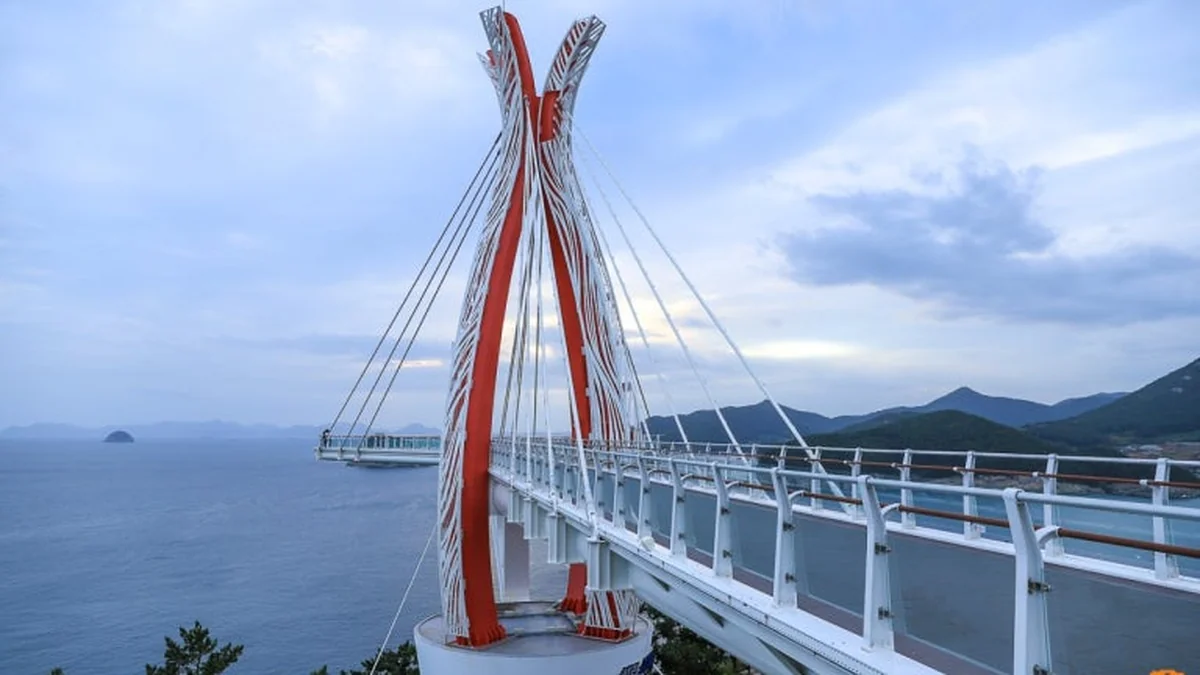
Namhae sits on Korea’s southern coast, connected to the mainland by a bridge rather than a ferry, and it carries a nickname — “Treasure Island” — that turns out to be more than just marketing.
What makes Namhae special is the sheer variety of things it offers within a relatively compact space. You have dramatic mountain terrain, terraced hillside rice fields, one of Korea’s most beloved beaches, a thousand-year-old mountain hermitage, and — most unexpectedly — a functioning German village perched on a hillside above the sea.
That last part tends to get people’s attention, and it deserves a proper explanation.
In the 1960s and 1970s, South Korea was in the early stages of its economic development — and the country actively sent workers abroad to earn foreign income. Thousands of Korean nurses and coal miners went to West Germany to work, sending remittances home that contributed meaningfully to the country’s growth. When many of them eventually retired decades later, a group of them resettled together on Namhae Island, building homes with materials imported from Germany in a style that genuinely reflects their years lived abroad.
The result is the Namhae German Village — a hillside community of orange-roofed, European-style houses overlooking the blue South Sea. It sounds like it shouldn’t work, and yet it does. There’s a small square, German restaurants serving schnitzel and beer, an exhibition hall telling the community’s story, and a viewpoint that offers one of the most photographed vistas on the southern coast. Admission to the village is free, which makes the whole thing feel even more generous and unhurried.
Just as memorable is the Darangee Village — or Darang-i — a hillside community where over a hundred terraced rice fields cascade down a steep coastal slope toward the water. These terraces have been farmed for generations, carved out of a landscape that left almost no flat ground to work with. The dedication embedded in that landscape is quietly extraordinary. Walking the narrow paths between the paddies in spring, when young green shoots are just beginning to show, is one of those slow-travel moments that doesn’t photograph well but stays with you for years.
Up on Geumsan Mountain, the Boriam Hermitage adds a different kind of beauty. Perched near the summit with sweeping views across the sea and surrounding islands, this small Buddhist hermitage has been a prayer site for over a thousand years and is considered one of Korea’s most sacred spots for Avalokitesvara worship. The hike up isn’t long, but the view at the top — sea in every direction, islands dotted below — rewards every step.
Sangju Silver Sand Beach rounds out the island’s offerings for those who want to simply rest beside the water. It’s a crescent-shaped bay with soft sand, calm waters, and enough surrounding pine forest to give the whole place a sheltered, almost private feel. In a country where good beaches tend to get crowded fast, Sangju holds up even on a busy summer weekend.
Getting to Namhae from Seoul takes around four to five hours by express bus, so it’s better suited as a two-night trip than a day trip. Renting a car on arrival is highly recommended — the island’s highlights are spread across winding coastal roads, and having your own wheels lets you stop wherever the view demands it.
3. Hongdo — The Red Island at the Edge of the Map
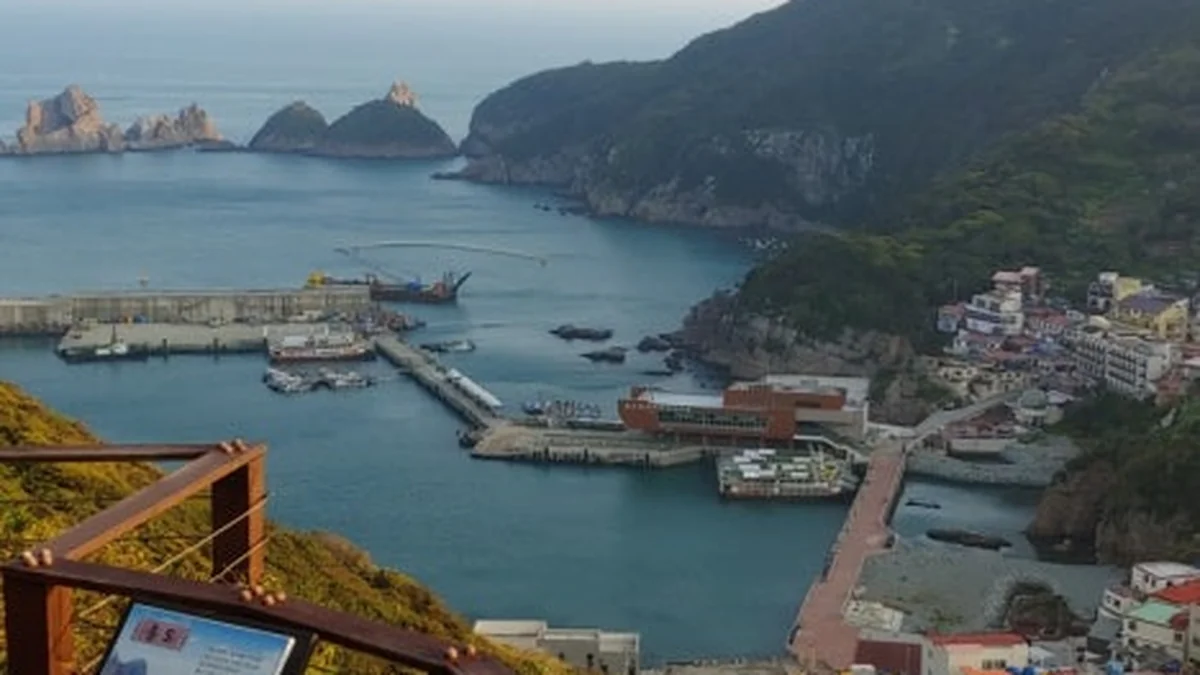
If the previous two islands still felt a little close to the mainland, Hongdo is the antidote.
Located off the southwestern tip of the Korean Peninsula in South Jeolla Province, Hongdo requires a ferry ride of over two hours from the port city of Mokpo. There are only two ferries a day — one in the morning and one in the early afternoon — and the island has a population of around 800 people, most of whom work in fishing. When you step off the boat, local fishermen will greet you immediately, offering to cook you whatever they’ve brought in that morning.
The name Hongdo means “Red Island” — and the name earns itself. The island’s cliffs and rock formations glow in vivid shades of rust and crimson, particularly in the late afternoon when the light hits them at low angles. Towering sea stacks, sea caves carved by centuries of wave action, and dramatic coastal rock formations make up a coastline that feels almost geological in its intensity. Boat tours around the island are the primary way to see these formations, and on a clear day the combination of red rock and blue water produces colors that seem slightly unreal.
Hongdo is a designated national park and natural monument, which means development has been kept minimal and the island’s natural state is largely intact. There are no cars. The hiking trails are simple and well-maintained. The accommodation options are small guesthouses and family-run minbaks — Korean-style homestays where you sleep on a traditional ondol-heated floor and meals are prepared by whoever is running the house.
The seafood here deserves its own mention. Because Hongdo sits in the middle of the Yellow Sea with some of the most productive fishing grounds in Korea, the fish and shellfish brought in daily are exceptional. Meals at minbaks often involve whatever came off the boat that morning — grilled mackerel, raw fish, small clams in broth, dried squid that’s been curing on wooden racks outside in the sea air. It’s not fancy. It’s exactly what it should be.
Visiting Hongdo requires a bit more planning than the other islands on this list. Because of the limited ferry schedule and the remote nature of the island, most visitors stay at least one night — and two nights is better, giving you one full day to hike and one to take the boat tour without feeling rushed. Accommodation books up during summer and autumn, so planning a few weeks ahead is wise.
But that extra effort is part of what makes Hongdo feel the way it does. When you’ve taken a two-hour ferry, settled into a small room overlooking the harbor, and eaten dinner with fish that was swimming a few hours ago, you feel the distance from ordinary life in a way that’s harder to achieve at a more accessible destination. That distance, for many travelers, is exactly the point.
Practical Notes for Planning
A few things worth keeping in mind across all three islands:
English signage varies considerably. Ganghwado, being close to Seoul and popular with international visitors, has reasonably good English information at major sites. Namhae has less, though tourism infrastructure is improving. Hongdo has very little, and the ferry ticketing system at Mokpo operates almost entirely in Korean — having a translation app ready, or asking your accommodation to help you book tickets in advance, is strongly recommended.
The best seasons for island travel in Korea are spring (April to early June) and autumn (September to November). Summer is warm and the water is inviting, but weekends can be very crowded at more accessible spots like Namhae. Hongdo, being remote, is less affected by weekend crowds but the sea can be rougher in late summer typhoon season, with ferry cancellations possible.
All three islands reward slow travel more than a rushed checklist approach. The landscapes are better appreciated at walking pace, the food is better enjoyed when you’re not rushing to catch a bus, and the sense of being somewhere genuinely different from the mainland settles in more fully when you give yourself a day or two to just exist in the place.
Final Thoughts
Korea’s 3,000-plus islands are one of the country’s most underappreciated assets — not just as tourist destinations, but as expressions of the country’s extraordinary geographic and cultural range. The history layered into Ganghwado, the unexpected warmth of Namhae’s German Village, the raw natural intensity of Hongdo’s red cliffs — none of these are on the typical international itinerary, and all of them are completely worth the detour.
Jeju will always be there. These islands are worth finding first.
Have you visited any of Korea’s lesser-known islands? Which one surprised you the most? Drop your experience in the comments — we’d love to hear where your travels have taken you.