
Why Koreans Say “Our Mom” Instead of “My Mom”: The Deep Meaning of Uri (우리)
Imagine you’re having a conversation with a Korean friend, and they casually say, “Our mom made the best kimchi last weekend.” You pause for a second. Our mom? You’re pretty sure you’ve never met their mother. So what’s going on?
Welcome to one of the most quietly fascinating corners of the Korean language — the word 우리 (uri).
At first glance, it simply means “we” or “our.” But spend any time around Korean speakers and you’ll realize it shows up in places that feel almost jarring to a non-Korean ear. “Our mom.” “Our country.” “Our company.” “Our husband.” It’s everywhere — and it’s not a mistake. It’s a window into how Korean people experience the world around them.
More Than a Pronoun
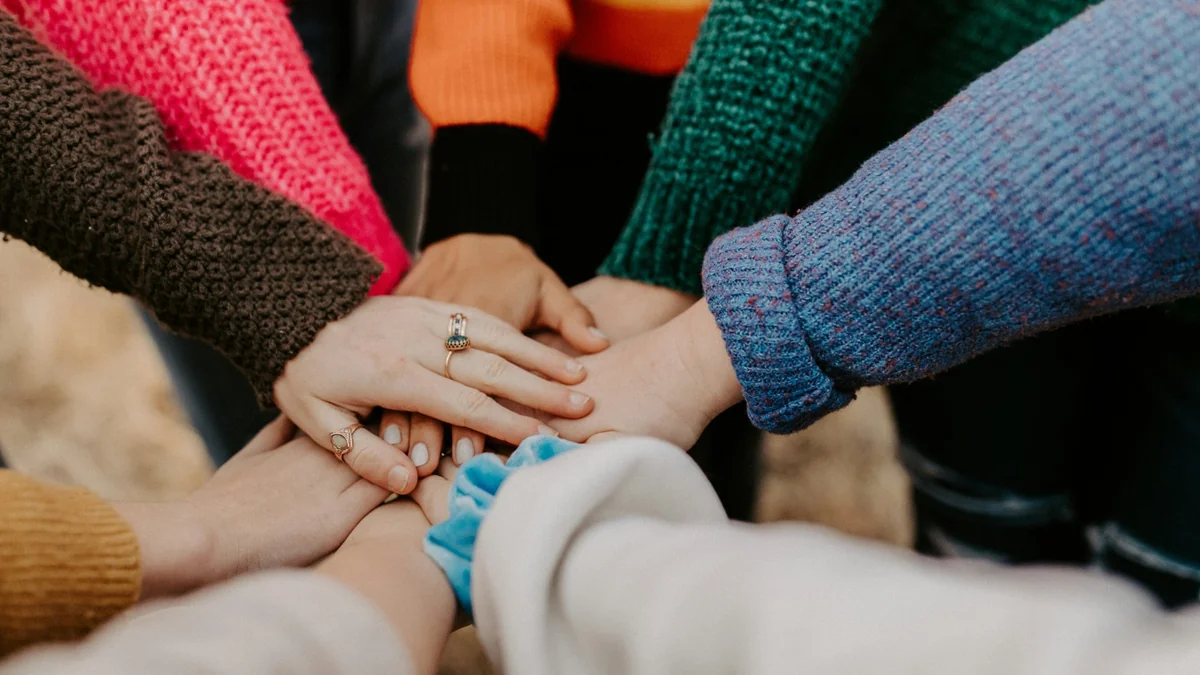
In English, the word “my” does a very specific job. It draws a clean boundary: this belongs to me, not you. “My house.” “My mother.” “My opinion.” The ownership is individual, and it’s intentional.
Korean works differently.
In Korean, uri is closer to belonging than possession. When a Korean person says “우리 엄마” — literally “our mom” — they’re not suggesting that you somehow share their mother. They’re expressing something warmer and more layered than that. They’re saying: she is someone precious on my side, someone inside my circle.
Uri embodies what might be called “we-ness” — a strong sense of unity and solidarity that extends the intimacy of the family unit to broader social circles, including school, the workplace, and even the nation itself.
It’s not grammar. It’s a philosophy.
A Word Rooted in History
To understand why uri runs so deep in Korean society, it helps to take a small step back in time.
Rice farming can never be done alone. Every stage — bringing water, planting seedlings, harvesting — depended on collective labor, a survival system known as dure and pumassi. To be isolated from the community could mean hunger. In that kind of environment, the boundary between “mine” and “ours” wasn’t just cultural — it was practical. Survival depended on it.
This cultural trait was further shaped by Confucianism, which prioritizes social hierarchy and collective well-being, and by periods of national hardship like the Korean War. Across generations of shared struggle, the instinct to huddle together under a single “we” became not just common, but deeply natural.
Koreans have a difficult history due to the Korean War, and unification among the people is one of the greatest cohesive forces in the country. This is reflected in both political and economic spheres of life and even in personal life, too.
History didn’t just shape the Korean character — it shaped the Korean language.
“Our Country” — 우리나라
There’s perhaps no better example of uri in action than the phrase 우리나라 (uri nara) — “our country.”
In English, people say “my country” without thinking twice. It’s natural, even patriotic. But in Korean, the idea of claiming a nation as purely “mine” feels strange — almost self-centered. The country belongs to all of us, so why would anyone frame it otherwise?
The most telling example is how Koreans refer to their nation. While Americans naturally say “my country,” Koreans say “우리나라” — “our country.” This isn’t political correctness or modesty; it reflects a fundamental worldview where individual ownership of abstract concepts feels inappropriate.
This is worth sitting with for a moment. It’s not that Koreans feel less personally connected to their homeland — if anything, the opposite is true. It’s that their connection to it is experienced collectively. The country isn’t something one person owns; it’s something everyone belongs to together.
That small linguistic choice says something enormous about how national identity is felt in Korea.
“Our Mom” — 우리 엄마
If uri nara surprises people, “우리 엄마” tends to genuinely confuse them.
A Korean person talking to a complete stranger will refer to their own mother as “우리 엄마” — our mom — without a second thought. In most other languages, this would be bizarre. In Korean, it’s completely ordinary.
In the western world, it would be regarded as somewhat odd if a stranger referred to her mom as “our mother.” There is something here that goes much deeper into the mindset of the Korean culture.
What’s actually happening is that the speaker is locating their mother within a circle of belonging. She’s not just a private possession — she’s someone precious, someone who sits inside the speaker’s warmest inner world. By using “our,” the speaker is, in a subtle way, inviting whoever they’re talking to into that warmth.
Uri dissolves the sharp lines that “my” tends to draw, suggesting that even the most personal aspects of life are part of a shared experience. It is, in a sense, a linguistic embrace.
Uri Across Everyday Life
Once you start noticing uri, you see it absolutely everywhere in Korean life. It’s not limited to family — it stretches across nearly every context.
우리 학교 (uri hakgyo) — our school. Students don’t go to their school; they go to our school. The institution belongs to the community of people who share it.
우리 회사 (uri hoesa) — our company. Employees are expected to think of the company as uri, sharing in collective success and failure. Company dinners, known as 회식 (hwesik), are less about personal enjoyment and more about bonding as uri company members.
우리 집 (uri jip) — our house. Even when a person lives alone, they are more likely to call their home “our house” than “my house.” The space is defined by warmth and belonging, not individual ownership.
우리 친구 (uri chingu) — our friend. Even in friendships, Koreans might say “우리 친구” when introducing someone, emphasizing that friendship creates a shared bond rather than just a mutual relationship.
Each of these phrases quietly reinforces the same idea: that identity is relational. You are not just a person standing alone — you are someone embedded in a web of connections, and that web matters.
The Fence That Uri Builds
One of the most helpful ways to understand uri is through the image of a fence.
Uri represents organic unity within shared boundaries. Individual boundaries dissolve within the group identity, and the collective identity can transcend individual autonomy.
Think of uri as the fence line around a shared space. Inside the fence, there is warmth, obligation, loyalty, and care. People inside the fence look out for each other. Outside the fence, you’re a stranger — not necessarily an enemy, but someone who doesn’t yet belong.
Once you’re part of someone’s uri, expectations and obligations change dramatically. Foreigners who understand and respect these boundaries tend to integrate more successfully into Korean social life.
This is why being welcomed into someone’s “우리” is significant. It’s not just a casual inclusion — it’s an invitation into a circle of genuine mutual care.
Uri and Jeong — Two Sides of the Same Feeling
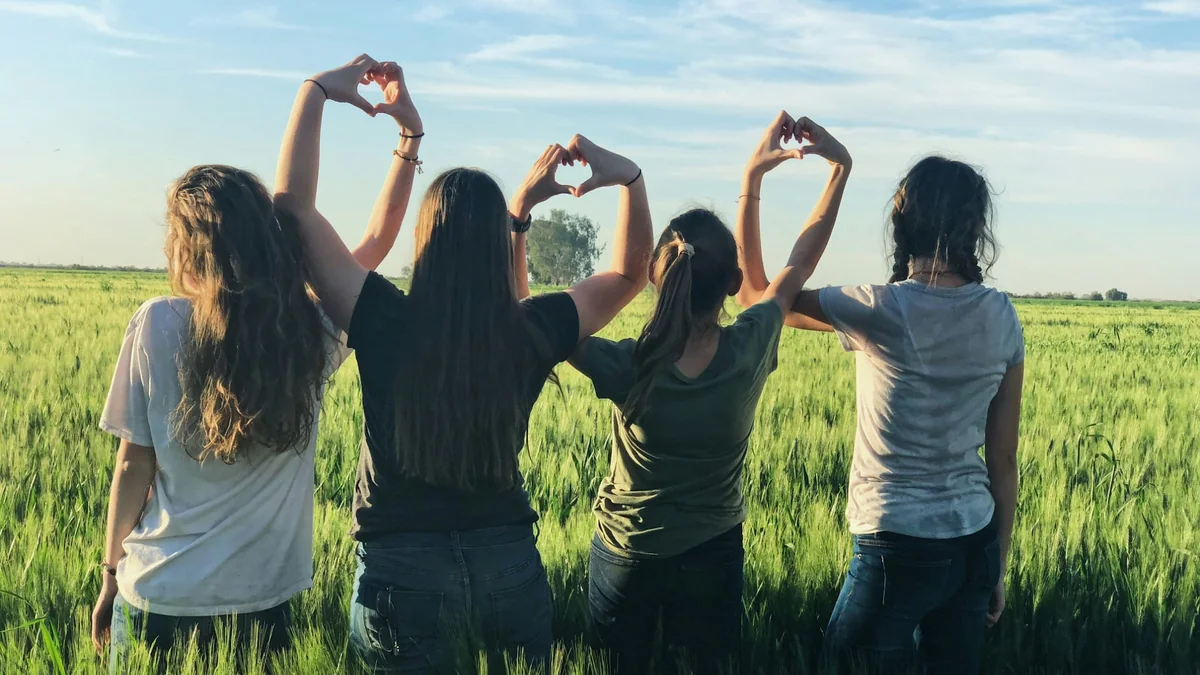
Uri doesn’t exist in isolation. It’s closely tied to another deeply Korean concept: 정 (jeong).
The concept of uri is closely intertwined with jeong — a unique Korean emotional bond that signifies affection, care, compassion, and a deep sense of connection within a group, further solidifying the collective identity.
Jeong is the kind of affection that builds slowly, almost without you noticing. It’s the feeling you have for the neighborhood you grew up in, the colleague you’ve eaten lunch with for years, or the friend you’ve been through hard times with. It’s not dramatic love — it’s the quiet, sturdy kind.
When a Korean person uses uri to describe someone or something, there’s often jeong wrapped up inside it. The word carries an emotional texture that a simple translation to “our” can never fully capture.
The Tension Within Uri
It would be unfair to paint uri as purely beautiful. Like most deeply rooted cultural values, it comes with complexity.
Uri is a warm blanket that blocks the cold, and at the same time, a plastic wrap that can feel suffocating. In Korea, uri often becomes a justification for interference and control. “Because we are uri, I’m telling you this…” — these sentences wear the mask of love, but they can press down on a person’s choices and pace under the heavy name of uri.
Maintaining collective harmony is a priority in Korean society, sometimes at the expense of individual expression. Younger Koreans in particular are navigating this tension — finding ways to honor the warmth of collective identity while also carving out space for individual expression and autonomy.
Contemporary Korean society exists in a dynamic space between its collectivist traditions and a rising tide of individualism, driven by rapid modernization and global cultural exchange. Yet, the spirit of uri has proven remarkably resilient, finding new relevance in the digital age through online communities and K-pop fandoms.
The word evolves. But its core remains.
Uri in the Age of K-pop and Global Culture
Here’s something worth pointing out for anyone who’s spent time in K-pop fandom spaces: uri is everywhere there, too.
Fans naturally refer to “우리 오빠” (our older brother — a term of endearment for a male idol), “우리 팀” (our team), and “우리 팬덤” (our fandom). The emotional logic is the same: this person, this group, this community belongs to us. We are invested together. We rise and fall as one.
Online communities and K-pop fandoms have become modern tribes, bound by a powerful sense of shared identity. In these spaces, the deep-seated need for belonging continues to find powerful new forms of expression.
In a way, it’s fascinating — a word born from centuries of agricultural cooperation and collective survival is now the emotional engine powering some of the world’s most passionate fan communities. The form changes. The feeling doesn’t.
What Uri Teaches Us
For anyone learning Korean, or simply trying to understand Korean culture more deeply, uri is one of the most rewarding concepts to sit with.
Research has found that the first associations with the word “me” were “family” and “love” for Koreans. In contrast, the first word associated with the word “me” for Americans was “I, person, individual.” The differences that emerge from these first cultural concepts are striking. Koreans view themselves as blending into their family, whereas people in Western countries fundamentally view themselves as separate from others.
Neither approach is better or worse — they’re just different lenses through which people make sense of belonging. But understanding uri gives you a genuine key to understanding how Korean people build relationships, communicate care, and experience identity.
The next time you hear a Korean person say “our mom” or “our country,” you don’t need to be confused. You just need to listen a little differently.
They’re not describing ownership. They’re describing where they feel at home.
Have you ever noticed how Korean friends use “우리” in conversation? Did it surprise you the first time? Share your experience in the comments — we’d love to hear your story.