Jeju Columnar Joints Explained: Lava, Geometry, and Coastal Landscape
Stone That Looks Too Ordered
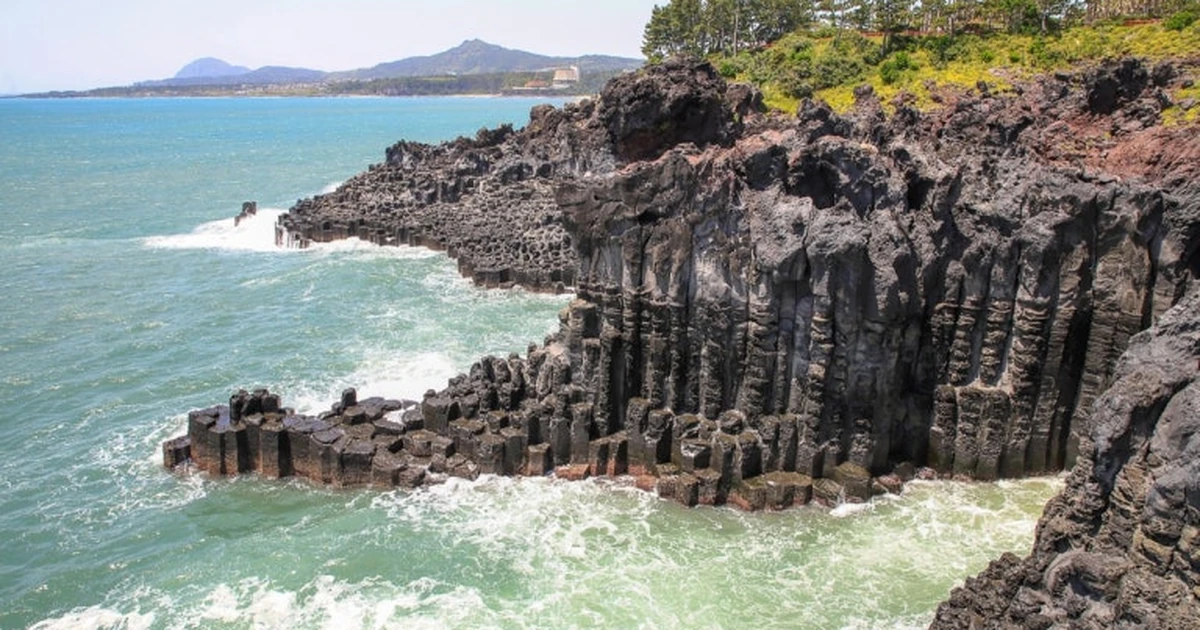
Along parts of the southern coast of Jeju Island, the cliffs do not look random.
The rocks appear stacked.
Vertical.
Evenly shaped.
From a distance, they resemble columns rising from the sea.
Some look like bundles of long pillars.
Others appear almost geometric.
This formation is known as “Columnar Jointing,” and in Korean it is called “Jusangjeolli” (주상절리).
The name literally means “pillar-shaped joints.”
The term describes cracks in volcanic rock that form natural columns.
Lava That Slowly Cooled
The origin of Jusangjeolli begins with lava.
Thousands of years ago, molten lava flowed across the landscape of Jeju Island.
When lava spreads across land or reaches the ocean, it eventually cools and hardens.
But cooling does not happen instantly.
As the surface temperature drops, the rock begins to contract.
This contraction creates fractures in the solidifying lava.
Over time, those fractures form repeating patterns.
Why the Columns Are Hexagonal
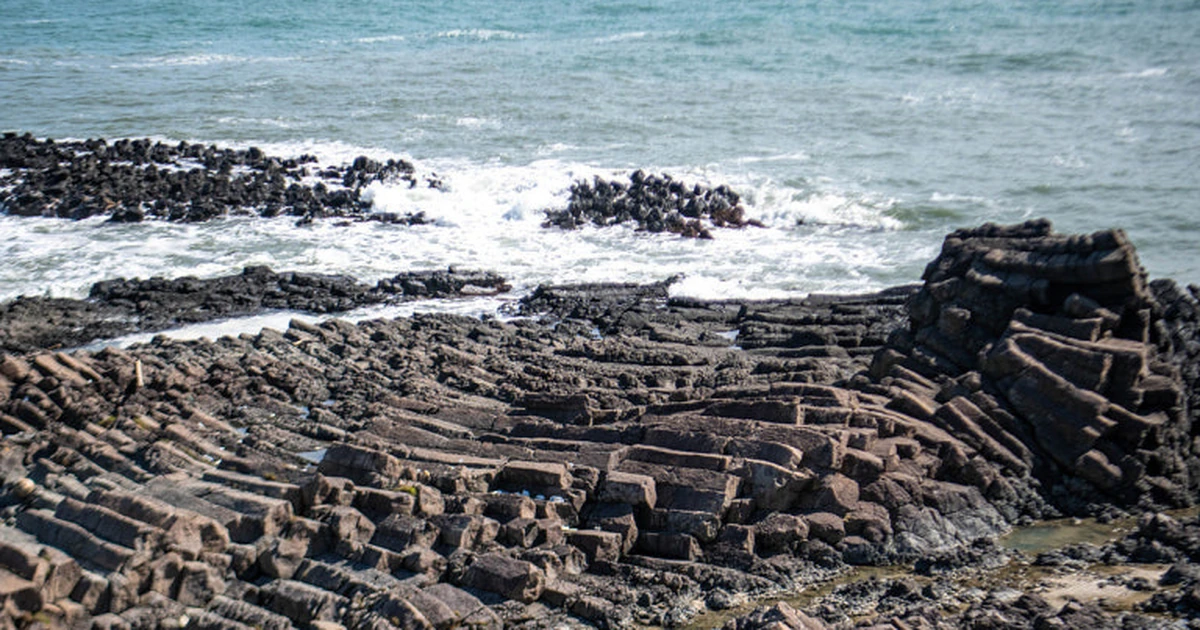
Many of the columns appear six-sided.
This shape is not accidental.
When materials shrink evenly while cooling, stress distributes in patterns that favor hexagons.
Hexagonal shapes pack efficiently.
They allow the rock to crack in balanced directions.
The result is a series of long vertical columns that appear almost engineered.
Nature often produces geometry when physical forces settle into equilibrium.
The Cliffs at the Coast
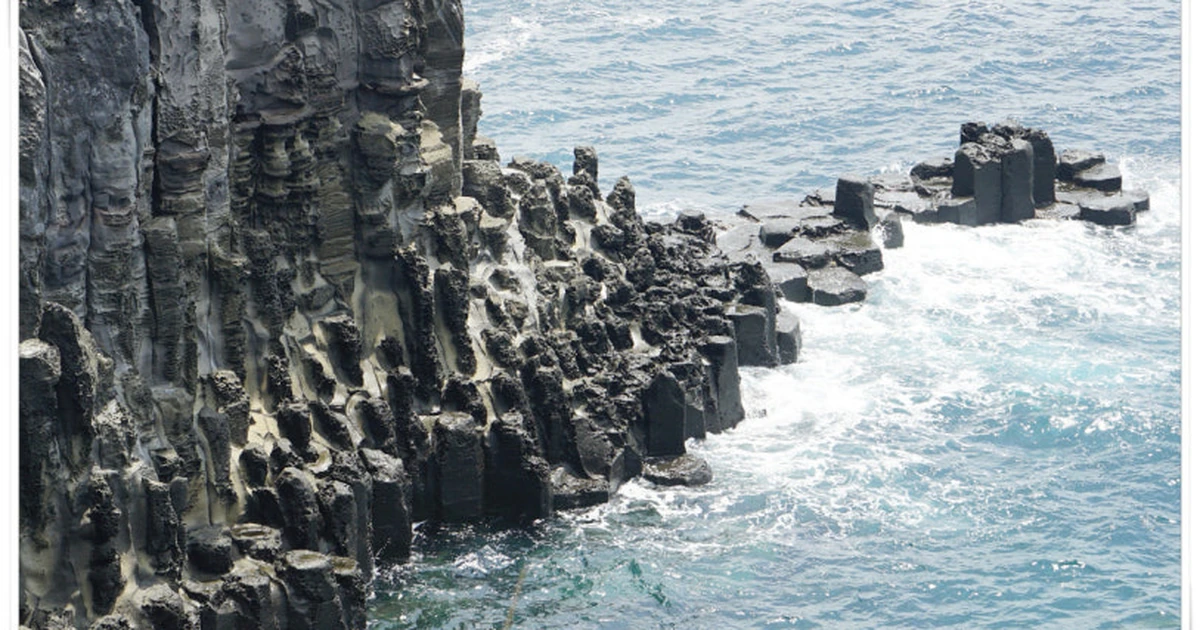
In Jeju, columnar joints are most visible along coastal cliffs.
One of the best-known sites lies near Jungmun on the southern shore of the island.
There, waves strike directly against walls of basalt columns.
The pillars extend downward into the sea.
Some are tall.
Others are shorter and broken by erosion.
The ocean gradually shapes their edges.
A Landscape Formed by Two Forces
The appearance of Jusangjeolli comes from two different processes working together.
The first is volcanic activity.
Lava created the basalt rock itself.
The second is erosion.
Wind and waves exposed the internal column patterns by wearing away surrounding material.
Without erosion, many of these structures would remain hidden inside the rock layers.
A Common Misunderstanding
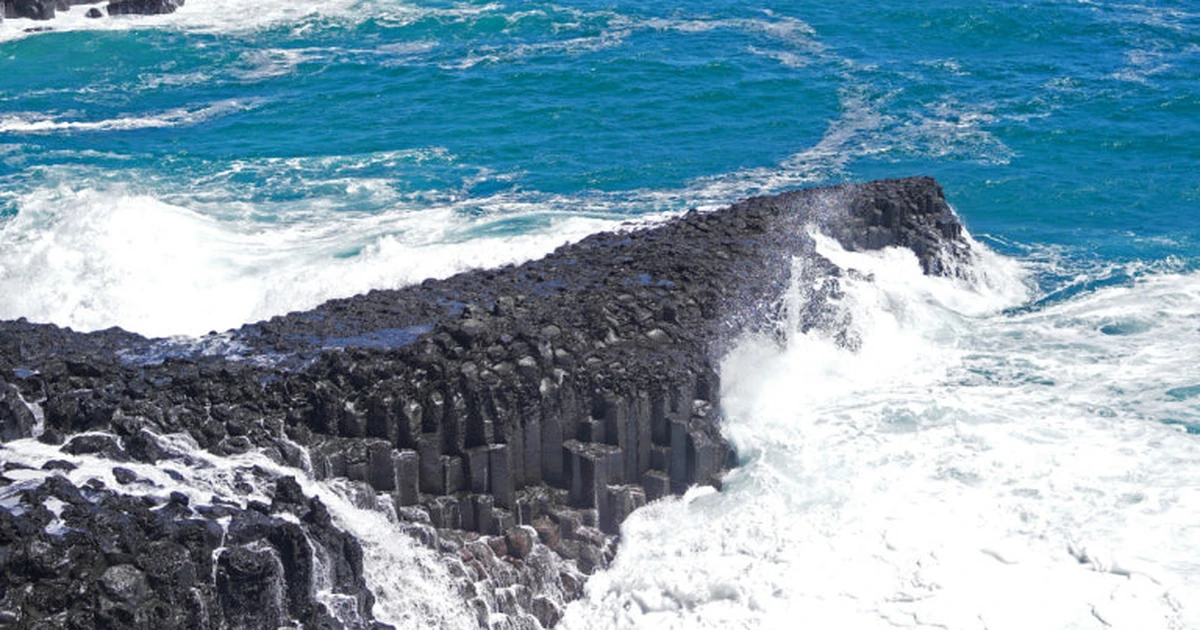
Visitors sometimes assume the columns were carved or arranged intentionally.
The pattern feels too regular to be accidental.
But no human tool shaped them.
The symmetry is entirely geological.
Volcanic rock cooled slowly.
Stress created fractures.
Time revealed the structure.
Sound and Movement
Standing near the cliffs, the sound of the ocean becomes part of the experience.
Waves crash against the columns repeatedly.
The water moves between the stone pillars.
Spray rises into the air.
The basalt appears rigid, but the sea remains in motion.
The Cultural Layer
In Korea, unusual landscapes often gather stories.
Columnar cliffs have sometimes been described as resembling giant organ pipes or stone soldiers standing side by side.
The imagery varies depending on who is looking.
These comparisons are not scientific explanations.
They are ways of describing something unfamiliar.
Stone That Remembers Heat
Basalt forms from intense heat beneath the earth’s surface.
Yet the columns now stand cool along the shoreline.
What remains visible is the record of cooling itself.
Every column edge marks a fracture created as molten rock slowly lost its heat.
The geometry is a trace of that moment.
The Quiet Order of Lava
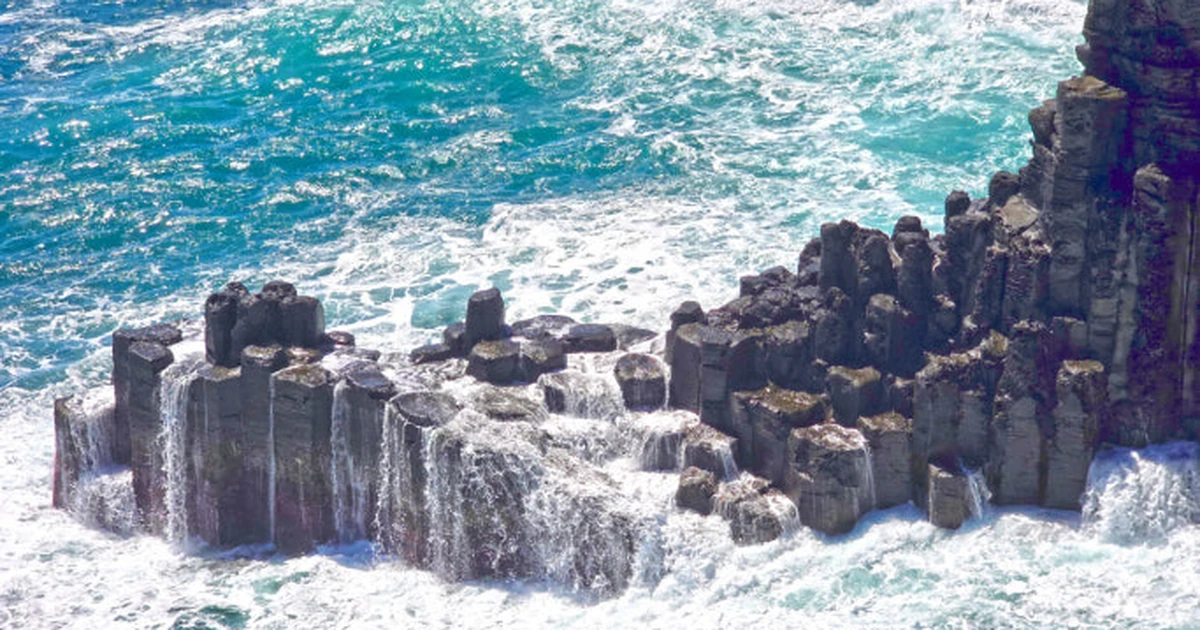
Jusangjeolli does not appear everywhere on the island.
It forms only where lava cooled under specific conditions.
That rarity makes the cliffs noticeable.
Visitors often stand for a moment looking at the repeating patterns.
Vertical lines.
Sharp edges.
Stone rising from water.
The columns appear rigid and permanent.
But they began as flowing lava.
Liquid becoming stone.
Heat becoming structure.
And the sea continuing to move beside it.