Jeju Island Waterfalls: Meaning, Formation, and Cultural Landscape
Water and Lava
When people imagine Jeju Island, they often picture volcanic landscapes.
Black rock.
Wide skies.
Wind moving across grass fields.
Waterfalls are not always the first image that comes to mind.
Yet across the southern coast of the island, waterfalls appear repeatedly.
They fall over dark lava cliffs.
Some drop into forests.
One falls directly into the sea.
These waterfalls are not accidents of scenery.
They are part of the island’s geological story.
An Island Shaped by Volcanoes
Jeju Island was formed by volcanic activity thousands of years ago.
Layers of lava cooled into porous basalt rock.
Basalt absorbs water easily.
Rain does not always remain on the surface.
Instead, it travels underground through tiny spaces within the rock.
Eventually, the water emerges again where cliffs meet the ocean or valleys open.
This underground movement helps create the island’s waterfalls.
The water reappears suddenly.
Gravity finishes the journey.
The Three Famous Waterfalls
Among the many waterfalls in Jeju, three are widely known.
Jeongbang Waterfall.
Cheonjiyeon Waterfall.
Cheonjeyeon Waterfall.
Each carries a slightly different atmosphere.
Jeongbang Waterfall
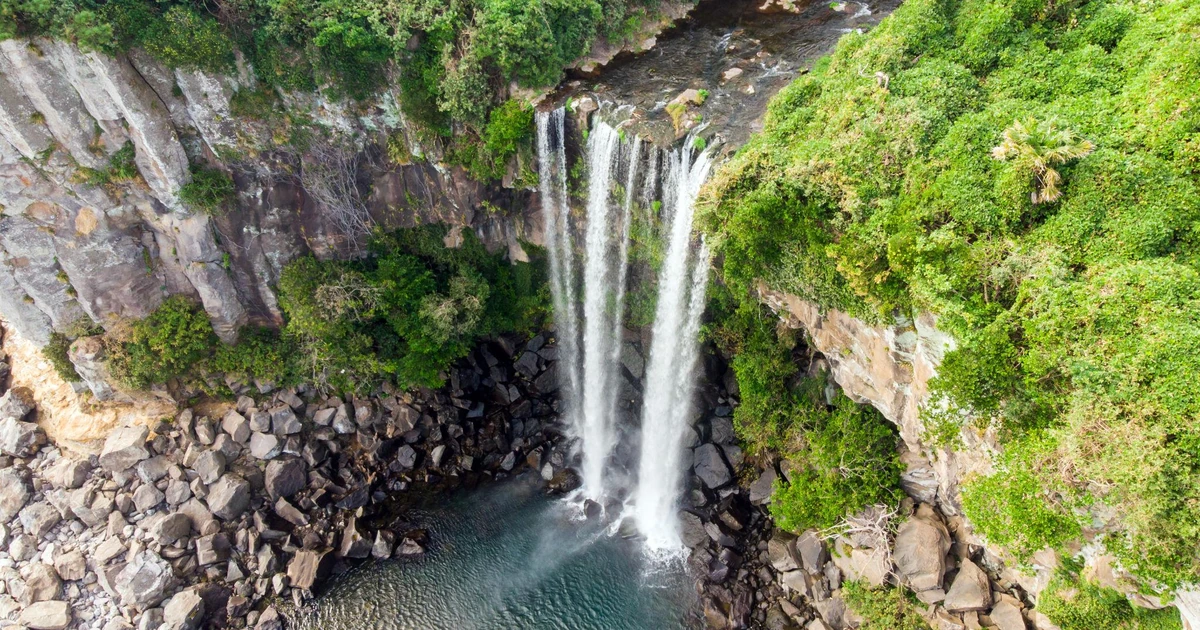
Jeongbang Waterfall is unusual.
The water falls directly into the ocean.
Few waterfalls in the world meet the sea this way.
Visitors walk down a rocky shoreline to reach it.
The sound of waves mixes with the falling water.
Behind the waterfall rises a cliff of dark volcanic stone.
The scene feels open.
Sea in front.
Cliff behind.
Water descending between.
Cheonjiyeon Waterfall


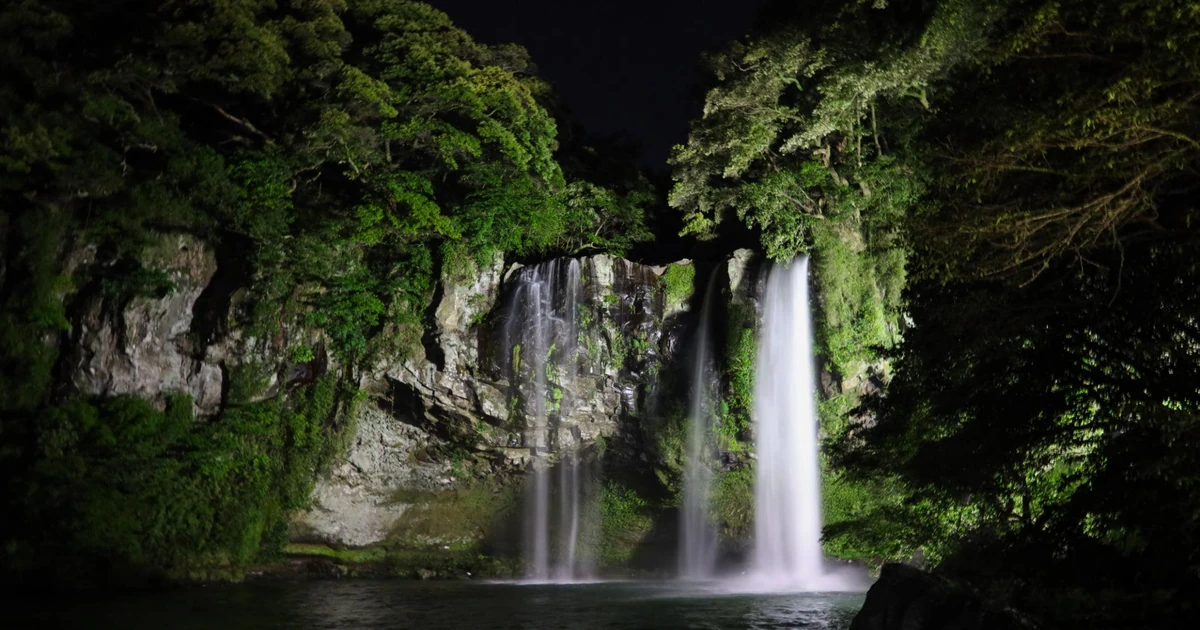
Cheonjiyeon Waterfall sits deeper inside a valley.
Its name means “the pond where heaven and earth meet.”
The water drops into a wide pool surrounded by dense vegetation.
Walking paths lead visitors through subtropical plants.
At night, the area is sometimes illuminated softly.
The waterfall appears calm rather than dramatic.
It feels enclosed by the forest.
Cheonjeyeon Waterfall


Cheonjeyeon Waterfall forms a series of three levels.
Its name is often translated as “the pond of the emperor of heaven.”
Water flows down step by step through different pools.
Nearby stands Seonimgyo Bridge, decorated with carvings of heavenly nymphs.
Local legends describe celestial maidens descending to bathe in the waters.
The landscape encourages imagination.
Water and Story
Waterfalls often attract stories.
The sound of falling water creates distance from ordinary noise.
Mist gathers in the air.
In Jeju, many natural places carry legends about spirits, gods, or travelers from the sky.
These stories are not always taken literally.
But they shape how people see the landscape.
A Common Misunderstanding
Some visitors expect enormous waterfalls similar to those found in larger continental regions.
Jeju’s waterfalls are not extremely tall.
Their character comes from surroundings rather than scale.
Volcanic rock frames the water.
The ocean sits close by.
Subtropical plants grow around the pools.
The environment forms the experience.
The Role of Rain
Jeju receives significant rainfall during parts of the year.
Seasonal rain feeds streams moving through the porous rock.
After heavy rains, the waterfalls become stronger.
During drier periods, the flow may soften.
The waterfalls respond directly to weather.
They are part of the island’s rhythm.
Standing Near the Water
Visitors approach slowly.
Paths descend toward the sound.
The air becomes cooler.
Mist settles lightly on skin.
The falling water is constant.
It does not rush or hurry.
On Jeju Island, waterfalls appear where underground water finally returns to daylight.
The journey of rain through lava rock ends there.
For a moment, the water becomes visible again.
Then it continues.
Toward the sea.