The Origin of Taekwondo: History, Philosophy, and Belt System Meaning
The First Question About the Belt
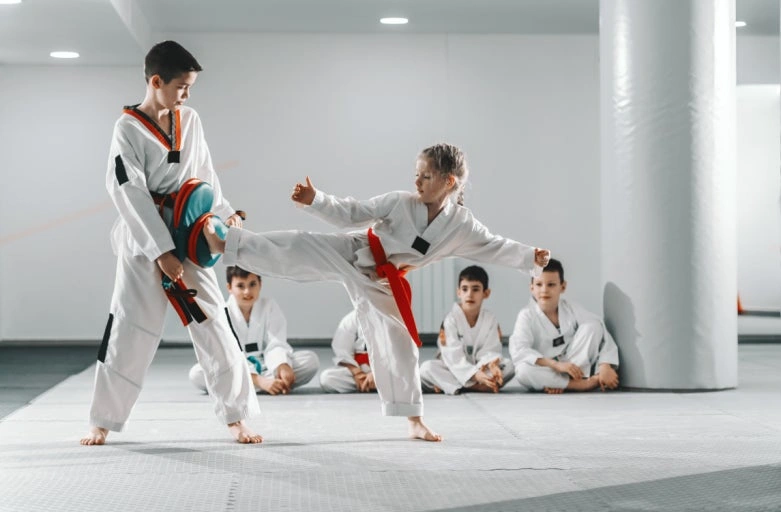
When people first encounter Taekwondo, they often focus on the kicks.
The height.
The speed.
The sound of the uniform cutting through air.
But very quickly, another question appears.
What does the belt color mean?
Why white, then yellow, then blue, then red, then black?
The belt seems simple.
A strip of fabric tied at the waist.
Yet it carries weight.
The Origin of Taekwondo
Taekwondo (태권도) literally means “the way of the foot and the fist.”
“Tae” refers to kicking or foot techniques.
“Kwon” refers to the fist.
“Do” means the way — a path or discipline.
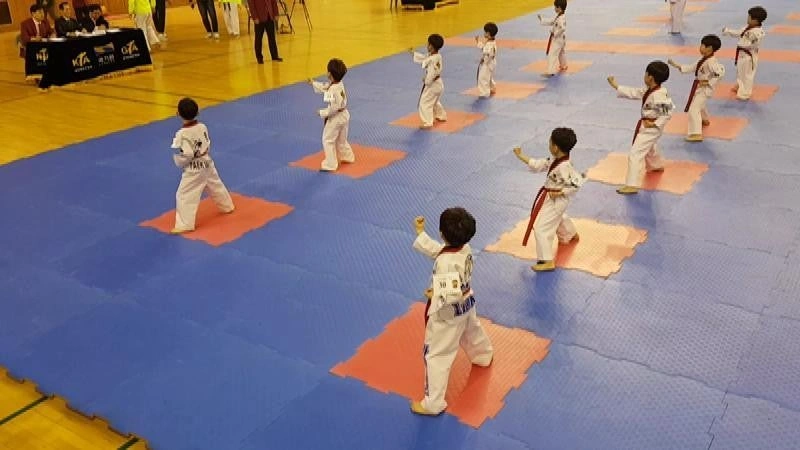
The term was officially adopted in 1955 in South Korea, after efforts to unify various martial arts schools.
Its roots trace back to older Korean martial traditions, including Taekkyeon (택견), as well as influences from Japanese karate during the colonial period.
After the Korean War, there was a strong desire to establish a distinctly Korean martial identity.
Taekwondo became part of that national reconstruction.
It was not only a fighting system.
It was symbolic.
Discipline, resilience, rebuilding.
The Meaning of the Belt System

The colored belt system did not exist in ancient Korea.
It was adapted and formalized in the 20th century.
The progression reflects growth rather than status alone.
White belt represents beginning.
White is blankness.
Like unmarked paper.
The student knows little.
Yellow belt often symbolizes earth.
The foundation where roots take hold.
Blue belt represents the sky.
Growth upward.
Red belt signals danger or caution.
Not toward others, but toward oneself.
Power requires control.
Black belt does not mean mastery.
It represents maturity and depth.
Black absorbs all colors.
It suggests completion of the basic cycle, not the end of learning.
A Common Misunderstanding
Outside Korea, a black belt is often seen as final achievement.
A permanent mark of superiority.
But within traditional Taekwondo philosophy, it is considered the beginning of serious study.
The belt is not a trophy.
It marks responsibility.
Higher ranks are expected to show restraint.
Skill without character is incomplete.
This idea aligns with the meaning of “Do.”
The way is ongoing.
The Uniform and Structure
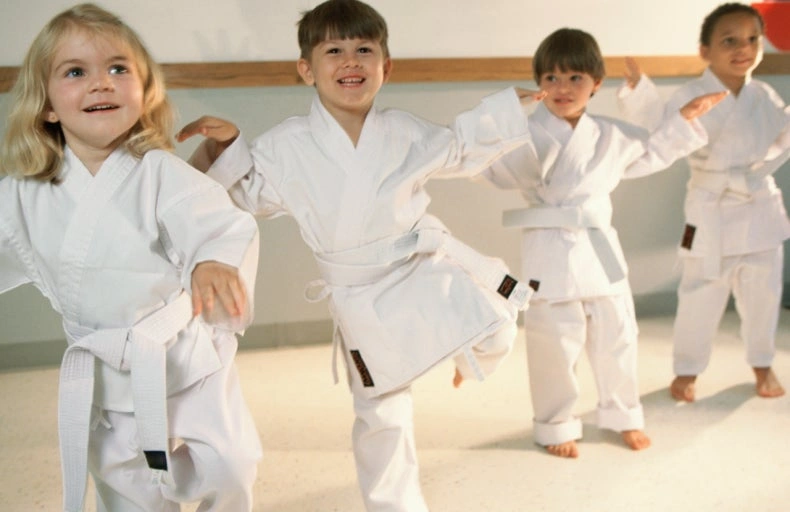
The uniform is called “Dobok” (도복).
White, loose, structured.
It reflects simplicity.
The belt ties around the waist, securing the jacket closed.
The knot sits at the center.
Balance is visual.
Training halls are called “Dojang” (도장).
Students line up by rank.
Hierarchy is visible.
But respect flows both upward and downward.
The instructor bows to students.
Students bow to the instructor.
Mutual acknowledgment.
Cultural Context
In post-war Korea, Taekwondo became part of education.
Children trained after school.
Military units adopted it.
It was promoted internationally as a symbol of Korean strength and discipline.
In 2000, Taekwondo became an official Olympic sport.
This global visibility transformed it.
Yet the structure of bowing, ranking, repetition remains consistent.
Practice involves repeating forms called “Poomsae” (품새).
Movements are precise.
Kicks are high, but structure is grounded.
Control precedes power.
Beyond Competition
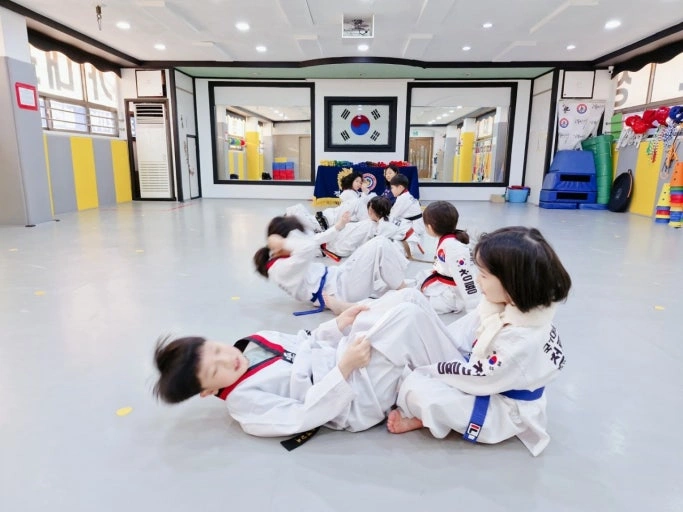
Modern Taekwondo includes sport sparring with electronic scoring.
But traditional training emphasizes etiquette.
Students bow when entering the dojang.
They bow before and after sparring.
The ritual is quiet.
The belt becomes worn over time.
Fabric softens.
The color fades slightly.
A new belt is stiff.
An old belt carries creases and sweat.
Time leaves marks.
Taekwondo is often associated with strength and speed.
But the belt around the waist does not measure force.
It measures passage.
From beginner to practitioner.
From imitation to understanding.
The strip of fabric looks small.
But in Korea, it once carried something larger —
A country rebuilding identity.
A generation training discipline into their bodies.
The belt tightens.
The stance lowers.
The movement begins again.