The First Generation of K-POP: How Idol Culture Was Created
The first generation of K-pop marks the moment when Korean pop music transformed into a fully structured idol industry.
This era did not simply introduce new artists—it created an entirely new system that combined music, performance, visuals, and fandom into one coordinated model.
Before this period, Korean popular music largely revolved around solo singers and ballad-driven television performances.
The first generation changed that logic completely.
Historical Background: Why the 1st Generation Emerged
The first generation took shape in the mid-to-late 1990s, during a period of rapid social change in South Korea.
Cable television expanded, youth culture became more visible, and Western pop influences—especially hip-hop and dance music—began to circulate more freely.
At the same time, entertainment companies recognized that young audiences were not just listeners but potential long-term supporters.
This realization pushed agencies to design artists not only as musicians, but as complete cultural products.
The Shift That Changed Everything
A major turning point came with Seo Taiji and Boys.
Their success demonstrated that Korean youth were eager for music that reflected global sounds and contemporary identity.
What followed was not imitation, but systemization.
Entertainment agencies began to:
- Recruit trainees at a young age
- Control music, styling, choreography, and public image
- Plan long-term group concepts rather than single releases
This was the true beginning of the idol system.
Defining Characteristics of 1st Generation K-POP
The first generation established rules that still define K-pop today.
Group-Centered Structure
Unlike earlier eras dominated by solo artists, idol groups became the industry standard.
Groups allowed agencies to assign roles—visuals, main vocalists, rappers—which made performances more dynamic and marketable.
Performance Over Vocals Alone
While singing ability remained important, choreography became equally central.
Synchronization and stage presence mattered as much as vocal tone.
Clear Visual Identity
Hair color, outfits, and styling were deliberately coordinated.
For many fans, visuals became the first point of attraction.
Representative Artists and Industry Competition
Several groups became symbols of the first generation.
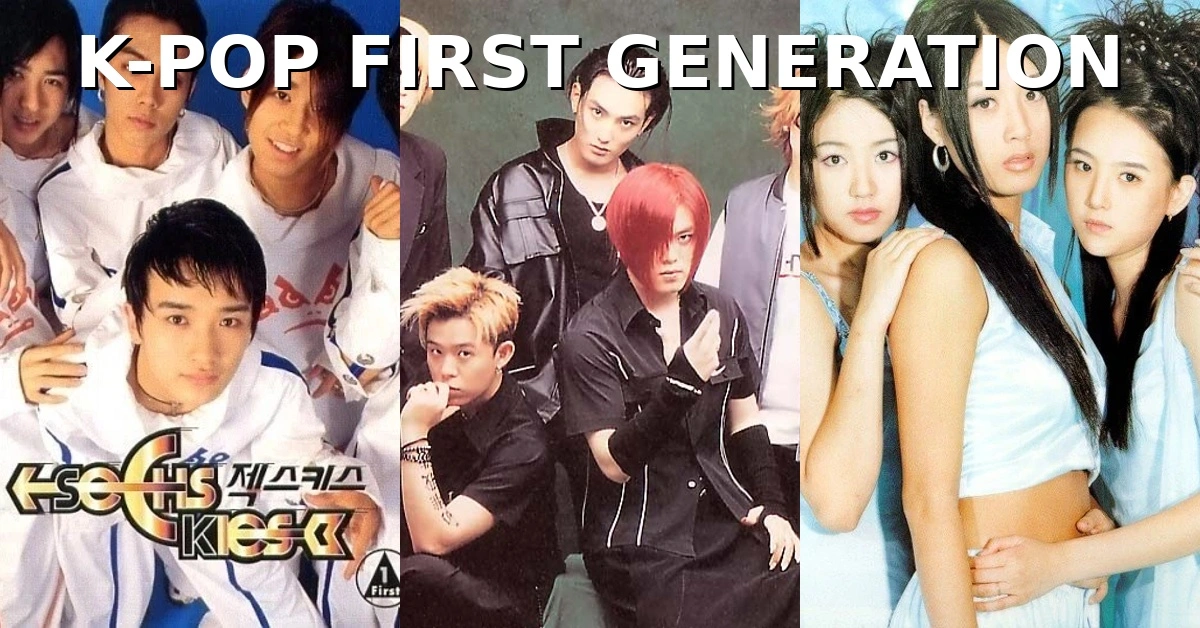
- H.O.T.
Often cited as the first fully realized idol group, H.O.T. defined fan culture and mass popularity. - Sechs Kies
Their rivalry with H.O.T. intensified fan loyalty and introduced competitive fandom dynamics. - S.E.S.
One of the earliest girl groups to succeed within the idol framework, setting a model for future female acts.
Agency competition during this period was fierce and public, helping to solidify idol fandom as an identity.
The Birth of Modern Fandom Culture
One of the most influential aspects of the first generation was fandom itself.
Fans did not simply consume music—they participated.
- Official fan clubs were formed
- Fans attended live broadcasts regularly
- Group colors and symbols created visible loyalty
- Fan chants synchronized audience participation
This behavior may feel normal today, but at the time it was revolutionary.
Media Environment and Limitations
Unlike later generations, first-generation idols relied almost entirely on television exposure.
There was no social media, no streaming platforms, and no direct artist-to-fan communication online.
Success depended heavily on:
- Music shows
- Variety programs
- Physical album sales
This environment made fandom dedication even more intense, as access was limited.
Controversies and Growing Pains
The first generation was not without problems.
- Contracts were often restrictive
- Idols had limited creative control
- Burnout and sudden disbandments were common
These issues later led to industry reforms, but they also revealed the cost of rapid system-building.
Why the 1st Generation Still Matters
Nearly every element associated with K-pop today can be traced back to this era.
The first generation:
- Created the idol training system
- Established fandom as an active force
- Defined performance as a core value
- Proved that pop groups could dominate youth culture
Without this foundation, later global success would not have been possible.
Transition Toward the 2nd Generation
As the 1990s ended, production quality improved and overseas interest began to grow.
The industry became more polished, and agencies started looking beyond Korea.
This shift marked the transition into the second generation of K-pop, where expansion and globalization became central themes.