K-POP Generations Guide: A Timeline for Global Fans
K-POP Generations Explained: From the 1st Generation to Today
If you are new to K-pop, you will quickly notice that fans often describe artists by “generation.”
You may hear phrases like first-generation idols, fourth-generation groups, or debates about when the next generation begins.
These generations are not officially defined by the Korean music industry.
They are a shared framework used by fans, media, and observers to explain how K-pop has changed over time.
Understanding K-pop generations is not about memorizing debut years.
It is about understanding how music, technology, fandom, and Korean society evolved together.
What Does “Generation” Mean in K-POP?
In K-pop, a generation refers to a broad period in which the industry shares similar characteristics.
These characteristics usually include:
- How idols are trained and produced
- Popular music and performance styles
- Main platforms used to connect with fans
- Fandom culture and participation
- Social and technological conditions in Korea
Because these factors change gradually, generations do not begin or end overnight.
Why K-POP Is Divided Into Generations
K-pop did not grow in a straight or predictable line.
Instead, it evolved through major shifts that changed how idol music functioned.
For example:
- Television shaped early idol exposure
- Online communities transformed fandom culture
- YouTube and social media enabled global expansion
- Algorithm-based platforms reshaped promotion
Each shift created a noticeable difference from the previous era.
Generations exist to describe these differences in a simple and accessible way.
The Commonly Used K-POP Generation Framework
While opinions may vary, most fans generally describe K-pop using the following generations:
- 1st Generation (1990s)
The beginning of the modern idol system and organized fandoms - 2nd Generation (2000s)
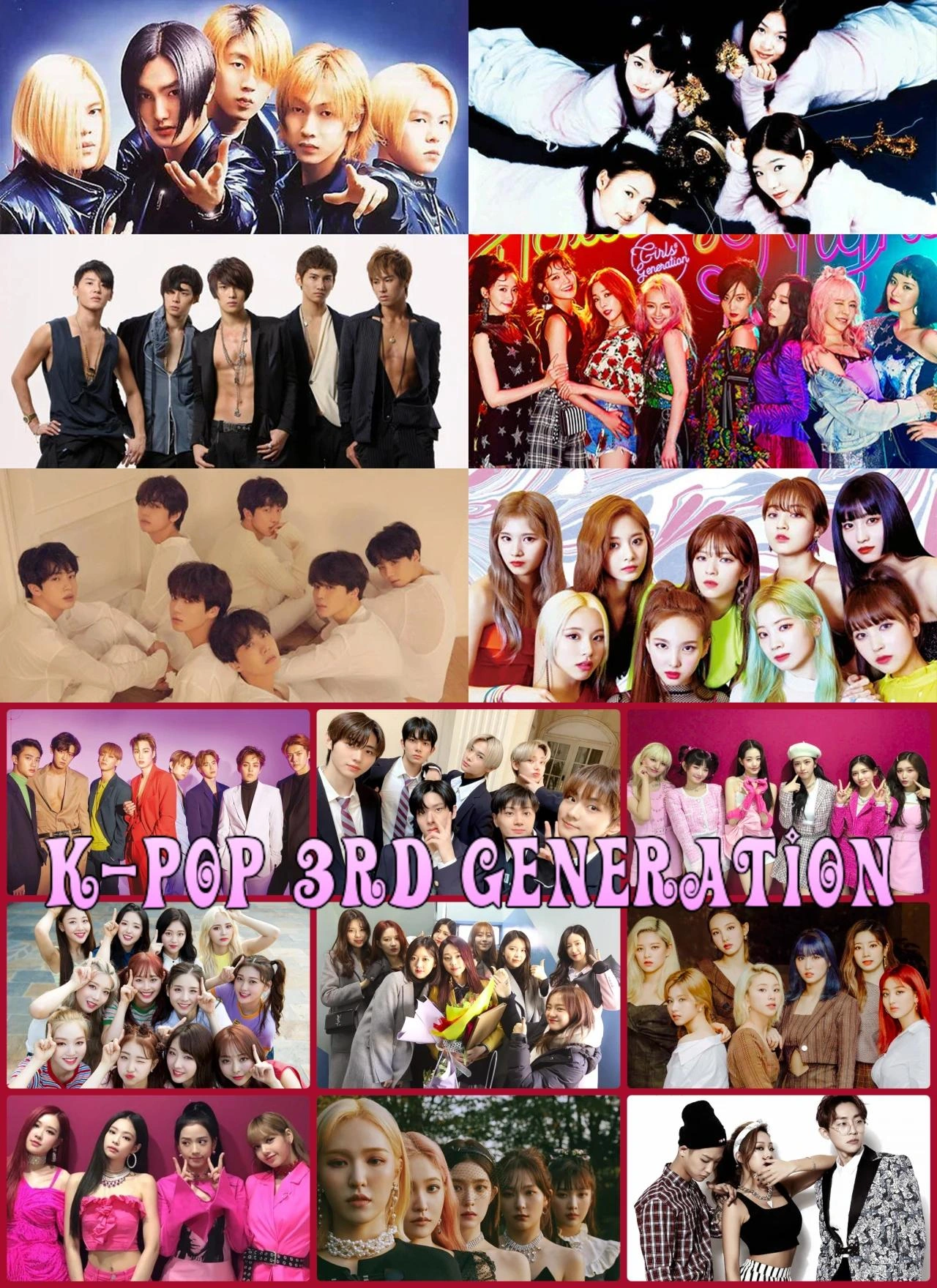
Growth within Korea and expansion across Asia - 3rd Generation (2010s)
Global visibility and large-scale international fandoms - 4th Generation (late 2010s–early 2020s)
Performance-focused groups and digital-native promotion - 5th Generation (2023– )
An emerging era shaped by platform-first strategies and changing global dynamics
This framework reflects how K-pop is most commonly discussed today.
Transitional Periods Between Generations
Between each major generation, there are transitional periods where characteristics overlap.
During these times:
- Older-generation groups remain active and influential
- New trends begin to appear in music, performance, and promotion
- The industry gradually shifts toward the next generation’s style
Some fans use informal labels like “half generations” to describe these moments.
However, these terms are not official and are best understood as explanatory tools rather than separate generations.
The Debate Around K-POP Generations
A frequent question is:
“Who decides when one generation ends and another begins?”
The answer is simple: no single authority does.
K-pop generations are shaped by collective interpretation.
Fans, media, and industry observers all emphasize different criteria, such as debut timing, technology, or fandom structure.
As a result, debates—especially around newer generations—are natural and ongoing.
These discussions reflect how fast K-pop evolves rather than a lack of clarity.
Why Generations Matter for Global Fans
Understanding generations helps international audiences see K-pop more clearly.
It explains:
- Why older and newer groups feel different
- Why fandom culture changes over time
- Why performance, visuals, and storytelling became increasingly important
Most importantly, it shows that K-pop is not a static genre.
It is a cultural system that constantly adapts.
This Series: What Comes Next
This article serves as an introduction to a generation-by-generation series.
Each upcoming post will explore one generation in detail, including:
- Historical and cultural background
- Musical and visual characteristics
- Key trends and influences
By the end of the series, you will not only recognize different generations—you will understand why they emerged.