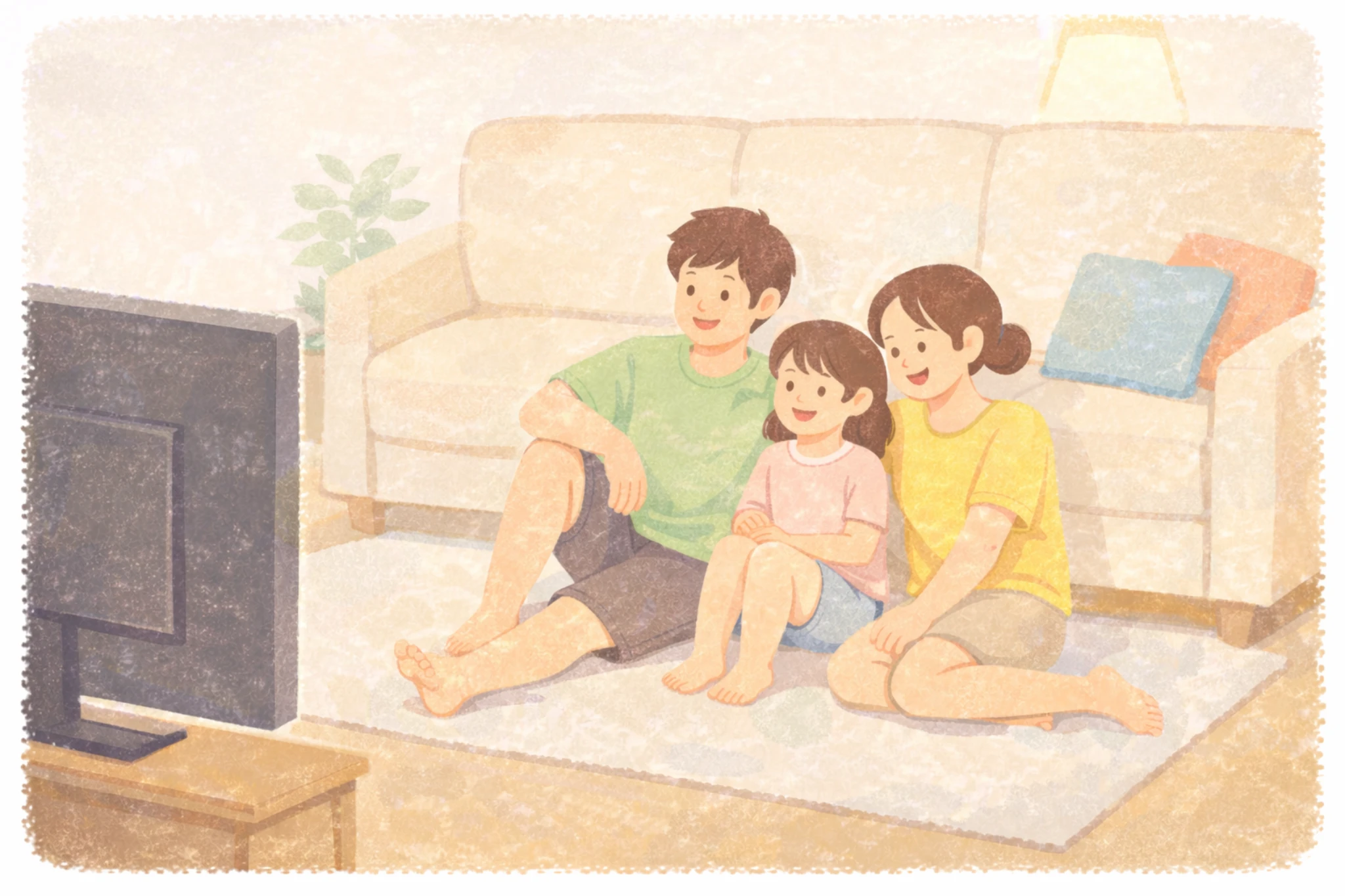
Why Koreans Don’t Wear Shoes Indoors
Why the Question Itself Feels Slightly Off
Sometimes a question arrives already leaning in the wrong direction.
“Why do Koreans wear shoes inside the house?” is one of those questions.
For many Koreans, the sentence causes a brief pause. Not confusion exactly, but a small hesitation, like noticing a chair placed slightly too close to the door. The question assumes a behavior that, in most homes, does not happen. Shoes are not worn inside. They stop at the threshold. They are turned outward. They wait.
But the question is still useful. It reveals where expectations differ. And it opens a way to talk about what Korean homes quietly assume without explaining.
“Take Off Your Shoes” (신발 벗고 들어와)
Literally, the phrase means exactly what it says: remove your shoes and come in.
“Take off your shoes” (신발 벗어) is often said casually, sometimes not said at all.
In many homes, no one instructs you. The floor itself does.
At the entrance, there is a small lowered space. Shoes gather there, pointed outward like a memory of leaving. Beyond it, the floor rises slightly. That change in height is not decorative. It marks a boundary. Outside and inside are not moral categories, but they are different worlds.
Crossing that line with shoes on feels wrong in a way that is difficult to explain without sounding excessive. It is not about dirt alone.
How It Works in Real Life
Most Korean homes are organized around the floor. People sit on it. Children play on it. Laundry is folded on it. Sometimes meals happen there. The floor is not a surface you pass over. It is a place you occupy.
Shoes carry the street. Pavement, dust, spilled drinks, exhaust, weather. Bringing that directly onto the floor feels like collapsing two spaces that are meant to stay separate.
So shoes come off automatically. Guests often remove them before greeting anyone. Hosts may gesture vaguely, more as acknowledgment than instruction. Slippers may appear. Or not.
The absence of shoes is not ceremonial. It is practical, habitual, and rarely discussed.
Common Misunderstandings
Visitors sometimes think the rule is about cleanliness in a strict sense. As if Korean homes are unusually hygienic, or as if stepping inside with shoes would cause offense.
That framing misses something.
It is not that shoes are dirty and floors are sacred. It is that the home is designed under the assumption that the outside world stays at the door. The rule is architectural as much as cultural.
Another misunderstanding is assuming this behavior is rigid. It isn’t. Workers repairing something may keep their shoes on. Moving day looks different. In emergencies, no one pauses to untie laces.
The rule bends easily. But it does not disappear.
Why Slippers Exist at All
Slippers confuse people.
If shoes are forbidden, why are slippers allowed?
Because slippers belong to the inside. They have no memory of the street. They exist only for moving lightly within the home, often between rooms, sometimes just to protect feet from cold floors.
Slippers are not shoes with a new name. They are part of the interior, like furniture that happens to be worn.
Even then, many homes do without them entirely.
The Floor as a Social Space
To understand this habit, it helps to understand how Koreans relate to floors.
Traditionally, floors were heated. People slept on them. Sat on them. Lived close to them. That closeness lingers even as furniture styles change.
When your body regularly touches the floor, you become sensitive to what touches it before you do.
Shoes disrupt that intimacy.
This is not nostalgia. It is memory embedded in posture.
Silence Instead of Explanation
One reason this habit confuses outsiders is that it is rarely explained.
Children learn it before they can articulate it. Guests follow it without being told. Corrections, when they happen, are quiet. A look. A pause. A small gesture toward the door.
No one gives a lecture about hygiene or tradition. The behavior survives without justification.
In Korean culture, many things are maintained this way. Through repetition, not explanation.
When the Rule Is Broken
Occasionally, someone forgets. A foreign guest steps inside absentmindedly. A Korean person rushing back for something takes a few steps with shoes on.
The reaction is rarely anger. More often, a soft intake of breath. Someone may laugh and say, “It’s okay,” while still watching the shoes carefully.
Discomfort exists, but it is restrained. The moment passes.
What lingers is not offense, but the feeling that something was briefly out of place.
Not About Right or Wrong
It is tempting to frame this as a matter of manners. Or respect. Or cleanliness.
But that turns a lived habit into a rulebook.
Koreans do not remove shoes because it is “correct.” They do it because the home expects it. The space is built for it. The body remembers it.
The question of why shoes are not worn indoors may never receive a satisfying answer, because the habit predates the question.
It is simply how inside feels separate from outside.
And that separation, once learned, is hard to unlearn.